

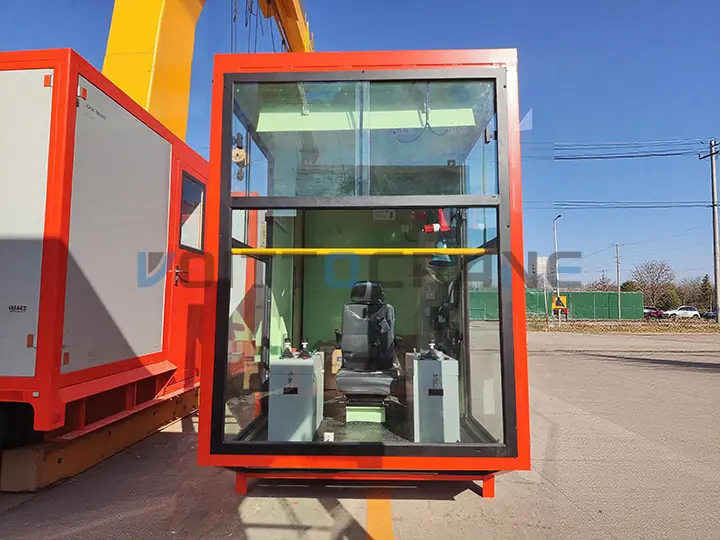
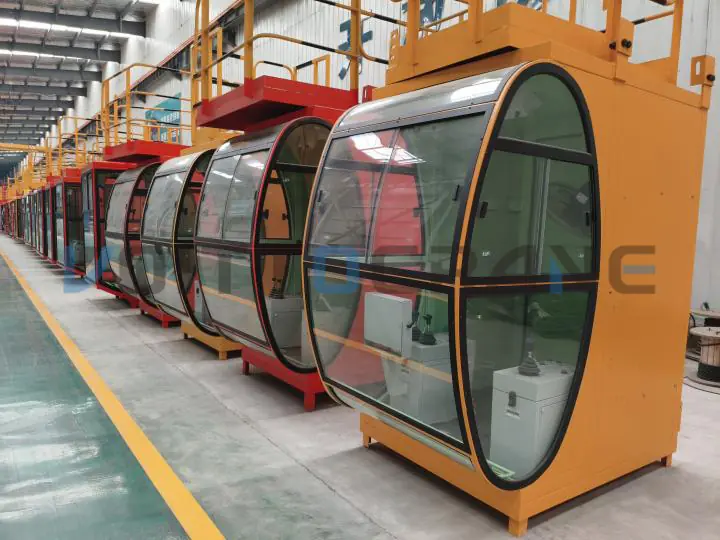
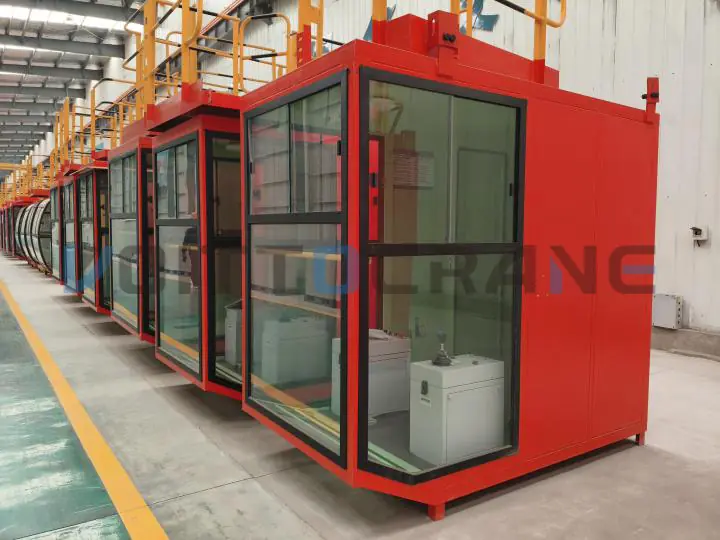
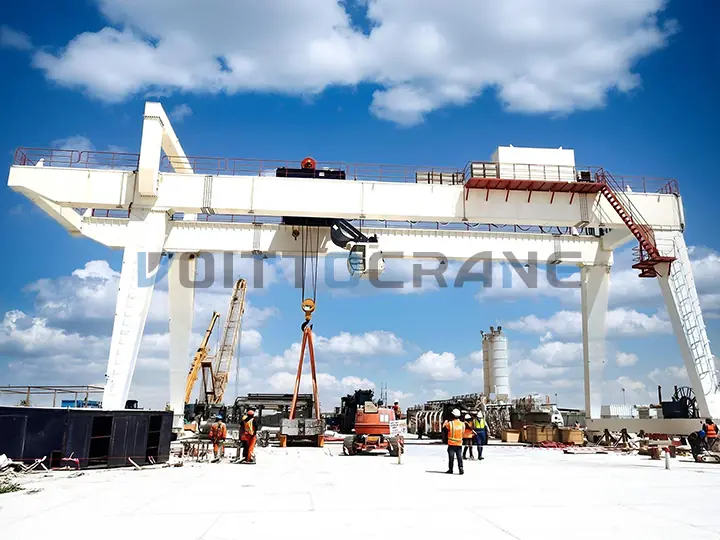
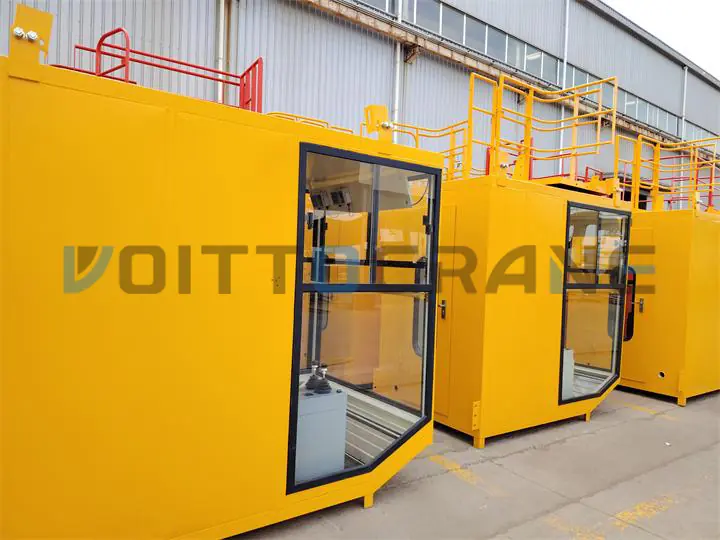
VOITTO crane cabins are supplied for the main girder, end carriage, gantry leg or hoist trolley of the host crane, with the mounting bracket drawn 1:1 to the crane structure. The cabin gives a horizontal viewing angle above 270° plus a bottom floor window, and its floor carries a 10–15 kV high-voltage insulated rubber mat.
A crane cabin (also known as an operator’s cab) is an enclosed control station from which the crane operator can control the hoisting mechanism, the trolley, and the travel of the bridge or gantry. This unit is typically installed on overhead cranes, gantry cranes, metallurgical cranes, or port cranes, and can be positioned on the main girder, end girder, gantry legs, or hoisting trolley. The VOITTO crane cab consists of a welded steel structure shell, safety glass with a bottom viewing window, a suspended seat with a joystick control console, an insulated electrical floor, and an air conditioning system equipped with auxiliary safety devices.
The crane cabin serves as the crane’s control center. From a position at approximately the same height as the load, the operator can control the crane’s operation from within the cab. This eliminates the blind spots that can occur when operating the crane from the ground using pendant controls or a remote control. The main components of the cab include: a welded steel shell and frame; safety glass windows with floor grating; a joystick control console and seat; an electrical cabinet with an insulated floor; as well as a heating, ventilation, and air conditioning (HVAC) system and various safety devices. Inside the sealed and insulated shell, the operator is protected from radiant heat, dust, corrosive fumes, and noise.
The structural shell is fabricated from 2.5 mm to 5.0 mm CNC-bent cold-rolled steel plate conforming to GB/T 700 (Q235B) or GB/T 1591 (Q355B), with a yield strength of 235–355 MPa. Cabins are designed for duty classes M5 to M8 (A5 to A8) and are the standard choice when the host crane exceeds 32 tons capacity or 25 m span, or works multiple shifts in severe-duty service.
Crane cabins are divided into different types based on environmental protection, host crane structure, and mounting mechanism. The four types below cover most overhead, gantry, metallurgical, and port crane installations.
Standard Closed Crane Cabin: The standard closed crane cabin is a fully enclosed welded steel structure with EPDM-sealed doors and windows, designed to keep rain, dust, and drafts out of the operator station. It is the base configuration for indoor EOT cranes and outdoor gantry cranes.
Insulated Metallurgical Crane Cabin: The insulated crane cabin is built for locations near radiant heat. It has a double-wall shell filled with 60–80 mm flame-retardant rock wool, double-glazed heat-reflective glass, a heat shield under the floor, and a high-temperature crane air conditioner that works up to +70°C ambient. A sealed shell reaching IP55/IP65 keeps metallurgical fumes and dust out of the cabin.
Port and Container Gantry Crane Cabin: The port crane cabin has a forward-inclined profile and an enlarged floor-to-ceiling bottom window, which gives the operator a vertical view down to the spreader and the container below. It is blasted to Sa2.5 and coated to ISO 12944 C5-M for salt-laden marine atmospheres, and carries a CMS/HMI touchscreen for crane monitoring.
Fixed Suspended vs. Trolley-Mounted Crane Cabin: A fixed suspended crane cabin is bolted to the end beam or gantry leg and stays at one position on the span. A trolley-mounted crane cabin is carried on the hoist trolley and moves in sync with it, so the operator stays directly above the hook. Cable supply to a moving cabin runs through a festoon or energy chain system. The trolley-mounted type is used for precision positioning on spans longer than 30 m.
A crane cabin consists of five subsystems, each with a defined structural or safety function.
Welded Steel Enclosure and Frame: Constructed from 2.5–5.0 mm Q235B/Q355B steel plates bent using computer numerical control (CNC) and welded to a tubular structural frame; the surface is sandblasted (to Sa2.5 standard) and coated with a zinc-rich epoxy primer and a polyurethane topcoat. This structure is designed to support operators, control consoles, air conditioning units, and other installed loads, transferring these loads to the crane’s main structure via brackets.
Panoramic Glass and Floor Grating: Equipped with 5–8 mm tempered safety glass or 8–12 mm laminated glass, providing a horizontal field of view exceeding 270°; an observation window is also provided at the bottom. The area above the observation window is covered with a removable, heavy-duty steel protective grating (with a load-bearing capacity exceeding 200 kg) to prevent personnel from accidentally stepping through.
Ergonomic Control Console: Equipped with a rotatable (90°–180°) shock-absorbing suspension seat and an integrated dual-axis master controller or cam controller. The console also includes safety foot/handle switches, an emergency stop button, and mounting brackets for a human-machine interface (HMI) or condition monitoring system (CMS) display.
Electrical Cabinet and Insulated Floor: The cab is equipped with an electrical cabinet and a central junction box, with wiring compliant with the IEC 60204-32 standard. The floor features non-slip checkered steel plates and is covered with high-voltage insulated rubber mats rated for 10 kV to 15 kV.
Industrial-Grade HVAC and Auxiliary Safety Equipment: The cab is equipped with a vibration-resistant air conditioning unit designed specifically for cranes, capable of operating normally at ambient temperatures ranging from -40°C to +70°C. Auxiliary equipment includes windshield wipers, sunshades, an intercom system, audible and visual alarms, fire extinguishers, and an emergency escape hammer.
Each VOITTO crane cabin incorporates engineering features that align with FEM 1.001, EN 13557, and OSHA crane operator station safety directives:
VOITTO Crane has designed and manufactured cranes and crane components since 2003 and supplies customers in more than 60 countries. Our crane cabins are CE, ISO, and FEM certified, and each order is approved against a 1:1 CAD drawing before production starts. If you need a crane cabin solution, please feel free to اتصل بنا.

آلان
أخصائي حلول الرافعات · رافعة Voitto
متخصصون في حلول تصدير الرافعات العلوية، والرافعات الجسرية، والرافعات الجيبية، ورافعات الموانئ، ورافعات الجسور العلوية الكهربائية. خبرة تزيد عن 10 سنوات في مساعدة العملاء العالميين من خلال الاستشارات قبل البيع، واختيار السعة، والتكوينات الخاصة بكل موقع.
Choose a crane cabin when the crane exceeds 32 tons capacity, 25 m span or 16 m lifting height, works at A6–A8 duty, or when the load path has blind spots or floor-level hazards such as molten metal, fumes, heat, and noise. In clear, single-shift bays under those limits, a wireless remote or pendant is normally enough. For mixed duty, VOITTO supplies the Cabin + Wireless Remote Dual-Control System: the operator controls the crane from the cabin during production and switches to the wireless remote for maintenance, set-up, and close-range hooking.
Yes. We build the replacement crane cabin to your existing bolt pattern, bracket geometry and electrical plugs. You send the old cabin’s drawings or measured photos, we issue a 1:1 CAD drawing for your approval, and production begins after approval. The new cabin bolts to the original mounting points and connects to the existing control cables.
The floor window uses 5–8 mm tempered safety glass or 8–12 mm laminated glass, which holds together on impact instead of falling out as fragments. A removable heavy-duty steel protective foot grate rated for more than 200 kg covers the glass, so the operator cannot step through the opening and the glass does not carry foot loads.
The cabin is pre-wired at the factory per IEC 60204-32: lighting, A/C, console, seat switches, alarms and intercom run to a central junction box on the cabin. On site, the electrician connects the junction box terminals to the crane control panel. For trolley-mounted cabins, the supply and control cables run through a festoon or energy-chain system that moves with the trolley.

يقدّم فريق ما قبل البيع لدينا استشارات قبل البيع، ويصمّم حلولاً تتناسب مع احتياجاتك وبيئتك.
تقديم خيارات تخصيص لسعة الرفع، والامتداد وارتفاع الرفع وما إلى ذلك لتلبية الاحتياجات الخاصة.

تحديثات التقدم في الوقت الفعلي: التقارير الأسبوعية والتواصل مع رئيس الوزراء.
اختبار ما قبل التسليم: 100% فحوصات الحمولة والسلامة، تقارير مفصلة.

ضمان لمدة 3-5 سنوات واستبدال مجاني للعيوب غير المصنعية.
الدعم عبر الإنترنت على مدار الساعة طوال أيام الأسبوع والمساعدة في الموقع لمشاكل الرافعات.
نعم، يتوفر الشحن الدولي ودعم التصدير للعملاء العالميين.
يختلف وقت الشحن حسب عدة عوامل، منها وجهة البضائع والمسافة وطريقة الشحن ومزود خدمة الشحن، وما إلى ذلك. بشكل عام، قد يستغرق الشحن الدولي حوالي شهر.
نحن نقدم خدمة شاملة لما بعد البيع، بما في ذلك الصيانة الدورية والدعم الفني السريع وتوريد قطع الغيار. مدة الضمان القياسية هي سنة واحدة، مع خيارات للتمديد حسب احتياجاتك.


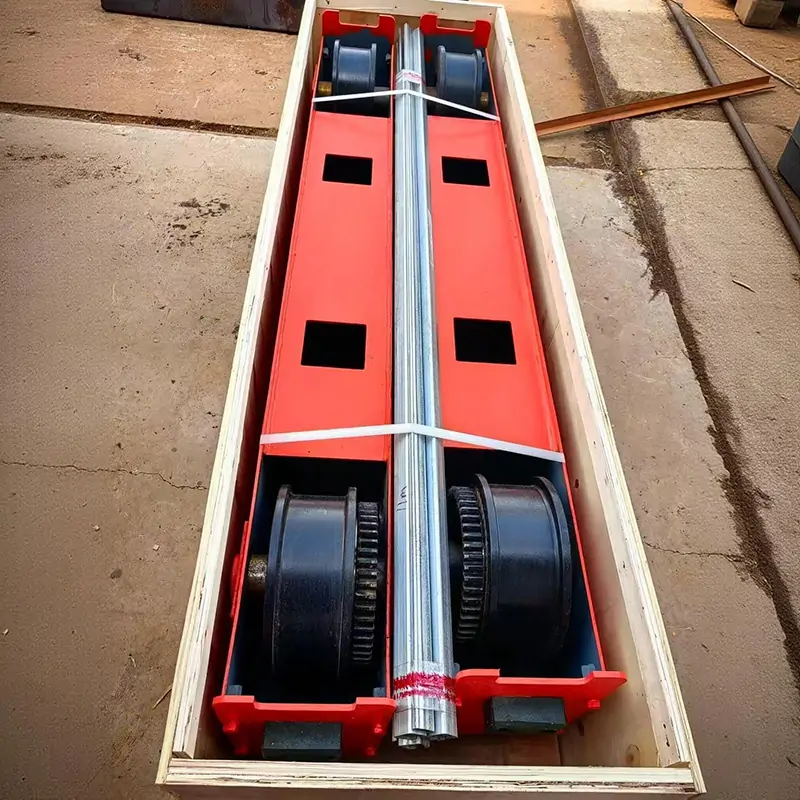
الرافعة الجسرية هي معدات رفع مواد كبيرة الحجم. وهي تستخدم بشكل شائع في مواقع البناء، ومحطات الموانئ، والمصانع، وساحات التخزين في الهواء الطلق، وأحواض بناء السفن. يتم تجميع معدات الرفع الصناعية هذه من مجموعة متنوعة من الأجزاء الرئيسية، مما يسهل أيضًا نقلها من الإنتاج إلى استخدام الموقع والصيانة والإصلاح في وقت لاحق. ستساعدك هذه المقالة على فهم الأجزاء الأساسية للرافعة الجسرية، وتحليل خصائصها الهيكلية ومبادئها الوظيفية، لمساعدتك على اكتساب فهم أشمل لنظام الرافعة الجسرية للخدمة الشاقة ومكوناتها. ما هي أجزاء الرافعة الجسرية؟ تتألف الرافعة الجسرية من عدة أجزاء رئيسية، بما في ذلك العارضة الرئيسية، وأرجل الدعم، والمسارات، وآلية الحركة، وآلية الرفع، والنظام الكهربائي. وتشمل المكونات الهامة الأخرى وحدة التحكم أو كابينة المشغل، والبكرات، والمكابح، وأجهزة السلامة المختلفة. تعمل هذه المكونات معًا لنقل البضائع من النقطة (أ) إلى النقطة (ب). وفيما يلي سوف نقدم لك الوصف الوظيفي لأجزاء الرافعة الجسرية. رسم تخطيطي لأجزاء الرافعة الجسرية مكونات ووظائف الرافعات الجسرية بأنواعها المختلفة الرافعة الجسرية المحمولة: الوصف الهيكلي إن الرافعة الجسرية المحمولة...
في الإنتاج الصناعي الحديث والإنشاءات الهندسية واسعة النطاق، أصبحت الرافعة العلوية، وهي المعدات الأساسية لمناولة المواد، بكفاءتها العالية وأدائها المستقر، الخيار المفضل للورش والمستودعات وما إلى ذلك. كما نعلم جميعًا ، يتم تجميع الرافعة العلوية بواسطة أجزاء مختلفة ، مما يسهل أيضًا نقلها من الإنتاج إلى استخدام الموقع والصيانة والإصلاح اللاحقة. ستساعدك هذه المقالة على فهم أجزاء الرافعة العلوية الأساسية وتحليل خصائصها الهيكلية ومبادئها الوظيفية لمساعدتك على اكتساب فهم أكثر شمولاً للرافعة العلوية ومكوناتها. قطع غيار الرافعات العلوية في الإنتاج الصناعي الحديث والبناء الهندسي واسع النطاق، أصبحت الرافعة العلوية، وهي المعدات الأساسية لمناولة المواد، بكفاءتها العالية وأدائها المستقر، الخيار المفضل للورش والمستودعات وما إلى ذلك. كما نعلم جميعًا ، يتم تجميع الرافعة العلوية بواسطة أجزاء مختلفة ، مما يسهل أيضًا نقلها من الإنتاج إلى استخدام الموقع والصيانة والإصلاح اللاحقة. ستساعدك هذه المقالة على فهم أجزاء الرافعة العلوية الأساسية وتحليل خصائصها الهيكلية ومبادئها الوظيفية لمساعدتك على ...
الرافعة العلوية هي نوع من معدات مناولة المواد المستخدمة على نطاق واسع في الورش والمستودعات والمصانع، وهي مسؤولة بشكل أساسي عن رفع المواد الخام والمنتجات النهائية والمنتجات شبه النهائية ونقلها أفقياً وتحميلها وتفريغها. لا يمكن فصل كفاءة وسلامة تشغيلها عن التنسيق والتعاون بين مختلف مكونات الرافعة العلوية الرئيسية، التي يؤدي كل منها وظيفة محددة. لذلك ، فإن فهم مكونات الرافعة الجسرية العلوية لا يساعد فقط في الاستخدام الصحيح للمعدات وصيانتها ، بل يساعد أيضًا المصانع على تحسين كفاءة الإنتاج والسلامة. بعد ذلك ، ستقدم هذه المقالة مكونات الرافعة الجسرية العلوية ، بالإضافة إلى تعريفها ووظائفها ، لمساعدتك على التعرف عليها وفهمها. ما هي مكونات الرافعة الجسرية العلوية؟ تتكون الرافعة العلوية من العارضة الرئيسية، والعارضة الطرفية، وآلية حركة الرافعة، وآلية تشغيل العربة، وآلية الرفع، والنظام الكهربائي، وأجهزة السلامة. تعمل أجزاء الرافعة العلوية هذه معًا لنقل البضائع من النقطة A إلى النقطة B. فيما يلي صور لمختلف مكونات الرافعة الجسرية وتعريفها. العارضة الرئيسية العارضة الرئيسية...
الرافعة العلوية، التي تُعرف غالبًا باسم الرافعة الجسرية، هي نظام رفع صناعي رئيسي لمناولة الأحمال الثقيلة في منشآت مثل المصانع والموانئ والمستودعات. وهي متاحة للرافعة العلوية ذات العارضة الواحدة (للأحمال الخفيفة، 1-32 طن) أو الرافعة العلوية ذات العارضة المزدوجة (للمهام الأثقل، 5-500 طن) أو الرافعة المرنة الخفيفة KBK (لخطوط المعالجة، أقل من 5 أطنان). يستخدم الهيكل العلوي لتوفير المساحة وتجنب الازدحام الأرضي. فيما يلي، سوف تتعمق هذه المقالة في تعريف الرافعة العلوية وصورتها وتطبيقها وهيكلها ومواصفاتها الفنية لمساعدتك على فهمها بشكل عام. ما هي الرافعة العلوية؟ الرافعة العلوية عبارة عن جهاز رفع للخدمة الشاقة يتم تركيبه فوق مناطق العمل (مثل المصانع والمستودعات) على قضبان علوية ثابتة. وعلى عكس الرافعات المتحركة، فهي تعمل على طول مسار ثابت، مما يوفر مساحة أرضية. تشمل مكوناتها الأساسية عوارض رئيسية (الهيكل الحامل)، وشاحنات طرفية (للحركة الطولية)، وعربة رافعة (للحركة الجانبية) وآلية رفع (للرفع الرأسي) ونظام تحكم (للتشغيل السهل والدقيق). يشتمل الهيكل الأساسي للرافعة العلوية على عارضة رئيسية ذات إطار جسر تمتد على
حل الرفع المصمم للمقاييس تتطلب بعض أعمال الرفع أكثر مما يمكن أن تقدمه الرافعة الثابتة. عندما تكون الأحمال ثقيلة، والامتدادات واسعة، ويحدث العمل في الهواء الطلق أو عبر مناطق مفتوحة كبيرة، فإن الرافعة الجسرية غالبًا ما تكون الحل العملي الوحيد. من محطات الحاويات في الموانئ إلى مواقع تجميع توربينات الرياح، تتعامل الرافعات الجسرية مع حركة المواد على نطاق لا يمكن أن يضاهيه سوى عدد قليل من الأنظمة الأخرى. إن الهيكل المستقر، وسعة الحمولة العالية، والنطاق التشغيلي الواسع يجعلها قطعة أساسية من المعدات في جميع أنحاء العالم في الصناعات الثقيلة. يغطي هذا الدليل كل ما تحتاج إلى فهمه عن الرافعات الجسرية - ما هي، وكيفية عملها، وأنواعها الموجودة، وما هي مصنوعة منه، وأين يكون أداء كل تكوين منها أفضل. ما هي الرافعة الجسرية؟ الرافعة الجسرية هي نظام كبير لمناولة المواد مبني حول هيكل إطار بوابة. تحمل ساقان داعمتان عموديتان عموديتان عارضة رئيسية أفقية عبر منطقة العمل. ويشكل هذا المزيج بين الساق والعارضة إطار باب - أو رافعة جسرية - وهو ما يعطي المعدات اسمها. يتحرك الهيكل بأكمله على طول مسارات على مستوى الأرض، حيث تتحرك العربة والرافعة...

 English English
 Español
 Português
 العربية
 Français
 Русский