blog

Grúa semipórtico
16 de julio de 2026

Semi Gantry Crane for Sale: BMG & BMH Configurations, Specs, and Factory-Direct Pricing

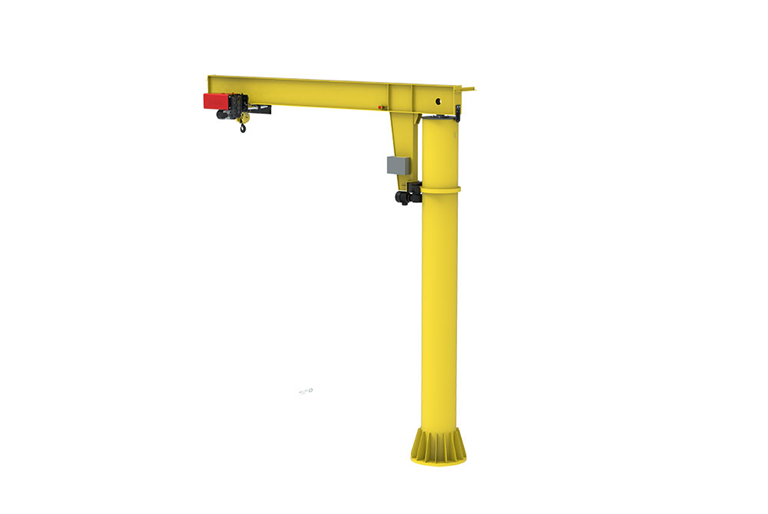
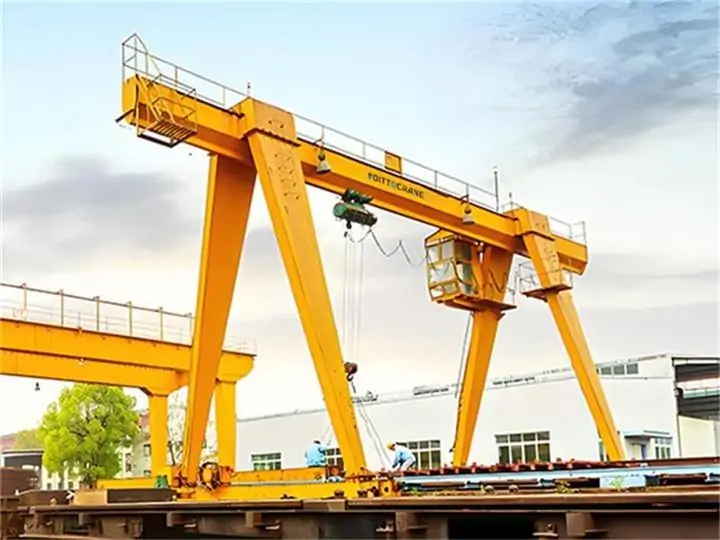
A semi gantry crane is a hybrid structure where one end carriage travels on an elevated runway attached to your building wall, and the other runs on a ground-level rail. Voitto Crane supplies two factory-direct configurations: the BMH single-girder (2–16 t, from ~$12,000) for light-to-medium workshop use, and the BMG double-girder (5–320 t, from ~$42,000) for heavy industrial applications — both with custom span, lifting height, and voltage options. If you manage a manufacturing facility, warehouse, or steel processing yard where floor space is limited and you already have overhead infrastructure on one side of the building, a semi gantry crane for sale is almost certainly the most cost-efficient lifting upgrade available. You avoid the civil cost of adding a full second column row while still covering the full width of your workspace. This page covers both BMH and BMG specs side by side, helps you choose the right type for your load cycle, breaks down what drives price, and explains how to verify certifications before you commit to a supplier. Quick Reference — Voitto Crane Semi Gantry Crane for…

LEER MÁS
mantenimiento de carretillas pórtico
16 de julio de 2026

Mantenimiento de grúas pórtico: Guía completa para la inspección, el mantenimiento y la resolución de problemas.

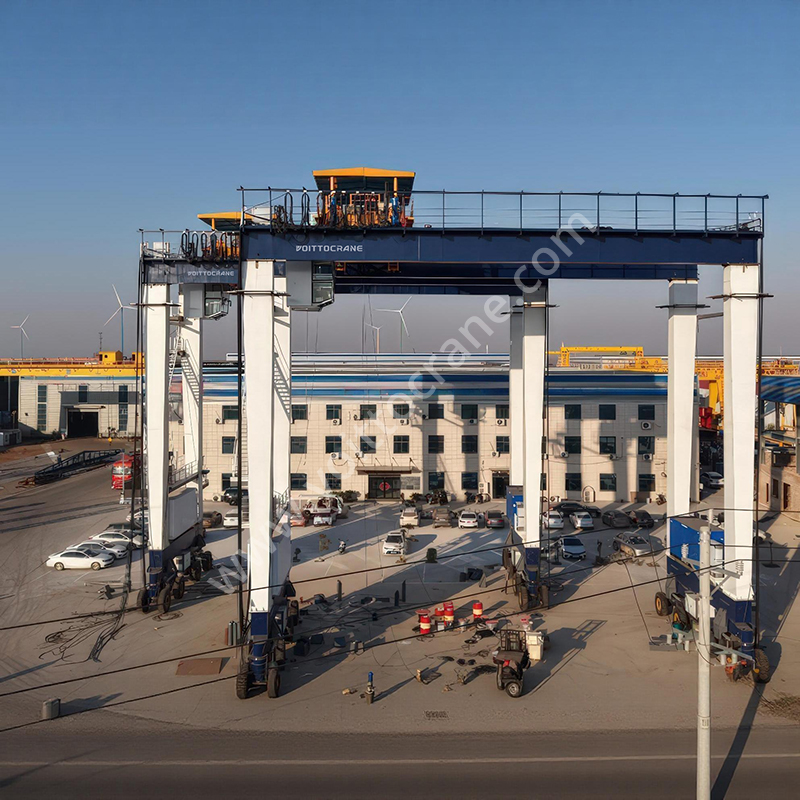
Straddle carrier maintenance is the structured program of preventive, condition-based, and corrective work applied to the hydraulic lifting system, spreader, tire and wheel assembly, structural frame, and electrical/control system of a straddle carrier. Currently, there are no specific international standards for the various subsystems of straddle carriers that prescribe specific maintenance intervals. A straddle carrier maintenance work primarily follows general inspection principles and the original equipment manufacturer’s (OEM) service manuals. In practice, procurement and maintenance teams often directly apply the maintenance schedules for overhead cranes to manage the straddle carrier fleet, which is a common misapplication: Straddle carriers integrate a hoisting mechanism with a mobile undercarriage and tires, and their wear characteristics are closer to those of mobile heavy equipment than to fixed overhead cranes. Therefore, maintenance plans must take both of these characteristics into account. Next, this article will provide you with a key checklist for straddle carrier maintenance, maintenance schedules, and practical maintenance tips. Straddle Carrier Maintenance Fundamentals: Definition and Inspection Scope This section defines the three types of maintenance that make up the preventive maintenance plan for…

LEER MÁS
gantry crane manufacturers
15 de julio de 2026

Fabricantes de grúas pórtico en los Emiratos Árabes Unidos: aplicaciones, tendencias del sector y cómo elegir un proveedor fiable.

Thanks to continued investment in ports, logistics, infrastructure, manufacturing, and renewable energy projects, the United Arab Emirates has become one of the largest markets for heavy lifting equipment in the Middle East. As demand for material handling equipment grows, simply comparing prices is no longer sufficient when selecting among the many gantry crane manufacturers. Buyers need to comprehensively evaluate a manufacturer’s engineering capabilities, compliance, local service levels, and long-term operating costs. For most industrial projects, selecting a manufacturer with extensive experience in similar applications is far more valuable than simply choosing the supplier with the lowest quote. The crane’s duty class, structural design, corrosion protection, and after-sales support directly determine the equipment’s reliability throughout its entire lifecycle. This guide provides a detailed overview of gantry crane applications in the UAE, the latest industry trends, key technical specifications that influence procurement decisions, and practical methods for selecting reliable suppliers. Why the UAE Has Strong Demand for Gantry Crane Manufacturers Understanding the local market demand in the UAE helps buyers identify gantry crane manufacturers with relevant project experience and technical capabilities. Port…

LEER MÁS
Grúa RTG vs. transportador de contenedores pórtico
15 de julio de 2026

Grúa RTG vs. Transportador pórtico de contenedores: Guía comparativa completa

Al decidir entre una grúa pórtico sobre neumáticos (RTG) y una grúa pórtico para contenedores, los compradores deben centrarse en las diferencias en las características funcionales de estos dos tipos de equipos, en lugar de en el rendimiento. Las grúas pórtico sobre neumáticos (RTG) son adecuadas para terminales de contenedores con altas densidades de apilamiento, mientras que las grúas pórtico para contenedores son adecuadas para terminales que requieren acceso a cualquier contenedor en cualquier momento. Esta guía tiene como objetivo ayudar a los responsables de la toma de decisiones a determinar qué sistema de grúa puede minimizar el número total de movimientos de contenedores por hora, considerando la relación de apilamiento real de la terminal y los patrones de llegada de camiones. El objetivo es ayudar a los operadores de terminales a seleccionar el equipo de manipulación de contenedores más adecuado. VOITTO Crane se compromete a proporcionar a los usuarios una valiosa orientación. ¿Qué es una grúa RTG? Una grúa pórtico sobre neumáticos (RTG) es un equipo de elevación especializado diseñado específicamente para operaciones de apilamiento en patios de contenedores. Con una capacidad de elevación de hasta 70 toneladas métricas y una envergadura que oscila entre 23,47 y 26 metros, puede apilar contenedores hasta seis niveles de altura o más. Utiliza neumáticos como medio de desplazamiento, eliminando…

LEER MÁS
grúa pórtico en venta
10 July 2026

Grúas para la industria del hormigón prefabricado: selección, especificaciones e instalación.

Cranes for precast concrete industry plants require three decisions most suppliers understate: duty class, two-zone layout, and below-hook compatibility. A double girder overhead crane spanning your casting bay typically starts around $28,000–$95,000, while an outdoor double girder gantry crane for yard and loading operations generally runs $18,000–$120,000 — with the final figure driven far more by span, duty class, and control specification than by raw tonnage alone. Precast plants handle a uniquely punishing combination of loads: heavy (beams and girders commonly reach 20–60 tons), geometrically awkward (long, asymmetric, with engineered lifting inserts at fixed points), and handled repeatedly at high cycle frequency throughout a shift. A crane sized purely by rated capacity but specified at the wrong duty class will reach its maintenance threshold in a fraction of its design life — and in a precast environment, unplanned crane downtime cascades directly into delayed demolding and missed delivery schedules. This guide walks procurement managers and equipment engineers through crane type selection by production zone, the key parameters that actually drive cost and reliability, certification requirements for import clearance, and what…

LEER MÁS
Grúa puente rígida de dos vigas con puesto de trabajo independiente
14 July 2026

Light Crane System for Workstations: Freestanding Bridge Crane Guide

A light crane system is a modular overhead lifting solution built for workstation-level material handling — typically 0.25 to 2 tons, spans up to 12.5 meters, designed to keep the floor clear and move loads smoothly without the structural demands of a full-size overhead crane. The most practical form for facilities that can’t or won’t modify their ceiling structure is the freestanding bridge crane: a self-supporting aluminum-rail system that bolts to the floor and needs nothing from the building above. Factory-direct pricing for a complete freestanding bridge crane system typically runs $4,000 to $20,000+, depending on span, capacity, and hoist configuration. If your facility has weak ceilings, leased space, or a layout that changes periodically, this is almost certainly the configuration worth evaluating first. This guide covers how freestanding bridge cranes work, when they outperform ceiling-suspended alternatives, what the real specs look like, and what certification documents to request before placing an import order. Quick Reference: Freestanding Bridge Crane Specifications Parameter Specification Lifting Capacity 0.25 – 2 ton Span 1 – 12.5 m Lifting Height 3.7 – 13.5 m Rail…

LEER MÁS
Single-Girder Gantry Crane
02 July 2026

Cranes for Manufacturing Industry: Matching Crane Type to Production Line

For most manufacturing plants, the fastest way to narrow down crane options is to work backward from what’s happening on the line — not from a catalog of crane types. A single-girder overhead crane rated for 5–10 tons typically runs $8,000–$25,000, while a double-girder crane in the 20–50 ton range moves into $30,000–$120,000+ depending on span and duty class. The harder problem isn’t the price — it’s that most buying guides list crane types and specs without connecting them to what’s actually happening at each stage of a production line, leaving procurement teams to guess whether a jib crane or an overhead system fits their assembly bay. This guide flips that order. It matches cranes for manufacturing industry buyers to production line stages — raw material intake, assembly, machining, and packaging — then covers the parameters and certifications that actually affect your purchase decision. Quick Reference: Cranes for Manufacturing Industry The table below compares the crane types most commonly used across manufacturing production lines, before we get into which one fits which stage of your process. Crane Type Typical Capacity…

LEER MÁS
lb-explosion-proof-overhead-crane
04 July 2026

Explosion-Proof Overhead Crane: Specifications, ATEX Certification & Selection Guide (2026)

Explosion-proof overhead cranes from Voitto start at $4,000 for a 1-ton LB single-girder unit and scale to $533,250 for a 320-ton QB double-girder configuration — a range wide enough that choosing the wrong series on the first RFQ is both common and expensive. If your facility processes petroleum, pharmaceutical solvents, coal dust, or paint-line vapors, a standard EOT crane is a compliance failure waiting to happen. This guide uses Voitto’s actual product data to show you exactly which series fits your hazard zone, how to read an Ex-grade nameplate, what documents to demand before signing a PO, and where the hidden cost traps sit. The single most frequent procurement mistake in Ex crane buying is treating explosion protection as a component-level upgrade — fitting an Ex-rated hoist onto a standard crane frame and assuming zone compliance. In a Zone 1 environment, that assumption fails because ignition risk lives in the whole electrical system: a non-Ex limit switch tripping under load, a standard pendant arcing on contact, or an unsealed cable entry. This article addresses that gap directly. By the end,…

LEER MÁS
Overhead Crane Span Lifting Height Diagram
10 July 2026

Overhead Crane Span & Lifting Height: Factory Layout Design Parameters Guide

Overhead crane span and lifting height are the two layout parameters that determine everything else in your factory crane design. Span is the horizontal distance between the centerlines of the runway rails; lifting height (also called hook travel) is the vertical distance the hook can rise from its lowest to its highest position. Get either wrong at the design stage and you will either waste structural budget on over-specified steel or — more expensively — discover on installation day that your loads cannot clear the machinery below the hook. Factory planners and equipment managers face the same two concrete questions: What span do I specify, given my building column spacing? And what lifting height do I need, given my building’s usable headroom? Both calculations look simple on the surface, but each hides a stack of deductions — end-beam protrusions, hoist body height, hook deadweight travel distance, top safety clearance — that add up to 700–1,000 mm or more of “lost” headroom that generic articles rarely quantify. This guide works through both calculations step by step, with real numbers, then shows…

LEER MÁS
Aplicación de la grúa puente de doble viga QD (1)
02 July 2026

Double Girder Overhead Crane Buyer’s Guide: Specs, Pricing & Selection (2026)

A double girder overhead crane typically costs between $7,900 and $1,772,500, depending on capacity, span, configuration, and duty class. Light-duty units — a 5-ton or 10-ton standard double girder — start at $7,900 and $8,500 respectively. Mid-range QD hook configurations covering 5–50 tons run $23,000–$149,000. Heavy-duty units above 100 tons start at $200,000, with the largest 320–800-ton configurations reaching $1,772,500 (all figures are ex-works market reference prices from Voitto Crane, excluding shipping and installation). If your operation regularly lifts loads above 20 tons, requires spans beyond 25 meters, or needs the hook to reach within 300–600 mm of the building end wall, a double girder crane is almost certainly the right direction. Below that threshold, a single girder crane may serve you more economically. This guide walks you through the complete decision process: what separates a double girder design from the alternatives, how specs translate into real prices, what certifications your import order must carry, and the five variables you need to confirm before sending a single RFQ. Quick Reference: Double Girder vs. Single Girder Overhead Crane Parameter Double Girder…

LEER MÁS
Puente grúa europeo HD avanzado.
26 June 2026

Low Headroom Crane: Design Solutions for Tight Spaces

If your facility has a ceiling height under 6 meters — or existing pipework, ductwork, and structural ties that eat into the space between the roof beam and the floor — a standard overhead crane will likely leave you with insufficient hook travel to do useful work. A low headroom crane solves this by using a European-style hoist that sits beside or within the bridge beam rather than hanging below it, typically recovering 400–700 mm of vertical space compared to a conventional design. For most tight-space applications, a European-style single girder crane covers 1–12.5 tons, while European double girder configurations extend that range significantly — with market reference prices from $15,000 to $180,000+ depending on capacity, span, and configuration. The decision most buyers get wrong isn’t choosing between low headroom and standard — it’s assuming that the “minimum headroom” figure in a supplier’s datasheet represents their actual usable hook height. It doesn’t. This guide explains the engineering difference between European-style and conventional cranes, gives you a calculation framework to determine real hook height in your building, and walks through the…

LEER MÁS
Grúa pórtico birraíl
24 June 2026

Mining Industry Overhead Crane: The Complete Harsh-Environment Selection Guide

Choosing the wrong overhead crane for a mining facility doesn’t just slow production — it creates safety failures that shut operations down entirely. A mining industry overhead crane must do something most industrial cranes don’t: sustain rated performance in environments where abrasive dust, corrosive moisture, explosive gases, and continuous heavy cycles attack every component simultaneously. For most mineral processing, smelting, and ore-handling applications, a double girder overhead crane in duty class M5–M7 is the starting point, not the ceiling — and prices for mine-grade units typically range from $25,000 to $350,000+ depending on capacity, span, and environmental protection level. This guide is written for procurement managers and plant engineers evaluating overhead crane options for mining facilities. You’ll find a side-by-side comparison of crane configurations, a structured selection framework for harsh conditions, the certifications suppliers must prove before shipment, and the procurement mistakes that most buyers only learn after the first breakdown. By the end, you’ll be able to write a technically grounded specification, ask the right questions in supplier negotiations, and avoid the hidden cost traps that turn a competitive…

LEER MÁS
Top