
An رافعة كهربائية is only as safe as the person operating it. The equipment itself — motor, brake, wire rope or chain, and control system — is engineered to handle rated loads reliably, but most lifting incidents stem from skipped inspections, overloading, or abrupt operation rather than equipment failure. This guide walks through a complete lifting operation, from pre-use checks to shutdown, so operators can operate a hoist correctly and consistently, whether it’s mounted on a single-girder overhead crane, a jib crane, or a standalone beam.
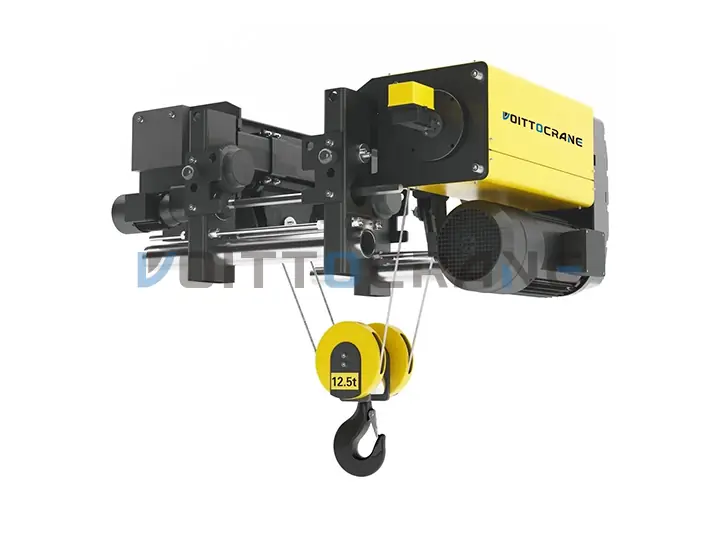
European Standard Hoist

رافعة حبل سلكي
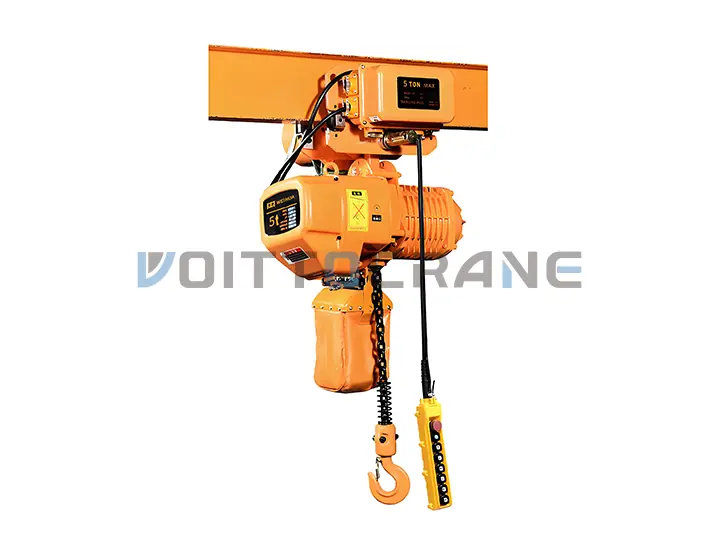
رافعة سلسلة
What Is an Electric Hoist?
An electric hoist is a motor-driven lifting device that raises and lowers heavy loads using a wire rope or lifting chain wound around a drum or sprocket. It is typically mounted on an overhead crane, jib crane, gantry crane, or a fixed I-beam and is operated via a handheld control box or a wireless remote control. This guide focuses on how to properly operate an electric hoist, rather than its construction or selection. For detailed information on its components, please refer to the article “What Is Electric Hoist?”
What to Check Before Using an Electric Hoist
Failing to perform pre-use inspections is one of the most common causes of accidents. Conducting a system check before every lift can effectively improve production efficiency and protect workers’ safety.
Check the Hoist’s Rated Capacity
The operator must verify the hoist’s rated lifting capacity, which is typically marked on the hoist itself or on its nameplate. Compare this value to the actual weight of the load, taking into account the weight of the slings, chains, or lifting accessories attached to the hook—all of which are part of the total load. Note: Never exceed the rated lifting capacity, and never assume that the hoist can handle a weight exceeding its rating.
Inspect the Wire Rope or Load Chain
Not every electric hoist uses the same lifting medium, so inspect according to type.
Wire Rope Hoists: Operators must check for broken wires, kinks, flattening or deformation, corrosion, and uneven wear along the length of the rope, especially near the drum and hook ends.
Chain Hoists: Operators should check for stretched or deformed chain links, excessive wear or corrosion at contact points, and any twisting of the chain.
If any of the above conditions are found, do not operate the equipment. It should be tagged out of service and handled in accordance with your organization’s inspection procedures.
Check the Hook and Safety Latch
Inspect the hook for visible deformation, cracks, or wear at the throat opening. Confirm the safety latch closes fully and springs back on its own — a latch that doesn’t seat properly can allow a sling or chain to slip off the hook during a lift.
Inspect the Pendant and Controls
Test the up and down buttons to ensure they operate smoothly and respond promptly, and verify that the emergency stop function is working properly. Inspect the handheld controller’s cable for any damage, exposed wires, or strained connections. If the control device responds slowly, becomes stuck, or operates abnormally, stop using it immediately and report the issue; never force it to continue operating.
Check the Power Supply and Working Area
Check for any obvious electrical problems (such as damaged wires, exposed connections, or signs of overheating). Never attempt to perform electrical repairs yourself. Clear any obstacles from the lifting path and the landing area, and make sure no one is standing under or near the lifting path before beginning operation.
How to Use an Electric Hoist Step by Step
Once the pre-use inspection is complete, the operation itself follows a consistent sequence.
1. Determine the Load Weight
Operators should verify the actual weight of the load by referring to relevant documentation, using a truck scale, or making a reliable estimate, and compare it with the hoist’s rated load capacity (be sure to include the weight of the rigging or lifting accessories). If there is any doubt regarding the weight of the load, it should be treated as an overloaded condition and verified before continuing operations.
2. Position the Hook Above the Load
Adjust the hook position so that it is as directly above the load’s center of gravity as possible. If the hook is off-center, lateral loads and load sway will occur during the lifting process; both of these factors reduce stability and increase the stress on the hoist and rigging. Unless the equipment is specifically designed and certified for inclined or lateral pulling operations, ensure that the lifting process remains as vertical as possible.
3. Attach the Load Correctly
Use lifting accessories (such as slings, chains, or shackles) that meet the required load capacity and are in good condition. When hooking the load, ensure the hook is fully engaged, that the load rests on the base of the hook rather than the tip, and that the safety latch is securely closed. Before lifting, check that the load is balanced; if the load is unbalanced, it may shift or tip over once it is off the ground.
4. Perform a Test Lift
Raise the load a few inches or centimeters off the ground and pause. Use this moment to check balance, watch for unexpected tilting, listen for abnormal noise from the motor or brake, and observe how the wire rope or chain behaves under load. If anything looks or sounds wrong, lower the load immediately, set it back down, and inspect before continuing.
5. Lift the Load Smoothly
Once a test lift has confirmed that everything is stable, the load may be raised smoothly and in a controlled manner. Avoid sudden starts or stops to prevent impact loads on the crane, wire ropes or chains, and rigging. During the lifting process, be sure to monitor the load continuously and ensure that no one is standing beneath the load or in its swing path.
6. Move and Position the Load
An electric hoist by itself can only move a load vertically (i.e., up and down). To move a load horizontally, a trolley is required, which allows for lateral movement along the main girder, while the crane bridge enables longitudinal movement within the workshop. During operation, all movements should be performed smoothly and in coordination to prevent the load from swaying due to excessive speed or sudden changes in direction.
7. Lower the Load Safely
Lower the load into a clear, prepared landing area using controlled, steady movements. Avoid dropping or lowering too quickly, and make sure the load is properly supported — on blocking, a pallet, or a stable surface — before releasing tension on the hook.
8. Finish the Operation
Once the load is set down and released, raise the empty hook to a safe height, clear of walkways and equipment. Switch off or isolate the hoist according to your facility’s shutdown procedure. Report any abnormalities noticed during the operation, and do a quick visual check of the hoist before walking away, so the next operator starts from a known-good condition.
Common Mistakes When Using an Electric Hoist
Overloading the Hoist
Even a brief exceedance of the rated load can place excessive strain on the motor, brake, and wire rope or chain, and may lead to sudden failure while the load is being carried.
Side Pulling the Load
Pulling a load at an angle rather than straight up increases the stress on the rope, chain, and structure and may cause the load to swing unpredictably.
Lifting People With Equipment Not Designed for Personnel Lifting
Standard electric hoists are built for material handling, not personnel lifting, unless specifically certified and equipped for that purpose.
Using Damaged Lifting Accessories
Worn or damaged slings, chains, and shackles are a leading cause of dropped loads, even when the hoist itself is in good condition.
Standing Under a Suspended Load
No one should ever stand or walk beneath a load that is off the ground, regardless of how secure the rigging appears.
Starting or Stopping the Load Abruptly
Abrupt starts and stops can generate shock loads; even if the load itself is within normal limits, these shock loads may momentarily exceed the equipment’s rated load capacity.
Operating Without a Pre-Use Inspection
Failing to perform inspections often causes minor problems—such as worn ropes or jammed controls—to escalate into serious accidents.
Electric Hoist Safety Rules
Specific requirements vary by country and industry; therefore, while following the manufacturer’s instructions, be sure to comply with applicable local regulations.
- Never exceed the hoist’s rated load.
- Never use lifting equipment or attachments that show visible damage.
- Ensure that personnel remain clear of suspended loads at all times.
- Avoid lateral pulling unless the equipment is specifically designed and rated to allow it.
- Use lifting attachments that are appropriate for the load and the operational requirements.
- Before operation, ensure that the lifting path and drop-off area are clear of obstructions.
- Follow the manufacturer’s operating instructions for that specific hoist model.
- If required by policy or regulations, operation is restricted to trained and authorized personnel only.
- Immediately stop operation if you notice unusual noises, abnormal movements, braking issues, or equipment damage.
What to Do After Using an Electric Hoist
After completing the lifting operation, the operator must lower the hook to a safe and designated position and ensure that the load has been completely unloaded and can remain stable on its own. Turn off the equipment’s power or disconnect the power source in accordance with the regulations of the facility. Conduct a quick visual inspection of the wire rope (or chain), hook, and control devices, and report any abnormalities discovered during use.
الخلاصة
The key to the safe use of electric hoists lies in consistent operation: be sure to conduct an inspection before every lift, strictly adhere to the rated load limits, and ensure that the entire process—from hook attachment to final lowering—is carried out under controlled conditions. Most accidents are not caused by equipment failure, but rather by skipping necessary steps. Following the operating procedures in this guide ensures that every routine lifting operation is safe, controlled, and carries minimal risk.
VOITTO Crane is committed to manufacturing reliable and stable electric hoists suitable for bridge cranes and gantry crane systems, allowing operators to focus on precise operations without worrying about equipment performance issues. If you are selecting equipment for your factory, our team can assist you in matching the most suitable electric hoist configuration based on your specific lifting requirements.

آلان
أخصائي حلول الرافعات · رافعة Voitto
متخصصون في حلول تصدير الرافعات العلوية، والرافعات الجسرية، والرافعات الجيبية، ورافعات الموانئ، ورافعات الموانئ، ورافعات EOT. أكثر من 10 سنوات في مساعدة العملاء العالميين من خلال استشارات ما قبل البيع، واختيار السعة والتكوينات الخاصة بالموقع.
الأسئلة الشائعة
Can anyone use an electric hoist?
No. Operators must receive training specific to the particular model of hoist. In addition, if required by local regulations or company policy, operators must obtain formal authorization before operating such lifting equipment.
How do you lift a load with an electric hoist?
Verify that the load weight is within the rated capacity range, align the hook with the load’s center of gravity and secure it firmly, perform a test lift, and then carry out lifting, moving, and lowering operations with smooth, controlled movements throughout the entire process.
What should you check before using an electric hoist?
Users must verify that the rated load capacity matches the actual load; inspect the wire rope or chain, the hook, the safety latch, and the handle controller; confirm that the power supply is in good condition; and ensure that the work area is clear and safe.
Can an electric hoist move a load horizontally?
It cannot do so on its own. An electric hoist is only capable of vertical lifting; horizontal movement requires the use of a trolley designed for lateral travel or, on a bridge crane, the use of the crane’s main girder (bridge) designed for longitudinal travel.




 English
  Español
  Português
  العربية
  Français
  Русский