


A freestanding bridge crane is a self-supporting lifting device. The entire equipment does not rely on the roof beams or columns of the factory for load-bearing. It requires only a simple foundation (C30 concrete, thickness >200 mm), effectively reducing construction cost for a factory or Repair workshop.
A freestanding bridge crane is a self-supporting lifting system with a modular design, requiring only a simple C30 concrete foundation without roof reinforcement. Lifting capacity ranges from 0.25 to 5 tons with spans of 1–12.5 meters. Applied across industrial manufacturing, automotive production, and repair workshops. Next, this page will provide a detailed introduction to this self-supporting lifting device.
A freestanding bridge crane is a self-supporting overhead lifting system that operates independently of a building’s roof beams or columns. Its self-supporting design allows for easy installation and dismantling, enabling the equipment to be deployed across different work areas and serving as a cost-effective solution to meet ever-changing production demands. Therefore, freestanding overhead cranes are an ideal choice for facilities with limited structural load-bearing capacity.
Unlike traditional overhead cranes, this workstation overhead crane features a modular frame structure, with the self-supporting frame mounted on a concrete foundation at ground level. It requires only a simple foundation (C30 concrete, thickness >200 mm), effectively reducing construction cost for a factory or Repair workshop. This design offers factories and workshops the advantages of quick installation, reduced construction costs, and a high degree of flexibility.
The freestanding workstation bridge crane is an ideal material handling solution that is efficient, economical, and easy to install. VOITTO crane offers customized designs based on users’ specific needs and material handling routes.
Freestanding bridge cranes can be classified into different types based on their structure and materials, including flexible freestanding bridge cranes, rigid freestanding overhead cranes, single-girder structures, double-girder structures, and aluminum alloy freestanding bridge crane types. These types are described below.
رافعة جسرية قائمة بذاتها ذات عارضة واحدة

Double Girder Workstation Bridge Crane
Rigid Monorail Crane System
Flexible Workstation Crane

Aluminum Alloy Freestanding Workstation Bridge Crane
رافعة جسرية قائمة بذاتها ذات عارضة واحدة: This type features a single main girder. The hoisting mechanism runs along the lower flange of the main girder and is used for the vertical lifting and horizontal handling of materials. Its rated lifting capacity typically does not exceed 2 tons.
Double Girder Workstation Crane: Compared to single-girder structures, double-girder freestanding workstation cranes offer greater load-bearing capacity and smoother operation, making them suitable for handling medium- to large-sized materials. Their lifting capacity ranges from 125 kilograms to 3.2 tons.
Rigid Monorail Crane System: This equipment utilizes a rigid steel frame structure as its support system. These cranes exhibit minimal deformation during operation, offering high stability and strong resistance to sway. Their rated lifting capacity typically ranges from 125 kilograms to 2 metric tons, with some reinforced structures capable of handling 3 tons.
Flexible Workstation Crane: This type is constructed from lightweight, modular steel components. The main girder and rails are bolted together to form a frame structure, making installation and disassembly extremely convenient. These cranes are suitable for work environments where the load capacity does not exceed 2 metric tons.
Aluminum Alloy Freestanding Workstation Bridge Crane: This type uses aluminum alloy as its primary structural material. The entire unit is characterized by light weight, high strength, corrosion resistance, and rust-free properties. It is widely used in environments with high requirements for cleanliness and flexibility, such as food processing, pharmaceuticals, electronics, aerospace, assembly lines, and laboratories.
Thanks to their modular design and rapid deployment, freestanding workstation bridge cranes have steadily increased production efficiency by 30 percent. Below, I will explain each of these features in detail:
هيكلي: This structural design not only reduces construction costs but also enables rapid assembly on the ground.
سهولة التركيب: The freestanding workstation overhead crane features a modular design, making installation, disassembly, and relocation extremely convenient. Users can flexibly adjust its position or operating range according to the production line layout.
تشغيل سلس: Equipped with high-precision rails and a drive system, this equipment operates smoothly and quietly, with minimal vibration.
سهولة الصيانة: The equipment uses modular components, facilitating inspection and replacement, and keeping daily maintenance costs low.
Cost-Effective and Practical: Compared to traditional overhead cranes, the freestanding structure requires no factory renovation, has a short installation cycle, and consumes less energy.
قدرة عالية على التنقل: The freestanding bridge crane can be completely disassembled or relocated to new workstations, workshops, or job sites for use.
Wide Range of Options: Users can choose from various structural configurations—including single-girder, double-girder, rigid, flexible, or aluminum alloy—based on their lifting requirements.
Freestanding overhead bridge cranes are widely used in various industrial and production scenarios. The following are some application scenarios for the workstation bridge crane:
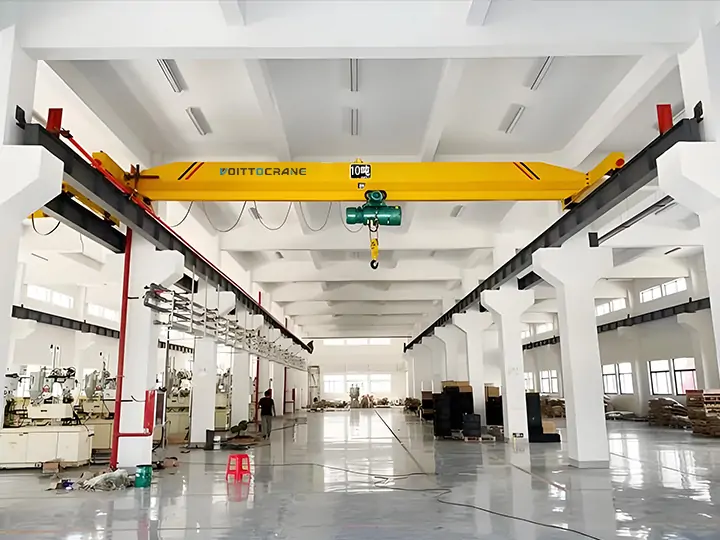
A freestanding overhead bridge crane consists of support columns, a runway beam, a bridge girder, a hoist mechanism, a foundation fixing system, a power supply system, a foundation fixing system, and a control system.

| نموذج | رافعة جسرية قائمة بذاتها |
|---|---|
| سعة التحميل | 0.1-3.2 ton |
| الامتداد | 1-12.5 m(Customized based on the work area) |
| ارتفاع الرفع | 3.7 – 13.5 م |
| مصدر الطاقة | 380 فولت، 50 هرتز، ثلاثي الأطوار |
| معدات الرفع | رافعة سلسلة أو رافعة حبل سلكي |
| طريقة التحكم | جهاز التحكم عن بعد |
| أنواع السفر | يدوي أو كهربائي |
| فئة الواجب | A2-A3 |
The price of freestanding overhead cranes varies depending on lifting capacity, type, and materials used. Below, I will list the price ranges for freestanding overhead cranes. For a customized quote, please specify your lifting requirements, span dimensions, and application environment.
| النوع | السعة | الامتداد | النطاق السعري (بالدولار الأمريكي) |
|---|---|---|---|
| رافعة جسرية قائمة بذاتها ذات عارضة واحدة | 0.1–2 Ton | 3-12 m | $3,500–15,000 |
| Double Girder Workstation Crane | 0.1–3.2 Ton | 5–15 m | $8,000–35,000 |
| Rigid Monorail Crane System | 0.125–3.2 Ton | مخصص | $1,500–12,000 |
| Flexible Workstation Crane | 0.125–2 Ton | 3-10 m | $2,000–10,000 |
| Aluminum Alloy Freestanding Workstation Bridge Crane | 0.125–2 Ton | 2-8 m | $3,000–18,000 |
تلتزم VOITTO بتزويد العملاء بحلول رفع جسرية قائمة بذاتها تتسم بالكفاءة والأمان والموثوقية. بفضل مفاهيم التصميم المتقدمة وعمليات التصنيع المتطورة ومراقبة الجودة الصارمة، أقامت VOITTO شراكات استراتيجية مع أكثر من 70 دولة حول العالم.
يمكن لشركة VOITTO المصنعة والموردة للرافعات توفير حلول مخصصة للرافعات الجسرية العلوية المستقلة لمحطات العمل بناءً على عرض وارتفاع مصنع العميل. إذا كان لديك أي متطلبات محددة أو كنت بحاجة إلى مزيد من المساعدة، فلا تتردد في اتصل بنا.

آلان
أخصائي حلول الرافعات · رافعة Voitto
متخصصون في حلول تصدير الرافعات العلوية، والرافعات الجسرية، والرافعات الجيبية، ورافعات الموانئ، ورافعات الجسور العلوية الكهربائية. خبرة تزيد عن 10 سنوات في مساعدة العملاء العالميين من خلال الاستشارات قبل البيع، واختيار السعة، والتكوينات الخاصة بكل موقع.
A freestanding bridge crane operates on a self-supporting frame requiring only a simple concrete foundation, whereas traditional overhead cranes depend on roof beam reinforcement.
Due to modular component design, a freestanding bridge crane can be assembled on the ground in 2–4 days. Moreover, the entire system can be disassembled and moved to new locations, making it ideal for evolving manufacturing environments.
Yes, customization covers lifting capacity (0.25–3 tons), span width (1–12.5 meters), lifting height, and hoist type. Therefore, our engineering team designs solutions tailored to your exact operational needs and facility constraints.
The modular design enables convenient component inspection and replacement, keeping maintenance costs low. Additionally, we provide 24/7 technical support, spare parts availability, and comprehensive warranty coverage with extended options.
Absolutely. The portability, self-supporting structure, and capacity range (up to 5 tons) make it exceptionally suited for repair workshops. Consequently, operators achieve efficient material handling without costly facility modifications.

يقدّم فريق ما قبل البيع لدينا استشارات قبل البيع، ويصمّم حلولاً تتناسب مع احتياجاتك وبيئتك.
تقديم خيارات تخصيص لسعة الرفع، والامتداد وارتفاع الرفع وما إلى ذلك لتلبية الاحتياجات الخاصة.

تحديثات التقدم في الوقت الفعلي: التقارير الأسبوعية والتواصل مع رئيس الوزراء.
اختبار ما قبل التسليم: 100% فحوصات الحمولة والسلامة، تقارير مفصلة.

ضمان لمدة 3-5 سنوات واستبدال مجاني للعيوب غير المصنعية.
الدعم عبر الإنترنت على مدار الساعة طوال أيام الأسبوع والمساعدة في الموقع لمشاكل الرافعات.
نعم، يتوفر الشحن الدولي ودعم التصدير للعملاء العالميين.
شركة VIOTTO هي شركة مصنعة وموردة لمنصات الرفع المقصية شديدة التحمل، حيث تقدم حلولاً مباشرة من المصنع وخيارات مخصصة.
نحن نقدم خدمة شاملة لما بعد البيع، بما في ذلك الصيانة الدورية والدعم الفني السريع وتوريد قطع الغيار. مدة الضمان القياسية هي سنة واحدة، مع خيارات للتمديد حسب احتياجاتك.
نعم، يمكن تخصيص سعة الرفع، والامتداد، والارتفاع، ونوع الهيكل، وخيارات الرافعة لتتناسب مع ظروف عمل محددة.


في ورشات الإنتاج ومصانع الصلب وبيئات تخزين المواد، تعتبر الرافعات العلوية معدات الرفع المفضلة للعديد من الشركات. فهي لا تحسن كفاءة مناولة المواد بشكل كبير فحسب، بل تقلل أيضًا من تكاليف العمالة اليدوية. هناك العديد من أنواع الرافعات الجسرية، وأكثرها شيوعًا هي الرافعات EOT والرافعات HOT. على الرغم من أن الاثنين لهما أشكال وهياكل متشابهة، إلا أنهما يختلفان بشكل كبير في طرق القيادة وسيناريوهات التطبيق ودرجة الأتمتة. فيما يلي، ستتعمق هذه المقالة في ماهية الرافعات EOT و HOT، بالإضافة إلى ميزاتها ومزاياها وسيناريوهات تطبيقها، وما إلى ذلك، لمساعدتك على التعرف على النوع الأنسب لاحتياجاتك الصناعية وفهمه. ما هي رافعة EOT؟ تُعرف رافعة EOT أيضًا باسم الرافعة الكهربائية العلوية المتحركة. تعمل بالكهرباء وتمتد فوق مبنى المصنع، مما يتيح مناولة المواد في ثلاثة أبعاد طولية وجانبية ورأسية. تتكون رافعة EOT بشكل أساسي من جسر وآلية تشغيل علوية وآلية تشغيل عربة وآلية رفع. يمكن تقسيم رافعة EOT، وفقًا للهيكل، إلى رافعة أحادية العارضة،...
Monorail cranes are suspended lifting devices that operate along a single fixed rail. Using electric hoists, they can transport materials along straight or curved paths to designated points. They are used in indoor industrial environments such as workshops, production lines, and warehouses, and are suitable for material handling scenarios where there are defined logistics routes between workstations. This article systematically introduces the structural characteristics, common types, primary components, and operating principles of these systems. It analyzes their differences from bridge cranes and jib cranes through typical industrial applications. Additionally, it outlines selection criteria for monorail cranes based on key factors such as lifting capacity, track layout, and operating conditions. What Is a Monorail Crane? the cranes are overhead lifting devices installed within factory buildings, transporting materials from one workstation to another along a fixed rail. These systems operate along predetermined routes and are primarily used in production and assembly scenarios where workpieces require movement according to fixed processes. They feature a simple structure and offer flexible operation. Types of monorail crane Monorail cranes can be classified based on their track…
يُحدد نوع الرافعة العلوية المناسبة في صناعة السيارات بناءً على مرحلة الإنتاج، وليس على الحمولة فقط. فمثلاً، تحتاج مكبس التشكيل إلى رافعة ذات ماسك قوالب بحمولة تتراوح بين 20 و32 طنًا ودقة تحديد موضع ±1 مم. بينما تحتاج خلية التشذيب والتجميع النهائي إلى نظام سكة ألومنيوم KBK بحمولة تتراوح بين 250 و500 كجم، يمكن للمشغلين دفعه يدويًا. إن تحديد أحدهما دون الآخر يُهدر الميزانية أو يُحدث ثغرة أمنية. تعمل مصانع السيارات على مدار الساعة بفئة تشغيل M5-M6 (وفقًا لمعيار FEM 1.001)، وأي توقف غير مخطط له للرافعة يُترجم مباشرةً إلى توقف خط الإنتاج. يحتاج المهندسون ومديرو المشتريات إلى رافعات تتناسب مع الحمولة، وتكرار الدورة، والظروف البيئية، وليس مجرد رافعات علوية عامة من صفحة كتالوج "رافعة علوية للسيارات". يُوضح هذا الدليل كل مرحلة إنتاج رئيسية ونوع الرافعة المناسب، والمواصفات الأساسية، ومتطلبات الامتثال. استخدم الجدول في القسم التالي لتسهيل عملية الاختيار. باختصار: الرافعات في صناعة السيارات • نطاق الإنتاج: تدعم الرافعات العلوية في صناعة السيارات ست مراحل إنتاجية متميزة، تتطلب كل منها أنواعًا محددة من الرافعات وقدرات رفع معينة. • اختيار النظام: استخدام رافعات جسرية مزدوجة العوارض (5-50 طنًا) لأعمال التشكيل والتجميع؛ استخدام رافعات KBK...

 English English
  Español
 Português
 العربية
 Français
 Русский