The sticker price on an overhead crane is the number everyone negotiates. The number that actually determines your total spend over 10 years is the annual servicing budget — and most buyers don’t model it until the first major breakdown arrives. For a 10-ton crane running at moderate duty in general manufacturing, the lifetime cost of operating and maintaining the equipment typically runs three to five times its purchase price. Most of that difference comes down to one decision: preventive servicing or reactive repair.
This guide breaks down where رافعة علوية servicing costs actually come from, what a realistic annual budget looks like by duty class, and how to calculate the ROI of preventive maintenance in terms any finance team can follow.
- 1 Where Overhead Crane Servicing Cost Actually Comes From
- 2 Annual Maintenance Budget by Duty Class
- 3 The ROI of Preventive Maintenance: How the Math Works
- 4 What to Budget For: A Practical Planning Framework
- 5 How Crane Specification at Purchase Affects Your Servicing Budget
- 6 الخلاصة
-
7
الأسئلة الشائعة
- 7.1 Q1: How much does overhead crane servicing cost per year?
- 7.2 Q2: Is preventive maintenance actually worth the higher routine cost?
- 7.3 Q3: What is the biggest hidden cost in overhead crane ownership?
- 7.4 Q4: How does crane specification affect future maintenance cost?
- 7.5 Q5: When should a crane be replaced rather than repaired?
Where Overhead Crane Servicing Cost Actually Comes From
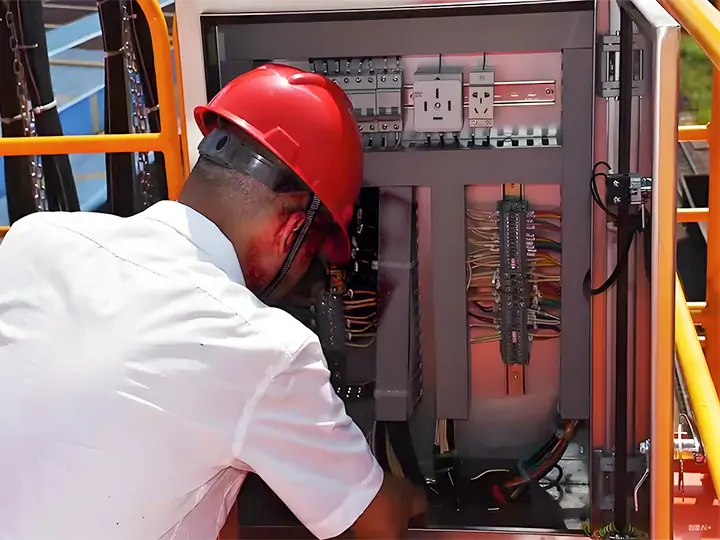
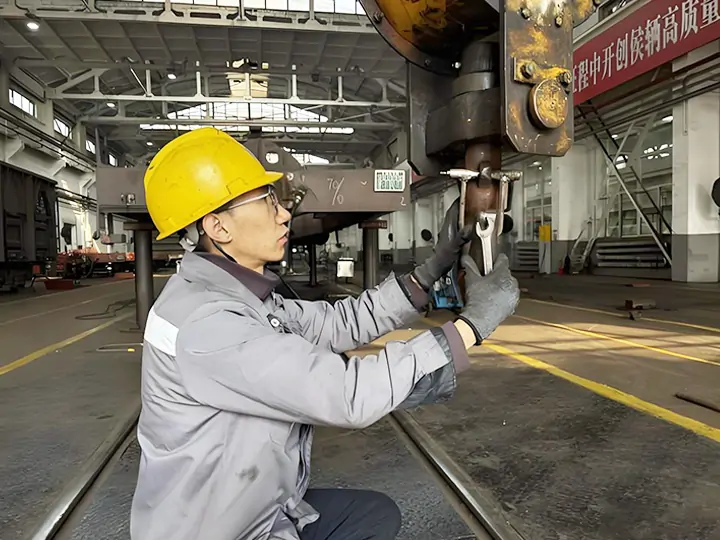
Most maintenance budgets only capture the visible costs — the invoice from the service technician and the price of replacement parts. That covers roughly one third of what servicing truly costs. The full picture has three layers.
Direct Servicing Costs: Labor, Parts, and Inspections
Direct costs are what most buyers budget for: scheduled inspections, lubricants, replacement wear parts (brake pads, wire rope, hook assemblies, contactors), and periodic overhaul labor. For a mid-duty crane in a clean indoor environment, these typically run in the range of $2,000–$5,000 per year in the early years, rising to $5,000–$15,000+ by years 6–10 as fatigue accelerates across structural welds, wheel flanges, and electrical components.
The key variables that move this number are duty class, operating environment, and component quality at the time of purchase. A crane built with undersized motors or non-standard gearbox configurations will generate parts costs 2–3× higher than an equivalent crane using standardized, readily available components — not because it breaks more catastrophically, but because sourcing and labor for non-standard parts carry significant premiums and lead times.
Downtime Costs: The Number Nobody Puts in the Budget
Downtime cost is the line item most maintenance budgets omit entirely — and in most production environments, it dwarfs the direct servicing cost. When an overhead crane in an active production line fails unexpectedly, the cost is not just the repair invoice. It includes idle labor waiting for the crane to return to service, delayed output affecting downstream operations, potential penalties for missed delivery schedules, and the premium cost of emergency repair response versus scheduled maintenance.
In a manufacturing plant where the crane supports a main production line, a single unplanned breakdown lasting 8–24 hours can generate production losses that exceed the entire annual preventive maintenance budget in one event. The exact number depends on what the crane is moving and how tightly integrated it is with the rest of the production flow — a crane feeding a welding cell every 20 minutes carries far higher downtime risk than a warehouse crane used for occasional stock movement.
The practical implication: a crane with lower direct servicing cost but higher breakdown frequency is almost never cheaper than a crane with higher routine servicing cost and reliable uptime. The math rarely works in favor of deferred maintenance once downtime is included.
Design-Embedded Costs: What You Lock In at Purchase
This is the layer most buyers discover too late. Certain decisions made during crane specification — duty class selection, hoist type, component standardization, maintenance access design — effectively set the maintenance budget for the crane’s entire service life before the first invoice arrives.
A crane specified at FEM M5 for a workload that actually runs at M6 cycles will begin showing accelerated wear in years 3–5: brake relining more frequently than planned, wire rope discard criteria reached sooner, structural welds requiring earlier inspection for fatigue cracks. The crane isn’t defective — it’s simply working harder than its design assumed. Correcting this in the field means more frequent servicing intervals, more parts, and more labor. Specifying the right duty class upfront costs nothing extra and eliminates this entire category of future expense.
Similarly, cranes built with standardized motors, gearboxes, and electrical components from common supplier families allow maintenance teams to stock spare parts at reasonable cost, source replacements quickly when needed, and work with local technicians familiar with the equipment. Cranes with bespoke or proprietary components shift that balance: parts arrive on longer lead times, at higher cost, and sometimes only through a single supplier channel.
Annual Maintenance Budget by Duty Class
Concrete budget planning requires breaking out the cost by how the crane is actually used. The following are market reference ranges for annual overhead crane servicing cost — covering routine inspection labor, consumables, and typical wear-part replacement — in a clean indoor environment. Harsh or outdoor environments should add 30–50% to these estimates.
| فئة الخدمة النسائية | التطبيق النموذجي | Annual Direct Servicing Cost (Reference) | Primary Budget Drivers |
|---|---|---|---|
| M3–M4 (Light) | Maintenance bays, warehouses, infrequent lifts | $1,500–$3,500 | Annual inspection, basic lubrication, occasional brake adjustment |
| M5 (Medium) | General manufacturing, assembly lines | $3,000–$7,000 | Semi-annual inspection, wire rope monitoring, brake relining, electrical checks |
| M6 (Heavy) | Steel fabrication, foundries, multi-shift production | $6,000–$14,000 | Quarterly inspection, frequent wire rope and brake replacement, gearbox oil changes, structural weld checks |
| M7–M8 (Very Heavy) | Scrap yards, steel mills, continuous operation | $12,000–$30,000+ | Continuous monitoring, high-frequency parts replacement, possible dedicated maintenance resource |
These figures cover routine servicing only. Emergency repair events — a hoist motor failure, a gearbox rebuild, a cracked end carriage weld — are additive, typically ranging from $1,500–$3,000 for minor electrical failures to $15,000–$25,000 for major mechanical overhauls. The frequency of these events is where preventive and reactive maintenance strategies diverge most sharply in cost.
The ROI of Preventive Maintenance: How the Math Works
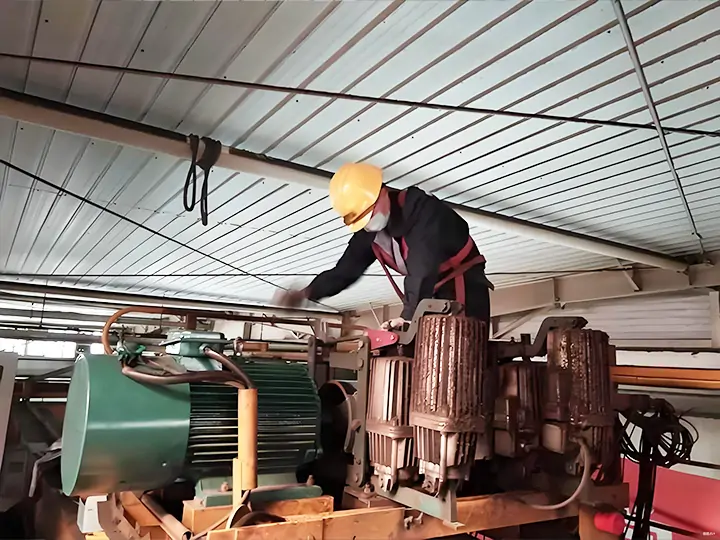
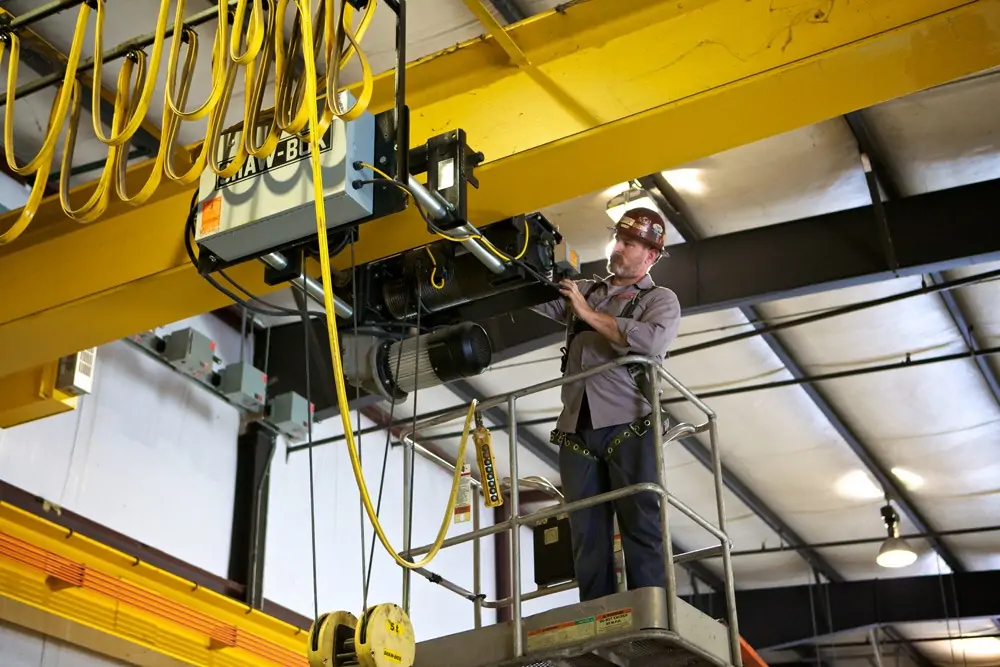
The ROI case for preventive overhead crane servicing is not difficult to make — but it needs to be built on actual production data, not general claims. Here is a framework for calculating it.
Establish Your Downtime Cost Per Hour
Start with what one hour of crane downtime actually costs your operation. For a production crane integrated with an active line, this typically includes: direct lost output (units not produced × margin per unit), idle labor cost (operators, material handlers waiting), and any downstream penalties or expediting costs. In most manufacturing environments, this figure runs $500–$5,000 per hour depending on process type, shift structure, and downstream integration.
Model Two Scenarios Over Three Years
Scenario A — Reactive maintenance: Annual inspection only, servicing when problems arise. Typical pattern for a medium-duty crane: years 1–2 low cost, year 3 first significant failure (hoist brake or gearbox issue), one unplanned downtime event of 12–24 hours. Repair cost: $8,000–$18,000. Downtime cost: $6,000–$120,000 depending on the production environment.
Scenario B — Preventive maintenance: Semi-annual service, parts replaced on condition before failure. Higher routine cost by $2,000–$4,000 per year. Zero unplanned downtime events in the same three-year window (a realistic outcome for medium-duty cranes on a proper preventive schedule). Total spend: higher by $6,000–$12,000 over three years on direct servicing — but no emergency repair invoice and no downtime event.
The crossover point — where preventive maintenance saves money net of its higher routine cost — typically occurs the first time a reactive failure is avoided. For any crane where downtime costs exceed $500 per hour, preventive servicing pays for itself on the prevention of a single breakdown event. For higher-value production lines, the ROI is typically positive within the first year.
The Component Lifespan Argument
Beyond the single-event calculation, preventive maintenance extends the useful life of high-cost components. Wire rope replaced on a condition-based schedule (before discard criteria are reached under ASME B30.2 or FEM guidelines) lasts its full rated service life. Wire rope run to visible failure typically damages drum grooves, sheaves, and occasionally the drum itself — converting a $300–$800 rope replacement into a $3,000–$6,000 drum and sheave refurbishment. The same principle applies to brake linings, where worn-through pads score drum surfaces, and to motor bearings, where missed lubrication intervals accelerate fatigue and pull through the motor winding on failure.
A well-maintained crane running on a preventive schedule routinely reaches 20–25 years of service life with moderate capital expenditure. A reactive-maintenance crane of the same initial specification typically requires major overhaul or replacement at year 10–15 — and carries significantly higher total expenditure in the years leading up to that point.
What to Budget For: A Practical Planning Framework
Translating the above into an actual annual maintenance budget involves four categories.
Routine servicing labor and consumables covers inspection labor, lubricants, and adjustments. Budget this as a fixed annual line item based on the duty class ranges above, adjusted for your environment.
Planned parts replacement covers components you know will need replacement on a cycle: wire rope (typically every 1–3 years depending on duty), brake pads (every 6–18 months on medium to heavy duty), filter elements, electrical contactors (high-cycle items), and hoist oil. Establish replacement intervals based on manufacturer specifications and actual condition monitoring, and pre-purchase these parts to avoid premium pricing under emergency conditions.
Emergency repair reserve should be carried even on a preventive maintenance program — no schedule eliminates all unexpected failures. A conservative reserve of 20–30% of the annual direct servicing budget covers the statistical probability of one minor unplanned event per year.
Capital replacement accrual addresses the reality that high-cost components — hoists, gearboxes, control systems — have defined service lives. For longer-lived cranes (15+ years), accruing for these replacements annually avoids large unbudgeted capital events. A useful rule of thumb: accrue 5–8% of the crane’s original value per year for capital component replacement, adjusted upward for higher duty classes.
How Crane Specification at Purchase Affects Your Servicing Budget
As a crane manufacturer, Voitto Crane’s position on this is straightforward: the servicing budget you’ll live with for 15–20 years is largely set by the decisions made in the specification and procurement stage. Three choices have the highest long-term impact.
Duty class accuracy. Specifying the duty class that matches actual working conditions — not the lightest class that fits the rated load — is the single most consequential decision. An honest assessment of lift frequency, load spectrum, and operating hours translates directly to the right structural fatigue margin, motor sizing, brake specification, and recommended servicing interval. Voitto’s engineering team can assist with this calculation before quotation.
Component standardization. Where application requirements allow, specifying standard hoist units, motors from common supplier families, and off-the-shelf electrical components (contactors, inverters, limit switches) significantly reduces future parts cost and lead time. Voitto Crane designs for standard component interoperability by default, with customization only where the application genuinely requires it.
Maintenance access. A crane that is difficult to service will be serviced less frequently than it should be. Accessible lubrication points, walk-through platform design on larger spans, modular electrical cabinet layouts, and clearly labeled inspection points reduce the time and cost of every routine service visit over the crane’s life. These are not premium features — they are standard design considerations that pay back in the first few service cycles.
If you are comparing crane quotations and want to understand the total cost of ownership implications of different specification options, contact Voitto Crane’s engineering team for a TCO comparison before committing to a purchase decision.
الخلاصة
The true cost of overhead crane servicing is three numbers, not one: direct servicing cost, downtime cost when servicing is deferred, and the design-embedded cost locked in at specification. For most production cranes, preventive maintenance delivers a clear positive ROI — typically recovering its incremental cost over reactive maintenance in the avoidance of a single unplanned downtime event. Budget by duty class, reserve for emergency events, and accrue for capital component replacement. And if you are specifying a new crane, treat the maintenance budget conversation as part of the procurement process — not something to figure out after the crane is installed.

آلان
أخصائي حلول الرافعات · رافعة Voitto
متخصصون في حلول تصدير الرافعات العلوية، والرافعات الجسرية، والرافعات الجيبية، ورافعات الموانئ، ورافعات الموانئ، ورافعات EOT. أكثر من 10 سنوات في مساعدة العملاء العالميين من خلال استشارات ما قبل البيع، واختيار السعة والتكوينات الخاصة بالموقع.
الأسئلة الشائعة
Q1: How much does overhead crane servicing cost per year?
Annual direct servicing cost ranges from roughly $1,500–$3,500 for light-duty cranes (FEM M3–M4) to $12,000–$30,000+ for very heavy-duty units (M7–M8), not including emergency repairs. The figure depends on duty class, operating environment, and component specification. Harsh or outdoor environments typically add 30–50% to indoor baseline costs.
Q2: Is preventive maintenance actually worth the higher routine cost?
For any crane where downtime costs exceed roughly $500 per hour, preventive maintenance pays for itself on the prevention of a single unplanned breakdown. The higher routine spend is typically $2,000–$4,000 per year for a medium-duty crane — less than the repair cost alone for most major failure events, before downtime losses are counted.
Production downtime. A single unplanned crane failure lasting 8–24 hours in an active manufacturing environment can cost more than the entire annual preventive maintenance budget. Most maintenance cost comparisons omit downtime entirely, which systematically understates the ROI of preventive servicing.
Q4: How does crane specification affect future maintenance cost?
Significantly. Duty class selection, component standardization, and maintenance access design at the time of purchase effectively set the maintenance budget for the crane’s service life. Underspecifying duty class or selecting non-standard components leads to accelerated wear, higher parts costs, and longer lead times for replacement — costs that compound over 15–20 years of operation.
Q5: When should a crane be replaced rather than repaired?
A useful rule of thumb: if the cost of a required repair or overhaul exceeds 40–50% of the replacement cost of the crane, evaluate replacement seriously. Factor in the age of the crane, the condition of the structure (girder fatigue, rail wear), and whether the current specification still matches your actual duty requirements. An older crane on a lighter duty class than your current operation demands is a candidate for replacement on specification grounds regardless of repair cost.




 English
  Español
  Português
  العربية
  Français
  Русский