
Choosing the right electric hoist for an electronics manufacturing plant comes down to matching lifting frequency and load precision to the right hoist type — most PCB assembly, EMS, and component plants in Thailand are well served by an electric chain hoist or wire rope hoist in the 0.5–10 ton range, not specialized cleanroom equipment.
If you’re sourcing lifting equipment for a facility in Rayong, Chonburi, or another Eastern Economic Corridor industrial zone, the decision usually isn’t about raw lifting capacity — electronics manufacturing rarely involves the multi-ton loads seen in steel or automotive plants. Instead, the real challenges are precise, low-shock positioning around sensitive components, matching Thailand’s 380V/50Hz power supply, and holding up in a humid, coastal industrial climate without corroding.
This guide walks through the electric hoist types that fit electronics manufacturing environments, the selection factors that actually change the outcome (duty class, positioning control, protection rating, voltage), and the certification checks you should run before placing an order.
- 1 Types of Electric Hoists Suited to Electronics Manufacturing
- 2 Key Selection Parameters for Electronics Manufacturing Environments
- 3 Certification and Compliance for Electric Hoists in Thailand
- 4 Conclusión
-
5
PREGUNTAS FRECUENTES
- 5.1 Q1:What type of electric hoist is best for a PCB or electronics assembly line?
- 5.2 Q2:How much does an electric hoist for a factory in Thailand typically cost?
- 5.3 Q3:What certifications should an electric hoist have for use in Thailand?
- 5.4 Q4:Can a standard electric hoist be used in an ESD-sensitive or cleanroom area?
Types of Electric Hoists Suited to Electronics Manufacturing
| Tipo de polipasto | Capacidad | Altura de elevación | Velocidad de elevación | Precio de referencia de mercado | Mejor ajuste |
|---|---|---|---|---|---|
| Polipasto eléctrico de cadena | 0.25–20 t | 6–30 m | 1.8–8 m/min | ~$300–$4,500 | SMT line changeovers, mold/fixture handling, frequent light lifts |
| Polipasto eléctrico de cable metálico | 1–25 t | 6–45 m | 0,8-8 m/min | ~$1,200–$12,000 | Component reels, packaging lines, heavier subassemblies |
| Polipasto eléctrico europeo según la norma FEM | 1–80 t | 5-30 m | 1–10 m/min | ~$2,500–$45,000+ | High-duty-cycle production lines, injection molding tool changes |
Need help matching a hoist to your production line?
Obtener presupuesto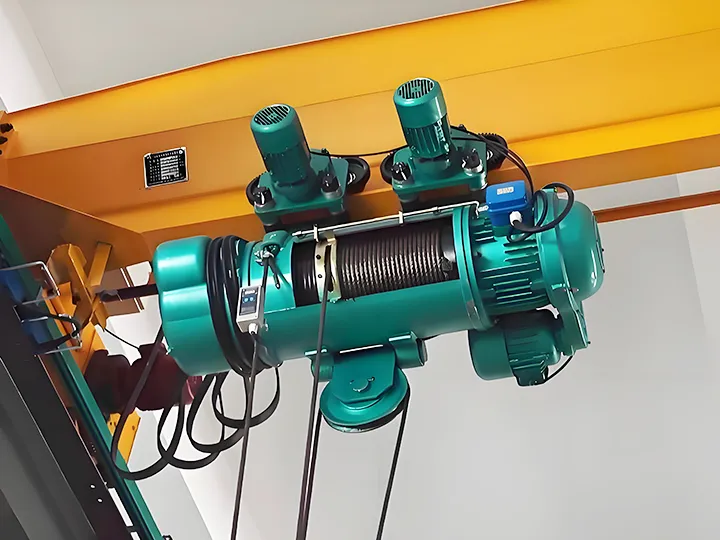

Polipasto eléctrico de cadena
An electric chain hoist is the default choice for electronics assembly lines because it handles frequent, light-to-medium lifts (typically under 5 tons) at low cost per lift cycle. The reason it fits this environment specifically: SMT and PCB assembly lines change fixtures, molds, and component reels dozens of times a shift, and a chain hoist’s compact head-room and simple sealed-chain mechanism tolerate that duty cycle without the higher upfront cost of a wire rope system. Voitto’s chain hoist range covers 0.25–20 tons with lift heights up to 30 m — comfortably beyond what most single-story assembly halls need. The trade-off: chain hoists top out around 20 tons and have lower hoisting speeds than wire rope equivalents, so they’re the wrong choice if your line also handles heavier tooling, transformers, or bulk raw-material drums.
Polipasto eléctrico de cable metálico
A wire rope hoist earns its place on lines that mix electronics assembly with heavier ancillary handling — coil stock, packaging pallets, or finished-goods crating — because it lifts faster and scales to higher capacities than a chain hoist while still fitting standard workshop headroom. Voitto’s wire rope hoist is rated 1–25 tons with hoisting speeds up to 8 m/min, roughly matching or exceeding chain-hoist speed at every capacity tier. The typical scenario: a plant runs light SMT lifts on chain hoists in the assembly bay but installs a wire rope hoist over the warehouse or packaging dock, where loads are heavier and less frequent. The trade-off is headroom and noise — wire rope systems generally need more vertical clearance than an equivalent chain hoist.
Polipasto eléctrico europeo según la norma FEM
For electronics plants that also run injection molding, stamping, or heavy tooling changeovers alongside assembly, a FEM-classified European-standard hoist covers the widest capacity range (1–80 tons) with duty ratings built for continuous industrial use rather than occasional lifts. Voitto’s European electric hoist is built to FEM design rules, which grade hoists by both load and duty cycle rather than load alone — relevant because two hoists rated for the same tonnage can have very different service lives under high-frequency use. The trade-off is cost: FEM-standard hoists carry a higher price premium than chain or standard wire rope hoists, so they only pay off when lift frequency or facility size genuinely justifies the duty rating.
Key Selection Parameters for Electronics Manufacturing Environments
Duty Class and Lift Frequency
Match the hoist’s duty class to how many lifts your line actually performs per shift, not to the load weight alone — using load capacity as the only selection criterion is one of the most common sourcing mistakes in this industry. Hoists are typically classified M3–M5 under FEM/ISO duty class systems, with M3 suited to intermittent use (a few dozen lifts a shift) and M5 built for near-continuous cycling. A high-frequency SMT changeover station running 100+ lifts a shift on an M3-rated hoist will wear out its brake and motor years ahead of schedule, even though the tonnage was never exceeded — this mismatch is a frequent source of unplanned downtime and warranty disputes in Thai electronics plants.
Precision and Load Control for Sensitive Components
Electronics assembly needs smooth, low-shock positioning more than raw speed, so look for hoists with two-speed or inverter (VFD) control rather than single-speed models. The reason: single-speed hoists start and stop abruptly, which risks shifting delicate component trays, PCB racks, or reel stock during transfer — inverter control ramps speed up and down gradually, cutting sway and stopping loads within centimeters rather than the wider margin single-speed units need. This matters most for chain hoists moving fixtures directly above populated boards or component bins; it matters less for a wire rope hoist parked over a packaging dock where positioning tolerance is looser.
Environmental Protection in Thailand’s Climate
Coastal and high-humidity zones like Chonburi and Rayong accelerate corrosion on unprotected steel components, so hoists destined for these areas should specify anti-corrosion coating or stainless fittings at order time rather than after installation problems appear. Humidity and salt air attack exposed gearing, brake surfaces, and control cabinets faster than in drier inland regions — a hoist that performs well in a dry northern-Thailand facility can show premature wear within a couple of years on the coast without the right protective spec. Voitto’s explosion-proof hoist line (ExdⅡBT4/ExdⅡCT4 rated, 1–32 tons) is also worth flagging for plants running solvent-based cleaning, conformal coating, or adhesive-curing processes near the hoist, where standard electrical enclosures aren’t appropriate.
Power Supply and Voltage Compatibility
Confirm the hoist is configured for Thailand’s standard 380V, 50Hz three-phase industrial supply before ordering, since a hoist built for a different voltage or frequency standard either needs a transformer or won’t run at rated speed and torque. This is a paperwork step, not an engineering one — but it’s frequently missed on hoists sourced through general industrial catalogs rather than suppliers already set up for Southeast Asian export, and catching it after the equipment lands adds weeks of delay and added freight cost for a replacement unit.

Alan
Especialista en Soluciones de Grúas · Voitto Crane
Especializada en soluciones de exportación de grúas puente, grúas pórtico, grúas pluma, grúas portuarias y grúas EOT. Más de 10 años ayudando a clientes de todo el mundo con asesoramiento preventa, selección de capacidad y configuraciones específicas para cada emplazamiento.
Certification and Compliance for Electric Hoists in Thailand
Which Standards Apply
Electric hoists sold into Thailand’s industrial sector are generally expected to meet CE marking under the European Union’s Machinery Directive (2006/42/EC) if the equipment or its components originate from CE-regulated manufacturing, FEM design classification for load/duty rating, and International Organization for Standardization (ISO) crane classification standards such as the ISO 4301 series; a factory-wide ISO 9001 quality management certification from the manufacturer is a separate but related check. Thailand’s own Thai Industrial Standards Institute (TISI) requirements and local safety regulations may also apply depending on your facility’s compliance program and insurer requirements.
Why Certification Matters
Missing or unverifiable certification isn’t just a compliance formality — it’s a common point of failure at customs clearance, and it directly affects insurance and liability coverage if an incident occurs. Buyers who skip this step often find out the hard way: a shipment held at port pending documentation, or a claim denied because the installed hoist couldn’t be matched to a valid conformity declaration. Verifying certification before payment, not after delivery, avoids both outcomes.
How to Verify Before You Buy
Ask your supplier for actual documents, not verbal assurance: an EC Declaration of Conformity, load/overload test certificates for the specific unit or model family, and the manufacturer’s ISO 9001 certificate. Also confirm the hoist includes basic safety devices — overload protection, anti-collision limits, and a load display — as standard, and get these listed on the order confirmation rather than assumed. Specific certification status should always be confirmed against the supplier’s current documentation rather than taken from general industry claims.
Conclusión
For most electronics manufacturing plants in Thailand, the right electric hoist is less about maximum tonnage and more about matching duty class to lift frequency, choosing inverter-controlled positioning for sensitive components, and specifying corrosion protection and 380V/50Hz compatibility up front. Start by mapping your actual daily lift count and load types, then confirm the certification paperwork before you commit to an order. Request a quote with your capacity, lift height, and duty cycle, and Voitto’s team can match an electric hoist to your line.
Alan
Especialista en Soluciones de Grúas · Voitto Crane
Especializada en soluciones de exportación de grúas puente, grúas pórtico, grúas pluma, grúas portuarias y grúas EOT. Más de 10 años ayudando a clientes de todo el mundo con asesoramiento preventa, selección de capacidad y configuraciones específicas para cada emplazamiento.
PREGUNTAS FRECUENTES
Q1:What type of electric hoist is best for a PCB or electronics assembly line?
An electric chain hoist is usually the best fit for PCB and electronics assembly lines. Most assembly-line lifts are under 5 tons but happen frequently throughout a shift, and a chain hoist’s compact design and lower cost per cycle suit that pattern better than a wire rope hoist, which is better reserved for heavier, less frequent lifts elsewhere in the plant.
Q2:How much does an electric hoist for a factory in Thailand typically cost?
Pricing typically ranges from around $300 for a small-capacity electric chain hoist up to $45,000+ for a high-capacity FEM-standard hoist, as a market reference. The right price point depends on capacity, duty class, and control features (single-speed vs. inverter) — get a quote based on your specific lift requirements rather than a general market average.
Q3:What certifications should an electric hoist have for use in Thailand?
At minimum, request Marcado CE documentation, FEM duty-class rating, and the manufacturer’s ISO 9001 certificate before purchasing. Depending on your facility’s compliance program, Thai Industrial Standards Institute (TISI) requirements may also apply. Always verify current certification status directly with your supplier rather than relying on general product descriptions.
Q4:Can a standard electric hoist be used in an ESD-sensitive or cleanroom area?
A standard electric chain or wire rope hoist, properly grounded and bonded into the facility’s ESD program, is generally suitable for typical PCB and component assembly areas, which make up most electronics manufacturing floor space. Ultra-clean, ISO Class 5–7 wafer-level environments require specialized cleanroom-rated lifting equipment beyond a standard industrial hoist — if your line falls into that category, have a cleanroom engineer confirm requirements separately.




 English
  Español
  Português
  العربية
  Français
  Русский