
Introducción
Las plataformas elevadoras de tijera se utilizan ampliamente en almacenes, obras de construcción, mantenimiento de equipos e instalaciones industriales para operaciones de elevación diarias de alta frecuencia. Sin embargo, su uso prolongado sin el mantenimiento adecuado puede provocar fugas de aceite hidráulico, una menor vida útil de la batería, un rendimiento de elevación inestable y paradas inesperadas del equipo. En aplicaciones industriales reales, muchas fallas de los equipos no se deben a daños en componentes principales, sino a la falta de inspección rutinaria y mantenimiento preventivo.
Este artículo cubre problemas comunes de mantenimiento de plataformas elevadoras de tijera, elementos de inspección diaria, mantenimiento del sistema hidráulico, cuidado de la batería y métodos prácticos de solución de problemas. También aprenderá cómo un mantenimiento preventivo adecuado ayuda a reducir el tiempo de inactividad inesperado, disminuir los costos de reparación, extender la vida útil del equipo y mantener las operaciones de elevación más seguras y estables en el uso diario. Este artículo cubre problemas comunes de mantenimiento de plataformas elevadoras de tijera, elementos de inspección diaria, mantenimiento del sistema hidráulico, cuidado de la batería y métodos prácticos de solución de problemas. También aprenderá cómo un mantenimiento preventivo adecuado ayuda a reducir el tiempo de inactividad inesperado, disminuir los costos de reparación, extender la vida útil del equipo y mantener las operaciones de elevación más seguras y estables en el uso diario. Si también está buscando orientación sobre cómo operar una plataforma elevadora de tijera Es fundamental seguir correctamente los procedimientos de mantenimiento, que se tratan por separado.


Por qué es importante el mantenimiento de las plataformas elevadoras de tijera.
El mantenimiento regular de las plataformas elevadoras de tijera es esencial para un funcionamiento seguro, una mayor vida útil del equipo, un rendimiento estable y una eficiencia operativa fiable. Un mantenimiento adecuado ayuda a reducir el tiempo de inactividad, prevenir accidentes y disminuir los costes operativos a largo plazo.
1. Mejorar la seguridad operativa
Las inspecciones rutinarias ayudan a detectar fugas hidráulicas, componentes sueltos, frenos defectuosos y dispositivos de seguridad dañados antes de que provoquen accidentes o fallos en los equipos.
2. Prolongar la vida útil del equipo.
La lubricación periódica, el cambio de aceite hidráulico y las revisiones de los componentes reducen el desgaste de las piezas críticas y ayudan a prolongar la vida útil general del elevador.
3. Mantener un rendimiento estable
Un mantenimiento adecuado garantiza un izamiento fluido, un funcionamiento eléctrico fiable y un rendimiento constante, lo que reduce los tiempos de inactividad inesperados durante el funcionamiento.
4. Garantizar una capacidad de carga fiable.
Las inspecciones estructurales periódicas y las pruebas de carga ayudan a mantener la estabilidad de la plataforma y garantizan que el elevador cumpla de forma segura con su capacidad de carga nominal.
5. Reducir los costos de reparación y operación.
El mantenimiento preventivo minimiza las averías importantes, reduce los gastos de reparación y mejora la fiabilidad general de los equipos con el paso del tiempo.
Lista de verificación para el mantenimiento e inspección de plataformas elevadoras de tijera
La inspección periódica y el mantenimiento preventivo son esenciales para garantizar un funcionamiento seguro, reducir los tiempos de inactividad inesperados y prolongar la vida útil de las plataformas elevadoras de tijera. Un programa de mantenimiento estructurado ayuda a los operadores a identificar posibles problemas con antelación y a mantener un rendimiento estable del equipo.

Lista de verificación de inspección diaria de plataformas elevadoras de tijera
Se deben realizar inspecciones diarias antes de la puesta en marcha del ascensor para garantizar que se encuentre en condiciones de funcionamiento seguras.
| Inspección | Requisitos de inspección |
|---|---|
| Plataforma y estructura de tijera | Revise la plataforma, las barandillas y los brazos de tijera en busca de grietas, deformaciones o daños. Los técnicos de mantenimiento suelen reemplazar los componentes desgastados utilizando herramientas de precisión. herramientas de perforación para garantizar una sujeción segura. |
| Sistema hidráulico | Inspeccione las mangueras hidráulicas, los cilindros y los racores para detectar fugas de aceite o desgaste. |
| Sistema de batería y sistema eléctrico | Verifique que la alimentación de la batería, las conexiones de los cables y los controles eléctricos funcionen correctamente. |
| Dispositivos de seguridad | Pruebe los botones de parada de emergencia, los interruptores de límite, las alarmas y los controles de seguridad. |
| Neumáticos y sistema de frenado | Compruebe el estado de los neumáticos, la respuesta de los frenos y el rendimiento de la dirección. |
| Rendimiento en levantamiento de pesas | Garantiza un ascenso y descenso suaves, sin vibraciones anormales ni ruidos inusuales. |
| Sujetadores y pasadores | Verifique que los pernos, pasadores y conectores estén bien apretados. |
| Etiquetas de advertencia | Confirme que las etiquetas de capacidad de carga y las advertencias de seguridad sean claras y visibles. |
| Entorno de trabajo | Asegúrese de que el terreno esté nivelado y libre de obstáculos elevados. |
| Capacidad de carga | Confirme que la plataforma no esté sobrecargada antes de su funcionamiento. |
| Puertas y cerraduras de seguridad | Compruebe que las puertas de acceso y los mecanismos de cierre funcionan correctamente. |
Tareas de mantenimiento semanales de la plataforma elevadora de tijera
El mantenimiento semanal ayuda a reducir el desgaste y a mantener un rendimiento estable del equipo.
| Elemento de mantenimiento | Requisitos de mantenimiento |
|---|---|
| Limpieza de equipos | Limpie las superficies de la plataforma, el chasis y el sistema hidráulico. |
| Aceite hidráulico | Compruebe el nivel de aceite hidráulico e inspeccione el estado del aceite. |
| Neumáticos y ruedas | Inspeccione el desgaste de los neumáticos y la fijación de las ruedas. |
| Sistema de baterías | Compruebe el nivel de líquido de la batería, los terminales y las conexiones de los cables. |
| Sistemas de emergencia | Pruebe las funciones de descenso de emergencia y los dispositivos de alarma. |
| Barandillas y fijaciones | Inspeccione las barandillas de seguridad, las puertas, los pernos y los sujetadores. |
| Inspección de fugas y ruido | Compruebe si hay fugas de aceite, vibraciones anormales o ruidos de funcionamiento inusuales. |
Tareas de mantenimiento mensuales de la plataforma elevadora de tijera
El mantenimiento mensual se centra en los sistemas estructurales y mecánicos clave para garantizar su fiabilidad a largo plazo.
| Elemento de mantenimiento | Requisitos de mantenimiento |
|---|---|
| Brazos de tijera y soldaduras | Inspeccione los brazos de las tijeras, los pasadores, las bisagras y las juntas soldadas para detectar desgaste o grietas. |
| Sistema hidráulico | Compruebe la presión hidráulica, las mangueras y el estado del cilindro. |
| Lubricación | Lubrique todas las articulaciones móviles y los componentes mecánicos. |
| Sistema de transmisión y frenado | Inspeccione los motores, los componentes de transmisión y el rendimiento de los frenos. |
| Dispositivos de protección de seguridad | Calibrar interruptores de límite y sistemas de protección de seguridad. |
| Cableado eléctrico | Compruebe si hay desgaste o holgura en el cableado, los terminales y los conectores. |
| Pruebas funcionales | Realice una prueba operativa completa y registre los resultados del mantenimiento. |
Una inspección y un mantenimiento adecuados no solo mejoran la seguridad, sino que también ayudan a reducir los costes de reparación y a prolongar la vida útil de los equipos.
Mantenimiento del sistema hidráulico para plataformas elevadoras de tijera
El sistema hidráulico de una plataforma elevadora de tijera es el componente principal de potencia del equipo, que afecta directamente a la estabilidad de la función de elevación y a la seguridad operativa. El mantenimiento rutinario debe realizarse de acuerdo con los siguientes puntos clave:

Puntos para la inspección rutinaria
Antes de cada uso del ascensor, se debe realizar una inspección básica del sistema hidráulico:
- Compruebe el nivel de aceite en el depósito hidráulico; cuando la plataforma esté en su posición más baja, el nivel de aceite debe alcanzar dos tercios de la capacidad del depósito. Si el nivel es insuficiente, rellénelo inmediatamente con aceite hidráulico del mismo grado; está estrictamente prohibido mezclar aceites hidráulicos de diferentes grados.
- Inspeccione las mangueras hidráulicas, los racores, los cilindros y las juntas para detectar cualquier signo de fuga o filtración. Asegúrese de que las mangueras no presenten daños ni grietas, y de que los racores estén bien sujetos y no sueltos ni desprendidos.
- Pruebe los movimientos de elevación y descenso sin carga para comprobar que el funcionamiento sea suave y sin atascos. Si el elevador parece débil o presenta vibraciones anormales, revise inmediatamente el circuito hidráulico.
Programa de mantenimiento preventivo
Según el ciclo operativo, realice las siguientes tareas de mantenimiento profundo a intervalos regulares:
| Intervalo de mantenimiento | Tareas de mantenimiento |
|---|---|
| Mensual | Compruebe el estado del aceite hidráulico. Si el aceite se vuelve marrón oscuro, blanco lechoso, pegajoso o contiene impurezas arenosas, reemplácelo inmediatamente para evitar daños a componentes de precisión como cilindros y bombas hidráulicas. Limpie o reemplace el filtro de aceite hidráulico para mantener un circuito hidráulico limpio. |
| Trimestral | Retire los residuos alrededor del depósito de aceite hidráulico e inspeccione la bomba hidráulica para detectar ruidos anormales o fugas. Purge el sistema hidráulico para eliminar el aire atrapado y evitar inestabilidad o vibraciones durante el izaje. |
| Anualmente | Tras completar todas las tareas de mantenimiento mensuales y trimestrales, desmonte y limpie el núcleo de la electroválvula. Utilice aire comprimido para eliminar el polvo y los residuos antes del reensamblaje, a fin de evitar que la válvula se atasque y garantizar un control adecuado del flujo hidráulico. |
Mantenimiento de la batería de la plataforma elevadora de tijera eléctrica
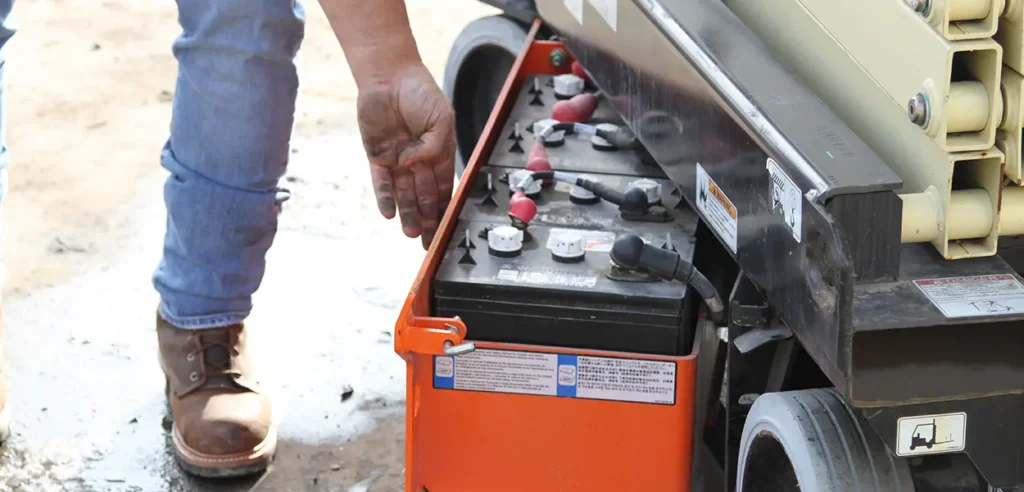
La vida útil de la batería de una plataforma elevadora eléctrica de tijera influye directamente en la comodidad y fiabilidad del equipo. Un mantenimiento adecuado prolonga la vida útil de la batería y reduce el riesgo de fallos. A continuación, resumimos los puntos clave de mantenimiento, que abarcan el uso diario, el almacenamiento, el mantenimiento y la protección en entornos especiales:
Directrices operativas diarias
Carga y descarga correctas: Recargue la batería inmediatamente cuando su nivel de carga baje a un tercio de su capacidad. No permita que la batería se descargue por completo y no demore la recarga más de 24 horas para evitar daños en las celdas causados por una descarga profunda. Si el equipo no arranca, no intente encenderlo repetidamente; espere al menos 60 segundos antes de volver a intentarlo para evitar daños en la batería por una descarga excesiva en un corto período de tiempo.
Requisitos de seguridad para la carga: La carga debe realizarse en un área bien ventilada. Está estrictamente prohibido fumar y usar llamas abiertas en las instalaciones para evitar el riesgo de explosión por el contacto de los gases inflamables emitidos por la batería con una fuente de ignición. Durante la carga, se debe abrir la tapa del compartimento de la batería y el tapón de llenado para garantizar una ventilación adecuada. Solo se puede utilizar el cargador original suministrado con el equipo; el uso de cargadores externos incompatibles está estrictamente prohibido.
Minimizar las descargas innecesarias: Desconecte la alimentación principal inmediatamente después de terminar el trabajo. Al estacionar, apague todas las luces del vehículo y los equipos eléctricos auxiliares. Apague el aire acondicionado antes de apagar el motor para evitar el consumo continuo de energía mientras el vehículo está parado, lo que prolongará el tiempo de funcionamiento por carga.
Inspección y mantenimiento rutinarios
Mantenimiento exterior y de la terminal: Mantenga la superficie de la batería limpia y seca. Limpie los terminales con regularidad. Después de apretar cada tuerca, aplique una capa fina de grasa limpia para prevenir la corrosión. Los terminales expuestos deben sellarse con tapas aislantes para evitar cortocircuitos o fugas eléctricas. Inspeccione las conexiones de los terminales semanalmente para asegurarse de que estén firmes, sin holgura y libres de oxidación o corrosión. En ambientes húmedos, aplique una pequeña cantidad de grasa aislante a los terminales para evitar la entrada de humedad.
Comprobación del nivel de electrolitos: Para baterías de plomo-ácido ventiladas, retire la tapa de ventilación antes de cargarlas para comprobar el nivel de electrolito. Si el nivel es bajo, añada agua destilada solo hasta que cubra las placas; no sobrepase el nivel marcado para evitar derrames de electrolito y corrosión de los componentes durante la carga. Para baterías selladas, siga los procedimientos estándar al llenarlas inicialmente con electrolito; ajuste el nivel solo después de que la carga esté completa para evitar derrames de ácido.
Controles de rendimiento periódicos: Inspeccione el estado de la batería al menos una vez por semana. Si el equipo no arranca después de haber estado inactivo durante varios días, o si el tiempo de funcionamiento ha disminuido notablemente, esto indica una disminución en el rendimiento de la batería; se requiere mantenimiento o reemplazo sin demora.
Mantenimiento de almacenamiento a largo plazo
Si el equipo no se utiliza durante un período prolongado, recargue la batería una vez al mes, asegurándose de que esté completamente cargada cada vez para evitar la descarga por autodescarga durante el almacenamiento. Para un almacenamiento prolongado, se recomienda desconectar los cables de la batería del controlador, apagar el interruptor y guardar la batería en un lugar interior seco y bien ventilado. Si no es posible trasladar la unidad completa al interior, se puede extraer la batería y guardarla allí. Al extraer la batería, siga la secuencia "terminal negativo primero, terminal positivo al final"; al reinstalarla, siga la secuencia "terminal positivo primero, terminal negativo al final".
Mantenimiento especial en invierno
Las bajas temperaturas reducen la actividad interna de la batería, lo que conlleva una disminución significativa de su capacidad y autonomía. Se requiere especial cuidado durante el invierno.
- Priorice el estacionamiento y la carga en entornos interiores con temperaturas más elevadas; si no es posible estacionar en interiores, retire la batería para guardarla siempre que sea posible.
- Mantenga la batería en un estado de carga completa y descarga parcial; recárguela inmediatamente después de usarla para evitar estacionar con poca carga. Si la batería se ha congelado, primero debe trasladarse a un lugar cálido para que se descongele de forma natural; recárguela y úsela solo después de descongelarse. No utilice ni cargue una batería congelada directamente.
Actualmente, las plataformas elevadoras eléctricas de tijera convencionales también están empezando a incorporar baterías de fosfato de hierro y litio. Estas baterías tienen una vida útil superior a 2000 ciclos y ofrecen mayor seguridad que las baterías tradicionales de plomo-ácido. Los procedimientos de mantenimiento pueden seguir los requisitos descritos anteriormente, además de cumplir con las directrices de mantenimiento especializadas proporcionadas por VOITTOCRANE.
Problemas comunes y solución de problemas en plataformas elevadoras de tijera
Durante su funcionamiento diario, las plataformas elevadoras de tijera pueden presentar problemas como elevación inestable, fugas hidráulicas, ruidos anormales o fallos eléctricos debido a un mantenimiento inadecuado, desgaste de los componentes o condiciones de trabajo adversas. La inspección periódica y la resolución de problemas oportuna pueden ayudar a reducir el tiempo de inactividad, mejorar la seguridad operativa y prolongar la vida útil del equipo. A continuación se resumen algunos problemas comunes de las plataformas elevadoras de tijera, sus posibles causas y las soluciones recomendadas. VOITTOCRANE.
| Problema | Posible causa | Método de solución de problemas |
|---|---|---|
| La plataforma elevadora no sube. | Nivel bajo de aceite hidráulico, falta de energía de la batería, interruptor de control defectuoso | Comprobar el aceite hidráulico, recargar la batería, inspeccionar el sistema de control. |
| Velocidad de elevación lenta | Aceite hidráulico contaminado, filtro obstruido, baja presión del sistema. | Cambiar el aceite hidráulico, limpiar el filtro, inspeccionar la bomba hidráulica. |
| La plataforma tiembla durante el izamiento. | Aire en el sistema hidráulico, terreno irregular y componentes desgastados. | Purga el sistema hidráulico, traslada el vehículo a un terreno estable e inspecciona las piezas móviles. |
| Fuga de aceite hidráulico | Manguera dañada, conexiones sueltas, juntas desgastadas. | Apriete las conexiones, reemplace las mangueras o los sellos. |
| La batería no se carga correctamente | Cableado suelto, cargador dañado, desgaste de la batería | Compruebe las conexiones del cableado, inspeccione el cargador, reemplace la batería si es necesario. |
| El sistema de parada de emergencia no funciona. | Interruptor de emergencia defectuoso o fallo eléctrico | Inspeccione el circuito de parada de emergencia y reemplace los componentes dañados. |
| Mal funcionamiento del sistema de alarma | Fallo del sensor o conexión eléctrica suelta | Compruebe los sensores y vuelva a conectar el cableado. |
| Ruido anormal durante el funcionamiento | Falta de lubricación, pernos flojos, piezas mecánicas desgastadas | Lubrique las piezas móviles y apriete o reemplace los componentes. |
| El ascensor no puede moverse | Problema con los frenos, fallo del motor de accionamiento, batería baja | Inspeccione el sistema de frenos, pruebe el motor, recargue la batería. |
| La plataforma desciende inesperadamente. | Fuga en el sistema hidráulico o válvula defectuosa | Revise las líneas hidráulicas e inspeccione las válvulas de control. |
Programa de mantenimiento preventivo de plataformas elevadoras de tijera
Para garantizar un rendimiento estable y reducir las tasas de fallos, las plataformas elevadoras de tijera deben seguir un programa de mantenimiento preventivo estructurado. El mantenimiento regular ayuda a prolongar la vida útil de los sistemas hidráulicos, los componentes eléctricos y las piezas estructurales, a la vez que mejora la seguridad operativa general. A continuación, se muestra el programa de mantenimiento preventivo estándar que hemos elaborado:
| Intervalo de mantenimiento | Tareas de mantenimiento |
|---|---|
| A diario | Compruebe si hay fugas de aceite hidráulico; verifique el nivel de la batería; pruebe las funciones de parada de emergencia y elevación; inspeccione las barandillas y los dispositivos de seguridad. |
| Semanal | Inspeccione los neumáticos, los frenos y los sujetadores; limpie las superficies de la plataforma y la máquina; revise el cableado eléctrico y los conectores; pruebe los sistemas de alarma y límite. |
| Mensual | Compruebe el nivel y el estado del aceite hidráulico; limpie o reemplace los filtros hidráulicos; inspeccione el desgaste de los brazos de tijera, los pasadores y los componentes estructurales; lubrique las piezas móviles. |
| Trimestral | Inspeccione el rendimiento de la bomba hidráulica y la presión del sistema; elimine el aire del sistema hidráulico; verifique el rendimiento del motor, del sistema de transmisión y de los frenos. |
| Anualmente | Realizar una inspección completa de los sistemas hidráulicos, eléctricos y estructurales; desmontar y limpiar las válvulas clave (como las electroválvulas); realizar pruebas completas de rendimiento y seguridad de la máquina. |
Consejos de seguridad durante el mantenimiento de plataformas elevadoras de tijera.
El estricto cumplimiento de los procedimientos de seguridad durante el mantenimiento es esencial para garantizar la seguridad de los equipos, prevenir accidentes y evitar el movimiento accidental de la maquinaria. Todos los trabajos de mantenimiento deben ser realizados por personal capacitado de acuerdo con los procedimientos de bloqueo/etiquetado y aislamiento. Lea atentamente los siguientes consejos de seguridad.

| Artículo de seguridad | Requisito de seguridad |
|---|---|
| aislamiento de energía | Desconecte siempre la alimentación eléctrica y retire la llave antes de realizar cualquier mantenimiento. |
| Bloqueo/Etiquetado | Utilice dispositivos de bloqueo/etiquetado para evitar el arranque accidental. |
| Soporte de plataforma | Baje completamente la plataforma o utilice soportes mecánicos homologados antes de trabajar debajo. |
| Seguridad hidráulica | Libere la presión hidráulica antes de abrir cualquier componente hidráulico. |
| Control de carga | Asegúrese de que no haya carga en la plataforma durante el mantenimiento. |
| Protección personal | Use guantes de seguridad, casco y calzado de protección. |
| Zona de advertencia | Coloque señales de advertencia y restrinja el acceso al área de mantenimiento. |
| Seguridad de las herramientas | Utilice las herramientas adecuadas y evite improvisar o utilizar equipos dañados. |
| Seguridad eléctrica | No toque los componentes eléctricos con las manos mojadas ni en ambientes húmedos. |
| Revisión posterior al mantenimiento | Pruebe todas las funciones antes de volver a poner el ascensor en servicio. |
¿Cuándo conviene sustituir una plataforma elevadora de tijera en lugar de repararla?
Cuando una plataforma elevadora de tijera presenta alguna de las siguientes condiciones, generalmente recomendamos reemplazar la unidad completa en lugar de continuar con las reparaciones:
Daños irreversibles en la estructura principal: El bastidor de tijera es la estructura portante principal del elevador. Si una sobrecarga prolongada o un impacto provocan grietas extensas o deformaciones severas en los brazos de tijera, o si los puntales de soporte se fracturan y fallan, no se puede garantizar la integridad estructural ni siquiera después de reparaciones mediante soldadura. Esto supone un riesgo significativo de colapso o vuelco durante el funcionamiento, por lo que recomendamos sustituir el equipo de inmediato.
El envejecimiento severo de los componentes principales genera costos de reparación prohibitivos:
Sistema hidráulico: Si los componentes principales de la unidad de potencia hidráulica, como la carcasa de la bomba, están desgastados o envejecidos, y esto se acompaña de daños simultáneos en las válvulas multidireccionales y en varias líneas principales de aceite, el costo de reemplazar estos componentes principales puede superar el 50% del precio de una máquina nueva;
Sistema eléctrico: Si el sistema de control eléctrico sufre filtraciones de agua o envejecimiento, lo que provoca la carbonización de varios circuitos y la avería de la placa de control principal, junto con un desgaste severo de los motores de elevación, el coste de reparar y sustituir todo el conjunto eléctrico es prohibitivo y no se puede garantizar la estabilidad posterior; en tales circunstancias, sustituir la máquina entera es más económico y seguro que realizar reparaciones repetidas.
Averías frecuentes y superación de la vida útil prevista: La vida útil estándar de las plataformas elevadoras de tijera en la industria suele ser de 8 a 10 años. Si el equipo se acerca o ha superado este límite y ha presentado la misma falla repetidamente (como una potencia de elevación débil o ruidos anormales frecuentes), es probable que los problemas se repitan incluso después de las reparaciones, y no se puede garantizar la seguridad; por lo tanto, se recomienda reemplazar la máquina.
Incumplimiento de las normas de seguridad vigentes: Los equipos más antiguos pueden carecer de elementos de seguridad obligatorios, como protección contra fosos, sistemas de advertencia de sobrecarga y barandillas de seguridad, o bien, los elementos de seguridad originales pueden haberse deteriorado y vuelto ineficaces. Además, si el fabricante original ha dejado de producir las piezas de repuesto pertinentes, lo que imposibilita la modernización de la seguridad, el equipo debe reemplazarse directamente por unidades nuevas que cumplan con las normas de seguridad internacionales vigentes.
Corrosión extensa debido al uso prolongado en entornos hostiles: Si el equipo ha estado funcionando durante un período prolongado en entornos altamente corrosivos, como plantas químicas o zonas costeras, y el chasis, el mecanismo de tijera, los estabilizadores, etc., han sufrido corrosión y perforación extensas, lo que resulta en una reducción significativa de la resistencia estructural general, la eliminación localizada del óxido y las reparaciones no resolverán el problema de la corrosión generalizada. En tales casos, se recomienda reemplazar el equipo por una unidad nueva. Muchos soportes de tijera, placas de montaje, ejes y componentes hidráulicos utilizados en plataformas elevadoras de tijera se fabrican mediante Mecanizado CNC a medida para garantizar una calidad constante y una fiabilidad a largo plazo.
Conclusión
El mantenimiento adecuado y la inspección periódica de las plataformas elevadoras de tijera son esenciales para garantizar un funcionamiento seguro, un rendimiento estable y una larga vida útil. Desde las revisiones diarias hasta el mantenimiento preventivo y la resolución de problemas, cada paso desempeña un papel fundamental para reducir los tiempos de inactividad inesperados, prevenir reparaciones costosas y proteger la seguridad del operario en entornos de trabajo reales.
Siguiendo un plan de mantenimiento estructurado, los operarios y gestores de equipos pueden mejorar significativamente la fiabilidad y la eficiencia, minimizando al mismo tiempo los riesgos operativos. Un mantenimiento constante no solo es un requisito técnico, sino también un factor clave para garantizar la productividad continua en las instalaciones.
Si busca información más detallada sobre mantenimiento, asistencia técnica o soluciones de plataformas elevadoras de tijera de alta calidad, no dude en contactar con VOITTOCRANE. Nuestro equipo está listo para ayudarle a mejorar la seguridad de sus equipos, optimizar su rendimiento y reducir sus costes totales de mantenimiento.
Preguntas frecuentes
¿Con qué frecuencia se debe realizar el mantenimiento de una plataforma elevadora de tijera?
Se deben realizar inspecciones diarias antes de la puesta en marcha, mientras que el mantenimiento preventivo se recomienda normalmente cada 250-500 horas de funcionamiento, dependiendo de las condiciones de uso y los requisitos del fabricante.
¿Qué tipo de aceite hidráulico se utiliza en las plataformas elevadoras de tijera?
La mayoría de las plataformas elevadoras de tijera utilizan aceite hidráulico antidesgaste, pero la especificación exacta depende del modelo de la máquina y del entorno de funcionamiento. Siga siempre el grado de aceite recomendado por el fabricante.
¿Cuánto duran las baterías de las plataformas elevadoras de tijera?
En condiciones normales de uso industrial, las baterías de las plataformas elevadoras eléctricas de tijera suelen durar entre 3 y 5 años. Unos hábitos de carga adecuados y un mantenimiento regular pueden prolongar significativamente la vida útil de la batería.
¿Pueden los operarios realizar ellos mismos las inspecciones diarias?
Sí. Los operarios suelen ser responsables de las inspecciones visuales diarias, que incluyen la comprobación de fugas hidráulicas, el estado de la batería, las funciones de parada de emergencia, los neumáticos y los sistemas de seguridad de la plataforma antes de su uso.
¿Qué provoca que una plataforma elevadora de tijera deje de levantar?
Las causas más comunes incluyen bajo nivel de aceite hidráulico, voltaje débil de la batería, interruptores de límite defectuosos, fugas hidráulicas o fallas en el sistema eléctrico. Las inspecciones periódicas ayudan a identificar los problemas a tiempo.
¿Cómo se realiza el mantenimiento de una plataforma elevadora de tijera eléctrica?
El mantenimiento regular incluye la carga y limpieza de la batería, la inspección del sistema hidráulico, la lubricación de las piezas móviles, la revisión del cableado eléctrico y las pruebas de los controles de seguridad.
¿Con qué frecuencia se debe cambiar el aceite hidráulico?
Los intervalos de sustitución del aceite hidráulico varían según el uso de la máquina y el entorno, pero muchos fabricantes recomiendan su sustitución cada 1.000-2.000 horas de funcionamiento o durante el mantenimiento anual.
¿Qué incluye la inspección anual de una plataforma elevadora de tijera?
Las inspecciones anuales suelen incluir comprobaciones estructurales, pruebas del sistema hidráulico, inspección eléctrica, verificación de los dispositivos de seguridad, lubricación, evaluación de la batería y pruebas de rendimiento operativo.

Alan
Especialista en Soluciones de Grúas · Voitto Crane
Especializados en soluciones de exportación de grúas puente, grúas pórtico, grúas de pluma, grúas portuarias y grúas EOT. Más de 10 años ayudando a clientes internacionales con consultoría de preventa, selección de capacidad y configuraciones específicas para cada emplazamiento.


 English
  Español
  Português
  العربية
  Français
  Русский