
Introducción
With the rapid development of modern construction, warehousing logistics, equipment installation, and industrial maintenance industries, aerial work equipment is upgrading toward higher efficiency, higher safety, and more flexible operation. Scissor lift and boom lift have strong aerial working capability, and are widely used in indoor maintenance, construction, warehouse management, and outdoor complex working conditions. Both belong to aerial work platforms, but there are obvious differences in working height, horizontal outreach capability, applicable environment, and operation method. Many users face the problem of scissor lift vs boom lift when making a selection.
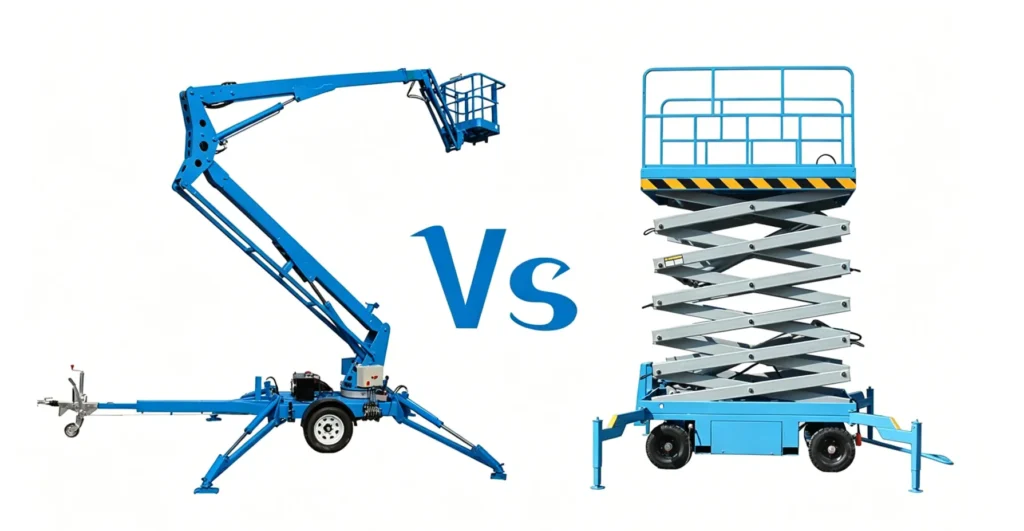
So, should you choose a scissor lift or a boom lift? Which equipment is more suitable for your project requirements? This article will focus on boom lift vs scissor lift, and provide a detailed analysis from equipment definition, working principle, core advantages, application scenarios, and multi-dimensional performance comparison, offering a practical aerial lift buying guide to help you complete choosing the right aerial work platform more efficiently.
What Is a Scissor Lift
A scissor lift is an aerial work platform that uses a scissor-type mechanical structure to achieve vertical lifting, usually powered by a hydraulic system or electric drive system. The equipment uses the expansion and contraction of intersecting linkages to lift the working platform smoothly, achieving vertical height increase within a fixed trajectory range. It has a stable structure, strong load capacity, and a large platform space that can accommodate multiple operators and tools at the same time. It is widely used in indoor installation, equipment maintenance, and warehouse logistics requiring vertical aerial work.
Principio de funcionamiento
The working principle of a scissor lift is based on the coordinated action of a scissor mechanical structure and a hydraulic/electric drive system, controlling the oil cylinder or motor to lift the platform steadily.
- Power Start: Start the electric motor or hydraulic pump station to provide stable power to the system.
- Energy Transmission: Hydraulic oil enters the oil cylinder, or the motor drives the screw system to generate thrust.
- Scissor Mechanism Expansion: The hydraulic cylinder pushes the scissor arms to gradually open, and the cross-link structure expands synchronously.
- Vertical Platform Lifting: The scissor structure continues to extend, and the working platform rises vertically to the set height.
- Height Locking and Operation: After reaching the target height, the system maintains pressure, and the platform remains stable for aerial work.
- Descent Return: Control the return valve or motor reversal to gradually retract the scissor structure and lower the platform smoothly to the initial position.
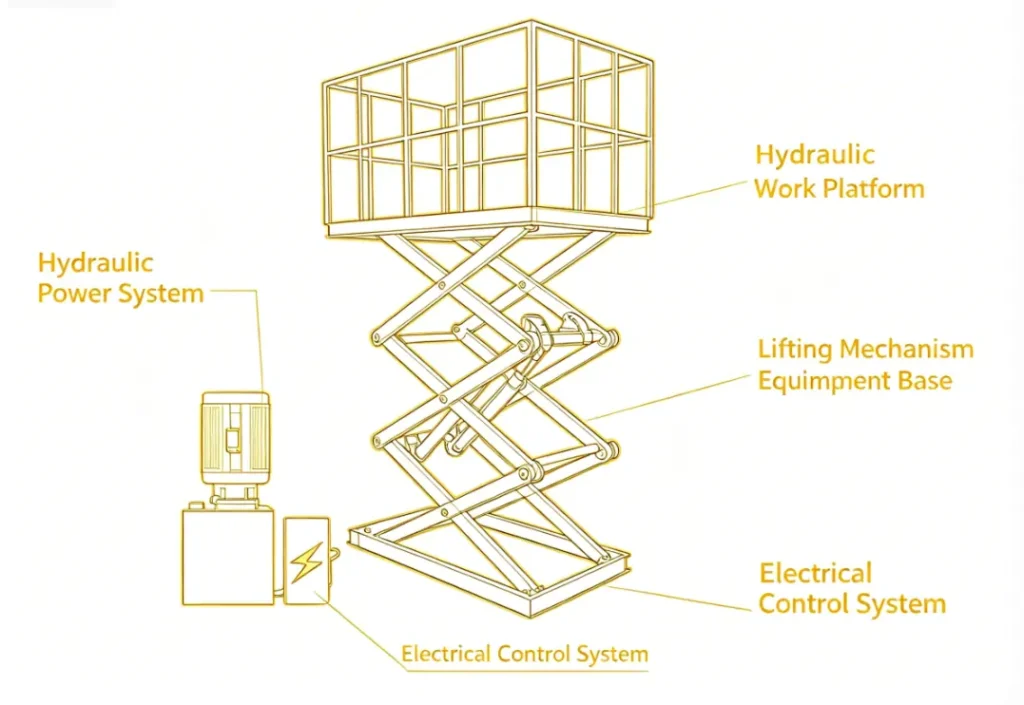
The characteristics of the scissor lift are fixed lifting path, stable operation, and strong load capacity, suitable for high-stability aerial work environments.
Ventajas
Scissor lifts are known for stability and load capacity in vertical aerial work, and are widely used in indoor and flat-ground environments, with high practical value.
- High structural stability: The scissor mechanical structure distributes force evenly, and the lifting process is stable with strong anti-sway ability.
- Strong load capacity: The platform area is large and can carry multiple operators and equipment.
- High vertical lifting efficiency: Fixed lifting path, simple operation, fast response.
- Suitable for indoor environment: Electric drive, low noise, no emissions, suitable for indoor use.
- Low maintenance cost: Simple structure, easy daily maintenance, and repair.
Scissor lifts are widely used in vertical operation scenarios requiring stability, multi-person cooperation, and indoor applications.
Aplicaciones
Scissor lifts are widely used in indoor and flat-ground aerial work environments due to their stable vertical lifting capability and strong load performance.
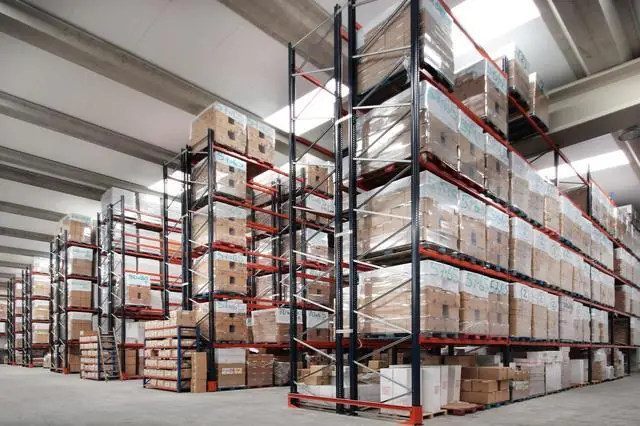
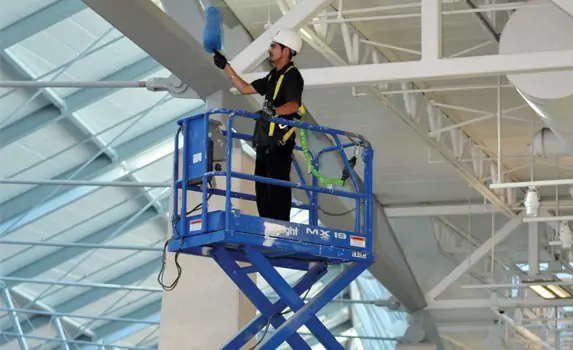
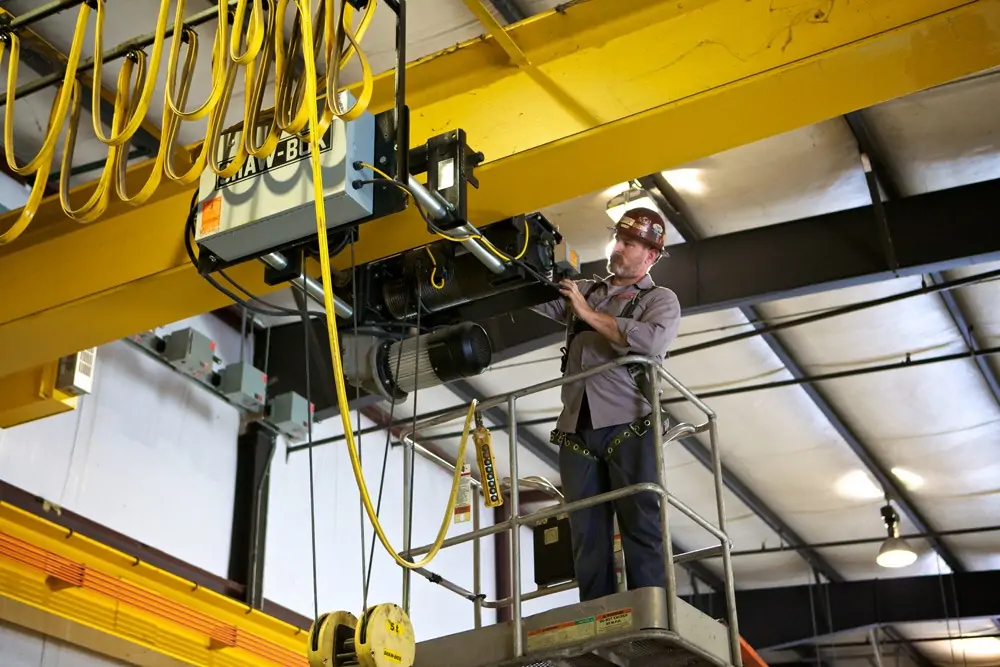
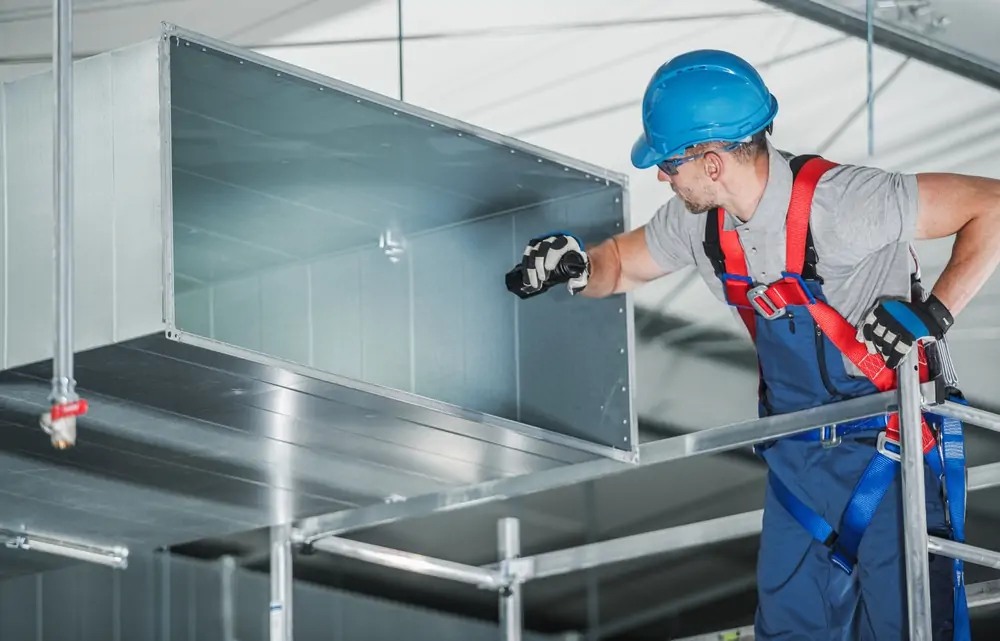
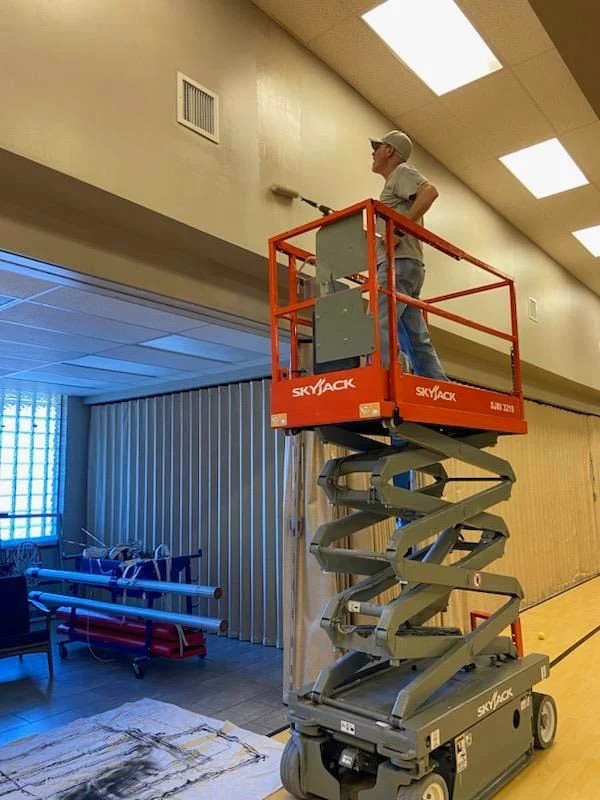
- Warehouse logistics operation: Used for rack maintenance, inventory inspection, and high-position installation of warehouse lighting and pipelines. It is a common choice for the best aerial lift for warehouse work.
- Industrial plant maintenance: Suitable for equipment inspection, electrical installation, and production line maintenance, especially stable in indoor environments, and commonly seen in indoor scissor lift applications.
- Commercial and public facility maintenance: Used for lighting replacement, ceiling construction, and cleaning maintenance in malls, airports, and exhibition halls.
- Indoor installation projects: Suitable for decoration, pipeline layout, and light installation work, with a large platform space for multi-person cooperation.
- Light construction and renovation projects: Used for short-distance and high-frequency vertical lifting operations in indoor or flat-ground environments.
Scissor lifts are more suitable for vertical operations, flat ground conditions, and working environments requiring high stability.
What Is a Boom Lift
A boom lift (Boom Lift) is an aerial work equipment that uses a multi-section boom structure to achieve high-altitude operation. It is usually driven by a hydraulic system and can perform multi-angle extension and rotation. The equipment consists of a chassis, a slewing mechanism, and a telescopic or folding boom. The working platform is installed at the end of the boom, allowing both vertical lifting and horizontal outreach to cross obstacles and reach the target working point. Its structure is mainly divided into telescopic boom lift (Telescopic Boom Lift) and articulating boom lift (Articulating Boom Lift), suitable for different aerial work requirements. It is widely used in construction, façade maintenance, and complex space aerial installation.
Principio de funcionamiento
The boom lift achieves vertical lifting and horizontal outreach of the aerial platform through the coordination of a hydraulic drive system and multi-section boom structure.
- Power Start: The engine or motor starts to provide power to the hydraulic system.
- Hydraulic System Pressurization: The hydraulic pump delivers pressurized oil to each actuator cylinder.
- Boom Extension: The telescopic boom extends section by section; the articulating boom uses multi-joint cylinders for folding and unfolding.
- Platform Lifting and Rotation: The slewing mechanism enables 360° rotation while the platform moves vertically.
- Horizontal Positioning: After extension, the boom adjusts within a certain range to reach the working point.
- Stable Operation: The hydraulic locking system maintains pressure to keep stability during aerial work.
- Retraction: After the operation, the boom retracts in sequence and returns to the initial position.
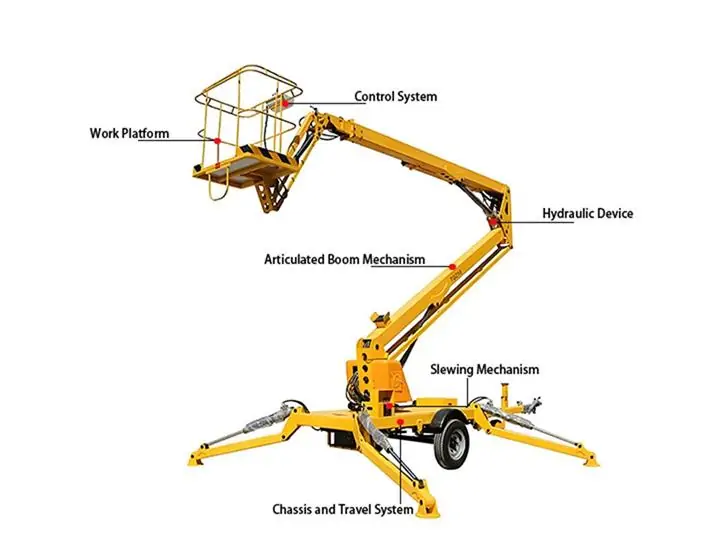
The overall working feature is flexibility, a large working range, and the ability to cross obstacles, suitable for complex and outdoor environments.
Ventajas
Boom lifts have strong adaptability in complex aerial working environments, and their advantages are mainly as follows:
- Wide working range: The boom can perform vertical lifting and horizontal outreach, covering a larger working radius, and is suitable for obstacle-crossing tasks.
- High working height capability: Compared with scissor lifts, boom lifts can reach higher working heights, making them suitable for high-rise construction needs.
- High flexibility: The articulated structure can be adjusted at multiple angles to fit complex and irregular working points.
- Strong accessibility: Suitable for building façades and steel structures with obstacles.
- Strong outdoor adaptability: Diesel-powered and off-road chassis design allows stable operation on uneven terrain.
- Precise positioning: The boom allows accurate adjustment, improving installation and maintenance efficiency.
Boom lifts are more suitable for high-altitude, complex, and outdoor operations with strong flexibility and coverage ability.
Aplicaciones
Boom lifts are widely used in various complex aerial working environments due to their height and horizontal outreach capability.
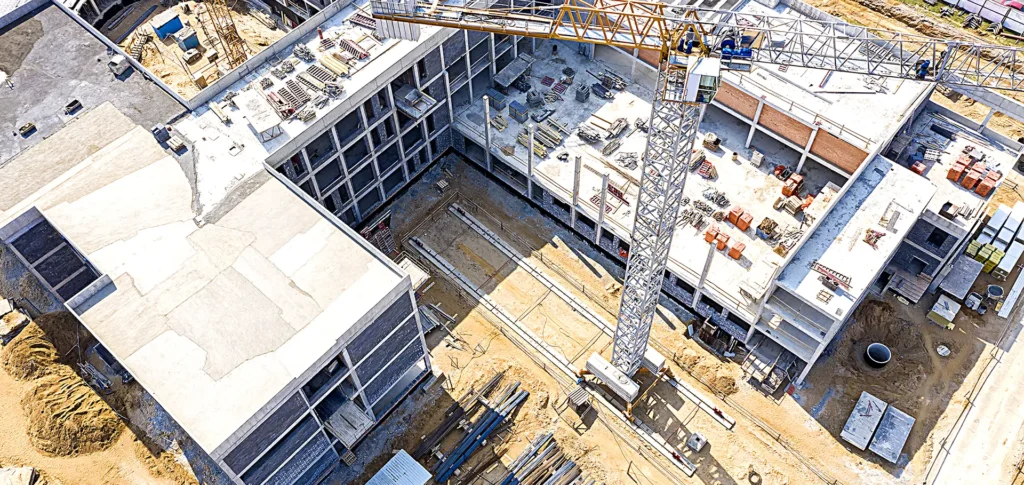

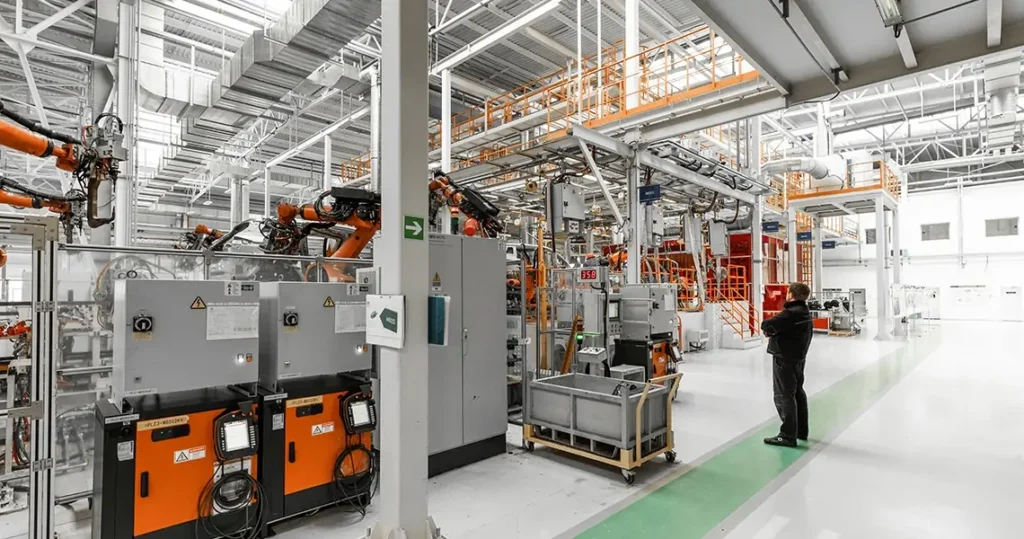
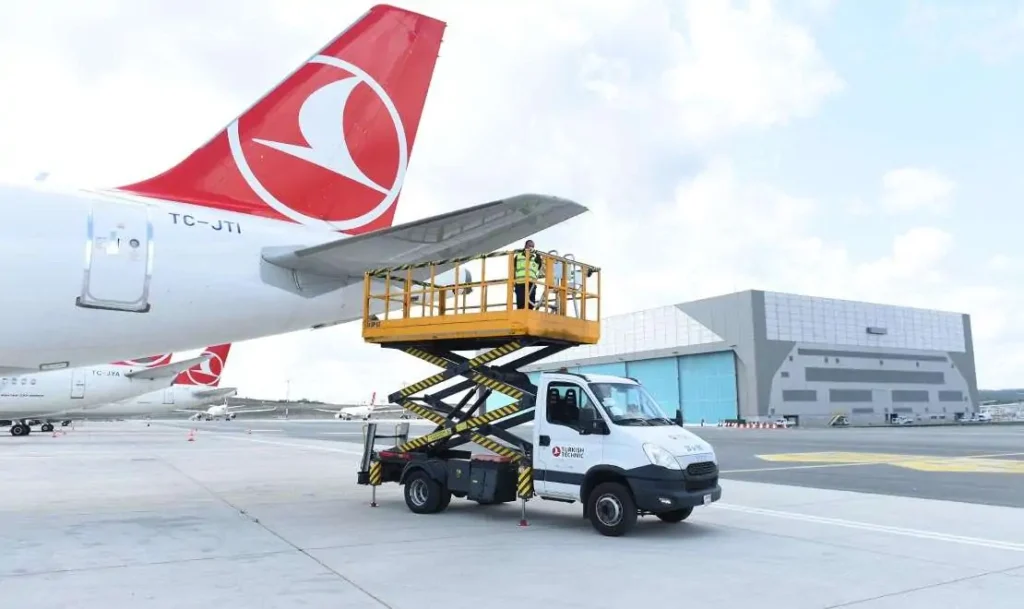
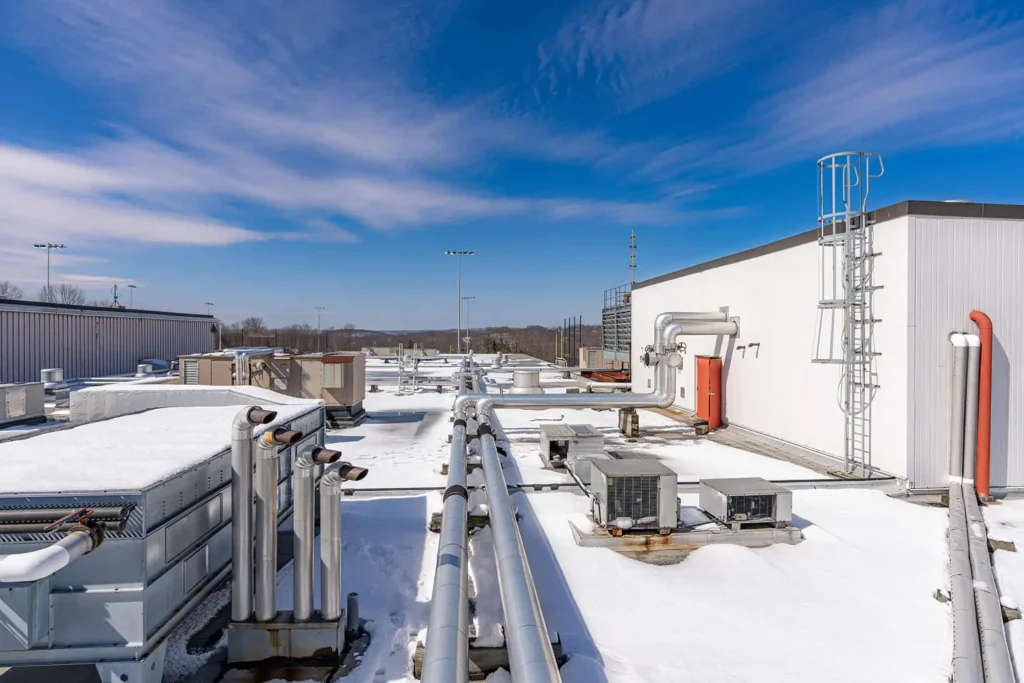

- Construction engineering: Used for steel structure installation, façade construction, and curtain wall work. Suitable for a boom lift for outdoor construction scenarios.
- Municipal and infrastructure maintenance: Applied in bridge inspection, streetlight repair, and urban facility maintenance.
- Industrial equipment installation and maintenance: Suitable for large plants, petrochemical facilities, and power station maintenance.
- Shipyard and port operations: Used for ship maintenance and port equipment inspection.
- Power and communication engineering: Suitable for transmission line maintenance and communication tower installation.
- Complex terrain outdoor operations: Can operate on uneven terrain with off-road chassis support.
Boom lifts are more suitable for high-altitude outdoor and complex environments requiring both height and outreach.
What Are the Differences
The differences between scissor lifts and boom lifts can be compared from multiple dimensions:
Movement Type
- Scissor lift: Vertical lifting only
- Boom lift: Vertical + horizontal outreach + rotation
Altura de trabajo
- Scissor lift: Medium height (indoor use)
- Boom lift: Higher working height (outdoor use)
Horizontal Reach
- Scissor lift: No outreach capability
- Boom lift: Large working radius
Entorno de trabajo
- Scissor lift: Indoor/flat ground
- Boom lift: Outdoor/complex terrain/obstacle environment
Capacidad de carga
- Scissor lift: Higher load capacity (multi-person operation)
- Boom lift: Lower load capacity (single or few operators)
Stability
- Scissor lift: Higher structural stability
- Boom lift: Depends on support and the hydraulic balance system
Cost & Maintenance
- Scissor lift: Lower cost, easier maintenance
- Boom lift: Higher cost, more complex structure
Aplicaciones
- Scissor lift: Warehouses, factories, indoor installation
- Boom lift: Construction, bridges, power, outdoor engineering
Main difference: scissor lift focuses on vertical stable operation, while boom lift focuses on high-altitude flexible coverage.
How to Choose
When choosing a scissor lift (Scissor Lift) and a boom lift (Boom Lift), the key is not simply comparing performance, but matching equipment to actual working conditions. This is the key decision point in scissor lift vs boom lift selection.

Choose a Scissor Lift If You Need
Scissor lifts are ideal for vertical lifting tasks in stable indoor or fixed-position working environments. They provide larger platform space, better lifting stability, and higher efficiency for routine maintenance and warehouse operations.
- Indoor maintenance and equipment installation
- Warehouse management and vertical material access
- Stable lifting on flat indoor floors
- Medium and low-height aerial work
- Frequent daily operation with lower operating cost
- Applications without horizontal outreach requirements
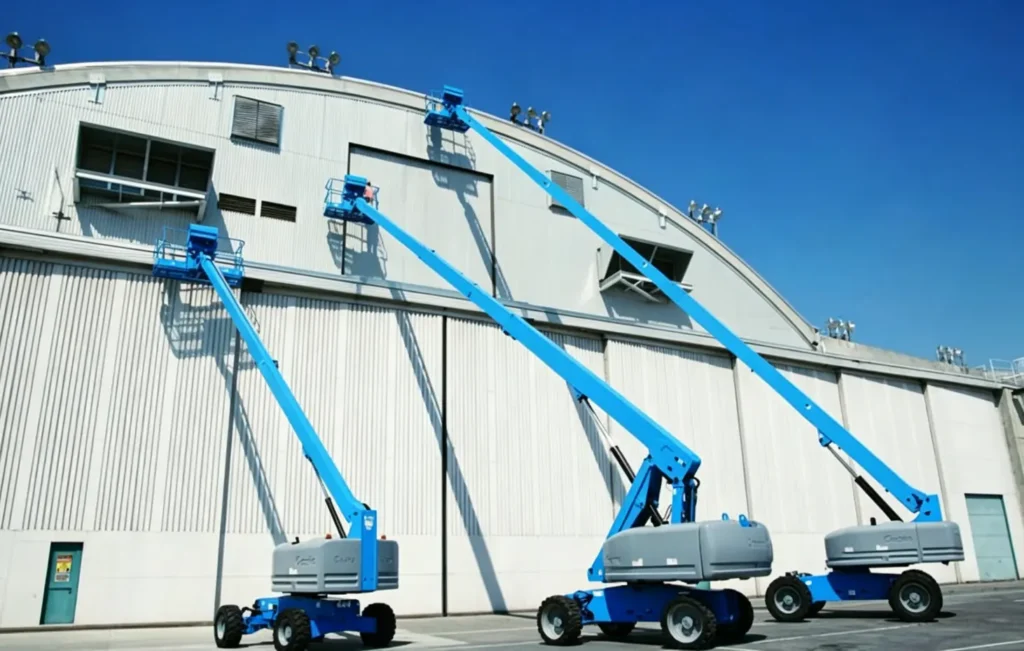
Choose a Boom Lift If You Need
Boom lifts are designed for outdoor high-altitude work and complex environments requiring horizontal outreach or obstacle crossing. They offer greater flexibility and wider working coverage for demanding construction tasks.
- Outdoor high-altitude maintenance and installation
- Obstacle crossing and multi-angle aerial work
- Steel structure and façade construction projects
- High or extra-high working height requirements
- Rough terrain and uneven ground operation
- Applications requiring horizontal extension capability
Scissor lifts are better suited for stable indoor vertical lifting applications, while boom lifts provide greater flexibility for outdoor and complex aerial work environments. Choosing the right equipment depends on working height, environment, outreach requirements, and project conditions.
Key Preconditions for Aerial Work
The selection of aerial work equipment depends on actual working conditions and safety requirements.
- Working height requirement
- Working environment condition
- Working space and horizontal outreach are needed
- Load capacity requirement
- Power and usage type
- Safety standards and operation requirements
The essence is a comprehensive evaluation of height, environment, space, load, and safety.
Types Provided by VIOTTO
VIOTTO offers a range of indoor and industrial lifting solutions designed for different working heights, load capacities, and application environments. From compact indoor aerial platforms to heavy-duty material-handling equipment, each lifting system is engineered to enhance safety, efficiency, and operational flexibility across warehouse, factory, and maintenance applications.
Plataforma elevadora de tijera
A scissor-type hydraulic or electric aerial platform used for vertical lifting in warehouses and factories.
- Load 227–500 kg
- Height 6–13.7 m
- Speed 3–5 m/min
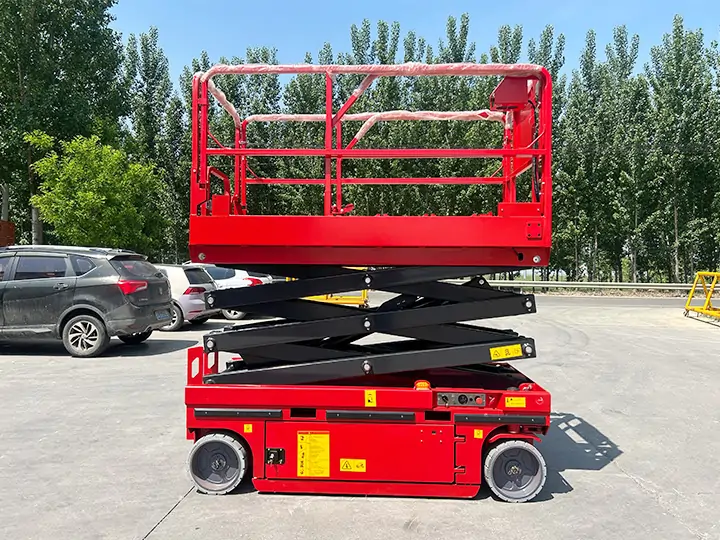
Plataforma Elevadora Eléctrica de Tijera
Low-noise, zero-emission indoor aerial platform designed for narrow warehouse environments.
- Height 8 m
- Load 230 kg
- Platform 1.67 × 0.74 m
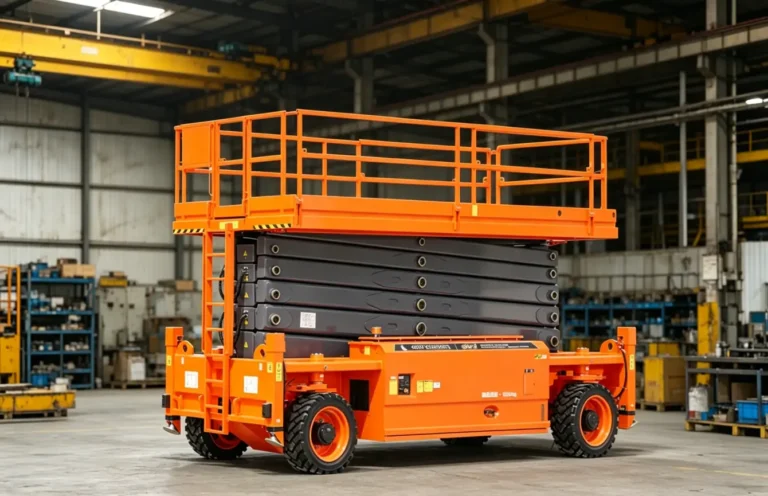
Mesa elevadora hidráulica de tijera para manipulación de materiales
Fixed heavy-duty lifting table for vertical material transfer in production systems.
- Load 500–10,000 kg
- Height 1–6 m
- Customizable size
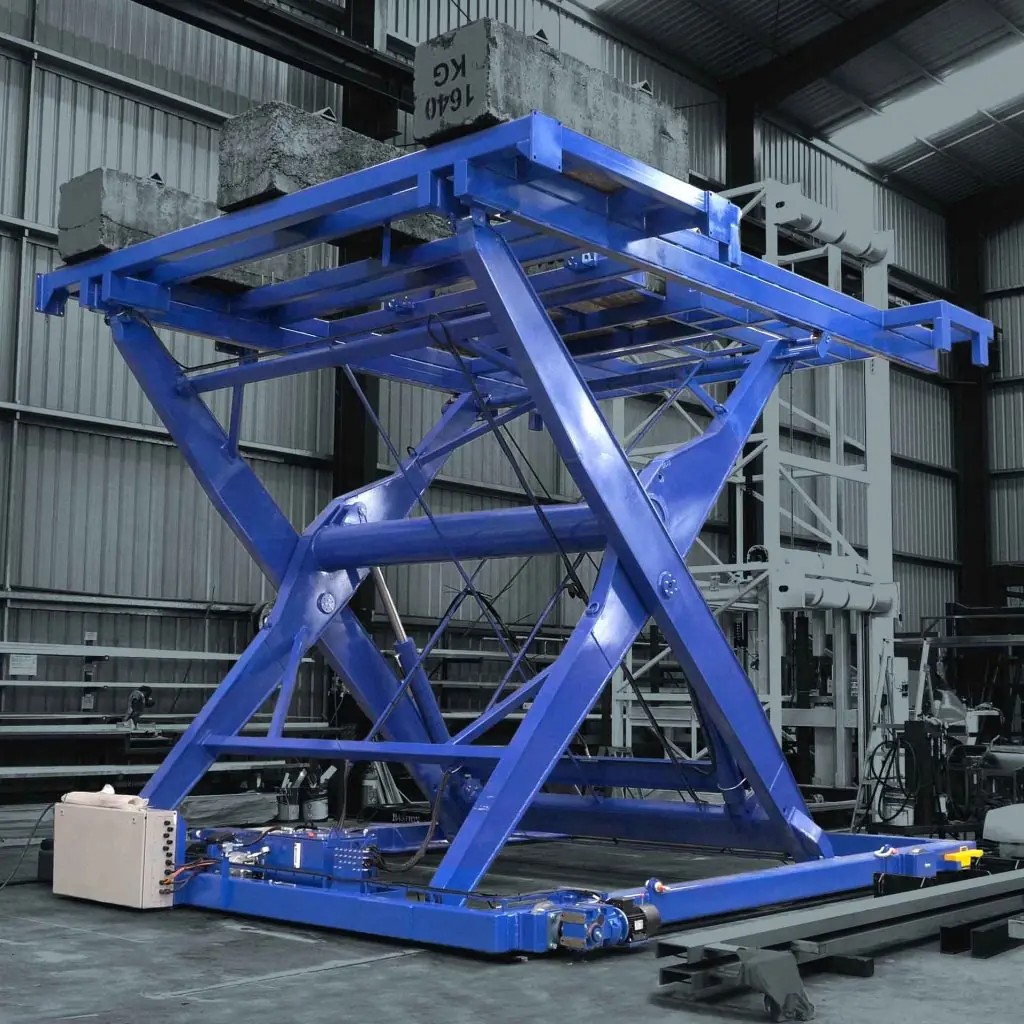
Heavy Duty Lifting Scissor Platform
For the vertical handling of heavy-duty materials with high tonnage
- Load Capacity:1–20 Tons
- Lifting Height:1–10 m
- Sistema de alimentación: Hidráulico/eléctrico opcional

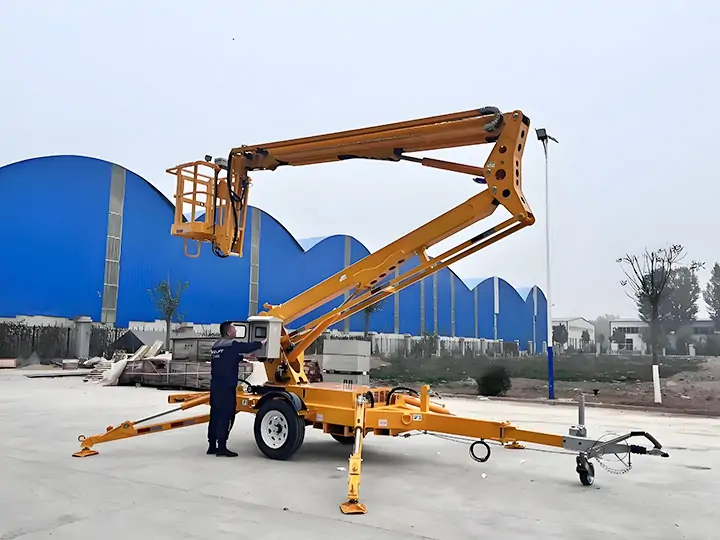
Plataforma articulada remolcable
Towable articulated boom lift for multi-angle outdoor aerial work.
- Height 10–22 m
- Radius 4.5–9.5 m
- Load 200 kg
Customization Range
Wantai provides customized aerial work equipment solutions based on different industries and working conditions.
- Work height customization
- Load capacity customization
- Platform size customization
- Power system customization
- Structure and function customization
- Safety and control system customization
Customization advantage: better adaptation to project requirements and improved efficiency and safety.
Conclusión
Scissor lifts and boom lifts have different focuses in aerial work: the former is more suitable for vertical lifting, indoor operation, and high-frequency stable working conditions, while the latter performs better in high-altitude extension, obstacle crossing, and complex outdoor environments. In practical selection, working height, construction environment, space conditions, and load requirements should be considered together to achieve better efficiency and safety.
If you are choosing aerial work equipment for your project or need matching solutions for specific working conditions, feel free to Contacto. VIOTTO will provide professional selection advice and customized solutions.

Alan
Especialista en Soluciones de Grúas · Voitto Crane
Especializados en soluciones de exportación de grúas puente, grúas pórtico, grúas de pluma, grúas portuarias y grúas EOT. Más de 10 años ayudando a clientes internacionales con consultoría de preventa, selección de capacidad y configuraciones específicas para cada emplazamiento.
Preguntas frecuentes
What is the main difference between a scissor lift and a boom lift?
Scissor lifts provide vertical lifting only, while boom lifts offer both vertical and horizontal outreach for flexible access.
Which is better for indoor use, a scissor lift or a boom lift?
Scissor lifts are better for indoor use due to their stability, large platform, and zero-emission electric operation.
Can a scissor lift be used outdoors?
Yes, but only on flat and stable ground, as scissor lifts have limited terrain adaptability.
What is a boom lift mainly used for?
Boom lifts are used for outdoor construction, façade maintenance, and high-altitude work requiring obstacle crossing.
Which lift has a higher working height capacity?
Boom lifts generally offer higher working heights compared to scissor lifts.
How do I choose between a scissor lift and a boom lift?
Choose based on working height, environment, and whether horizontal reach or vertical stability is required.




 English
  Español
  Português
  العربية
  Français
  Русский