Los compradores que investigan equipos de elevación suelen preguntar cómo se relacionan una grúa pórtico y un polipasto, y si es necesario especificar el polipasto por separado. En resumen, una grúa pórtico no puede levantar nada sin un polipasto, y un polipasto no puede mover una carga dentro de una instalación sin la estructura que proporciona la grúa pórtico.
La estructura de la grúa pórtico —que incluye las patas, la viga principal, las vigas de los extremos y las ruedas de traslación— es responsable de soportar el sistema de elevación y cambiar su posición. El polipasto, por su parte, se encarga de realizar los movimientos verticales de elevación y descenso. Si está equipada con un carro, este desplaza el polipasto lateralmente a lo largo de la viga principal, mientras que la grúa pórtico en su conjunto se desplaza longitudinalmente a lo largo de la vía o el recorrido sobre el terreno. Solo comprendiendo cómo interactúan estos tres tipos de movimiento —elevación, desplazamiento lateral y desplazamiento longitudinal— los compradores podrán seleccionar un sistema que se ajuste perfectamente a sus necesidades de carga, envergadura y condiciones de operación. A continuación, este artículo describirá la relación sinérgica entre la grúa pórtico y el polipasto. Continúe leyendo.
- 1 ¿Qué es una grúa pórtico y un polipasto?
- 2 ¿Cómo funciona una grúa de pórtico?
- 3 ¿Qué función cumple un polipasto en una grúa pórtico?
- 4 ¿Qué tipos de polipastos se utilizan con las grúas pórtico?
- 5 Componentes de la grúa pórtico: ¿Dónde se ubica el polipasto?
- 6 Grúa pórtico, carro y polipasto: ¿Cuál es la diferencia?
- 7 Grúa pórtico vs. polipasto pórtico: ¿Son lo mismo?
- 8 ¿Cómo elegir un polipasto para una grúa pórtico?
- 9 ¿Qué configuración de grúa pórtico es la más adecuada para los diferentes polipastos?
- 10 Aplicaciones de grúas pórtico y polipastos
- 11 Factores de costo de las grúas pórtico y los polipastos
- 12 Cómo seleccionar una grúa pórtico y un polipasto para su proyecto.
- 13 Conclusión
- 14 PREGUNTAS FRECUENTES

Grúa de pórtico

Polipasto eléctrico
¿Qué es una grúa pórtico y un polipasto?
Una grúa pórtico y un polipasto forman juntos un sistema completo de manipulación de materiales: la grúa pórtico es la estructura de soporte y desplazamiento, y el polipasto es el mecanismo montado sobre ella que eleva y desciende la carga.
Grúa de pórtico
A grúa de pórtico Consta de una viga principal que abarca toda la zona de trabajo, apoyada en ambos extremos por patas. Unas vigas laterales con ruedas se fijan a la parte inferior de las patas, lo que permite que toda la estructura se desplace sobre raíles o sobre una superficie pavimentada. Un carro se desplaza por encima o por debajo de la viga principal, transportando el mecanismo de elevación a medida que este se mueve a lo largo de la viga. Las grúas pórtico cumplen funciones tanto de soporte estructural como de posicionamiento: mantienen el mecanismo de elevación a una altura específica y lo trasladan a la ubicación requerida para la carga.
Elevador
El izar El mecanismo principal que realiza la acción de elevación es el polipasto eléctrico. Este integra un motor, una caja de engranajes y un tambor (para cable de acero) o una rueda dentada (para cadena de elevación). Además, cuenta con un gancho, un freno y topes de límite superior e inferior (para detener la elevación en posiciones predeterminadas). El polipasto convierte la energía eléctrica en un movimiento de elevación vertical controlado y sujeta la carga de forma segura una vez finalizada la elevación.
El polipasto es el principal responsable de elevar y descender la carga, mientras que la grúa pórtico proporciona la estructura de soporte y el movimiento horizontal o longitudinal necesario para su posicionamiento. No todas las grúas pórtico utilizan la misma configuración de polipasto; la selección del polipasto adecuado depende principalmente de la capacidad de elevación nominal de la grúa, su clase de servicio y su aplicación específica.
¿Cómo funciona una grúa de pórtico?
Una grúa pórtico funciona combinando tres movimientos distintos —elevación, desplazamiento transversal y desplazamiento longitudinal— bajo la coordinación de un operador o un sistema de control.
- Sujeción de la carga: El operario sujeta la carga al gancho u otro dispositivo de elevación.
- Izado: El motor del polipasto acciona el tambor o la rueda dentada para levantar la carga del suelo.
- Movimiento lateral: Si está equipado con un carro, este desplaza el mecanismo de elevación horizontalmente a lo largo de la viga principal.
- Movimiento longitudinal: La grúa pórtico se desplaza a lo largo de la vía o trayectoria para transportar la carga a la zona designada.
- Posicionamiento de la carga: El operador utiliza el sistema de control para coordinar el izado, el movimiento lateral y el movimiento longitudinal.
- Descenso: El mecanismo de elevación baja la carga hasta la posición deseada; una vez que se detiene el descenso, el freno asegura la carga en su lugar.
Estas tres funciones se pueden resumir de la siguiente manera: el mecanismo de elevación es responsable del movimiento vertical, el carro es responsable del movimiento lateral y la estructura del pórtico es responsable del movimiento longitudinal.
¿Qué función cumple un polipasto en una grúa pórtico?
En una grúa pórtico, el polipasto se encarga de elevar, descender y suspender cargas pesadas. Además de realizar estas operaciones, el polipasto controla la velocidad y la altura de elevación, factores que influyen directamente en la eficiencia operativa. Su sistema de frenado bloquea la carga en una posición específica cuando se detiene la elevación o en caso de un fallo eléctrico. La protección contra sobrecargas impide que el motor eleve cargas que superen la capacidad nominal del polipasto. Los interruptores de límite superior e inferior restringen el movimiento del gancho a un rango seguro, garantizando así la seguridad durante las operaciones.
Dado que estas funciones están estrechamente relacionadas con el funcionamiento diario de la grúa, los usuarios deben seleccionar un polipasto en función de los requisitos operativos reales de la grúa, en lugar de simplemente buscar la mayor capacidad de carga nominal. La capacidad de carga nominal, la altura de elevación, la frecuencia de elevación, el ciclo de trabajo, la velocidad de elevación, el entorno operativo y la precisión requerida para el posicionamiento de la carga son factores clave para determinar qué configuración de polipasto es la más adecuada para una grúa pórtico.
¿Qué tipos de polipastos se utilizan con las grúas pórtico?
Polipasto eléctrico de cable metálico
Los polipastos eléctricos de cable utilizan un motor eléctrico para accionar el tambor y enrollar el cable, elevando y descendiendo así el gancho. Este diseño se usa comúnmente en grúas pórtico industriales o grúas puente, ya que los polipastos de cable no solo tienen una amplia gama de aplicaciones (que abarcan diversas capacidades de carga y alturas de elevación), sino que también se pueden integrar fácilmente con carros para permitir el movimiento lateral. Son una opción común en plantas de fabricación, almacenes y operaciones generales de manipulación de materiales que implican tareas de elevación de frecuencia media a alta.
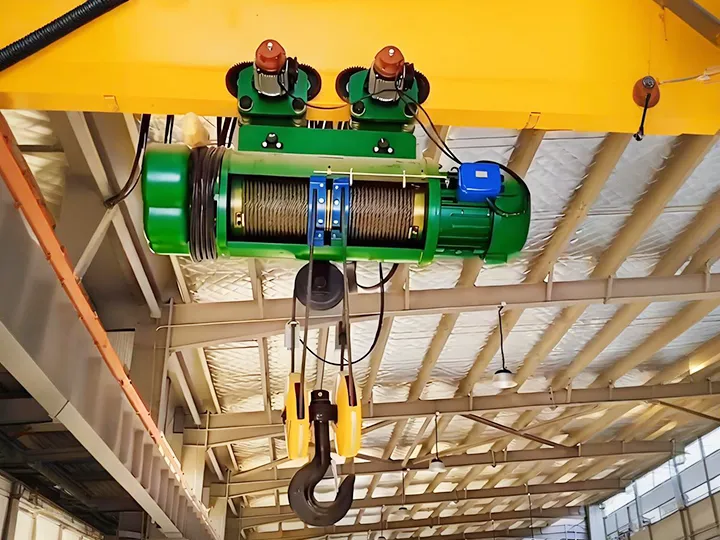
Polipasto eléctrico de cable metálico

Polipasto de cadena
Los polipastos eléctricos de cadena utilizan cadenas en lugar de cables de acero, y la unidad completa suele ser más compacta que un polipasto de cable de acero de capacidad equivalente. Esto los hace ideales para talleres y mantenimiento, así como para configuraciones de pórtico portátiles o ligeros donde el espacio libre o el peso son limitados.
Sistema de elevación con cabrestante abierto o sistema de elevación compuesto
Para aplicaciones de alta exigencia que requieren gran capacidad de elevación y ciclos de trabajo estrictos, las grúas pórtico pueden equiparse con cabrestantes abiertos o sistemas de elevación combinados. Estos sistemas son comunes en entornos industriales como acerías, astilleros, puertos e instalaciones de fabricación pesada, donde las cargas y los ciclos de trabajo suelen superar la capacidad de diseño de los polipastos eléctricos. Además, la decisión de instalar un cabrestante no puede basarse únicamente en la capacidad de elevación. Nota: No todas las grúas pórtico de gran tamaño requieren esta configuración.
Componentes de la grúa pórtico: ¿Dónde se ubica el polipasto?

Grúa pórtico monohaz

Grúa pórtico birraíl
| Componente | Función principal |
|---|---|
| Viga principal | Soporta el carro y el sistema de elevación. |
| Patas del pórtico | Sostener la viga principal |
| vagones de cola | Conecte la estructura a las ruedas de desplazamiento |
| Carro | Mueve el polipasto horizontalmente |
| Elevador | Eleva y baja la carga |
| Gancho | Conecta el sistema de elevación a la carga. |
| Ruedas de viaje | Mueva el pórtico a lo largo de la trayectoria de desplazamiento. |
Grúa pórtico, carro y polipasto: ¿Cuál es la diferencia?
Estos tres términos se usan a menudo de forma genérica en el lenguaje cotidiano, pero cada uno corresponde a un modo de movimiento diferente. El polipasto se encarga del izamiento vertical; el carro transporta el polipasto y se desplaza lateralmente a lo largo de la viga principal; y la grúa pórtico proporciona soporte general y se desplaza longitudinalmente sobre raíles o por el suelo.
En resumen: el movimiento vertical lo realiza el polipasto, el movimiento lateral el carro y el movimiento longitudinal el mecanismo de traslación de la propia grúa pórtico. Sin embargo, algunas configuraciones pueden variar; por ejemplo, algunas grúas pórtico ligeras o portátiles integran las funciones del polipasto y el carro de forma más directa. Por lo tanto, antes de seleccionar un polipasto, los usuarios deben confirmar con exactitud cómo la grúa distribuye estas funciones de movimiento.
Grúa pórtico vs. polipasto pórtico: ¿Son lo mismo?
Aunque los términos “grúa pórtico” y “polipasto pórtico” están relacionados, no siempre son intercambiables, y distintos fabricantes y mercados pueden utilizar términos diferentes para referirse a ellos. Una grúa pórtico suele referirse a un sistema de elevación industrial completo que incluye componentes como patas, viga principal, carro y mecanismo de traslación. En cambio, un polipasto pórtico a veces se refiere a una estructura de pórtico ligera o portátil (como un pórtico en A) equipada con un polipasto para realizar tareas de elevación ligeras, en lugar de un equipo de elevación industrial fijo. Dado que la terminología aún no está completamente estandarizada, los usuarios deben aclarar la configuración específica prevista por el proveedor antes de comparar presupuestos.
¿Cómo elegir un polipasto para una grúa pórtico?
- Capacidad de elevación: Los usuarios deben seleccionar una carga nominal con un margen de seguridad adecuado, en lugar de basar su selección únicamente en la carga máxima absoluta prevista.
- Altura de elevación: La altura del gancho requerida afecta a la configuración del polipasto, incluyendo la longitud del tambor y el espacio libre necesario cuando el gancho está en su posición más alta.
- Ciclo de trabajo: La frecuencia de funcionamiento y el tiempo de funcionamiento continuo del polipasto influyen en la selección del motor y la durabilidad de los componentes.
- Velocidad de elevación: Si bien las velocidades de elevación más rápidas pueden mejorar la eficiencia de la producción, también requieren un control de carga más estricto, especialmente al manipular cargas frágiles o inestables.
- Movimiento transversal: La velocidad de desplazamiento y la precisión de posicionamiento del carro determinan la precisión de la colocación de la carga.
- Entorno operativo: Las condiciones como entornos interiores, exteriores, polvorientos, húmedos, de alta temperatura o corrosivos afectan al grado de protección del motor y a la selección de materiales.
- Fuente de alimentación: El voltaje, la frecuencia y la configuración eléctrica deben coincidir con las condiciones reales del lugar de instalación.
- Métodos de control: Los controles manuales, los controles remotos inalámbricos, los controles en cabina o los controles automáticos son adecuados para diferentes modos de funcionamiento y requisitos de seguridad, respectivamente.
- Requisitos de seguridad: Deben especificarse claramente las características de seguridad, como la protección contra sobrecargas, los interruptores de límite, la parada de emergencia, los sistemas de frenado y los límites de recorrido.
- Necesidades futuras: Durante el proceso de selección, los usuarios deben considerar la posibilidad de un aumento de la carga o de la frecuencia de funcionamiento.
Seleccionar un polipasto basándose únicamente en su capacidad de elevación e ignorando los demás factores mencionados anteriormente suele ser una de las causas comunes de un rendimiento deficiente del sistema o de una vida útil reducida del equipo.
¿Qué configuración de grúa pórtico es la más adecuada para los diferentes polipastos?
Grúa pórtico monorraílNormalmente equipado con un polipasto eléctrico de cable o de cadena, es adecuado para operaciones de elevación de carga ligera a media en talleres y almacenes en general.
Grúas pórtico de doble vigaEste equipo admite mayores capacidades de elevación y tareas más pesadas; su carro de elevación normalmente se desplaza por encima de dos vigas principales.
Grúas pórtico portátiles/de estructura en AEste equipo es adecuado para operaciones compactas y de carga ligera, y se utiliza con frecuencia junto con polipastos de cadena para tareas de elevación ligeras en talleres de mantenimiento o talleres pequeños.
Grúas pórtico industriales de alta resistenciaEstas máquinas están diseñadas para operaciones de elevación a gran escala, donde los sistemas de elevación abiertos o modulares son más adecuados.
NotaLa selección real depende de la carga, el alcance, la altura de elevación, el ciclo de trabajo, la distancia de recorrido, el entorno operativo y la frecuencia de funcionamiento requerida.
Aplicaciones de grúas pórtico y polipastos
Las plantas de fabricación utilizan grúas pórtico y sistemas de elevación para trasladar materias primas y productos terminados entre los procesos de producción sin depender de equipos de transporte terrestres. Las acerías las emplean para reposicionar planchas de acero pesadas y componentes estructurales durante las operaciones de corte y soldadura. Los almacenes dependen de estos equipos para operaciones de elevación repetitivas y predecibles, especialmente cuando las rutas de desplazamiento fijas se adaptan mejor a la distribución de las instalaciones que las grúas móviles.
En las obras de construcción se utilizan grúas pórtico portátiles o semipermanentes para la manipulación de materiales. Los astilleros y puertos emplean grúas pórtico de gran capacidad (generalmente equipadas con sistemas de elevación de cabrestante abierto) para manipular componentes y contenedores de gran tamaño. Las centrales eléctricas las utilizan para la instalación y el mantenimiento de equipos en zonas con espacio limitado.
Durante las operaciones de mantenimiento de equipos, las grúas pórtico se utilizan para elevar componentes como motores o cajas de cambios y realizar tareas de revisión. Los fabricantes de maquinaria pesada las utilizan para mover grandes conjuntos en las líneas de producción, mientras que los depósitos de materiales las emplean para apilar y recuperar mercancías.
Factores de costo de las grúas pórtico y los polipastos
El costo total del equipo viene determinado por la capacidad de elevación, la luz y la altura de elevación, así como por la estructura de la grúa (de viga simple o doble), el tipo de polipasto seleccionado y la clase de servicio requerida. La distancia de recorrido afecta la longitud del riel o vía y el dimensionamiento del sistema de traslación. El sistema eléctrico, los dispositivos de seguridad y el método de control (colgante, remoto o desde cabina) también influyen en las especificaciones. La instalación, los requisitos de cimentación o riel, las medidas de protección ambiental, cualquier personalización, el transporte y la puesta en marcha son factores que influyen en el costo final.
Es importante distinguir entre el precio de compra del equipo y el costo total de propiedad. Un polipasto de menor costo que no se ajuste al ciclo de trabajo real puede generar un mantenimiento más frecuente o un reemplazo prematuro, mientras que un sistema correctamente especificado, incluso con un precio inicial más alto, suele reducir los costos de operación y mantenimiento a largo plazo.
Cómo seleccionar una grúa pórtico y un polipasto para su proyecto.
Antes de emitir una solicitud de cotización, se recomienda al equipo de compras que prepare las respuestas a las siguientes preguntas:
- ¿Cuál es la capacidad de carga máxima?
- ¿Cuál es la altura de elevación requerida?
- ¿Cuál es el intervalo requerido?
- ¿Qué distancia debe recorrer la grúa?
- ¿Cuál es la frecuencia de funcionamiento?
- ¿Se utilizará la grúa en interiores o exteriores? ¿Cuáles son las condiciones ambientales?
- ¿Qué velocidad de elevación se requiere?
- ¿Qué método de control prefiere?
- ¿Qué normas de seguridad se aplican?
- ¿Qué fuente de alimentación está disponible?
- ¿Prevé la necesidad de expansión en el futuro?
Los fabricantes profesionales de grúas deben revisar cuidadosamente este conjunto completo de requisitos antes de finalizar la configuración; incluso pequeñas diferencias en la clase de servicio o el entorno operativo pueden dar lugar a cambios en el mecanismo de elevación y la configuración estructural adecuados.
Obtener presupuestoConclusión
Una grúa pórtico y un polipasto constituyen un sistema único e integrado que funciona de forma coordinada, en lugar de ser equipos independientes: la estructura del pórtico se encarga de soportar y mover la carga, mientras que el polipasto realiza la elevación propiamente dicha. Para garantizar una correcta compatibilidad entre ambos —en lugar de simplemente seleccionar el polipasto con la mayor capacidad de carga nominal—, deben considerarse factores como la capacidad de carga nominal, la altura de elevación, el ciclo de trabajo, la velocidad de elevación y el entorno operativo.
Para los compradores que se preparan para pasar de la fase de investigación a la fase de especificación, proporcionar información detallada, como la capacidad de elevación, el alcance, la altura de elevación, la distancia de recorrido, el entorno operativo, el ciclo de trabajo y la fuente de alimentación disponible, permite al equipo de ingeniería del fabricante de grúas recomendar la grúa pórtico y el sistema de elevación más adecuados para la aplicación específica, evitando así el uso de configuraciones genéricas y estándar.
Voitto Crane es un fabricante y proveedor de grúas pórtico con más de 20 años de experiencia en el sector. Como fabricante de grúas pórtico, no ofrecemos una configuración única y fija; en su lugar, proporcionamos diseños personalizados basados en la envergadura, la capacidad de elevación y las condiciones específicas de cada proyecto. Contacto para soluciones de grúas pórtico y polipastos.

Alan
Especialista en Soluciones de Grúas · Voitto Crane
Especializada en soluciones de exportación de grúas puente, grúas pórtico, grúas pluma, grúas portuarias y grúas EOT. Más de 10 años ayudando a clientes de todo el mundo con asesoramiento preventa, selección de capacidad y configuraciones específicas para cada emplazamiento.
PREGUNTAS FRECUENTES
¿Cuál es la diferencia entre una grúa pórtico y un polipasto?
Una grúa pórtico es la estructura de soporte y desplazamiento —patas, viga y ruedas de traslación—, mientras que un polipasto es el mecanismo montado sobre ella que eleva y desciende la carga. La grúa pórtico posiciona el polipasto; el polipasto realiza el izamiento.
¿Una grúa pórtico necesita un polipasto?
Sí. La estructura de una grúa pórtico por sí sola no puede levantar una carga; necesita un polipasto, ya sea un polipasto eléctrico compacto o un sistema de cabrestante abierto, para realizar el izado y descenso vertical que la estructura de la grúa luego reposiciona.
¿Qué tipo de polipasto se utiliza en una grúa pórtico?
La mayoría de las grúas pórtico utilizan un polipasto eléctrico de cable o de cadena montado sobre un carro. Las grúas pórtico industriales de alta resistencia, diseñadas para manejar grandes capacidades o ciclos de trabajo intensos, pueden utilizar un cabrestante abierto o un sistema de elevación modular.
¿Cómo funciona el sistema de elevación de una grúa pórtico?
El motor del polipasto acciona un tambor o una rueda dentada para subir o bajar el gancho, mientras que un freno sujeta la carga una vez que se detiene el izamiento. Los interruptores de límite detienen el movimiento en puntos preestablecidos, y la estructura del carro y el pórtico reposicionan el polipasto según sea necesario.
¿Cómo elijo un polipasto para una grúa pórtico?
Al seleccionar un modelo, el equipo de compras debe considerar exhaustivamente la carga nominal (incluido un margen de seguridad), la altura de elevación, el ciclo de trabajo, la velocidad de elevación, el entorno operativo y los dispositivos de seguridad necesarios, en lugar de basarse únicamente en la capacidad de carga máxima. El fabricante puede ayudar a determinar la configuración más adecuada para los requisitos de su aplicación.


 English
  Español
  Português
  العربية
  Français
  Русский