
Winch cost for crane applications varies widely. Typically, from a few thousand dollars for a light-duty unit to several hundred thousand dollars for heavy industrial lifting equipment. because the price is driven by load capacity, duty class, and control system, not just physical size. Next, this guide explains the key factors that determine the price of a crane winch, provides realistic price ranges for common types of crane winches, and highlights the most common mistakes buyers make when comparing quotes.


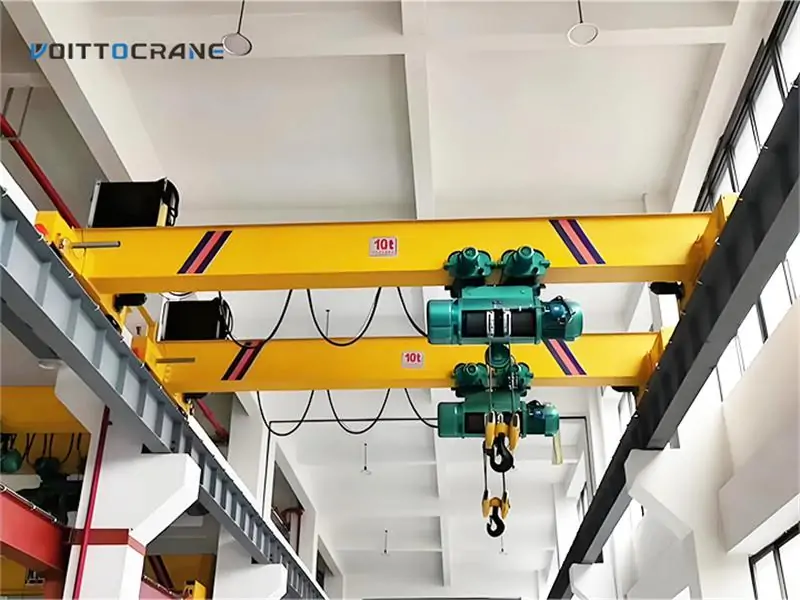
A رافعة ونش is also known as a hoisting winch or a lifting winch. Crane manufacturers install them on overhead cranes, gantry cranes, or port cranes as part of the lifting mechanism. This equipment consists of a power-driven drum combined with a gearbox and is primarily responsible for the vertical lifting and transport of materials. This is fundamentally different from vehicle recovery winches or marine winches: crane winches operate under continuous cyclic loading conditions and must comply with strict lifting safety standards. Moreover, their classification is determined based on “duty class” rather than simply on “rated pulling force.”
What Factors Determine Crane Winch Cost?
Crane winch pricing is not set by weight or size alone. Three variables account for most of the cost difference between units that appear similar on paper: rated load capacity, duty class, and the drive and control system. Understanding how each factor affects price prevents the most common purchasing mistake—selecting on capacity alone while ignoring the other two.
سعة الحمولة المقدرة
Rated capacity is the maximum load the winch lifts, measured in tonnes or kilonewtons. Price scales with capacity, but not linearly—a winch rated at 10 t does not cost twice as much as a 5 t unit. The mechanical components (drum, gearbox, shaft, brakes) must all be upsized together, and the cost of the braking system alone can increase substantially at higher capacities. Buyers often purchase by matching the winch capacity to the heaviest single lift planned. Still, they should also account for dynamic load factors applied during acceleration and deceleration, which may require a capacity margin above the stated load.
فئة الواجب
The duty cycle determines the intensity of a winch’s operation. Specifically, it includes the number of lifts per hour, the number of operating hours per day, and the ratio of the average load to the rated load. Warehouse overhead cranes perform only a handful of lifting operations per shift, a scenario that is starkly different from that of port gantry cranes, which operate continuously at near-full capacity.
Winches designed specifically for heavy-duty continuous operation are typically equipped with larger bearings, motors with higher rated power, reinforced gearboxes, and more robust braking systems—all of which significantly increase their cost. Even if two winches have the same rated lifting capacity, the price difference can be as high as 50% or more simply due to differences in duty class. This is precisely the factor that buyers most often overlook when selecting equipment, and such oversight frequently leads to premature mechanical failure of the machinery.
نظام القيادة والتحكم
In most industrial applications, a crane winch is driven by electric motors. However, in specific environments—such as offshore platforms, hazardous areas, or locations with limited power supply—hydraulic drives are used. In electric drive systems, the control system—specifically, contactor-based step speed control and variable frequency drive (VFD) control—directly impacts both the initial purchase cost and long-term operating costs of the equipment.
Winches equipped with VFD control enable smooth acceleration and precise positioning, helping to reduce mechanical stress and lower energy consumption. Although the initial investment for such systems is higher, they have become standard equipment on bridge cranes used to lift fragile or high-value cargo. In contrast, contactor-based control systems are less expensive and are sufficient for simple vertical lifting operations that do not require high positioning accuracy.
How Much Is a Winch for Crane Applications?
Price ranges below are for crane lifting winches and represent ex-factory equipment costs. Installation, freight, electrical connection, and commissioning are additional. Prices reflect general market ranges and will vary by manufacturer, region, and specification.
| Crane Type / Application | نطاق السعة | Typical Winch Price Range (USD) | Primary Price Driver |
|---|---|---|---|
| Light-duty overhead crane (warehouse, assembly) | 0.5 t – 5 t | $3,000 – $18,000 | Compact size, standard duty class |
| Medium-duty bridge crane (manufacturing, fabrication) | 5 t – 20 t | $15,000 – $60,000 | Motor size, duty class specification |
| Heavy-duty overhead crane (steel, heavy industry) | 20 t – 100 t | $50,000 – $250,000 | Gearbox complexity, brake system |
| Port/harbour crane (container, bulk) | 10 t – 80 t (per rope reeving) | $80,000 – $400,000+ | Continuous duty, environmental rating |
| Metallurgical / ladle crane | 50 t – 500 t+ | $200,000 – $1,000,000+ | Extreme duty, redundant systems |
At this stage, the most common mistake buyers make is comparing quotes based on different work duty classes. The lower-priced quote may be based on a lower performance level. While this may make it appear cheaper at first glance, the equipment delivered is highly prone to failure under actual operating conditions or may require frequent maintenance. Therefore, before comparing prices, crane winch manufacturers and purchasers must confirm the specified performance ratings in writing.


How Much Does a Winch Cost to Install on a Crane?
Installation costs depend on whether the winch equipment is being installed as a replacement for an existing crane or as part of a brand-new crane system. In addition, the structural modifications required and the electrical work involved will also affect the cost. For most industrial overhead cranes, installation costs typically amount to 20% to 50% of the equipment cost. However, this range may increase significantly in complex or non-standard applications.
Replacement Winch on an Existing Crane
To replace the hoisting mechanism on an operational crane, the process involves: removing the existing unit, verifying that the bridge structure and end beams can support the weight and installation dimensions of the new unit, performing any necessary structural or electrical modifications, connecting the new motor and control system, and finally, conducting commissioning tests.
For standard overhead cranes in good structural condition, installation by a qualified crane service company typically costs between $2,000 and $15,000, depending on the crane’s height, on-site working conditions, and changes to the control system. If the new crane winch uses variable frequency drive (VFD) control while the original unit used contactors, the resulting additional electrical engineering costs may range from $3,000 to $10,000 or even higher.
New Crane Equipment
When a crane winch is specified as part of a new crane, installation cost is typically included in the crane contractor’s scope, and it is more meaningful to evaluate total installed cost (equipment + structural steelwork + electrical + commissioning + testing). In new construction projects, treating the cost of the winch separately from the main body of the crane can often be misleading. This is because quotes for cranes designed specifically around a particular hoist specification are typically provided as a complete system. Therefore, it is recommended that users request a detailed breakdown of the total installation costs, listing items such as mechanical equipment supply, electrical equipment supply, steel structure work, and commissioning separately, to facilitate accurate comparisons among different suppliers.
Additional Cost Items Buyers Frequently Overlook
In accordance with local regulations governing the use of industrial equipment, a load test must be conducted after the crane is installed. This test will incur additional costs, covering expenses related to test weights, rigging, and certified inspectors. Ongoing operating costs include regular brake inspections and adjustments, gearbox oil changes, wire rope replacement, and maintenance of electrical contacts. When purchasing equipment, users should factor the cost of spare parts for critical components—such as brake linings, drum bearings, and rope sheaves—into their budget.
Types of Crane Winches and How Type Affects Winch Price
Not all crane winches are equivalent in terms of mechanical performance. The three main configurations used in overhead and gantry cranes each have distinct pricing structures. Improper selection can not only affect the initial purchase cost but also increase maintenance costs throughout the crane’s entire service life.
Wire Rope Winch (Drum Hoist)
The standard configuration of most bridge cranes includes an electric drum responsible for winding and unwinding the wire rope, with the load supported by a hook block and a pulley block assembly. Wire rope hoisting mechanisms cover a full range of lifting capacities. They are not only well-known to the vast majority of crane suppliers but also have a broad supply base. However, when performing heavy-load lifting or long-distance travel tasks, the size and weight of the drum often increase, thereby raising the manufacturing costs of the crane structure. In addition, the wire rope requires regular inspection and replacement. To ensure uniform drum wear, effective management of the wire rope’s fleet angle is also critical.
Chain Hoist Winch
This equipment is primarily suitable for lighter lifting loads (typically under 5 tons) and applications where compact dimensions are required. Within the lower load range, chain winches are more cost-effective and require less headroom than comparable wire rope winches. When the load exceeds approximately 5 tons, wire rope winches become a more practical and cost-effective choice due to the weight of the chain and wear factors. Additionally, chain winches are not suitable for applications requiring precise speed control or extremely high lifting heights.
ونش هيدروليكي
This device is primarily used in environments where electric motors are unsuitable. Examples include offshore platforms, explosive atmospheres, or locations already equipped with hydraulic power units. For the same load capacity, hydraulic winches are typically more expensive than comparable electric winches. In addition, they must be used in conjunction with a hydraulic power unit (which increases cost, weight, and maintenance requirements), and they are relatively more difficult to control with precision. Depending on the load capacity and specific specifications, the price of a hydraulic winch is typically 30% to 80% higher than that of an electric winch.


الخلاصة
The price of a winch is merely a starting point, not the sole criterion for selection. Before finalizing a purchase, users must confirm three key pieces of information with the supplier: the load duty class, motor power, and insulation class, and the maintenance intervals required for the gearbox and brake under their specific operating conditions.
The above summarizes the key factors affecting the cost of crane winches and provides a reference table of price ranges. VOITTO Crane is committed to providing you with valuable information to help you select the most suitable lifting equipment.
VOITTO offers a crane winch for sale. We provide customized solutions tailored to our clients’ specific operating conditions and lifting requirements. If you need a project solution involving crane winches, please feel free to اتصل بنا في أي وقت.

آلان
أخصائي حلول الرافعات · رافعة Voitto
متخصصون في حلول تصدير الرافعات العلوية، والرافعات الجسرية، والرافعات الجيبية، ورافعات الموانئ، ورافعات الجسور العلوية الكهربائية. خبرة تزيد عن 10 سنوات في مساعدة العملاء العالميين من خلال الاستشارات قبل البيع، واختيار السعة، والتكوينات الخاصة بكل موقع.
الأسئلة الشائعة
What is the main reason two crane winches with the same capacity have very different prices?
Duty class is the most common cause. Two winches rated at 10 t can differ in price by 40%–60% if one is specified for light intermittent use and the other for heavy continuous operation. The heavier-duty unit uses larger bearings, a higher-rated motor, a more robust gearbox, and a braking system designed for more frequent engagement.
Does a higher-capacity winch always cost more?
Generally, yes, but capacity alone is not sufficient to predict price. A 20 t winch in a light-duty class may cost less than a 10 t winch in a heavy continuous-duty class. Duty class and control system have a larger combined effect on price than capacity increments within typical industrial ranges.
How often does a crane winch need maintenance, and what does it cost?
Maintenance intervals depend on the equipment’s duty cycle and operating environment, rather than fixed calendar cycles. For equipment operating under light duty conditions, an annual inspection is typically the standard for basic maintenance. For cranes operating under heavy duty conditions or requiring continuous operation, a typical maintenance plan involves inspecting the brakes quarterly and inspecting the wire ropes more frequently.
Can I install a higher-capacity winch on an existing crane bridge?
Not automatically. The crane bridge structure, end carriages, runway rails, and electrical supply are all sized to the original winch specification. A higher-capacity winch will likely be heavier, impose greater wheel loads, and require higher motor power. A structural assessment by a qualified crane engineer is required before uprating—this cost should be included in any uprating budget.
What is the difference between winch cost and hoist cost?
A winch is an open-architecture drive — motor, gearbox, drum, and brake are separate components integrated into the crane structure, supporting variable reeving and virtually unlimited lift height. A hoist is a self-contained unit with fixed reeving and catalog-defined lift height limits. Both perform vertical lifting. The difference is configurability, duty ceiling, and integration complexity.



 English
  Español
  Português
  العربية
  Français
  Русский