This Precast Girder Moving Gantry Crane guide covers technical specifications, structural features, and applications across highway, metro, and high-speed rail bridge construction. It explains working principles and main components, helping procurement teams evaluate capacity, span, and safety requirements before selecting a Moving Gantry Crane supplier.
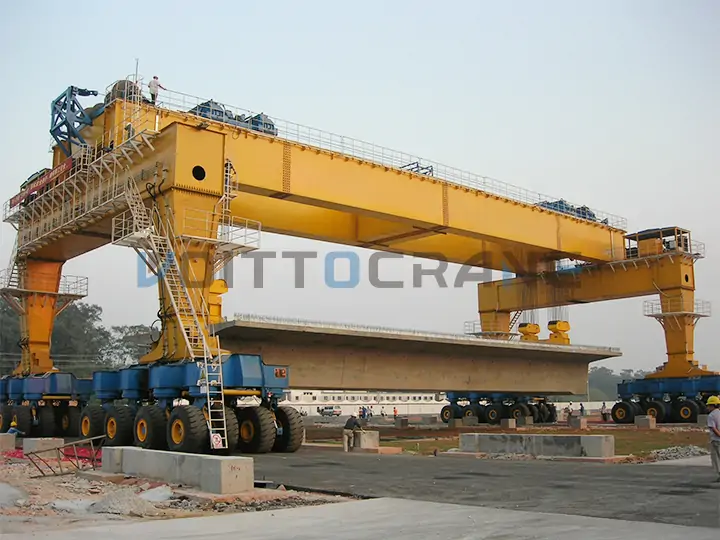
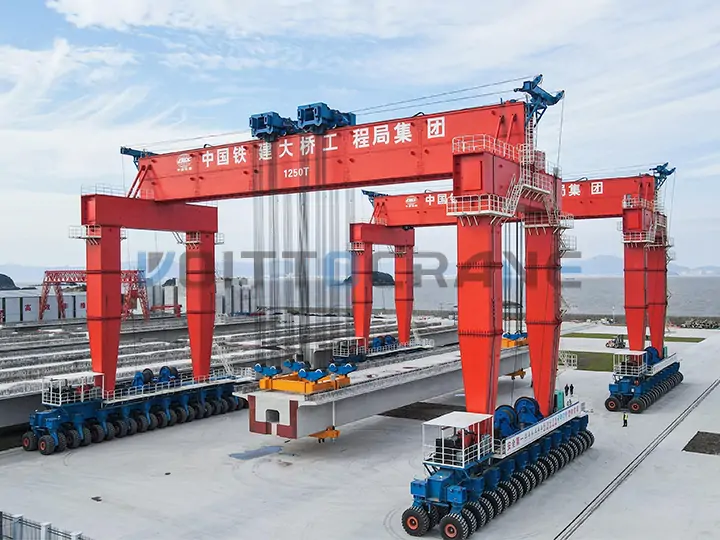
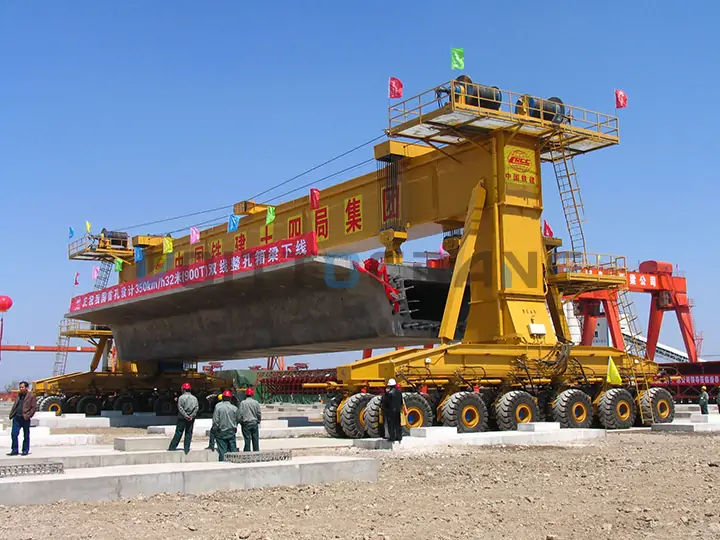
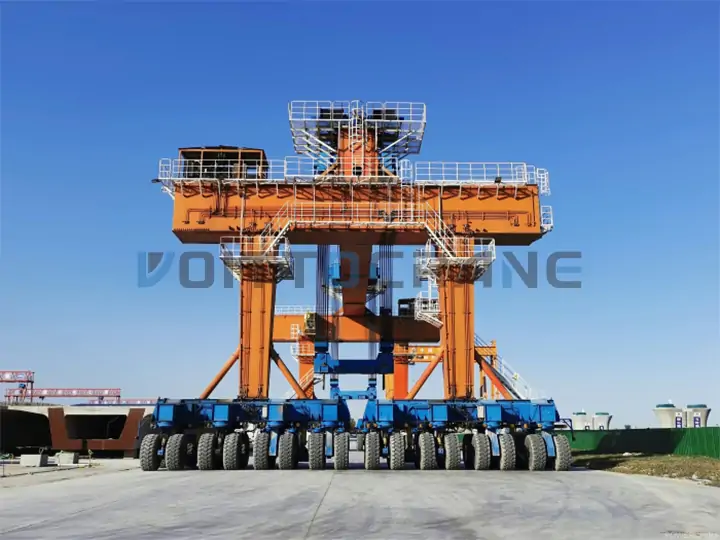
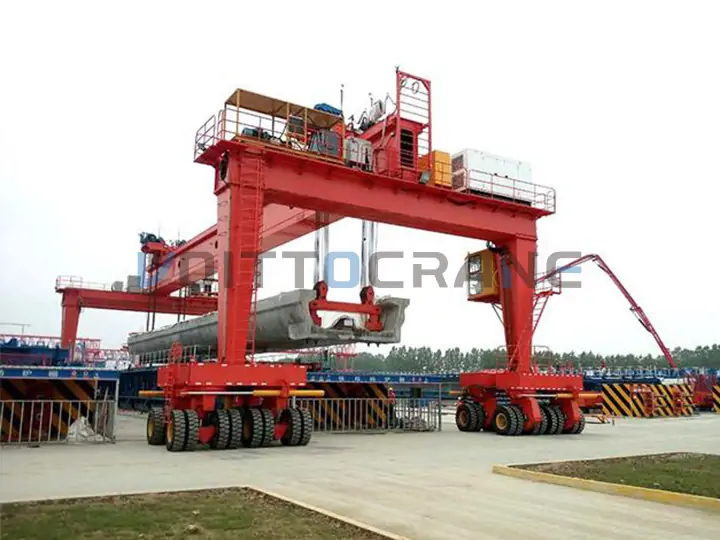
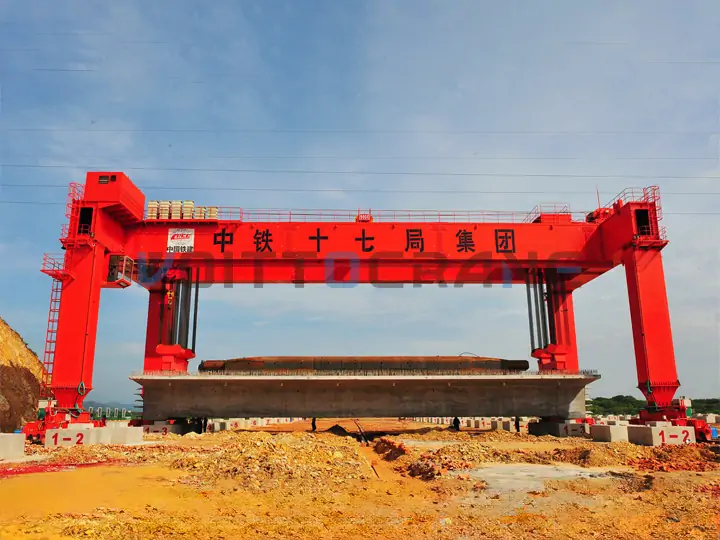
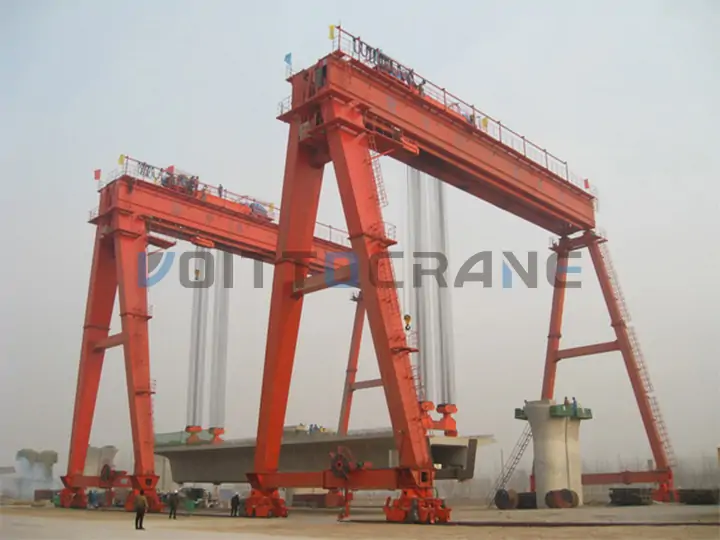
The precast girder moving gantry crane is a type of heavy-duty lifting equipment. Users can choose between wheeled and rail-mounted models based on their operational needs. This equipment is widely used in high-speed rail, highway bridge, and urban rail transit construction projects to transport box girders, T-beams, U-beams, and large precast bridge components between precast casting beds, curing areas, beam storage yards, inspection stations, and loading points. It features a double-girder structure with adjustable outrigger spans (up to 38.5 meters) and a hoisting speed ranging from 0.05 to 1 meter per minute.
Product Description
A precast girder moving gantry crane is a specialized lifting device with a rated capacity of 30 to 900 metric tons, designed for material handling at precast bridge production sites. Its structure typically consists of a box-shaped main girder paired with adjustable-span outriggers, enabling it to span piers, roads, or obstacles while supporting an entire precast beam span above. VOITTO Crane can customize the design of each unit based on the specific span, lifting height, and ground load-bearing conditions at the site.
The precast beam moving gantry crane is equipped with a comprehensive safety protection system. Its key safety features include: overload protection, emergency stop, travel and hoisting limit protection, collision-prevention devices, synchronized travel and hoisting control, automatic alignment correction, wind-speed monitoring, wind-resistant rail-clamping devices (for rail-mounted models), and real-time fault diagnosis. The intelligent PLC control system continuously monitors the equipment’s operating status, ensuring coordinated movement of all drive units and maintaining a stable load throughout the entire handling process.
Applications
This precast beam mobile gantry crane is used in various transportation infrastructure construction sectors.
Precast Beam Production Sites: This equipment is responsible for moving finished precast beams to storage areas. It is designed to maximize space utilization at precast beam production sites.
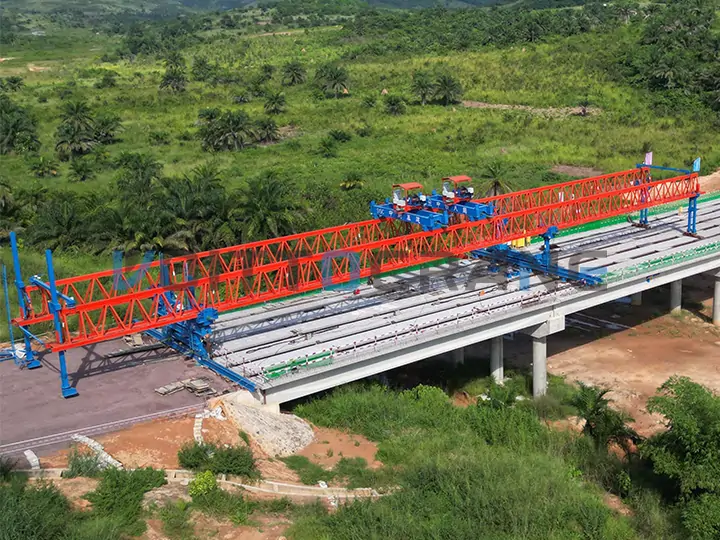
Highway and Expressway Bridge Construction: In highway and expressway bridge projects, operators use this equipment to transport box girders or T-beams from precast casting beds to elevated bridge piers.
Urban Rail Transit and Subway Viaducts: In urban rail transit projects, this precast beam moving crane is used to install standardized precast segments along elevated subway lines.
High-Speed Rail Bridge Projects: Utilizing synchronized lifting technology and laser-guided positioning, this mobile precast girder erection gantry crane precisely meets the construction requirements of high-speed rail bridge projects.
Features
The Precast Girder Moving Gantry Crane is designed for safe, stable, and efficient handling of precast bridge girders. Its optimized structure and intelligent control system ensure reliable performance in demanding bridge construction projects.
Heavy-Load Handling Capacity: The precast girder transporter equipment features a high-strength steel structure and load-bearing design, enabling it to safely handle large precast concrete components such as box girders and T-beams.
Synchronized Operation: This equipment utilizes a multi-drive travel system and synchronized control technology.
Precise Positioning Control: Through a PLC control system and precise operational adjustments, the girder is accurately positioned between the girder production platform, storage area, and loading zone.
Hydraulic Jacking and Support System: The unit is equipped with a hydraulic synchronous jacking system that evenly supports the weight of large precast beams.
High Mobility: Users can opt for a rubber-tyred system to adapt to different beam yard layouts and construction environments.
Advanced Safety Features: The equipment integrates safety devices such as overload protection, limit switches, collision prevention, synchronization monitoring, and emergency stop.
Improved Production Efficiency: The precast girder transporter crane is between the girder production area, storage area, and transportation area.
Customized Design: Crane manufacturers can provide customized design solutions based on girder weight, span, yard layout, and project construction requirements.
Specifications
The following specifications outline typical configurations for a Precast Girder Moving Gantry Crane.
Parameter
Typical Value
Load Capacity
30 – 900 t
Main Girder Span
20 – 38.5 m
Lifting Height
6 – 12 m
Center Distance between two rails
1200 mm
Hoisting Speed
0.05 – 0.5 – 1 m/min
Trolley Traveling Speed
Hydraulic Push Rod
Crane Traveling Speed
1 – 10 – 12(empty load)
Empty Load Steering
90°
Total Weight
505 t
Duty Class
A3
Power Supply
380V / 50Hz, 3-phase (customizable)
Working Principle
The operating principle of a precast girder moving gantry crane is based on a coordinated hoisting, traveling, and synchronization control system that operates along fixed or temporary tracks. The hoisting mechanism lifts the beam from the precast formwork using multiple lifting points, thereby distributing the load evenly across the cross-section of the concrete beam.
After the beam is lifted, the crane’s travel mechanism moves along the track toward the target position, guided by limit switches and anti-collision sensors. During this process, a PLC coordinates the motor speeds at each hoisting and travel point to prevent beam damage or structural instability caused by uneven load distribution. When the equipment reaches the target position, the crane uses a fine-tuning control system to slowly lower the beam.
Parts and Components
Understanding the main components of this precast beam moving gantry crane helps procurement teams evaluate build quality and maintenance requirements.
Main Beam: As the primary load-bearing structure of the precast beam moving gantry crane, this component supports the weight of the precast beams and operational loads.
Outriggers: These components connect the main beam to the travel system, evenly distributing the load of the beams to the tracks or ground.
Beam Support Device: This component supports and secures the precast beams.
Hydraulic Lifting System: Hydraulic cylinders are used to lift, lower, and adjust the height of the precast beams.
Travel System: This component drives the equipment along the tracks or within the construction area.
Wheel Sets/Tire System: This component supports the entire machine’s weight and provides propulsion.
Synchronization Control System: This component coordinates the synchronized operation of multiple drive units and hydraulic mechanisms.
Electrical Control System: This component controls the equipment’s travel, lifting, and various functional movements.
Hydraulic Power Unit: This component provides power to the hydraulic lifting and support mechanisms.
Safety Protection System: This primarily includes overload protection, limit switches, collision prevention, and emergency stop devices.
Precast Girder Moving Gantry Crane Manufacturer and Supplier
VOITTO Crane is dedicated to manufacturing and supplying precast girder mobile gantry crane systems for precast beams to bridge, highway, and rail transportation contractors worldwide. Each crane is custom-designed to meet the specific span, lifting capacity, and duty cycle requirements of each project and is validated through structural calculations and load tests before shipment.
In addition, the VOITTO engineering team provides installation guidance, spare parts planning, and after-sales technical support to help contractors maintain efficient equipment operation on infrastructure projects. Please contact us for project solutions.
Specialized in Overhead Crane, Gantry Crane, Jib Crane, Port Crane & EOT Crane export solutions. 10+ years helping global clients with pre-sales consultation, capacity selection and site-specific configurations.
What are precast beam moving gantry cranes primarily used for?
Precast beam handling gantry cranes are used to transport heavy precast concrete beams to designated locations.
What is the lifting capacity of a precast girder moving gantry crane?
The rated lifting capacity of this equipment typically ranges from 30 tons to 900 tons, depending on the beam length, span configuration, and project conditions. For high-speed rail box girders weighing over 700 tons, large specialized models are typically used.
Can this gantry crane operate on uneven or temporary tracks?
Yes. With adjustable outriggers and a multi-wheel steering bogie, the equipment can operate on temporary track foundations with minor elevation differences. Note: The bearing capacity of the foundation must be verified before use to prevent uneven settlement.
When should maintenance be performed on this equipment?
It is recommended to conduct a routine inspection every 200 operating hours (covering wire ropes, brakes, and structural welds). Major overhauls are typically performed after 2,000 to 3,000 operating hours, in accordance with the manufacturer’s guidelines.
Qualification and Honor
Engineered Strength, Global Crane Supplier
service
Exclusive and Considerable, Customer First.
01
Reliable and Customized Solutions
Our pre-sale team provides consultations, tailoring solutions to your needs and environment.
Offer customization options for lifting capacity, span and lifting height etc. to meet specific needs.
02
Updated Production Process
Real-Time Progress Updates: Weekly reports and PM communication.
3-5 years warranty and free replacement for non-manufacturing defects.
24/7 online support and on-site assistance for crane issues.
FAQ
Engineered Strength, Global Crane Supplier
How are large gantry cranes shipped overseas?
Large gantry cranes are typically shipped overseas through modular disassembly, where the crane is broken down into major components (beams, legs, hoists) for containerized transport. For mega-cranes, we use specialized heavy-lift vessels equipped with reinforced decks, and critical parts are protected with anti-corrosion coatings during transit.
Have your gantry cranes been used in major infrastructure projects?
Yes, our gantry cranes have participated in large-scale bridge construction projects and railroad construction in Brazil, Pakistan, Indonesia, Malaysia, Egypt, and other countries, in which we have played a particularly key role and contributed to these construction projects!
Do you ship internationally?
Yes, international shipping and export support are available for global customers.
Get In Touch
Please feel free to leave a message. We will reply in 24 hours.
Please specify your requirement by referring to the following aspects:
Which crane product do you need?
What is the maximum lifting capacity (in tons) required for your project?
Could you specify the lifting height (in meters) needed?
Can you provide details on the working environment, such as ground conditions, space limitations, and any obstacles?
What is the expected frequency of use and the duration of the project?




 English
  Español
  Português
  العربية
  Français
  Русский