blog

magnetic crane
08 September 2026

Electromagnetic Crane Specifications & Selection Guide: Capacity, Duty Cycle, Magnet Type, and Key Buying Factors

Electromagnetic cranes for industrial use typically range from 5 to 64 tons lifting capacity, carry a market reference price of $18,000–$120,000+ depending on configuration, and are rated at work grade A5–A8 under ISO 4301 crane classification. If you’re sourcing one for a steel mill, scrapyard, or metal processing facility, the most common mistake isn’t picking the wrong capacity — it’s specifying the wrong magnet type or underestimating the duty cycle requirement, both of which affect whether the crane will actually survive your operating rhythm. This guide is for procurement managers and equipment engineers who are past the “what is an electromagnetic crane” stage and need a structured way to match specifications to their actual working conditions. You’ll find a quick-reference comparison table, a breakdown of the four key specification dimensions (crane type, magnet grade, duty cycle, and capacity), common buying mistakes that inflate real cost, and a checklist for evaluating supplier documentation. Quick Reference: QC vs QCL Electromagnetic Crane Specifications Before diving into selection logic, here’s the core comparison between the two standard electromagnetic crane configurations available from Voitto Crane:…

READ MORE
29 August 2026

Red Flags When Sourcing a Lifting Equipment Manufacturer: A Buyer’s Checklist

Choosing the wrong lifting equipment manufacturer can cost far more than the price difference you saved. A crane that arrives without a valid CE Declaration of Conformity may be held at customs; one built to the wrong duty class can fail within months of installation. The damage — downtime, retrofit costs, liability exposure — typically runs several times the original equipment price. Most procurement mistakes at this stage don’t come from obvious scams. They come from manufacturers who look credible on paper but can’t support their claims with documentation. The warning signs are consistent and, once you know what to look for, straightforward to check before you commit to an order. This checklist covers seven red flags specific to overhead crane, gantry crane, and jib crane procurement. For each flag, you’ll find a concrete verification step you can run during the quoting stage — before any deposit changes hands. Quick Reference: Verification Checklist Red Flag What to Request Pass Threshold No CE documentation EC Declaration of Conformity Specific to your model, not generic Vague duty class specs FEM/ISO duty class…

READ MORE
Steel Mill Crane
17 August 2026

Overhead Crane for Steel & Aluminum Industry in Oman: Selection Guide & Pricing (2026)

An overhead crane for steel and aluminum industry applications in Oman typically runs $10,000 to $130,000+ in market reference pricing, with the wide range driven almost entirely by one factor: whether the crane handles molten metal or finished product. A ladle-duty double girder crane rated for continuous high-temperature service costs several times more than a standard workshop crane of the same tonnage, because the structural and safety requirements are fundamentally different. Oman’s steel and aluminum sector has scaled fast — Jindal Steel Sohar alone runs a 2.4-million-ton integrated DRI-EAF steel plant in the Sohar Free Zone, and Sohar hosts one of the region’s largest aluminum smelters alongside a titanium processing complex nearing full completion. Procurement teams sourcing overhead cranes for these facilities face a problem that generic “cranes for Oman” listings don’t solve: a crane spec that works for a finishing bay will fail — or be dangerously under-engineered — in a melt shop or potroom. This guide breaks down which overhead crane configuration fits which stage of steel and aluminum production, how duty class and heat protection should be…

READ MORE
gantry crane manufacturer
12 August 2026

Gantry Crane for Sale in Peru: Mining & Port Pricing, Types & Selection Guide

A gantry crane for sale in Peru typically runs $9,000 to $230,500+ (approximately S/ 30,400 to S/ 779,000+) FOB factory, depending on lifting capacity, span, and whether the unit is destined for a mine maintenance yard or a coastal port terminal. At current exchange rates (1 USD ≈ 3.38 PEN, August 2026), a mid-range 10-ton double girder unit lands around $22,000–$40,000, or roughly S/ 74,400–S/ 135,200. Peru’s mining sector — led by Antamina, Cerro Verde, and Las Bambas — and its three main Pacific ports (Callao, Matarani, and the newer Chancay terminal) drive most of the country’s demand for gantry cranes. Procurement teams sourcing for these environments face a problem generic buying guides don’t address: a crane spec written for a European warehouse doesn’t automatically hold up at 4,000 meters of altitude in the Andes, or under the salt-air corrosion load at a container terminal on the coast. This guide walks through which gantry crane type fits which Peruvian application, how capacity and duty class should be set for mining versus port duty cycles, what certification your supplier needs to…

READ MORE
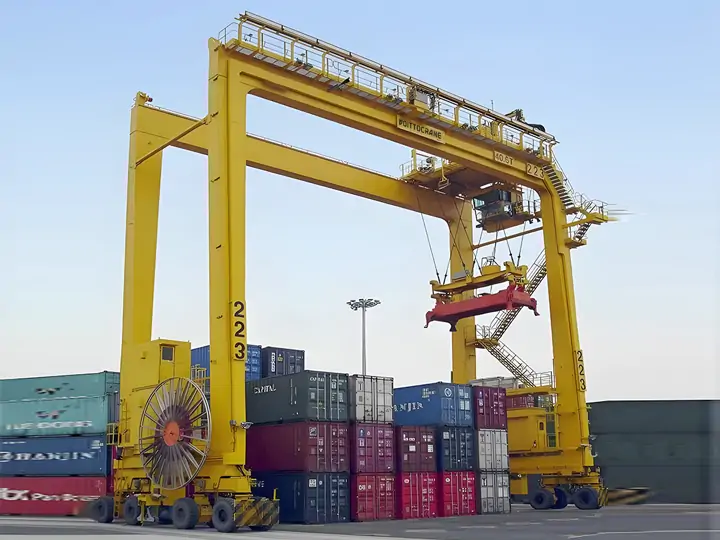
RTG rubber tyred gantry crane
31 July 2026

Cranes for the Shipbuilding Industry: Types, Specs & How to Choose the Right One

Shipyards need more than a generic crane — they need the right lifting solution matched to each production zone. A double girder overhead crane covering a steel-plate fabrication hall operates under completely different load cycles and environmental stresses than a gantry crane straddling an open dry dock. Get the match wrong and you’re looking at chronic production delays, accelerated corrosion failure, or a crane that physically can’t reach what it needs to lift. For most mid-size shipbuilding yards, the core fleet typically spans two to four crane types: overhead cranes for indoor fabrication bays, gantry or rail gantry cranes for block assembly and dry docks, and jib cranes for outfitting stations and quayside repair. Market reference prices from Chinese manufacturers start around $15,000–$35,000 for industrial-grade overhead cranes and rise to $80,000–$300,000+ for heavy gantry systems — depending on capacity, span, and corrosion protection grade. This guide walks through each crane type used in shipbuilding, the key specs that determine fit, what corrosion and duty ratings to demand, and how to verify compliance before signing a purchase order. Quick Reference: Cranes…

READ MORE
jib crane for automotive assembly
24 July 2026

Jib Crane for Automotive Assembly Plants in Thailand: Types, Load Specs & Selection Guide

A jib crane for automotive assembly is a localized, station-level lifting device — floor-mounted, wall-mounted, or articulating — that handles loads from 0.25 to 10 tons at fixed workstations along a production line. Thailand’s automotive plants in Rayong, Chonburi, and Ayutthaya deploy them at engine assembly cells, body welding stations, trim lines, and maintenance bays, where a shared overhead crane system would create scheduling bottlenecks and slow down takt-time targets. The practical problem most equipment managers face is not whether to use jib cranes, but which type belongs at which station and what capacity to specify. Get the type wrong and you either cap your load range too low for heavy mold handling, or you over-engineer a simple trim-line application and pay twice what you needed to. Get the installation type wrong — wall-mounted where the column can’t carry the bending moment, or floor-mounted where there’s a buried utility trench — and you’re facing a costly rework before production even starts. This guide maps each jib crane type to its correct automotive assembly application, gives you the load capacity ranges…

READ MORE
gantry crane manufacturers
15 July 2026

Gantry Crane Manufacturers in UAE: Applications, Industry Trends, and How to Choose a Reliable Supplier

Thanks to continued investment in ports, logistics, infrastructure, manufacturing, and renewable energy projects, the United Arab Emirates has become one of the largest markets for heavy lifting equipment in the Middle East. As demand for material handling equipment grows, simply comparing prices is no longer sufficient when selecting among the many gantry crane manufacturers. Buyers need to comprehensively evaluate a manufacturer’s engineering capabilities, compliance, local service levels, and long-term operating costs. For most industrial projects, selecting a manufacturer with extensive experience in similar applications is far more valuable than simply choosing the supplier with the lowest quote. The crane’s duty class, structural design, corrosion protection, and after-sales support directly determine the equipment’s reliability throughout its entire lifecycle. This guide provides a detailed overview of gantry crane applications in the UAE, the latest industry trends, key technical specifications that influence procurement decisions, and practical methods for selecting reliable suppliers. Why the UAE Has Strong Demand for Gantry Crane Manufacturers Understanding the local market demand in the UAE helps buyers identify gantry crane manufacturers with relevant project experience and technical capabilities. Port…

READ MORE
gantry crane for sale
10 July 2026

Cranes for Precast Concrete Industry: Selection, Specs & Installation

Cranes for precast concrete industry plants require three decisions most suppliers understate: duty class, two-zone layout, and below-hook compatibility. A double girder overhead crane spanning your casting bay typically starts around $28,000–$95,000, while an outdoor double girder gantry crane for yard and loading operations generally runs $18,000–$120,000 — with the final figure driven far more by span, duty class, and control specification than by raw tonnage alone. Precast plants handle a uniquely punishing combination of loads: heavy (beams and girders commonly reach 20–60 tons), geometrically awkward (long, asymmetric, with engineered lifting inserts at fixed points), and handled repeatedly at high cycle frequency throughout a shift. A crane sized purely by rated capacity but specified at the wrong duty class will reach its maintenance threshold in a fraction of its design life — and in a precast environment, unplanned crane downtime cascades directly into delayed demolding and missed delivery schedules. This guide walks procurement managers and equipment engineers through crane type selection by production zone, the key parameters that actually drive cost and reliability, certification requirements for import clearance, and what…

READ MORE
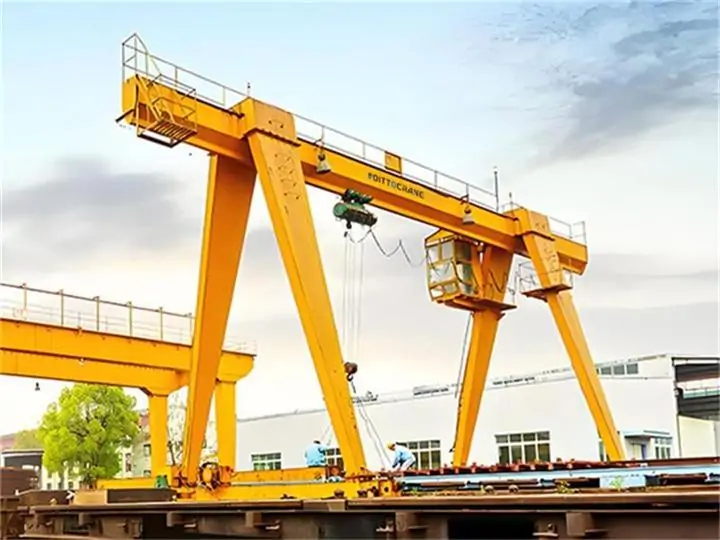
Single-Girder Gantry Crane
02 July 2026

Cranes for Manufacturing Industry: Matching Crane Type to Production Line

For most manufacturing plants, the fastest way to narrow down crane options is to work backward from what’s happening on the line — not from a catalog of crane types. A single-girder overhead crane rated for 5–10 tons typically runs $8,000–$25,000, while a double-girder crane in the 20–50 ton range moves into $30,000–$120,000+ depending on span and duty class. The harder problem isn’t the price — it’s that most buying guides list crane types and specs without connecting them to what’s actually happening at each stage of a production line, leaving procurement teams to guess whether a jib crane or an overhead system fits their assembly bay. This guide flips that order. It matches cranes for manufacturing industry buyers to production line stages — raw material intake, assembly, machining, and packaging — then covers the parameters and certifications that actually affect your purchase decision. Quick Reference: Cranes for Manufacturing Industry The table below compares the crane types most commonly used across manufacturing production lines, before we get into which one fits which stage of your process. Crane Type Typical Capacity…

READ MORE
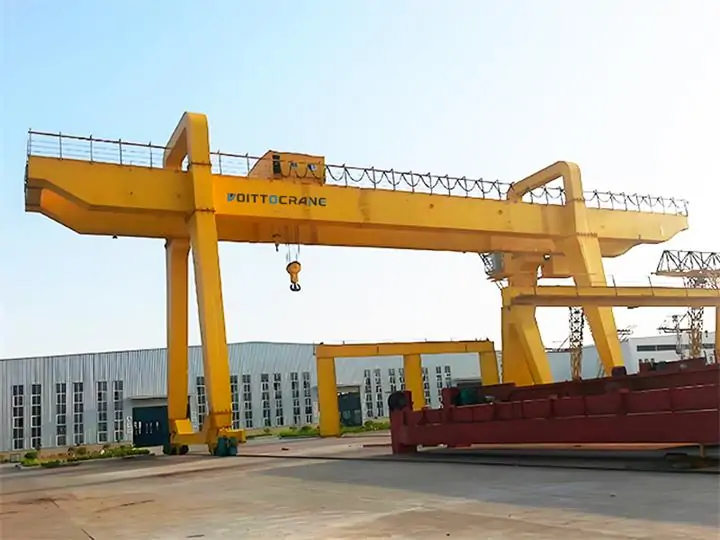
Double Girder Gantry Crane
24 June 2026

Mining Industry Overhead Crane: The Complete Harsh-Environment Selection Guide

Choosing the wrong overhead crane for a mining facility doesn’t just slow production — it creates safety failures that shut operations down entirely. A mining industry overhead crane must do something most industrial cranes don’t: sustain rated performance in environments where abrasive dust, corrosive moisture, explosive gases, and continuous heavy cycles attack every component simultaneously. For most mineral processing, smelting, and ore-handling applications, a double girder overhead crane in duty class M5–M7 is the starting point, not the ceiling — and prices for mine-grade units typically range from $25,000 to $350,000+ depending on capacity, span, and environmental protection level. This guide is written for procurement managers and plant engineers evaluating overhead crane options for mining facilities. You’ll find a side-by-side comparison of crane configurations, a structured selection framework for harsh conditions, the certifications suppliers must prove before shipment, and the procurement mistakes that most buyers only learn after the first breakdown. By the end, you’ll be able to write a technically grounded specification, ask the right questions in supplier negotiations, and avoid the hidden cost traps that turn a competitive…

READ MORE
3 ton overhead crane
22 June 2026

Overhead Crane in Saudi Arabia: Market & Suppliers

Sourcing an overhead crane in Saudi Arabia today means buying into a market worth roughly $54–67 million and projected to reach about $111 million by 2030 — and one that still runs largely on imports, with China supplying more than half of the Kingdom’s bridge- and gantry-crane purchases. For most workshop and light-industrial duty, a factory-direct overhead crane lands in a market reference range of $5,000–$150,000, with heavy process cranes climbing past $300,000. Those headline numbers are easy to find; what they don’t tell you is which supplier route, specification, and compliance path actually fit a Saudi site. If you’re a procurement manager or plant engineer specifying a crane for a facility in Riyadh, Jeddah, Dammam, or Jubail, the real friction isn’t price — it’s matching the machine to 50°C summers, coastal corrosion, the right duty class, and CE/FEM/ISO compliance. Get any of those wrong and a cheap crane becomes an expensive one stuck at customs or failing early on your project. This guide covers what’s driving demand, how the main crane types and price bands compare, the four supplier…

READ MORE
15 June 2026

Overhead Crane for Steel Mill: Types, Duty Class & How to Choose the Right One

Selecting the right overhead crane for a steel mill is not a catalog decision — it is an engineering decision with direct consequences for production continuity and worker safety. A ladle crane transporting 200 tons of molten steel at 800°C and a coil-handling crane moving finished product share the same name but almost nothing else: different work grades, different structural standards, different safety systems, and a price difference that can exceed $300,000. Steel mills present five simultaneous challenges that standard industrial cranes are not designed for: radiant heat from furnaces and ladles, airborne metallic dust, corrosive atmospheres, continuous multi-shift operation, and catastrophic consequences if a load is dropped. Each of those factors drives a specific design requirement, and every requirement narrows your crane specification further. This guide gives plant engineers and equipment managers a complete, bay-by-bay selection framework — crane type, capacity range, duty class, key technical features, and indicative price — so you can frame an accurate specification before you talk to any supplier. Quick Reference: Overhead Crane Types for Steel Mill The table below summarizes every overhead crane…

READ MORE
Top