Overhead Crane in the Automobile Industry: Applications, Types & Selection Guide
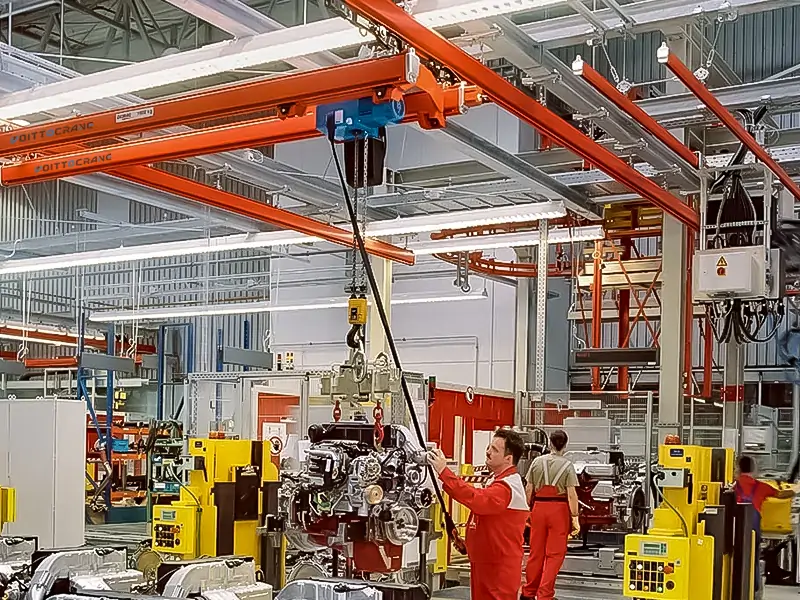
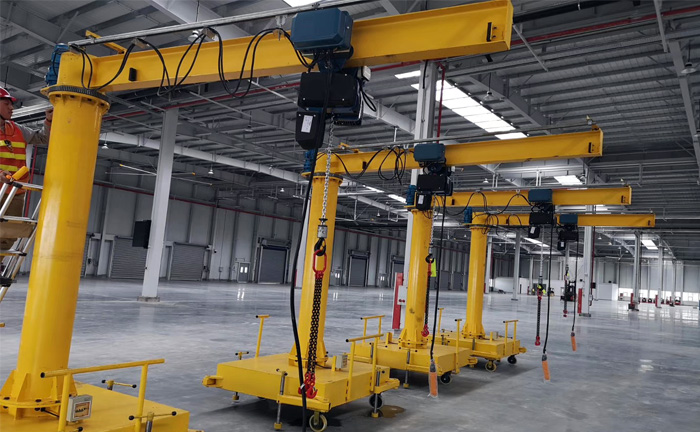
The right overhead crane in the automobile industry is defined by production stage, not by tonnage alone. A stamping press needs a 20–32 t die-gripper crane with ±1 mm positioning accuracy. A trim-and-final assembly cell needs a 250–500 kg KBK aluminum rail system that operators can push by hand. Specifying one without the other wastes budget or creates a safety gap. Automotive plants run 24 hours a day at duty class M5–M6 (per FEM 1.001), and unplanned crane downtime translates directly to line stoppage. Engineers and procurement managers need cranes matched to load, cycle frequency, and environmental conditions — not a generic “overhead crane for auto” catalog page. This guide maps every major production stage to the correct crane type, key specifications, and compliance requirements. Use the table in the next section to shortcut your selection process. TL;DR: Cranes in Automotive Production • Production Scope: Overhead cranes in the automobile industry support six distinct production stages, each requiring specific crane types and lifting capacities. • System Selection: Use double-girder bridge cranes (5–50 t) for stamping and body-in-white; utilize KBK rail…







 English
  Español
  Português
  العربية
  Français
  Русский