
Introduction
Scissor lift prices typically range from $8,000 to $50,000+, depending on lifting height, load capacity, platform size, and whether the unit is designed for indoor or rough-terrain use. In this article, we’ll explain what affects the cost, compare different lift types, and help you estimate the right budget before buying.


Average Scissor Lift Price Range by Type
If you are comparing the costs of scissor lifts, the quickest approach is to first understand the price ranges for different types. Based on 2026 market conditions, most buyers have budgets ranging from $4,000 to $36,000 (or even higher), depending on the lift type, working height, and drive system. Furthermore, equipment costs vary due to differences in materials and dimensions; components may be made of stainless steel, aluminum alloy die-castings, or zinc alloy die-castings. If you require aluminum alloy die-castings, you will need to commission an aluminum die casting manufacturer for production; the same applies to zinc alloy die-castings.
Recommended Price Table
| Type | Typical Working Height | Load Capacity | Average Price Range |
|---|---|---|---|
| Mini / Manual Mobile | 6–10 m | 300–500 kg | $4,000–$8,000 |
| Hydraulic Mobile Scissor Lift | 6–14 m | 300–1,000 kg | $6,000–$12,000 |
| Electric Self-Propelled | 8–16 m | 230–450 kg | $12,000–$25,000 |
| Standard Indoor Electric | 19–32 ft | 500–1,500 lbs | $13,950–$30,000 |
| Rough Terrain Diesel / 4WD | 32–43 ft | 1,500–3,000 lbs | $18,000–$36,000+ |
| Heavy-Duty High Reach | 16–22 m+ | 500–1,000 kg | $25,000–$50,000+ |
For most warehouse and maintenance projects, electric self-propelled models are the most commonly searched and purchased range, typically around $12,000–$25,000.
Mobile Hydraulic Scissor Lift
If you need a cost-effective solution for factories, warehouses, or maintenance work, this is usually the most economical option. We often recommend this Mobile Hydraulic Scissor Lift when you mainly need vertical lifting and do not require self-driving.
The biggest price drivers are working height and platform dimensions. For example, moving from 10 m to 14 m can increase the price by around 35%.
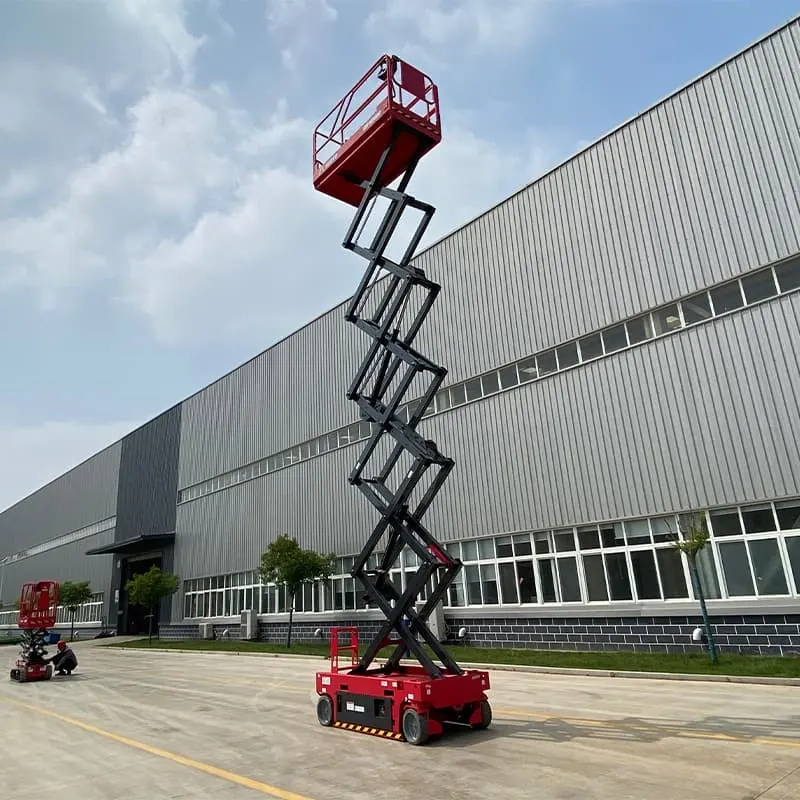
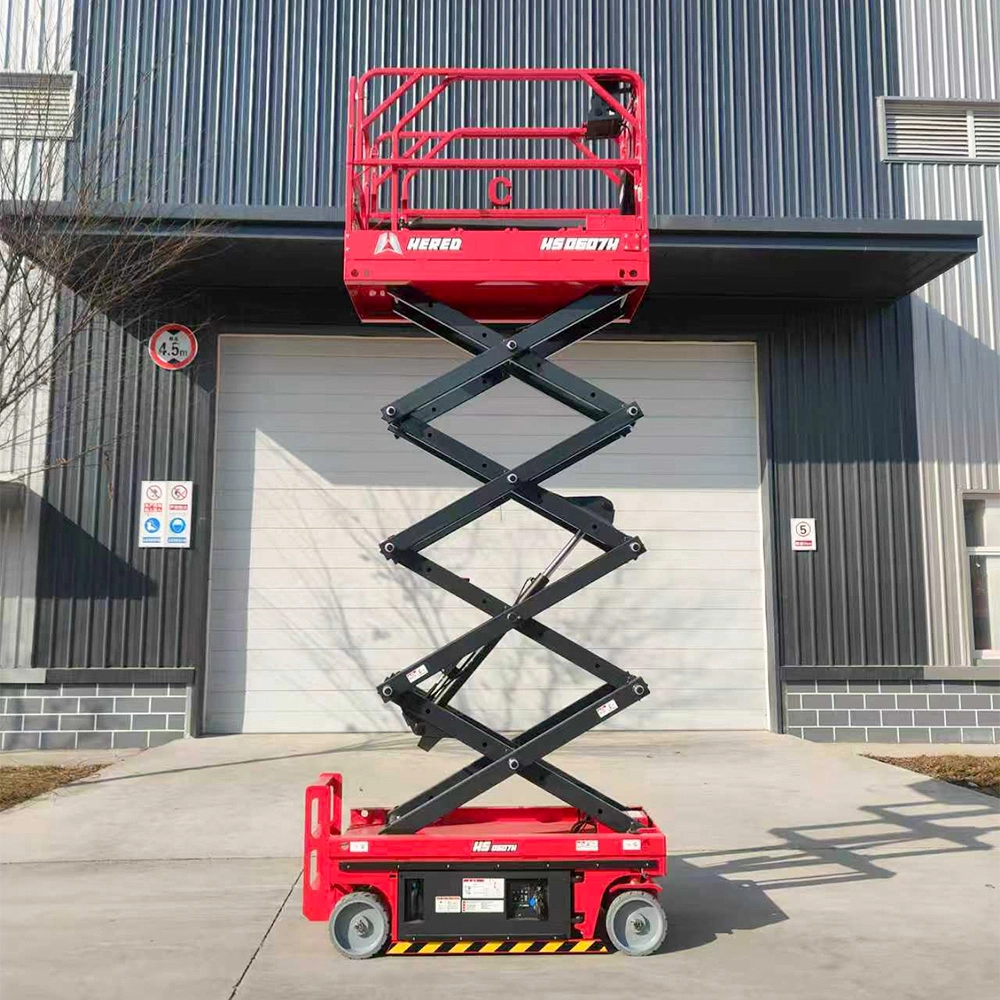
Electric Self-Propelled Scissor Lift
The Electric Self-Propelled Scissor Lift is one of the most searched by buyers because it balances efficiency and cost. If you need the platform to move while elevated, you will pay more for the drive motor, battery pack, and control system.
In most cases, compared with standard mobile models, the self-propelled function can raise the price by 20%–40%. We usually suggest this type for warehouses, airports, shopping malls, and indoor installation projects.


Standard Indoor Electric Lift
For indoor slab floors, this is the mainstream commercial option. Your cost mainly depends on platform height, load capacity, and battery quality.
For example, a 19 ft model often starts around $13,950, while a 32 ft unit may reach $27,000–$30,000. If you choose an extended deck, the total cost will increase further.
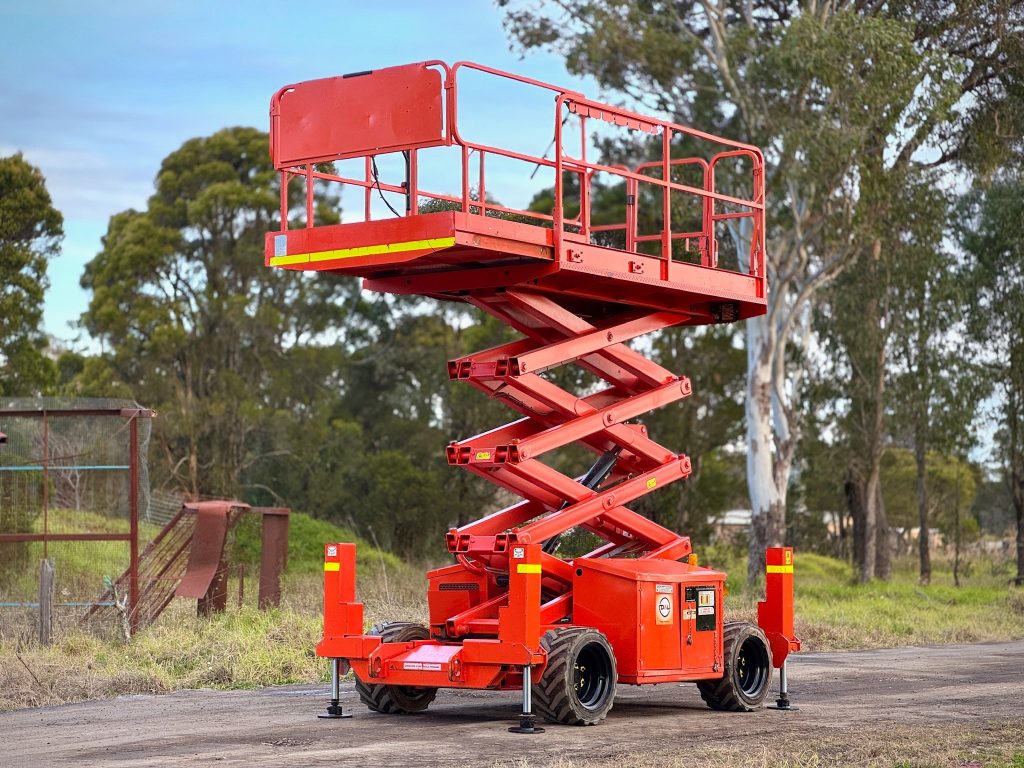
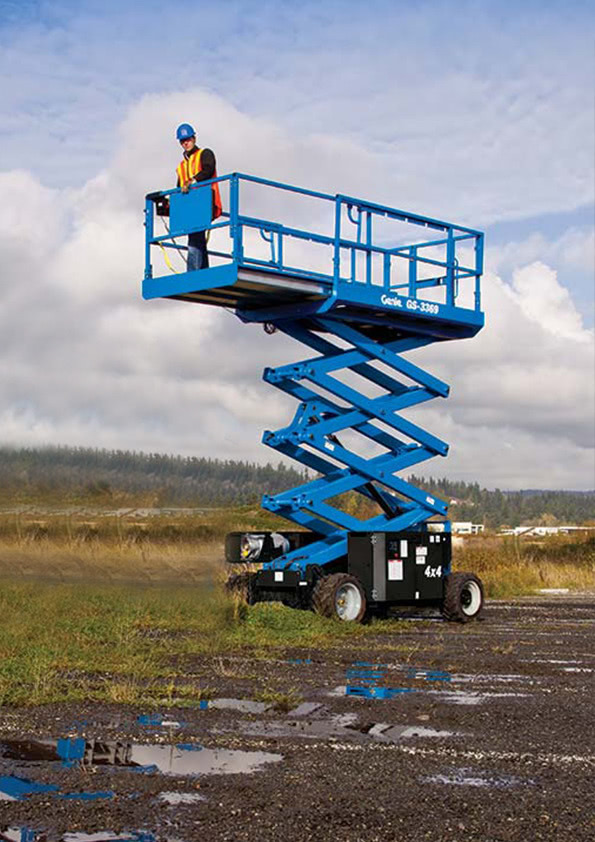
Rough Terrain Diesel Scissor Lift
If your project is outdoors, this type has the largest price difference. Once you need 4WD, pneumatic tires, stronger frame, and higher load ratings, the cost rises quickly.
We usually tell customers that terrain capability is the key cost factor. Rough terrain models generally start from $18,000 and can exceed $36,000+ for higher working heights.
Heavy-Duty High Reach Models
For construction and industrial applications above 16–22 m, the price is mainly driven by height, platform stability, and safety systems.
If you need larger platform capacity and stronger structure support, the price can easily exceed $50,000. This type is best suited for long-term commercial use where uptime and safety matter more than initial cost.
4 Factors Affect Scissor Lift Cost?
The cost of a scissor lift is not determined by one factor alone. In most cases, the final price depends on working height, load capacity, power type, and whether you plan to use it indoors or outdoors.
From our experience, the biggest price difference usually comes from the lifting height and application environment. If you clearly define your project needs first, we can help you avoid paying for specifications you do not actually need.
1. Working Height
Working height is usually the largest factor affecting scissor lift cost. In simple terms, the higher you need to lift, the higher the price.
For example, a 6 m model is often suitable for warehouse maintenance and costs significantly less than a 12 m or 16 m platform. As height increases, the lift requires a stronger scissor structure, larger hydraulic cylinders, and enhanced safety systems, all of which raise the overall cost.
Typical height-based ranges include 6 m, 8 m, 10 m, 12 m, and 16 m, and each step up can increase the price by 15%–30% depending on the type.
2. Load Capacity
Load capacity is another key factor buyers focus on when comparing prices. Common capacities include 300 kg, 500 kg, 1000 kg, and 2000 kg.
The larger the load capacity, the stronger the steel frame, platform deck, and hydraulic support system need to be. This directly increases manufacturing cost.
For example, if you need to lift both workers and heavy tools or materials, choosing a 1000 kg or 2000 kg model will cost noticeably more than a standard 300 kg platform.
3. Power Type
The power system has a direct impact on both price and application.
Electric scissor lifts are usually preferred for indoor use because they are quieter, cleaner, and easier to maintain.
Hydraulic scissor lifts are often more cost-effective for standard factory lifting tasks and are widely used in workshops and warehouses.
Diesel rough terrain lifts are generally the most expensive because they are designed for outdoor construction environments and require stronger engines, 4WD systems, and more durable chassis structures.
When you choose the power type, we usually recommend starting from your actual work scenario rather than price alone.
4. Indoor vs Outdoor Use
Whether you use the lift indoors or outdoors can significantly change the cost.
For indoor use, buyers usually choose electric models with standard wheels and compact platform sizes, which helps control the budget.
For outdoor use, especially on construction sites or uneven ground, you may need rough terrain models with larger tires, stronger frames, and better wind stability. These features can increase the price substantially.
If you tell us where the lift will be used, we can usually help you narrow down the most cost-effective option much faster.
Scissor Lift Cost by Height
When you are comparing scissor lift prices, working height is usually the biggest cost factor. In general, the higher the platform, the more you pay for a stronger steel structure, larger hydraulic cylinders, and enhanced safety systems.
To help you estimate your budget quickly, we’ve broken down the average price range by the most commonly searched heights below.
6m Scissor Lift Price
A 6m scissor lift typically costs $8,000–$10,000 and is one of the most economical options for indoor maintenance, warehouse picking, and low-height installation work.
If your project mainly involves standard ceiling work or equipment inspection, this height usually offers the best value. We often recommend this range when you want to control budget while meeting daily lifting needs.
8m Scissor Lift Price
An 8m scissor lift usually ranges from $9,000 to $12,000, making it a popular choice for warehouses, shopping malls, and factory maintenance.
Compared with 6m models, the higher platform requires stronger lifting components and better stability, which slightly increases the cost. If you need more flexible reach without a major budget jump, this is often the most practical option for you.
10m Scissor Lift Price
A 10m scissor lift generally costs $10,000–$15,000, depending on load capacity and whether you choose a mobile or self-propelled model.
At this height, buyers often start comparing electric drive and hydraulic options. We usually suggest evaluating your work frequency first, because self-propelled units can improve efficiency but also raise the total investment.
12m Scissor Lift Price
A 12m scissor lift typically falls between $12,000 and $18,000 and is widely used for commercial building maintenance, warehouse operations, and indoor construction projects.
The price increase mainly comes from the stronger frame design, larger platform deck, and higher safety requirements. If you need both height and stability, this range offers a balanced solution for long-term use.
16m Scissor Lift Price
A 16m scissor lift usually costs $18,000–$30,000+, especially for self-propelled or rough-terrain configurations.
At this height, structural strength, wind resistance, and platform safety become critical. We often recommend confirming whether you need indoor electric or outdoor rough-terrain use first, as this can create a significant price difference and directly affect your final budget.
New vs Used Scissor Lift Cost
A new scissor lift typically costs $8,000 to $30,000+, while a used unit usually ranges from $4,000 to $15,000, depending on height, brand, year, and operating hours. If you need long-term use, better warranty coverage, and lower maintenance risk, we generally recommend a new machine. For short-term projects or tighter budgets, a well-maintained used lift can help you reduce the initial investment.
When comparing new and used options, you should look beyond the purchase price alone. Factors such as battery condition, hydraulic system wear, service history, and remaining lifespan directly affect the total cost of ownership. In many cases, a lower-priced used lift may require more frequent repairs, while a new model offers better efficiency, safety compliance, and lower downtime over the long run.
| Item | New Scissor Lift | Used Scissor Lift |
|---|---|---|
| Price Range | $8,000–$30,000+ | $4,000–$15,000 |
| Initial Investment | Higher upfront cost | Lower upfront cost |
| Equipment Condition | Brand new, full performance | Varies by usage and maintenance |
| Maintenance Cost | Low in early years | Higher, depends on wear level |
| Service Life | 8–12+ years (typical) | 3–8 years remaining (varies) |
| Warranty | Full manufacturer warranty | Limited or no warranty |
| Risk Level | Low risk, stable performance | Higher risk of breakdown |
| Best For | Long-term, frequent use | Short-term or budget projects |
Is It Better to Buy or Rent a Scissor Lift?
Whether it is better to buy or rent a scissor lift depends mainly on how often you plan to use it, your project duration, and your overall budget. If you only need equipment for short-term tasks such as installation, maintenance, or seasonal work, renting is usually more cost-effective, with typical rates ranging from $150–$500 per day or $800–$2,000 per month depending on height and type.
However, if you have frequent or long-term lifting needs, purchasing becomes more economical over time, as it eliminates recurring rental costs and gives you full control over equipment availability. From our experience, we usually recommend renting for occasional use and buying when utilization is consistently high, helping you balance upfront investment with long-term operational efficiency.
How to Choose the Right Scissor Lift for Your Budget
Choosing the right scissor lift for your budget is not only about price, but about matching the equipment to your real working scenario. If you select based on application first, you can avoid overspending on unnecessary features or under-buying equipment that limits efficiency. From our experience, we usually guide customers to decide based on where and how often the lift will be used, so you can get the best balance between cost, safety, and productivity.
Best for Warehouse Use – Electric Scissor Lift
If you mainly work in warehouses, logistics centers, or indoor maintenance environments, an electric scissor lift is usually the most cost-effective choice. It runs quietly, produces zero emissions, and is easy to operate in narrow spaces. For most users, working heights between 6–12m are sufficient, and pricing typically stays in a mid-range budget. We recommend this option when you need daily use with stable performance and low operating cost.
Best for Outdoor Construction – Rough Terrain Scissor Lift
For outdoor construction sites, uneven ground, or large installation projects, a rough terrain scissor lift is the safest option. It is designed with stronger chassis, larger tires, and often 4WD systems to handle unstable conditions. Although the price is higher, usually starting from the upper mid-range, it ensures better stability and safety. If you work in changing environments, we suggest you prioritize durability over initial cost.
Best for Heavy-Duty Industrial Lifting – Hydraulic High-Capacity Scissor Lift
If your application involves heavy materials, large equipment, or continuous industrial lifting, a hydraulic high-capacity scissor lift is the most suitable option. It offers stronger load capacity, often ranging from 1000kg to 2000kg or more, depending on configuration. The cost is higher due to reinforced steel structure and upgraded hydraulic systems. We recommend this type when safety, load stability, and long-term durability are your top priorities.
Conclusion
Scissor lift cost is not a fixed number, but depends on key factors such as working height, load capacity, power type, and whether the equipment is designed for indoor or rough-terrain applications. In general, prices range from around $8,000 for compact models to over $50,000 for heavy-duty or customized platforms. Understanding these differences helps buyers choose the right solution that balances performance, safety, and budget efficiency.
If you are planning to invest in a reliable lifting solution, Voitto Crane provides professional scissor lift systems with customized configurations to match different working heights and industrial applications.
Contact Voitto Crane today to get a competitive quotation tailored to your project requirements.

Alan
Crane Solutions Specialist · Voitto Crane
Specialized in Overhead Crane, Gantry Crane, Jib Crane, Port Crane & EOT Crane export solutions. 10+ years helping global clients with pre-sales consultation, capacity selection and site-specific configurations.
FAQ
How much does a 12m scissor lift cost?
A 12m scissor lift typically costs between $12,000 and $18,000, depending on platform size, load capacity, and whether it is electric or hydraulic.
What is the average price of an electric scissor lift?
An electric scissor lift usually ranges from $8,000 to $25,000, with higher prices for self-propelled models and greater working height.
How much does it cost to rent a scissor lift per month?
Monthly rental costs generally range from $800 to $2,000, depending on lift height, type, and location.
Is buying cheaper than renting?
Buying is more cost-effective if you use the lift frequently. For short-term projects, renting is cheaper upfront, while ownership reduces long-term cost.
What affects scissor lift pricing most?
The main factors are working height, load capacity, power type, and application environment, which can significantly change total cost.
Does platform capacity increase cost?
Yes, higher load capacity requires stronger steel structure and hydraulic systems, which increases manufacturing cost and final price.
How long does a scissor lift last?
A well-maintained scissor lift typically lasts 8–12 years, depending on usage frequency and maintenance quality.
Are custom scissor lifts more expensive?
Yes, custom designs usually cost more because of modified structure, safety systems, and non-standard specifications tailored to specific projects.


 English
  Español
  Português
  العربية
  Français
  Русский