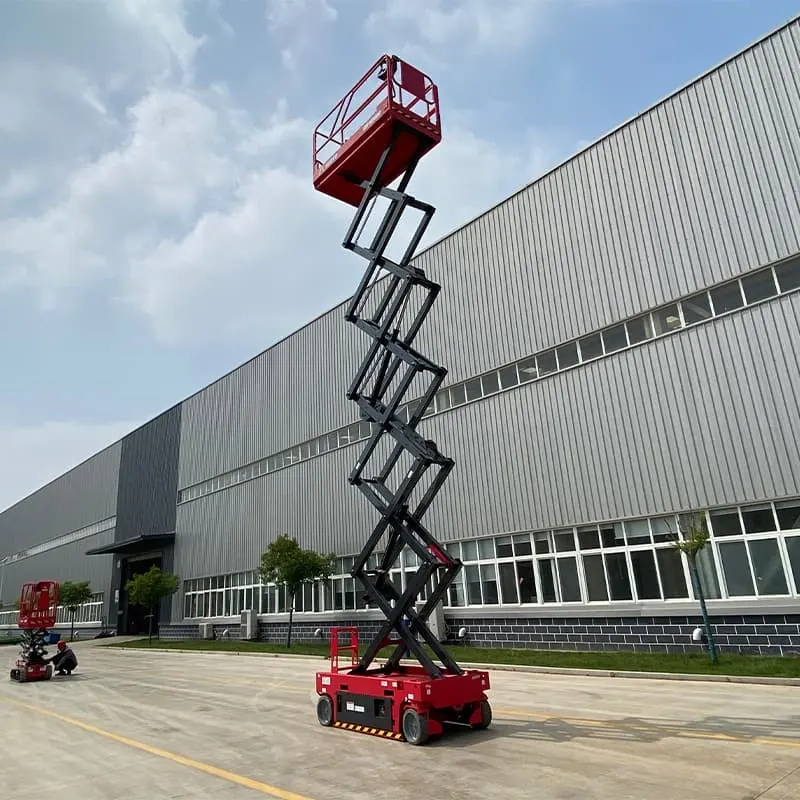
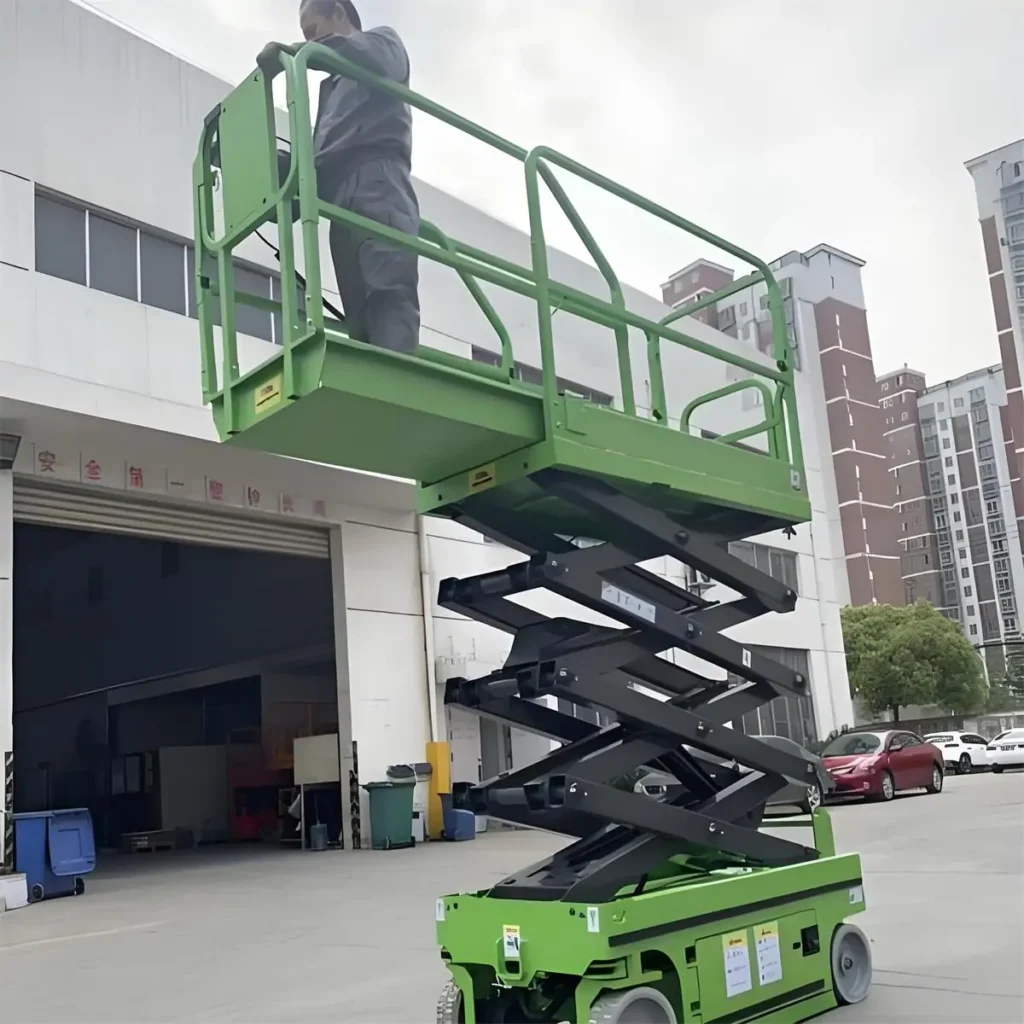
The Scissor Lift With Extension Platform is a common type of aerial work platform, typically operating at heights ranging from 6 to 14 meters, with load capacities and platform dimensions varying by model. It uses a folding support frame with a cross-shaped structure to raise and lower the work platform. This design expands the working range and improves efficiency during aerial operations, making it suitable for applications such as warehouse maintenance, equipment installation, and factory repairs.
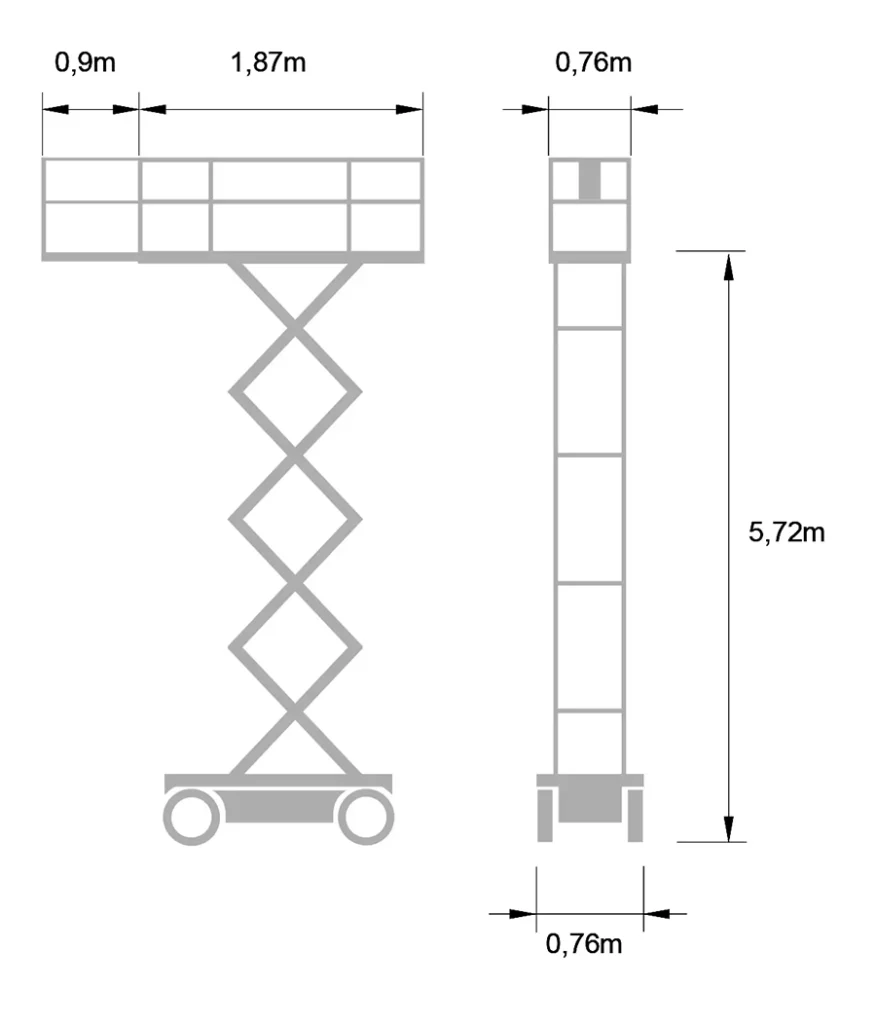
The Scissor Lift With Extension Platform features a stable scissor lift mechanism that raises and lowers the platform via a hydraulic system. The top of the unit is equipped with a retractable extension platform that extends outward a certain distance without moving the entire machine, allowing operators to access hard-to-reach areas.
Scissor Lift with Extendable Platform
Types Of Scissor Lift With Extension Platform
Depending on the drive system and application, scissor lifts with extension platforms typically come in three types: electric, hydraulic, and self propelled.
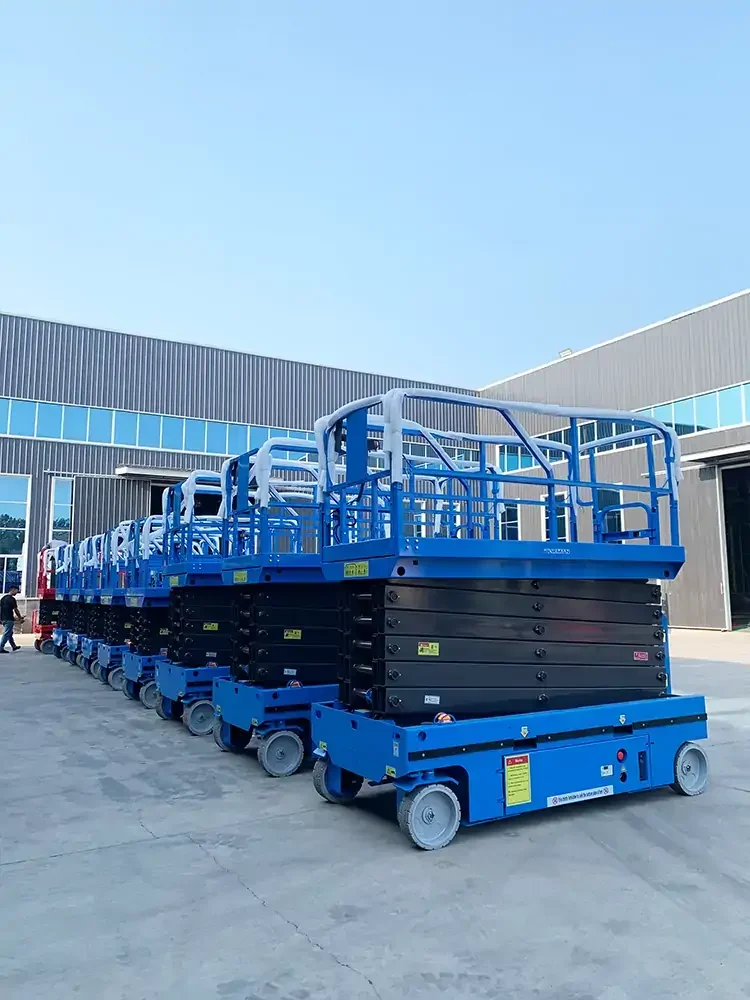
Electric Scissor Lift With Extension Platform
The Electric Scissor Lift with Extension Platform is battery-powered, operates quietly, and produces zero emissions, making it ideal for indoor work environments such as warehouses, factories, and shopping malls.
Working Height: 6–12 m
Load Capacity: 230–320 kg
Extension Platform: 0.8–1.0 m
Advantages:
Eco-friendly: The equipment features zero emissions, making it suitable for use in enclosed environments. Low Noise: The equipment operates with zero noise, ensuring it does not disrupt operations in shopping malls, hospitals, or airports. Low Maintenance Costs: Compared to diesel-powered machinery, the electric drive system offers lower maintenance costs and simpler maintenance procedures. Ease of Operation: Users can easily operate the equipment to perform continuous work tasks.
Application:
Warehousing and Logistics Centers: Users utilize this equipment for the routine inspection and maintenance of high-bay shelving systems. Shopping Malls / Supermarkets / Airports: Users operate this equipment to perform maintenance tasks related to lighting, signage, and facility fixtures. Hotels / Exhibition Halls: Users control this equipment to carry out the installation of lighting, exhibition booths, and decorative elements. Indoor Equipment Installation and Maintenance: Users employ this equipment to perform the installation and maintenance of various mechanical and electrical systems.
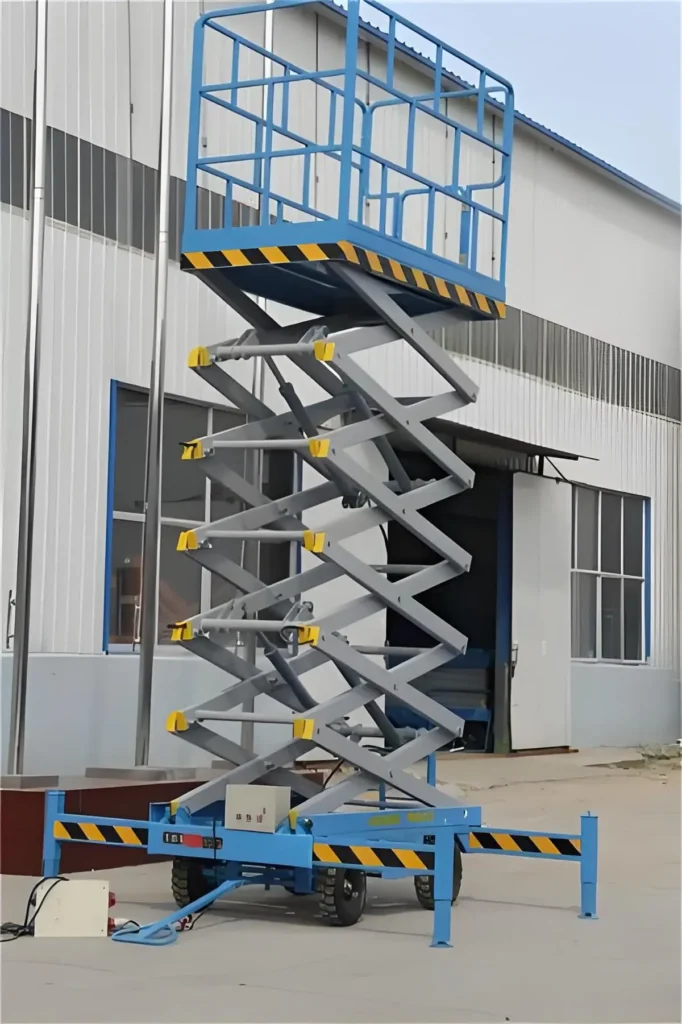
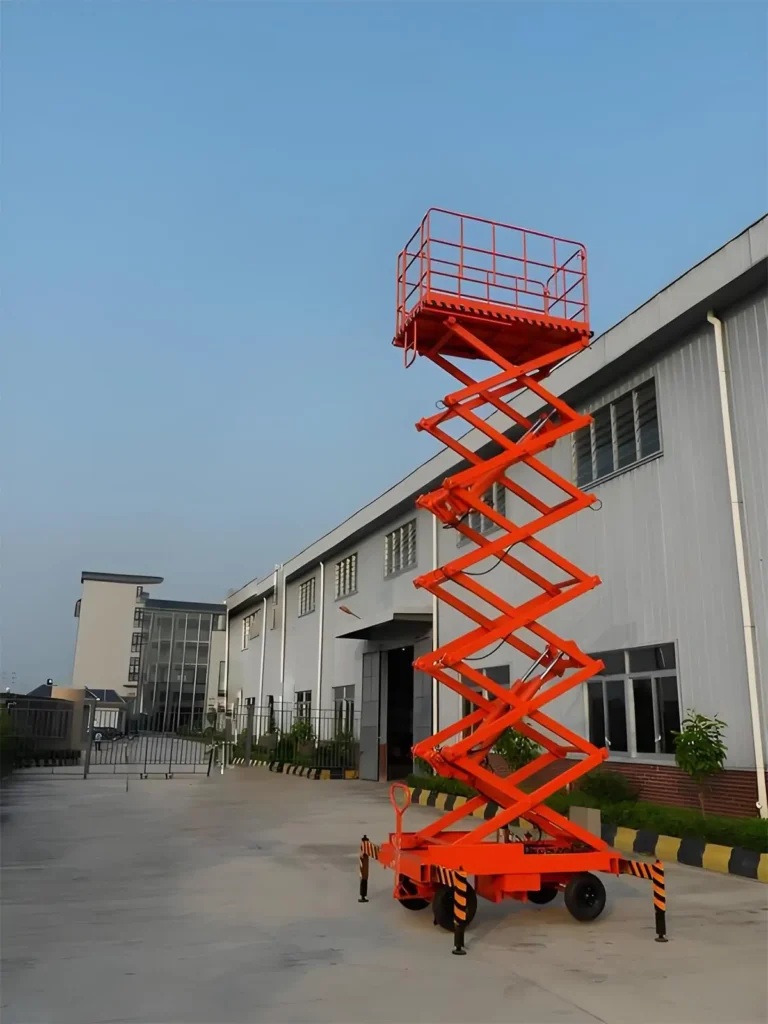
The Hydraulic Scissor Lift with Extension Platform uses a hydraulic system to raise and lower the platform. With its stable structure, it is suitable for a variety of high-altitude tasks, including equipment installation, inspection, and maintenance.
Working Height: 8–14 m
Load Capacity: 320–450 kg
Extension Platform: 0.9–1.2 m
Advantages:
High Load-Bearing Capacity: The equipment is capable of supporting loads reaching several tons or even higher. Exceptional Stability: This equipment is specifically designed for industrial-grade applications. High Cost-Effectiveness: The equipment features low manufacturing and procurement costs. Robust Durability: The equipment is suitable for use in long-term operational environments.
Application:
Factory Production Line Integration: Users utilize this equipment to facilitate material transfer between various workstations. Automotive Manufacturing / Heavy Equipment Industry: Operators use this equipment to perform lifting and assembly operations involving heavy components.
Self-Propelled Scissor Lift With Extension Platform
Self-Propelled Scissor Lift with Extension Platform: Equipped with a self-propelled drive system, the operator can control both movement and lifting directly from the platform, improving operational efficiency.
Working Height: 8–16 m
Load Capacity: 230–450 kg
Extension Platform: 0.9–1.2 m
Advantages:
High Operational Efficiency: Users can adjust the working height while the equipment is in operation. Labor-Saving: The equipment can be operated by a single person. High Maneuverability: The equipment is suitable for large-scale operations. High Safety: The unit is equipped with multiple safety protection features.
Application:
Construction Site Operations: Users utilize this equipment to perform aerial work and structural construction tasks at building sites. Large-Scale Plant Equipment Installation: Users employ this equipment to assist with the installation and commissioning of heavy machinery. High-Level Warehouse Maintenance: Users operate this equipment to conduct maintenance and inspection of high-rise shelving and warehouse facilities. Outdoor Engineering / Municipal Projects: Operators use it for the maintenance of streetlights, power infrastructure, and other municipal facilities.
The Scissor Lift with Extension Platform primarily consists of a lifting mechanism, a platform system, and a control system.
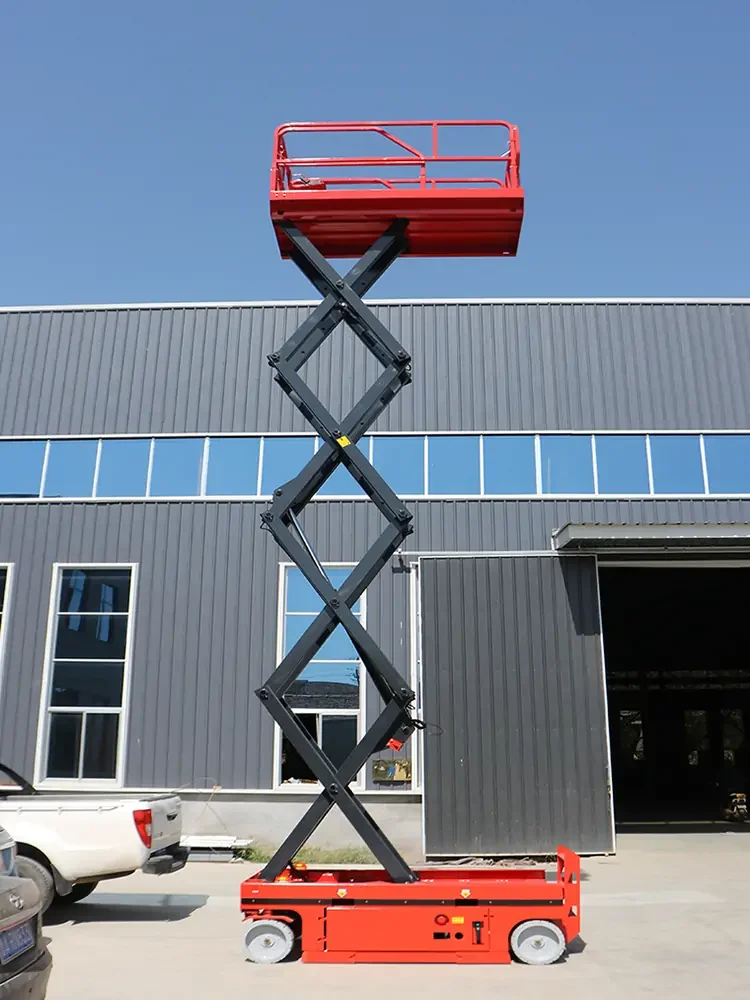
Scissor Mechanism: The scissor mechanism is the core component of the lift, using multiple sets of intersecting steel structures to raise and lower the platform. It is characterized by excellent stability and high load-bearing capacity.
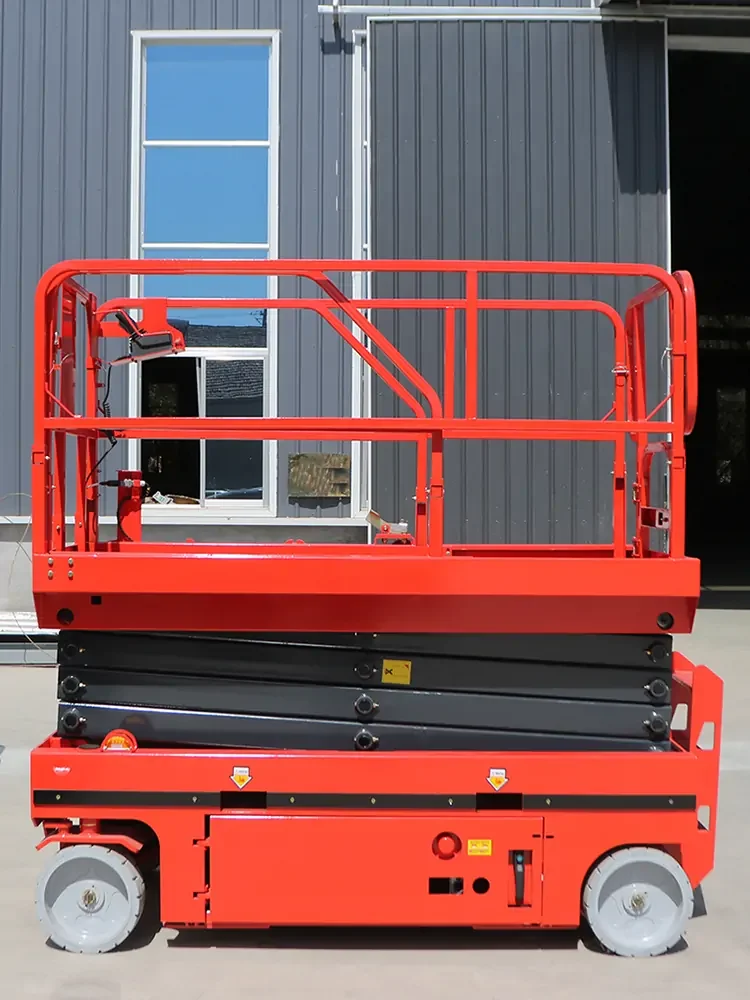
Extension Deck: The extension deck is mounted at the front of the main work platform and can slide outward to expand the working range, facilitating access to walls, equipment, or other work locations.
Hydraulic Lifting System: The hydraulic system provides the lifting power for the equipment. It primarily consists of hydraulic cylinders, a hydraulic power unit, and a hydraulic circuit, ensuring a smooth and reliable lifting process.
Drive and Steering System: The drive and steering system enables the equipment to move and turn. Self-propelled models use electric motors to drive the wheels, with operation controlled from the platform.
Control Panel: The control panel is used to operate the equipment’s lifting, movement, and emergency stop functions. It is typically located both on the platform and at ground level for ease of operation and maintenance.
Safety Protection System: The safety protection system includes emergency stop devices, overload protection, tilt protection, and guardrails, all designed to ensure safety during work at heights.
Key Features of Scissor Lift With Extension Platform
Extendable Working Deck: The platform can extend outward to expand the working range
Stable Scissor Structure: The scissor structure is stable and offers high load-bearing capacity
Electric or Hydraulic Drive: Available with electric or hydraulic drive options
Safety Guardrails: Safety guardrails are installed around the perimeter of the platform
Emergency Stop System: Equipped with an emergency stop device
Anti-slip Platform Floor: The platform surface features an anti-slip design
Specifications
Different models of scissor lifts with extension platforms vary in terms of platform height, load capacity, and platform dimensions. Common specifications are as follows:
Model
Platform Height
Working Height
Load Capacity
Platform Size
Extension Deck
SL06E
6 m
8 m
230 kg
2.15 × 1.05 m
0.8 m
SL08E
8 m
10 m
320 kg
2.20 × 1.10 m
0.9 m
SL10E
10 m
12 m
320 kg
2.30 × 1.10 m
1.0 m
SL12E
12 m
14 m
450 kg
2.40 × 1.20 m
1.2 m
SL14E
14 m
16 m
450 kg
2.50 × 1.25 m
1.2 m
Application
Scissor lifts with extension platforms are commonly used for equipment installation and high-altitude maintenance work.
Warehouse Maintenance: Warehouse lighting, shelving, and equipment maintenance
Factory Equipment Installation: Installation and maintenance of factory equipment
Building Maintenance: Maintenance of factory buildings or building exteriors
Electrical Installation: Installation and wiring of electrical equipment
HVAC System Servicing: Maintenance of heating, ventilation, and air conditioning systems
Logistics Center Operations: Installation and maintenance of logistics center equipment
The Scissor Lift with Extension Platform is equipped with a variety of safety protection devices:
Overload Protection: Prevents the equipment from operating when the rated load is exceeded.
Emergency Lowering System: Safely lowers the platform in the event of a power outage or malfunction.
Tilt Protection: A tilt protection device that automatically triggers an alarm or stops operation when the equipment tilts beyond safe limits.
Guardrail Safety System: A platform guardrail safety system designed to prevent personnel from falling from heights.
CE Certification: Certified to comply with CE and other relevant safety standards.
Scissor Lift With Extension Platform vs Standard Scissor Lift
The Scissor Lift with Extension Platform differs from standard scissor lifts in terms of working range and operational efficiency. The specific differences are as follows:
Feature
With Extension Platform
Standard Scissor Lift
Working Reach
Extended
Limited
Work Efficiency
Higher
Standard
Platform Size
Larger
Smaller
Access to Obstacles
Better
Limited
Customized Scissor Lift With Extension Platform
VOITTO offers customized designs tailored to various work environments and operational requirements. With a stable structure and flexible configuration, our equipment is suitable for a wide range of high-altitude work scenarios, including warehouse maintenance, equipment installation, and factory repairs.
Customizable working height: Select the appropriate working height range based on actual operational requirements.
Customizable platform dimensions: Adjust the platform’s length and width to fit the workspace.
Optional extended platform length: Configure the extended platform length according to the required operational range.
Configurable load capacity: Select the appropriate load capacity based on the weight of personnel and tools.
Power options: Electric or hydraulic drive systems are available.
Control system configuration: Supports both platform-mounted and ground-level controls for more convenient and safer operation.
Scissor Lift With Extension Platform Manufacturer and Supplier
VOITTO is a professional manufacturer and supplier of scissor lifts with extension platforms, providing solutions for high-altitude work such as warehouse maintenance, equipment installation, and factory repairs.
Our scissor lifts are designed and manufactured in accordance with relevant international standards. They feature a stable structure and are easy to operate, and have obtained certifications such as CE and ISO. If you have specific requirements regarding working height, load capacity, or platform dimensions, please feel free to contact our professional team.
Qualification and Honor
Engineered Strength, Global Crane Supplier
service
Exclusive and Considerable, Customer First.
01
Reliable and Customized Solutions
Our pre-sale team provides consultations, tailoring solutions to your needs and environment.
Offer customization options for lifting capacity, span and lifting height etc. to meet specific needs.
02
Updated Production Process
Real-Time Progress Updates: Weekly reports and PM communication.
3-5 years warranty and free replacement for non-manufacturing defects.
24/7 online support and on-site assistance for crane issues.
FAQ
Engineered Strength, Global Crane Supplier
What is a scissor lift with extension platform?
A scissor lift with extension platform is an aerial work platform that includes a sliding deck to extend the working range, allowing operators to reach difficult areas without moving the entire machine.
What is the working height of a scissor lift with extension platform?
Most scissor lifts with extension platforms offer a working height ranging from 6 m to 16 m, depending on the model and configuration.
What is the load capacity of a scissor lift with extension platform?
The typical load capacity ranges from 230 kg to 450 kg, allowing operators to safely carry tools and materials during aerial work.
Where are scissor lifts with extension platforms commonly used?
They are widely used in warehouses, factories, logistics centers, building maintenance, equipment installation, and HVAC servicing.
Can a scissor lift with extension platform be customized?
Yes. Manufacturers can customize the working height, platform size, extension deck length, load capacity, and power system to meet different job requirements.
Get In Touch
Please feel free to leave a message. We will reply in 24 hours.
Please specify your requirement by referring to the following aspects:
Which crane product do you need?
What is the maximum lifting capacity (in tons) required for your project?
Could you specify the lifting height (in meters) needed?
Can you provide details on the working environment, such as ground conditions, space limitations, and any obstacles?
What is the expected frequency of use and the duration of the project?





 English
  Español
  Português
  العربية
  Français
  Русский