blog

crane pulley wheel set
04 August 2026

Crane Sheaves Buying Guide: How to Choose the Right Ones for Your Crane

Crane sheaves typically run $80 to $1,500 or more per unit, with price driven mainly by diameter, material, and load rating rather than brand alone. If you’re sourcing crane sheaves for a new build or a wire-rope replacement, that price spread is also the biggest trap: two sheaves that look identical on a spec sheet can behave very differently once they’re under load for a full shift. Most procurement managers researching crane sheaves are trying to solve one of three problems at once — matching a replacement sheave to an existing wire rope without guessing, deciding whether a worn sheave still has service life left in it, or confirming a supplier’s parts actually meet the standards their insurer or customs broker will ask about. Getting any one of these wrong tends to show up later as accelerated rope wear, an unplanned production stop, or a shipment held up at customs for missing documentation. This guide walks through how crane sheaves differ by material and groove design, how to size and rate one correctly, when a worn sheave needs replacing rather…

READ MORE
electric rotating crane hook -1
24 July 2026

Crane Hook Set: Types, Safe Working Load Standards & Replacement Cycle

A crane hook set is the complete load-bearing assembly connecting a crane’s hoisting mechanism to its cargo — typically comprising the hook body, hook beam, pulley block, safety latch, and swivel bearing. Market reference prices from Chinese manufacturers typically start around $500 for light-duty C hook configurations and reach $35,000 or more for heavy-duty electric rotating assemblies rated at 100+ tons, with European-standard hook blocks generally falling between those two points. Selecting the wrong type — or continuing to use a hook that has exceeded its safe working thresholds — is one of the most preventable causes of lifting incidents in industrial facilities. Most procurement managers and equipment engineers searching for a crane hook set are evaluating three things simultaneously: which type fits their working environment, how to confirm the correct safe working load (SWL), and when a hook must be retired. These three questions look straightforward but are routinely under-answered by suppliers who list specs without explaining the logic behind them. This guide walks through all three. It covers the main crane hook set types available today, the parameters…

READ MORE
crane remote control systems
21 July 2026

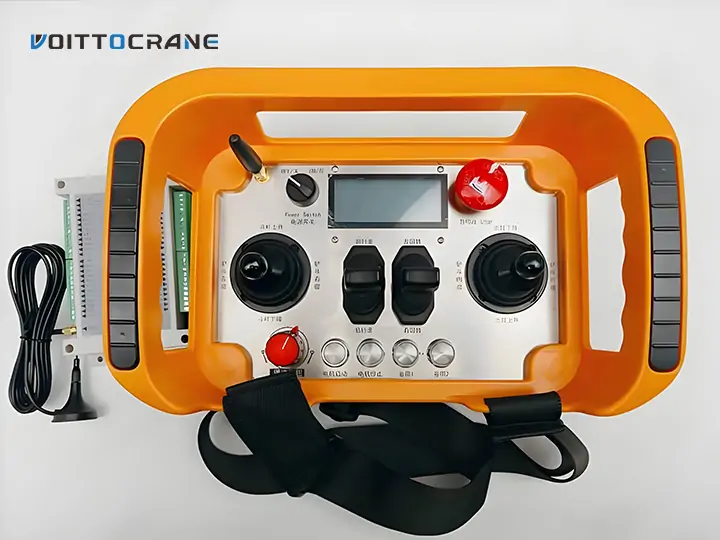
Crane Electrical Equipment: Control Systems, Limit Switches & Safety Devices Explained

Crane electrical equipment refers to every component that powers motion, regulates travel, and enforces safety limits across a crane system — including control stations, limit switches, contactors, overload relays, and emergency protection devices. Without a properly integrated electrical system, even a structurally sound crane cannot operate safely or predictably. Procurement managers sourcing overhead cranes or gantry cranes often evaluate structural specifications in detail — span, lifting capacity, duty class — while treating the electrical system as a secondary checklist item. This is a costly mistake. Electrical failures account for a significant share of crane incidents, most of which trace back to undersized protection devices, improperly set limit switches, or control systems mismatched to the application. This guide explains what crane electrical equipment consists of, how each subsystem works, and what questions to ask your supplier before accepting any configuration. What Crane Electrical Equipment Actually Covers Crane electrical equipment is best understood as three functional layers that work together: the control layer (how operators command movement), the power and drive layer (how motors receive and regulate electricity), and the protection layer…

READ MORE
Clamshell Grab Bucket
03 June 2026

Clamshell Grab Bucket: 5 Key Selection Factors & Factory-Direct Pricing

A rope-type clamshell grab bucket starts at roughly $150–$900 (FOB China factory) for capacities under 1 m³, while hydraulic and electro-hydraulic models for bulk port operations range from $1,500 to $5,000+ depending on volume, jaw configuration, and material contact class. If you already know your bulk density and crane SWL, you’re two specification items away from a confirmed order. Most procurement delays come from the same problem: engineers submit an RFQ without locking down cycle frequency, material abrasiveness, or crane rope arrangement — and the factory sends back three clarification emails before quoting. That back-and-forth adds 5–10 days to delivery. This guide cuts through that. Below you’ll find a spec-confirmation checklist, a type comparison table, the five technical factors that determine the right bucket for your crane, and what to verify before signing a purchase order. Quick Reference: Clamshell Grab Bucket Types & Indicative Pricing Type Drive Method Typical Capacity Indicative Price (FOB China) Best For Two-rope mechanical Rope (holding + closing) 0.1 – 5 m³ $150 – $1,500 Overhead cranes, scrap yards Four-rope mechanical 2 holding + 2 closing…

READ MORE
Grab Bucket for Sale
26 May 2026

Hydraulic Grab Bucket for Sale: How to Choose the Right Type for Your Crane or Excavator

Hydraulic grab buckets from Chinese exporters start at around $200 FOB factory for a small excavator-mounted clamshell and reach $3,000+ for a heavy-duty electro-hydraulic orange peel unit above 8 m³. Most buyers land somewhere in the $8,00–$2,000 range. The bigger risk isn’t overpaying — it’s buying the wrong type. A clamshell bucket on a scrap line, or an orange peel grab on a sand-unloading crane, will underperform from day one regardless of price. This guide compares the two main types — hydraulic clamshell grab bucket and hydraulic orange peel grab bucket — on material fit, crane compatibility, key specs, and price. By the end, you’ll know which one fits your application and what to confirm before placing an order.If you’re still earlier in the decision process — comparing rope-operated versus hydraulic drive, or working out how bulk density affects grab capacity sizing — our grab bucket buying guide covers both classification frameworks and the full capacity sizing method before you narrow down to a specific type. Quick Reference: Hydraulic Grab Bucket Comparison Spec Hydraulic Clamshell Grab Bucket Hydraulic Orange Peel…

READ MORE
Orange Peel Grab Bucket
26 May 2026

How to Choose the Right Orange Peel Grab Bucket for Scrap & Bulk Material Handling

Choosing the wrong orange peel grab bucket doesn’t just hurt productivity — it can overload your crane, accelerate wear part consumption, and create a compliance gap that voids your equipment insurance. The right bucket is determined by four variables: your material type, required capacity, crane configuration, and duty cycle intensity. Get those four right, and the rest of the specification falls into place. Most procurement managers encounter this decision when a scrapyard is scaling up throughput, a port facility is adding a handling line, or a demolition contractor is specifying crane attachments for a new project. In each case, the temptation is to size up — bigger bucket, more per cycle. That logic fails when the bucket’s dead weight pushes the crane past its Working Load Limit at the operating radius, or when tine geometry doesn’t match material piece size. This guide walks you through every selection variable in the order that matters: material first, capacity second, drive system third, structural specification fourth. By the end, you’ll have a complete specification checklist ready to send to a supplier. Quick Reference:…

READ MORE
how much does a winch cost
21 May 2026

How Much Does a Winch Cost? A Buyer’s Guide to Crane Winch Pricing

Winch cost for crane applications varies widely. Typically, from a few thousand dollars for a light-duty unit to several hundred thousand dollars for heavy industrial lifting equipment. because the price is driven by load capacity, duty class, and control system, not just physical size. Next, this guide explains the key factors that determine the price of a crane winch, provides realistic price ranges for common types of crane winches, and highlights the most common mistakes buyers make when comparing quotes. A crane winch is also known as a hoisting winch or a lifting winch. Crane manufacturers install them on overhead cranes, gantry cranes, or port cranes as part of the lifting mechanism. This equipment consists of a power-driven drum combined with a gearbox and is primarily responsible for the vertical lifting and transport of materials. This is fundamentally different from vehicle recovery winches or marine winches: crane winches operate under continuous cyclic loading conditions and must comply with strict lifting safety standards. Moreover, their classification is determined based on “duty class” rather than simply on “rated pulling force.” What Factors…

READ MORE
industrial winch manufacturers
20 May 2026

Top 10 Industrial Winch Manufacturers in China for Cranes

Industrial winch manufacturers in China supply the lifting mechanism units fitted to overhead cranes, gantry cranes, and port cranes. Industrial winches designed specifically for cranes integrate a wire rope drum, a multi-stage gearbox, a hoisting motor, and a mechanical braking system into a single unit. They are engineered specifically for repetitive vertical load cycles under specific duty cycles. Their rated load, thermal capacity, and safety device specifications are determined based on the crane’s specific operating parameters, rather than simply applying standard data from product catalogs. China accounts for the largest share of global crane-grade winch production. Manufacturing is concentrated in Henan Province, with additional clusters in Shanghai, Jiangsu, Liaoning, and Hunan. The ten manufacturers listed below have documented crane-specific winch product lines that cover electric and hydraulic winch systems, as well as custom-engineered configurations for non-standard crane applications. What Separates a Crane-Grade Industrial Winch from General Winches Industrial winches for cranes are specifically designed for vertical lifting and material handling applications that demand the highest levels of safety, precision, and continuous operational reliability. In contrast, standard winches are typically used…

READ MORE
Voitto Crane Manufacturer
19 May 2026

Top 10 Clamshell Grab Bucket Exporters in China: Verified Supplier Guide (2026)

Mechanical clamshell grab buckets from Chinese exporters typically run $700–$3,000 FOB factory for standard crane-mount units (1–5 m³). Electro-hydraulic models in the 6–15 m³ range used at ports and steel mills sit in the $3,000–$15,000+ bracket depending on capacity, drive system, and classification society certification requirements. Remote-control and leak-proof grain-handling variants carry premium pricing, usually 20–40% above equivalent mechanical models. For procurement teams sourcing at volume — ports, bulk terminals, power plants, steel mills — supplier selection mistakes rarely show up in the purchase order. They surface 18 months later in unplanned maintenance costs, certification rejections, or mismatched crane compatibility. That is where this guide focuses. Below is a verified shortlist of China’s most active clamshell grab bucket exporters in 2026, evaluated across product range, certifications, export track record, and application specialization. Use it to reduce your supplier shortlist from dozens to three. Quick Reference: Top 10 China Clamshell Grab Bucket Exporters at a Glance # Supplier Location Capacity Range Key Certifications Best Fit 1 Voitto Crane Henan 0.5–100 t CE, ISO Heavy industry, custom solutions 2 Weihua Heavy Machinery…

READ MORE
crane winch
15 May 2026

What Is a Crane Winch? Definition, Types & Selection Guide

A crane winch is a mechanical transmission device. Typically, this equipment is installed on overhead cranes, gantry cranes, or port cranes and is responsible for vertically lifting and suspending loads. A crane drum winds or unwinds the wire rope through rotation, thereby converting the motor’s torque into vertical displacement of the load. Unlike stand-alone winches used for traction or anchoring, a crane winch is specifically designed to function as a hoisting mechanism within the crane structure. Therefore, it must meet all requirements specified in the crane design, including load cycles, duty classes, and safety factors. What Is a Crane Winch and How Does It Work A crane winch is the lifting system unit mounted on a crane. Below, I will introduce the components that make up a crane winch, as well as how it operates. Core Components of a Crane Winch A crane hoist consists primarily of five components: a motor, a gearbox, a wire rope, a drum, and a braking system. These components are integrated into a single unit and mounted on the crane’s bridge or trolley frame. When…

READ MORE
Single Flange vs Double Flange Crane Wheels
15 May 2026

Single Flange vs Double Flange Crane Wheels: Which Type Do You Actually Need?

Single flange crane wheels guide the crane on one side of the rail. Double flange crane wheels grip both sides. That one sentence covers the mechanical difference — but it doesn’t tell you which is correct for your system, and getting this wrong means accelerated rail wear, wheel flange failure, and unplanned downtime within months of installation. The decision comes down to four variables: your rail type, the crane’s span, how much lateral force the end truck generates, and whether your runway geometry is fixed or subject to thermal movement. Most buyers find out they’ve specified the wrong type after the first wear inspection — not before. This guide gives you the full comparison, a spec reference table, and the questions you need to answer before placing an order. If you already know what you need, the quick reference block below gets you to inquiry in under two minutes. Quick Reference: Single vs Double Flange at a Glance Parameter Single Flange Double Flange (Standard) Double Flange (Flanged Both Sides) Flange position One side only Both sides Both sides, wider flange…

READ MORE
Overhead Crane Wheels
15 May 2026

Overhead Crane Wheels: Types, Specifications & Selection Guide

Choosing the wrong overhead crane wheel doesn’t just accelerate rail wear — it can bring your entire crane system out of service within months. The right wheel type, material grade, and flange configuration depend on four variables: wheel load, travel speed, rail profile, and operating environment. Get those four right and you’ll match a wheel to the FEM or ISO standard that governs your application. Skip one and you’re guessing. For most purchasing managers and equipment supervisors, the confusion starts here: single-flange or double-flange? Cast iron or forged steel? 200 mm or 400 mm diameter? Suppliers often quote “standard” wheels without clarifying which standard applies — FEM 1.001, ISO 286, or a proprietary DIN-based specification — leaving you to reconcile incompatible specs after delivery. This guide cuts through that. You’ll find a clear breakdown of the five main overhead crane wheel types, the key dimensional and load-bearing specifications, a step-by-step load calculation method, and a practical replacement checklist. By the end, you’ll have a selection framework you can apply directly — whether you’re specifying new wheels for a bridge crane…

READ MORE
Top