
If you’ve ever tried to source a scissor lift platform without a clear framework, you know the frustration. Dozens of models, conflicting specs, and salespeople pushing inventory — it’s easy to end up with a machine that’s either underpowered for the job or far more expensive than necessary.
Here’s the short answer most buyers need upfront: the right scissor lift platform depends on three variables — working height, load capacity, and ground conditions. Get those three right, and the rest of the selection process becomes straightforward.
This guide breaks down the main types of scissor lift platforms, their real-world applications, and the key parameters you should evaluate before signing a purchase order. Whether you’re outfitting a warehouse, managing a construction site, or sourcing equipment for facility maintenance, the information below will give you a practical decision framework — not just a product catalog.
By the end, you’ll understand why a platform scissor lift that works perfectly indoors can be a liability outdoors, and how to avoid costly mismatches between equipment and environment.
- 1 What Is a Scissor Lift Platform — and Why Does Type Matter?
- 2 The 3 Main Types of Scissor Lift Platforms
- 3 Scissor Lift Platform Comparison: Key Specs at a Glance
- 4 How to Choose the Right Scissor Lift Platform: A 5-Step Framework
- 5 Summary and Action Steps
-
6
Frequently Asked Questions
- 6.1 Q1: What is the maximum safe working height for a standard scissor lift platform?
- 6.2 Q2: Can a scissor lift platform be used on a slope?
- 6.3 Q3: How often does a scissor lift platform require scheduled maintenance?
- 6.4 Q4: What certifications should I look for when purchasing a scissor lift platform?
- 6.5 Q5: What should I check before accepting delivery of a scissor lift platform?
What Is a Scissor Lift Platform — and Why Does Type Matter?
A scissor lift platform is a type of aerial work platform (AWP) that uses a crisscrossing “scissor” mechanism to raise a work deck vertically. Classified under the broader aerial work platform scissor lift category in international standards, it differs from boom lifts and telehandlers by moving strictly up and down — which makes it stable, predictable, and well-suited for tasks requiring a large, flat work surface at height.
At the broadest level, scissor lift platforms divide into two operational families. A mobile scissor lift platform is self-propelled and designed to be driven between work positions — the type most commonly seen on construction sites, in warehouses, and at maintenance facilities. A fixed scissor lift platform, by contrast, is anchored to a specific location and used as a permanent or semi-permanent installation, typically in manufacturing lines, loading docks, or vehicle service environments. Understanding which family you need is the first filter in any selection process.
The type matters because scissor lift platforms are not one-size-fits-all. A machine designed for smooth warehouse floors will sink or tip on soft ground. A heavy-duty rough terrain unit is unnecessarily expensive for indoor electrical work. Matching the platform type to the environment and task is the single most important purchasing decision.
Three primary categories define the market:
- Electric scissor lift platforms — mobile, ideal for indoor, flat-surface work
- Rough terrain (diesel/4WD) scissor lift platforms — mobile, built for outdoor, uneven ground
- Hydraulic scissor lift platforms — typically fixed or semi-fixed, used in industrial installations
Each has distinct engineering trade-offs worth understanding before you commit budget.
The 3 Main Types of Scissor Lift Platforms


Electric Scissor Lift Platforms
Electric models represent the most widely deployed mobile scissor lift platform in commercial and industrial settings. They run on rechargeable battery packs, produce zero direct emissions, and generate minimal noise — making them the default choice for warehouses, retail fit-outs, airports, and indoor maintenance work.
Key characteristics:
- Working height range: typically 6 m to 14 m (approximately 20 ft to 46 ft)
- Platform capacity: 230 kg to 450 kg (approximately 500 lbs to 1,000 lbs) for most standard models
- Drive system: electric, zero emissions, quiet operation
- Surface requirement: firm, level ground (concrete, asphalt, compacted substrate)
The platform scissor lift in electric format is particularly valued in environments where combustion engines are prohibited — food processing facilities, hospitals, and enclosed manufacturing floors being common examples. Battery run-time has improved significantly in recent years, with most modern units offering full-shift operation on a single charge under normal use conditions.
Limitation: Electric scissor lift platforms are generally not rated for outdoor use on unprepared ground. Attempting to use them on soft or uneven terrain creates a stability risk that violates EN 280 (the European standard for MEWPs) and ANSI/SAIA A92.20 in North America.
Rough Terrain Scissor Lift Platforms (4WD)
When work moves outdoors — construction sites, infrastructure projects, agricultural facilities — a standard electric unit is no longer appropriate. Rough terrain scissor lift platforms use diesel or dual-fuel engines combined with 4WD drive systems, oscillating axles, and reinforced outrigger systems to perform safely on uneven, soft, or sloped ground.
Key characteristics:
- Working height range: 10 m to 18 m (approximately 33 ft to 59 ft)
- Platform capacity: 500 kg to 900 kg for heavy-duty models
- Gradeability: up to 40% on many models, subject to manufacturer’s rated slope
- Tyre type: solid or foam-filled for puncture resistance
The platform/scissor lift 4WD category is growing as construction projects demand taller, heavier, more mobile access equipment. Manufacturers including JLG, Skyjack, and Genie offer validated configurations for specific terrain ratings. Always verify the machine’s rated side slope and ground bearing pressure before deployment — these figures appear in the manufacturer’s operator manual and are referenced in EN 280:2013+A1:2015.
Limitation: These units are significantly heavier and wider than electric models. Indoor use is restricted by weight, emissions, and turning radius constraints.
Fixed Scissor Lift Platforms — Hydraulic Industrial Systems
Hydraulic scissor platform lift systems serve a fundamentally different purpose from mobile MEWPs. A fixed scissor lift platform is anchored in place rather than driven around a job site — these units are permanent or semi-permanent installations used in vehicle service pits, loading docks, production lines, and stage platforms. Because they don’t need to travel, their engineering priorities shift toward maximum load capacity and long service life over portability.
Key characteristics:
- Lift capacity: from 500 kg to several tonnes depending on the configuration
- Stroke (vertical travel): typically 1 m to 4 m for industrial installations
- Power source: hydraulic power unit (HPU), often electrically driven
- Cycle time: 20–60 seconds for full extension depending on load and pressure rating
Hydraulic scissor lift platforms in industrial settings are governed by the Machinery Directive 2006/42/EC in Europe and ASME B20.1 in North America for safety systems. Their load capacity and durability make them appropriate for applications where a mobile MEWP would be impractical.
Scissor Lift Platform Comparison: Key Specs at a Glance

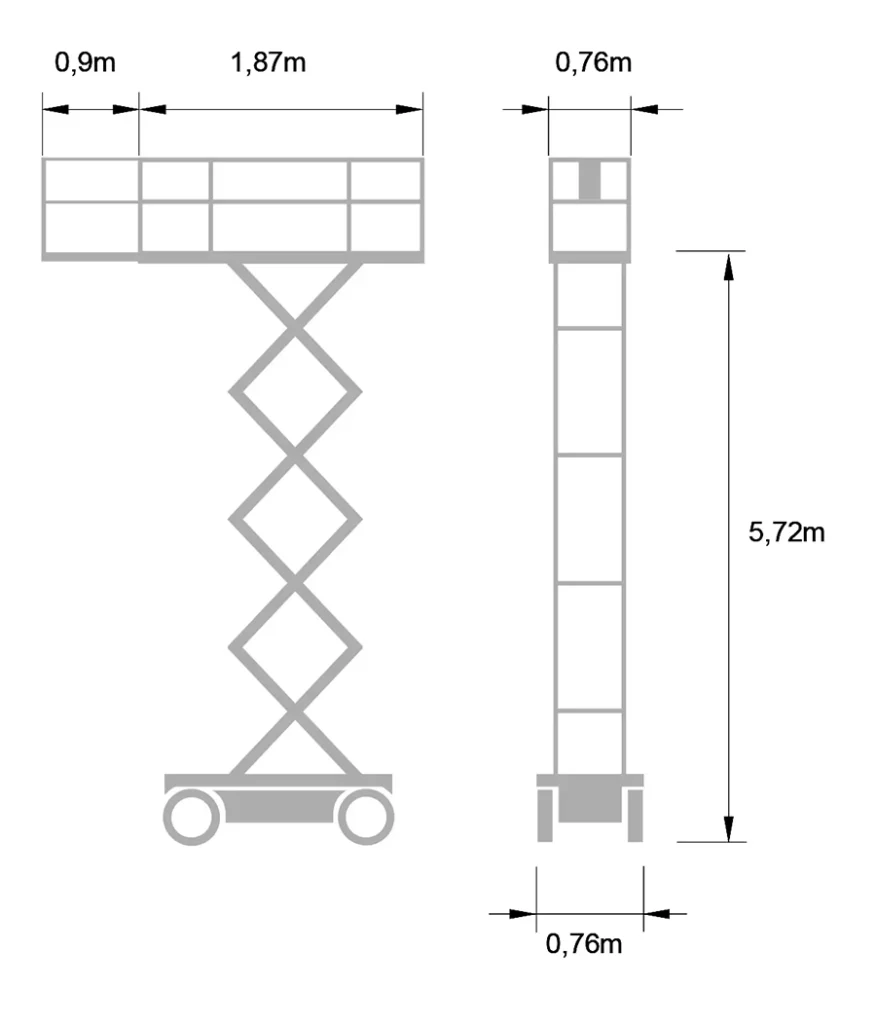
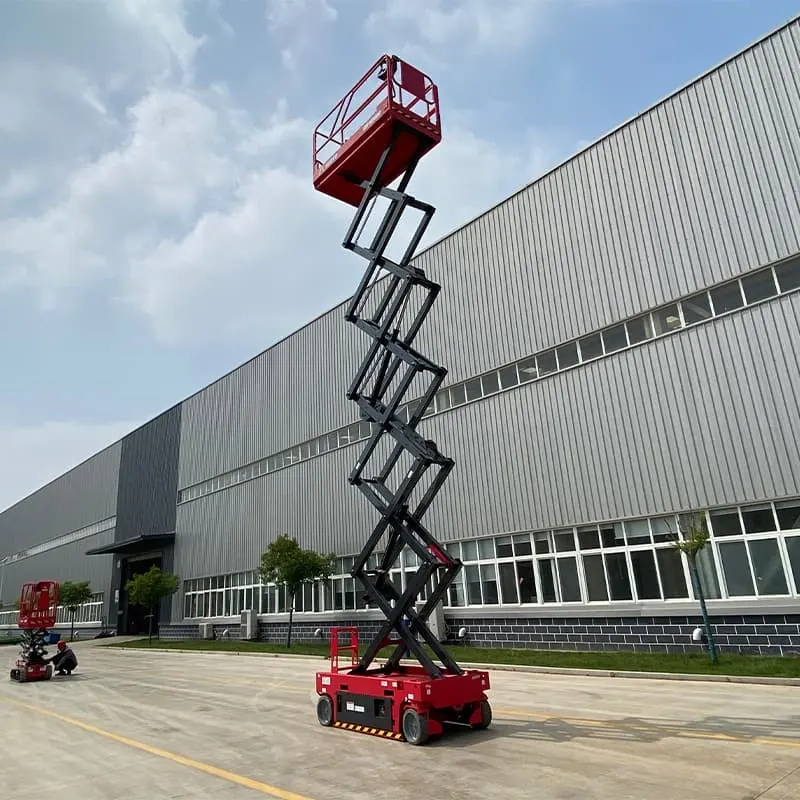
The table below summarizes typical specifications across the three main scissor lift platform categories. Note that figures represent industry-typical ranges, not guaranteed values — always verify with the specific manufacturer’s datasheet.
| Parameter | Electric (Mobile) | Rough Terrain 4WD (Mobile) | Hydraulic (Fixed) |
|---|---|---|---|
| Platform Type | Mobile scissor lift platform | Mobile scissor lift platform | Fixed scissor lift platform |
| Working Height | 6–14 m | 10–18 m | 1–4 m (stroke) |
| Platform Capacity | 230–450 kg | 500–900 kg | 500 kg–5+ tonnes |
| Power Source | Battery (electric) | Diesel / Dual-fuel | Hydraulic power unit |
| Indoor Use | ✓ Recommended | ✗ Limited | ✓ Fixed installations |
| Outdoor / Rough Terrain | ✗ Not rated | ✓ Primary use | N/A |
| Emissions | Zero | Diesel exhaust | Zero (if electric HPU) |
| Noise Level | Low (~65 dB) | High (80–90 dB) | Low to moderate |
| Typical Application | Warehouse, retail, maintenance | Construction, infrastructure | Docks, production lines |
Reference: EN 280:2013+A1:2015 (MEWPs — Design calculations, stability criteria, construction), IPAF MEWP category data 2022–2024.
How to Choose the Right Scissor Lift Platform: A 5-Step Framework
Step 1 — Define the Required Working Height
Always calculate working height from the ground to the task, not from the platform floor. Standard practice adds approximately 1.8 m (6 ft) of standing reach above the platform deck. So if your task is at 8 m height, you need a lift scissor platform with at least 6.2 m platform height.
Step 2 — Determine: Fixed or Mobile Platform?
Before evaluating terrain, establish whether you need a mobile scissor lift platform or a fixed scissor lift platform. If the work location changes — floor by floor, bay by bay, or site to site — you need a mobile unit. If the lift will serve a permanent position on a production line, loading dock, or service pit, a fixed platform is almost always the more cost-effective choice.
For mobile platforms, then assess the ground conditions:
- Paved and level → electric scissor lift platform is appropriate
- Compacted gravel or firm outdoor surface → check manufacturer’s outdoor rating
- Soft, uneven, or sloped → rough terrain scissor lift platform required
Ground bearing pressure is a specification often overlooked until equipment sinks on site. Confirm the GBP against the site’s soil load-bearing capacity, especially on construction sites.
Step 3 — Confirm Platform Capacity Requirements
Calculate the combined weight of workers, tools, and materials that will be on the platform simultaneously. Add a safety margin of at least 20% above calculated load. Overloading a scissor lift platform is one of the most common causes of incidents cited in IPAF’s annual accident reports.
Step 4 — Check Regulatory and Site Compliance
Scissor lift platforms — whether a mobile aerial work platform scissor lift or a fixed industrial installation — are subject to market-specific certification requirements:
- Europe: CE marking, EN 280 compliance, operator training per IPAF or equivalent
- North America: ANSI/SAIA A92.20 for mobile units, OSHA 1926.502 (construction) or 1910.23 (general industry); fixed platforms may additionally fall under ASME B20.1
- Australia/NZ: AS 2550.10, operator competency via WorkSafe-aligned training
Always confirm the machine holds current certification for the jurisdiction where it will be used.
Step 5 — Evaluate Total Cost of Ownership, Not Just Purchase Price
For procurement decisions, the initial unit cost is rarely the most important figure. Consider:
- Battery replacement cost (electric models, typically every 5–7 years)
- Service interval frequency (diesel units require more frequent maintenance)
- Parts availability for your region
- Resale value at end of service life (well-known brands retain value better)
A scissor lift platform that costs 15% more upfront from a manufacturer with strong local service support often represents lower TCO than a cheaper unit with limited parts availability. Before evaluating TCO, start with the unit price itself. Our scissor lift cost guide breaks down 2026 price ranges by type, working height, and drive system — so you can set a realistic budget before approaching any supplier.

Alan
Crane Solutions Specialist · Voitto Crane
Specialized in Overhead Crane, Gantry Crane, Jib Crane, Port Crane & EOT Crane export solutions. 10+ years helping global clients with pre-sales consultation, capacity selection and site-specific configurations.
Summary and Action Steps
Choosing the right scissor lift platform comes down to two decisions made in sequence: first, fixed or mobile; second, which mobile variant matches your terrain and height requirements. A fixed scissor lift platform suits permanent installations where load capacity and cycle reliability matter most. A mobile scissor lift platform — whether electric for indoor use or rough terrain 4WD for outdoor work — is the right choice when equipment needs to move between positions. For projects where the unit will also operate at significant height in open or semi-open environments, confirming aerial work platform scissor lift certification under the applicable standard ensures the machine meets both structural and operational safety requirements.
Before finalizing your selection:
- Confirm working height requirements with a site survey
- Verify ground conditions and bearing pressure with your site engineer
- Check regulatory certification for your jurisdiction
- Evaluate total cost of ownership, not just unit price
- Require a pre-delivery inspection checklist from the supplier
If you’re managing a multi-site fleet or a long-term project, consider working directly with a certified MEWP specialist or your equipment manufacturer’s technical team — they can provide site-specific recommendations based on validated equipment performance data.
Frequently Asked Questions
Q1: What is the maximum safe working height for a standard scissor lift platform?
For mobile aerial work platform scissor lifts, working height varies by category. Electric models for commercial use typically reach platform heights of 10–14 m (33–46 ft), translating to working heights of around 12–16 m when operator reach is included. Rough terrain models extend higher, with some configurations reaching platform heights of 18 m (approximately 59 ft). Fixed scissor lift platforms used in industrial settings generally have a shorter stroke — typically 1–4 m — since they are optimized for load capacity rather than elevation. Always verify the rated working height in the machine’s datasheet, as this figure accounts for the manufacturer’s rated capacity at full extension and should not be exceeded. Source: EN 280:2013+A1:2015.
Q2: Can a scissor lift platform be used on a slope?
Yes, but only within the manufacturer’s rated side slope and end slope limits. For most electric scissor lift platforms, this is a maximum of 1.5° to 3° (approximately 2.5% to 5% grade). Rough terrain platform scissor lifts are typically rated for steeper slopes — up to 40% gradeability for travel, though elevated operation limits are lower. Exceeding these limits creates a tip-over risk. Always check the operator manual for the specific model before deployment on any sloped surface.
Q3: How often does a scissor lift platform require scheduled maintenance?
Electric scissor lift platforms typically follow a 250-hour or 6-month service interval (whichever comes first) for standard inspections covering hydraulic fluid, battery condition, safety sensors, and structural checks. Diesel rough terrain models require more frequent attention — often 125-hour intervals for engine-related items. Pre-use daily checks are mandatory regardless of model type under EN 280 and ANSI A92 standards. Keep a maintenance log as documentation may be required for insurance and compliance purposes.
Q4: What certifications should I look for when purchasing a scissor lift platform?
In Europe, look for CE marking and confirmation of EN 280 compliance. In North America, verify ANSI/SAIA A92.20 certification and check whether the machine meets current OSHA requirements for your industry sector. Additionally, confirm that the unit comes with a Declaration of Conformity and that the manufacturer provides access to the full operator and service manual. If purchasing used equipment, an independent third-party inspection against current standards is advisable before putting the machine into service.
Q5: What should I check before accepting delivery of a scissor lift platform?
Before accepting delivery, conduct a structured pre-delivery inspection covering four areas. First, verify the machine’s serial number and CE/ANSI certification plate match the purchase documentation. Second, perform a full-function test — raise and lower the platform to maximum height, test the emergency lowering system, and confirm all safety interlocks engage correctly. Third, check the battery charge level (electric models) or fluid levels (diesel and hydraulic models) and confirm they meet the manufacturer’s pre-delivery standard. Fourth, ensure the full operator manual, service logbook, and Declaration of Conformity are included with the unit. Document any discrepancies in writing before signing the delivery acceptance form.




 English
  Español
  Português
  العربية
  Français
  Русский