blog

Metallurgical Electric Wire Rope Hoist
11 August 2026

Electric Hoist Solutions for Electronics Manufacturing in Thailand

Choosing the right electric hoist for an electronics manufacturing plant comes down to matching lifting frequency and load precision to the right hoist type — most PCB assembly, EMS, and component plants in Thailand are well served by an electric chain hoist or wire rope hoist in the 0.5–10 ton range, not specialized cleanroom equipment. If you’re sourcing lifting equipment for a facility in Rayong, Chonburi, or another Eastern Economic Corridor industrial zone, the decision usually isn’t about raw lifting capacity — electronics manufacturing rarely involves the multi-ton loads seen in steel or automotive plants. Instead, the real challenges are precise, low-shock positioning around sensitive components, matching Thailand’s 380V/50Hz power supply, and holding up in a humid, coastal industrial climate without corroding. This guide walks through the electric hoist types that fit electronics manufacturing environments, the selection factors that actually change the outcome (duty class, positioning control, protection rating, voltage), and the certification checks you should run before placing an order. Types of Electric Hoists Suited to Electronics Manufacturing Hoist Type Capacity Lift Height Hoisting Speed Market Reference Price Best…
READ MORE
what is an electric overhead travelling crane
10 August 2026

What Is an Electric Overhead Travelling Crane? Structure, Working Principle, and Applications

The electric overhead travelling crane is one of the most widely used material-handling solutions in industrial facilities. Mounted on overhead track beams above the work area, this equipment can move loads in three directions—up and down, left and right, and longitudinally—without occupying floor space. For plant managers, procurement teams, and engineers evaluating lifting equipment, understanding the structure and operating principles of electric overhead cranes is a crucial step in selecting a system that meets production needs, safety requirements, and long-term maintenance budgets. In the following sections, this article will cover the structure, operating principles, manufacturer selection criteria, and typical applications of electric overhead cranes, and compare them with mobile cranes. What Is an Electric Overhead Travelling Crane? An electric overhead traveling crane is also known as a bridge crane. This equipment operates on overhead tracks mounted on a building’s structure or on dedicated support columns. Its name accurately describes how the machine works: “electric” refers to the motor-driven hoisting and traveling mechanisms; “bridge” refers to the fact that it is located above the work area rather than on the ground;…

READ MORE
gantry crane manufacturer
12 August 2026

Gantry Crane for Sale in Peru: Mining & Port Pricing, Types & Selection Guide

A gantry crane for sale in Peru typically runs $9,000 to $230,500+ (approximately S/ 30,400 to S/ 779,000+) FOB factory, depending on lifting capacity, span, and whether the unit is destined for a mine maintenance yard or a coastal port terminal. At current exchange rates (1 USD ≈ 3.38 PEN, August 2026), a mid-range 10-ton double girder unit lands around $22,000–$40,000, or roughly S/ 74,400–S/ 135,200. Peru’s mining sector — led by Antamina, Cerro Verde, and Las Bambas — and its three main Pacific ports (Callao, Matarani, and the newer Chancay terminal) drive most of the country’s demand for gantry cranes. Procurement teams sourcing for these environments face a problem generic buying guides don’t address: a crane spec written for a European warehouse doesn’t automatically hold up at 4,000 meters of altitude in the Andes, or under the salt-air corrosion load at a container terminal on the coast. This guide walks through which gantry crane type fits which Peruvian application, how capacity and duty class should be set for mining versus port duty cycles, what certification your supplier needs to…

READ MORE
what is a bridge crane carriage
06 August 2026

What Is a Bridge Crane End Carriage? Structure, Components & Working Principle

A bridge crane end carriage is the structural assembly mounted at each end of a bridge crane’s main girder that houses the traveling wheels, wheel shafts, and drive mechanism. It is the component that allows the entire crane bridge to move back and forth along the runway rails installed on either side of the workshop. Without a properly functioning end carriage, a bridge crane cannot travel, no matter how strong the main girder or hoist may be. The main girder carries and lifts the load, the end carriage supports the girder and transfers that load down through the wheels, and the wheels roll along the runway system. Together, these parts form the crane’s traveling mechanism, making the end carriage essential to safe, stable, and efficient overhead crane operation. What Is a Bridge Crane End Carriage? A bridge crane end carriage is a welded steel structure positioned at each end of the crane’s main girder, perpendicular to it, that connects the girder to the traveling wheels. Structurally, it sits between the bridge and the runway rail, acting as both a support…

READ MORE
crane pulley wheel set
04 August 2026

Crane Sheaves Buying Guide: How to Choose the Right Ones for Your Crane

Crane sheaves typically run $80 to $1,500 or more per unit, with price driven mainly by diameter, material, and load rating rather than brand alone. If you’re sourcing crane sheaves for a new build or a wire-rope replacement, that price spread is also the biggest trap: two sheaves that look identical on a spec sheet can behave very differently once they’re under load for a full shift. Most procurement managers researching crane sheaves are trying to solve one of three problems at once — matching a replacement sheave to an existing wire rope without guessing, deciding whether a worn sheave still has service life left in it, or confirming a supplier’s parts actually meet the standards their insurer or customs broker will ask about. Getting any one of these wrong tends to show up later as accelerated rope wear, an unplanned production stop, or a shipment held up at customs for missing documentation. This guide walks through how crane sheaves differ by material and groove design, how to size and rate one correctly, when a worn sheave needs replacing rather…

READ MORE
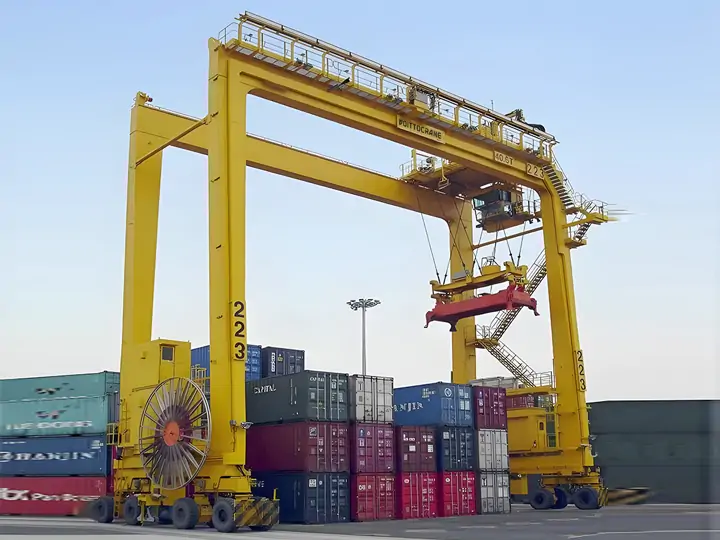
RTG rubber tyred gantry crane
31 July 2026

Cranes for the Shipbuilding Industry: Types, Specs & How to Choose the Right One

Shipyards need more than a generic crane — they need the right lifting solution matched to each production zone. A double girder overhead crane covering a steel-plate fabrication hall operates under completely different load cycles and environmental stresses than a gantry crane straddling an open dry dock. Get the match wrong and you’re looking at chronic production delays, accelerated corrosion failure, or a crane that physically can’t reach what it needs to lift. For most mid-size shipbuilding yards, the core fleet typically spans two to four crane types: overhead cranes for indoor fabrication bays, gantry or rail gantry cranes for block assembly and dry docks, and jib cranes for outfitting stations and quayside repair. Market reference prices from Chinese manufacturers start around $15,000–$35,000 for industrial-grade overhead cranes and rise to $80,000–$300,000+ for heavy gantry systems — depending on capacity, span, and corrosion protection grade. This guide walks through each crane type used in shipbuilding, the key specs that determine fit, what corrosion and duty ratings to demand, and how to verify compliance before signing a purchase order. Quick Reference: Cranes…

READ MORE
electric rotating crane hook -1
24 July 2026

Crane Hook Set: Types, Safe Working Load Standards & Replacement Cycle

A crane hook set is the complete load-bearing assembly connecting a crane’s hoisting mechanism to its cargo — typically comprising the hook body, hook beam, pulley block, safety latch, and swivel bearing. Market reference prices from Chinese manufacturers typically start around $500 for light-duty C hook configurations and reach $35,000 or more for heavy-duty electric rotating assemblies rated at 100+ tons, with European-standard hook blocks generally falling between those two points. Selecting the wrong type — or continuing to use a hook that has exceeded its safe working thresholds — is one of the most preventable causes of lifting incidents in industrial facilities. Most procurement managers and equipment engineers searching for a crane hook set are evaluating three things simultaneously: which type fits their working environment, how to confirm the correct safe working load (SWL), and when a hook must be retired. These three questions look straightforward but are routinely under-answered by suppliers who list specs without explaining the logic behind them. This guide walks through all three. It covers the main crane hook set types available today, the parameters…

READ MORE
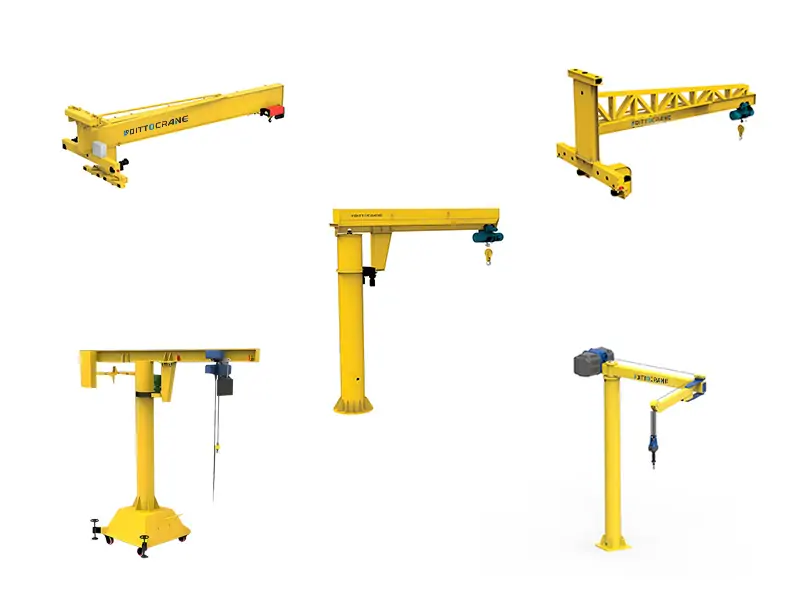
jib crane for automotive assembly
24 July 2026

Jib Crane for Automotive Assembly Plants in Thailand: Types, Load Specs & Selection Guide

A jib crane for automotive assembly is a localized, station-level lifting device — floor-mounted, wall-mounted, or articulating — that handles loads from 0.25 to 10 tons at fixed workstations along a production line. Thailand’s automotive plants in Rayong, Chonburi, and Ayutthaya deploy them at engine assembly cells, body welding stations, trim lines, and maintenance bays, where a shared overhead crane system would create scheduling bottlenecks and slow down takt-time targets. The practical problem most equipment managers face is not whether to use jib cranes, but which type belongs at which station and what capacity to specify. Get the type wrong and you either cap your load range too low for heavy mold handling, or you over-engineer a simple trim-line application and pay twice what you needed to. Get the installation type wrong — wall-mounted where the column can’t carry the bending moment, or floor-mounted where there’s a buried utility trench — and you’re facing a costly rework before production even starts. This guide maps each jib crane type to its correct automotive assembly application, gives you the load capacity ranges…

READ MORE
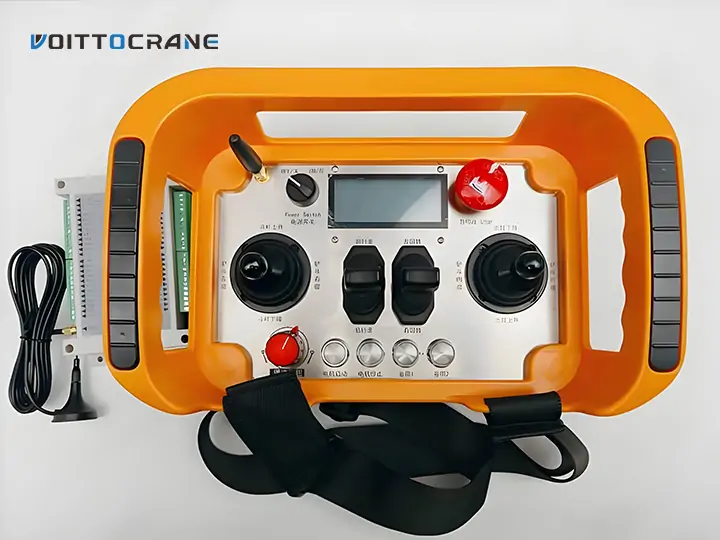
crane remote control systems
21 July 2026

Crane Electrical Equipment: Control Systems, Limit Switches & Safety Devices Explained

Crane electrical equipment refers to every component that powers motion, regulates travel, and enforces safety limits across a crane system — including control stations, limit switches, contactors, overload relays, and emergency protection devices. Without a properly integrated electrical system, even a structurally sound crane cannot operate safely or predictably. Procurement managers sourcing overhead cranes or gantry cranes often evaluate structural specifications in detail — span, lifting capacity, duty class — while treating the electrical system as a secondary checklist item. This is a costly mistake. Electrical failures account for a significant share of crane incidents, most of which trace back to undersized protection devices, improperly set limit switches, or control systems mismatched to the application. This guide explains what crane electrical equipment consists of, how each subsystem works, and what questions to ask your supplier before accepting any configuration. What Crane Electrical Equipment Actually Covers Crane electrical equipment is best understood as three functional layers that work together: the control layer (how operators command movement), the power and drive layer (how motors receive and regulate electricity), and the protection layer…

READ MORE
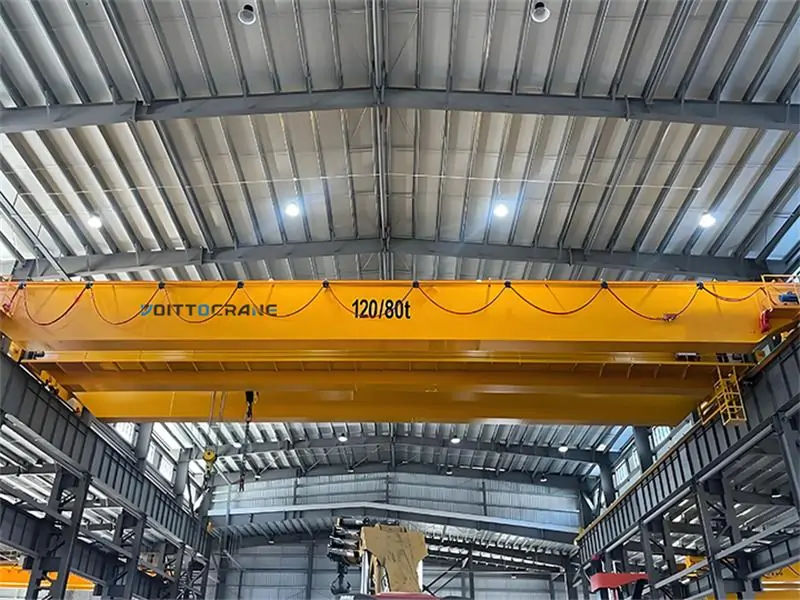
Double Girder EOT Crane
20 July 2026

EOT Crane for Sale: Factory-Direct Pricing, Types & Specs (2026)

Voitto Crane’s EOT crane for sale start at $3,000 for a 0.5-ton suspended unit and scale to over $1.7 million for a 800-ton heavy-duty double girder — a range wide enough that choosing the wrong series on your first RFQ costs real money and months of delay. This page covers all six Voitto series, their price ranges, technical specifications, and the three selection decisions that determine which configuration fits your facility. Factory procurement managers face two predictable pain points: they receive quotes with no clear rationale for why one configuration costs three times another, and they only discover span or headroom conflicts after a purchase order is signed. The sections below give you the numbers and the reasoning so both problems stay off your desk. By the end of this page you’ll know which Voitto EOT crane series matches your load, span, duty class, and any special environment requirements — and you’ll have a checklist to use when comparing competing supplier proposals. Quick Reference: Voitto EOT Crane Series & Price Ranges Series Type Capacity Span Lifting Height Price Range (Market…

READ MORE
Semi Gantry Crane
16 July 2026

Semi Gantry Crane for Sale: BMG & BMH Configurations, Specs, and Factory-Direct Pricing

A semi gantry crane is a hybrid structure where one end carriage travels on an elevated runway attached to your building wall, and the other runs on a ground-level rail. Voitto Crane supplies two factory-direct configurations: the BMH single-girder (2–16 t, from ~$12,000) for light-to-medium workshop use, and the BMG double-girder (5–320 t, from ~$42,000) for heavy industrial applications — both with custom span, lifting height, and voltage options. If you manage a manufacturing facility, warehouse, or steel processing yard where floor space is limited and you already have overhead infrastructure on one side of the building, a semi gantry crane for sale is almost certainly the most cost-efficient lifting upgrade available. You avoid the civil cost of adding a full second column row while still covering the full width of your workspace. This page covers both BMH and BMG specs side by side, helps you choose the right type for your load cycle, breaks down what drives price, and explains how to verify certifications before you commit to a supplier. Quick Reference — Voitto Crane Semi Gantry Crane for…

READ MORE
straddle carrier maintenance
16 July 2026

Straddle Carrier Maintenance: A Complete Guide to Inspection, Service and Troubleshooting

Straddle carrier maintenance is the structured program of preventive, condition-based, and corrective work applied to the hydraulic lifting system, spreader, tire and wheel assembly, structural frame, and electrical/control system of a straddle carrier. Currently, there are no specific international standards for the various subsystems of straddle carriers that prescribe specific maintenance intervals. A straddle carrier maintenance work primarily follows general inspection principles and the original equipment manufacturer’s (OEM) service manuals. In practice, procurement and maintenance teams often directly apply the maintenance schedules for overhead cranes to manage the straddle carrier fleet, which is a common misapplication: Straddle carriers integrate a hoisting mechanism with a mobile undercarriage and tires, and their wear characteristics are closer to those of mobile heavy equipment than to fixed overhead cranes. Therefore, maintenance plans must take both of these characteristics into account. Next, this article will provide you with a key checklist for straddle carrier maintenance, maintenance schedules, and practical maintenance tips. Straddle Carrier Maintenance Fundamentals: Definition and Inspection Scope This section defines the three types of maintenance that make up the preventive maintenance plan for…

READ MORE
Top