blogue

15 de junho de 2026

Overhead Crane for Steel Mill: Types, Duty Class & How to Choose the Right One

Selecting the right overhead crane for a steel mill is not a catalog decision — it is an engineering decision with direct consequences for production continuity and worker safety. A ladle crane transporting 200 tons of molten steel at 800°C and a coil-handling crane moving finished product share the same name but almost nothing else: different work grades, different structural standards, different safety systems, and a price difference that can exceed $300,000. Steel mills present five simultaneous challenges that standard industrial cranes are not designed for: radiant heat from furnaces and ladles, airborne metallic dust, corrosive atmospheres, continuous multi-shift operation, and catastrophic consequences if a load is dropped. Each of those factors drives a specific design requirement, and every requirement narrows your crane specification further. This guide gives plant engineers and equipment managers a complete, bay-by-bay selection framework — crane type, capacity range, duty class, key technical features, and indicative price — so you can frame an accurate specification before you talk to any supplier. Quick Reference: Overhead Crane Types for Steel Mill The table below summarizes every overhead crane…

LER MAIS
venda de gruas de pórtico
12 June 2026

Ponte rolante tipo pórtico à venda: tipos, preços e o que verificar antes de comprar

Um guindaste pórtico à venda de fabricantes chineses tem preços entre $3.800 e $150.000+ FOB fábrica, dependendo da capacidade de elevação, vão e configuração. Uma unidade de viga simples de 5 toneladas com vão de 12 m começa em torno de $7.000; uma de viga dupla de 10 toneladas com vão de 20 m normalmente fica na faixa de $20.000 a $30.000; um guindaste pórtico sobre trilhos de 50 toneladas custa entre $70.000 e $110.000. Esses são preços reais de transação das fábricas, não estimativas de catálogo. Antes de analisar configurações específicas, é útil entender o que influencia essas diferenças de preço — classe de serviço, vão, tipo estrutural, sistema de controle e ambiente afetam significativamente o valor final. Nosso guia de custos de guindastes pórticos detalha cada fator de custo para que você possa comparar qualquer orçamento recebido com as expectativas realistas do mercado. Muitos compradores tendem a cair em um equívoco comum durante a fase de cotação: consideram os pórticos rolantes como itens padronizados de catálogo. Isso não é verdade. O vão do equipamento, a altura de elevação, a bitola dos trilhos, o ciclo de trabalho e as condições ambientais externas influenciam o projeto estrutural. Alterar qualquer um desses fatores após o início da fabricação pode resultar em atrasos no projeto de…

LER MAIS
Ponte rolante na indústria automobilística
11 de junho de 2026

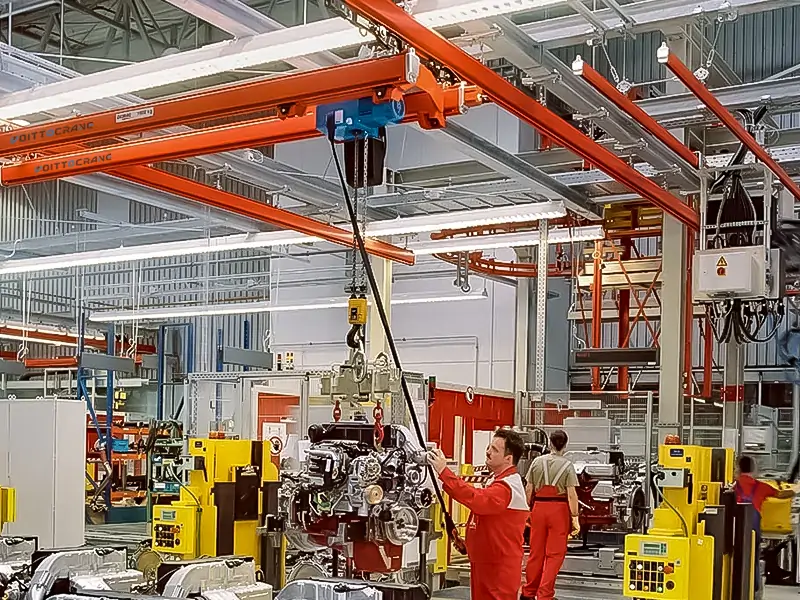
Pontes rolantes na indústria automotiva: aplicações, tipos e guia de seleção

The right overhead crane in the automobile industry is defined by production stage, not by tonnage alone. A stamping press needs a 20–32 t die-gripper crane with ±1 mm positioning accuracy. A trim-and-final assembly cell needs a 250–500 kg KBK aluminum rail system that operators can push by hand. Specifying one without the other wastes budget or creates a safety gap. Automotive plants run 24 hours a day at duty class M5–M6 (per FEM 1.001), and unplanned crane downtime translates directly to line stoppage. Engineers and procurement managers need cranes matched to load, cycle frequency, and environmental conditions — not a generic “overhead crane for auto” catalog page. This guide maps every major production stage to the correct crane type, key specifications, and compliance requirements. Use the table in the next section to shortcut your selection process. TL;DR: Cranes in Automotive Production • Production Scope: Overhead cranes in the automobile industry support six distinct production stages, each requiring specific crane types and lifting capacities. • System Selection: Use double-girder bridge cranes (5–50 t) for stamping and body-in-white; utilize KBK rail…

LER MAIS
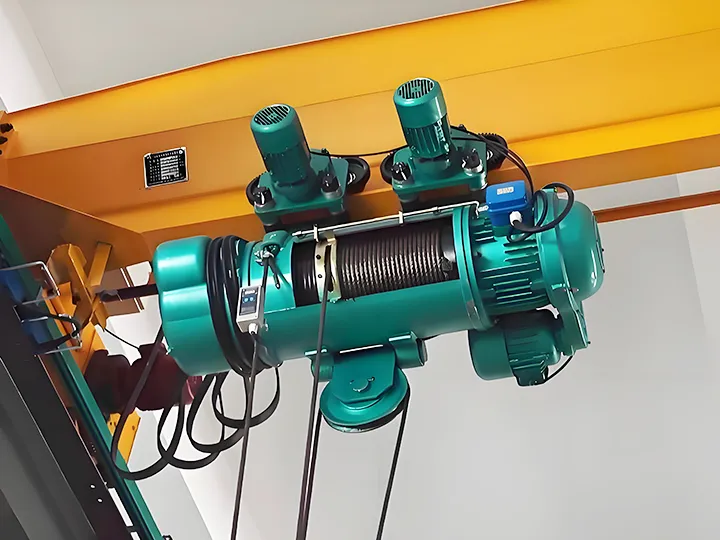
Talha elétrica com cabo de aço
08 June 2026

Guia de compra de guinchos elétricos com controle remoto: capacidade, tipos e preços (2026)

An electric hoist with remote gives your team motorized lifting plus hands-free distance control in a single unit. Entry-level 110V models for garages and light workshops start around $80–$300; industrial-grade 3–10 ton chain hoists with CE-certified wireless pendants run $800–$3,000; heavy-duty wire rope hoists for overhead cranes reach $1,900–$3,000+ (market reference, ex-works). If you’re comparing options for a factory, warehouse, or workshop, this guide walks you through exactly what to specify — before you talk to a supplier. Most buyers waste time comparing lifting capacities alone. The real variables are remote type, duty class, and installation constraints. Get those wrong and you’ll either overbuy on budget or watch an undersized hoist fail during a busy production shift. This guide covers: the two main hoist types, wired versus wireless remote trade-offs, the four key specs that actually determine fit, pricing by category, and the certification checks that protect you from non-compliant equipment. Quick Reference: Electric Hoist with Remote — Pricing & Specs by Category Category Capacity Remote Type Typical Use Price Range (Market Ref.) Light-duty wire rope hoist 440–880 lbs Wired…

LER MAIS
Grua suspensa de viga única
05 June 2026

Ponte rolante à venda: Preços e especificações direto da fábrica (2026)

If you are looking for an overhead crane for sale from a Chinese manufacturer, factory-direct pricing runs from $2,800 to $100,000+, depending on configuration, capacity, and span. A 3-ton single girder unit starts at around $3,500; a 10-ton single girder typically falls in the $5,000–$12,000 range; a 10–20 ton double girder runs $12,000–$25,000 FOB factory. These are real transaction prices — not catalog figures. Before you contact a supplier, confirm four variables: lifting capacity (tonnes), span (metres), lift height, and duty class (FEM/ISO). Having these ready cuts the quoting process from days to hours — and prevents the most common source of pricing surprises after you have already shortlisted a vendor. This page gives you a specification speed-reference, a pre-purchase checklist, and a clear picture of what to verify before placing your overhead crane for sale order — from first RFQ to factory shipment. Quick Price & Spec Reference Type Capacity Span China FOB Factory Price Best For Single Girder EOT 1 – 5 t 7.5 – 19.5 m $2,800 – $8,000 Light workshops, assembly lines Single Girder EOT 5…

LER MAIS
Balde de recolha em concha
03 June 2026

Balde de coleta tipo concha: 5 fatores-chave de seleção e preços direto da fábrica

A rope-type clamshell grab bucket starts at roughly $150–$900 (FOB China factory) for capacities under 1 m³, while hydraulic and electro-hydraulic models for bulk port operations range from $1,500 to $5,000+ depending on volume, jaw configuration, and material contact class. If you already know your bulk density and crane SWL, you’re two specification items away from a confirmed order. Most procurement delays come from the same problem: engineers submit an RFQ without locking down cycle frequency, material abrasiveness, or crane rope arrangement — and the factory sends back three clarification emails before quoting. That back-and-forth adds 5–10 days to delivery. This guide cuts through that. Below you’ll find a spec-confirmation checklist, a type comparison table, the five technical factors that determine the right bucket for your crane, and what to verify before signing a purchase order. Quick Reference: Clamshell Grab Bucket Types & Indicative Pricing Type Drive Method Typical Capacity Indicative Price (FOB China) Best For Two-rope mechanical Rope (holding + closing) 0.1 – 5 m³ $150 – $1,500 Overhead cranes, scrap yards Four-rope mechanical 2 holding + 2 closing…

LER MAIS
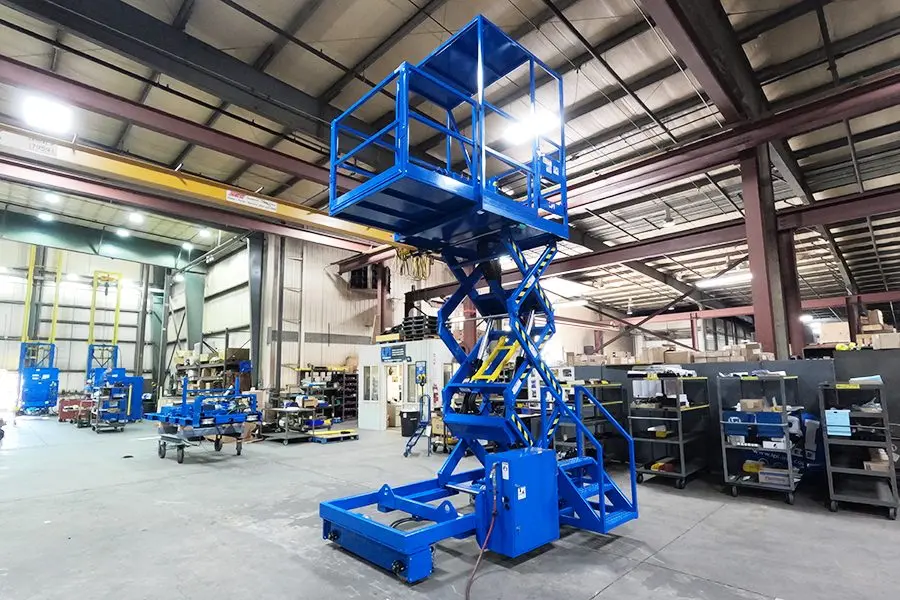
Elevador de tesoura com plataforma de extensão
27 de maio de 2026

Guia de Manutenção de Plataformas Elevatórias Tesoura

Introduction Scissor lift platforms are widely used in warehouses, construction sites, equipment maintenance, and industrial facilities for daily high-frequency lifting operations. However, long-term use without proper maintenance can easily lead to hydraulic oil leakage, reduced battery lifespan, unstable lifting performance, and unexpected equipment shutdowns. In real industrial applications, many equipment failures are caused not by major component damage, but by neglected routine inspection and preventive maintenance. This article covers common scissor lift maintenance issues, daily inspection items, hydraulic system maintenance, battery care, and practical troubleshooting methods. You will also learn how proper preventive maintenance helps reduce unexpected downtime, lower repair costs, extend equipment service life, and keep lifting operations safer and more stable in daily use. This article covers common scissor lift maintenance issues, daily inspection items, hydraulic system maintenance, battery care, and practical troubleshooting methods. You will also learn how proper preventive maintenance helps reduce unexpected downtime, lower repair costs, extend equipment service life, and keep lifting operations safer and more stable in daily use. If you are also looking for guidance on how to operate a scissor lift…

LER MAIS
Grab Bucket for Sale
26 May 2026

Caçamba hidráulica com garra à venda: como escolher o tipo certo para seu guindaste ou escavadeira

Hydraulic grab buckets from Chinese exporters start at around $200 FOB factory for a small excavator-mounted clamshell and reach $3,000+ for a heavy-duty electro-hydraulic orange peel unit above 8 m³. Most buyers land somewhere in the $8,00–$2,000 range. The bigger risk isn’t overpaying — it’s buying the wrong type. A clamshell bucket on a scrap line, or an orange peel grab on a sand-unloading crane, will underperform from day one regardless of price. This guide compares the two main types — hydraulic clamshell grab bucket and hydraulic orange peel grab bucket — on material fit, crane compatibility, key specs, and price. By the end, you’ll know which one fits your application and what to confirm before placing an order.If you’re still earlier in the decision process — comparing rope-operated versus hydraulic drive, or working out how bulk density affects grab capacity sizing — our grab bucket buying guide covers both classification frameworks and the full capacity sizing method before you narrow down to a specific type. Quick Reference: Hydraulic Grab Bucket Comparison Spec Hydraulic Clamshell Grab Bucket Hydraulic Orange Peel…

LER MAIS
Balde mecânico para cascas de laranja
26 May 2026

Como escolher a caçamba coletora de casca de laranja ideal para manuseio de sucata e materiais a granel

Choosing the wrong orange peel grab bucket doesn’t just hurt productivity — it can overload your crane, accelerate wear part consumption, and create a compliance gap that voids your equipment insurance. The right bucket is determined by four variables: your material type, required capacity, crane configuration, and duty cycle intensity. Get those four right, and the rest of the specification falls into place. Most procurement managers encounter this decision when a scrapyard is scaling up throughput, a port facility is adding a handling line, or a demolition contractor is specifying crane attachments for a new project. In each case, the temptation is to size up — bigger bucket, more per cycle. That logic fails when the bucket’s dead weight pushes the crane past its Working Load Limit at the operating radius, or when tine geometry doesn’t match material piece size. This guide walks you through every selection variable in the order that matters: material first, capacity second, drive system third, structural specification fourth. By the end, you’ll have a complete specification checklist ready to send to a supplier. Quick Reference:…

LER MAIS
Quanto custa um guincho
21 de maio de 2026

Quanto custa um guincho? Um guia para compradores sobre preços de guinchos para gruas

O custo de um guincho para aplicações em gruas varia bastante. Tipicamente, desde alguns milhares de dólares para uma unidade de serviço leve até várias centenas de milhares de dólares para equipamento industrial pesado de elevação, pois o preço é determinado pela capacidade de carga, classe de serviço e sistema de controlo, e não apenas pelo tamanho físico. De seguida, este guia explica os fatores chave que determinam o preço de um guincho de grua, fornece intervalos de preço realistas para tipos comuns de guinchos de grua e destaca os erros mais comuns que os compradores cometem ao comparar orçamentos. Um guincho de grua é também conhecido como guincho de sustentação ou guincho de elevação. Os fabricantes de gruas instalam-nos em gruas de ponte, gruas de pórtico ou gruas portuárias como parte do mecanismo de elevação. Este equipamento consiste num tambor motorizado combinado com uma caixa de velocidades e é o principal responsável pela elevação vertical e transporte de materiais. Isto é fundamentalmente diferente dos guinchos de recuperação de veículos ou dos guinchos marítimos: os guinchos de grua operam sob condições de carga cíclica contínua e devem cumprir normas rigorosas de segurança de elevação. Além disso, a sua classificação é determinada com base na “classe de serviço” em vez de simplesmente na “força de tração nominal”. Que Fatores…

LER MAIS
Topo