

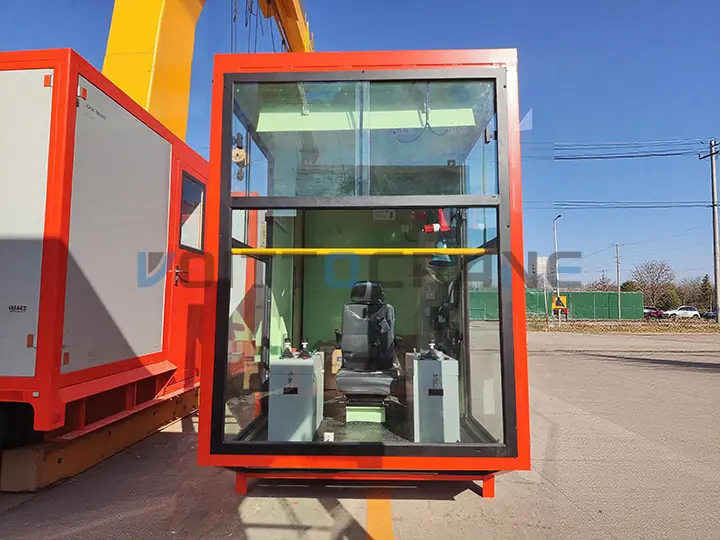
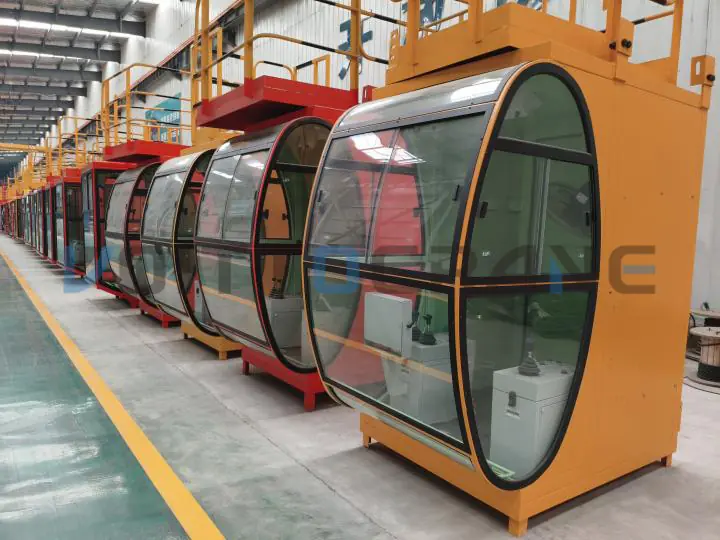
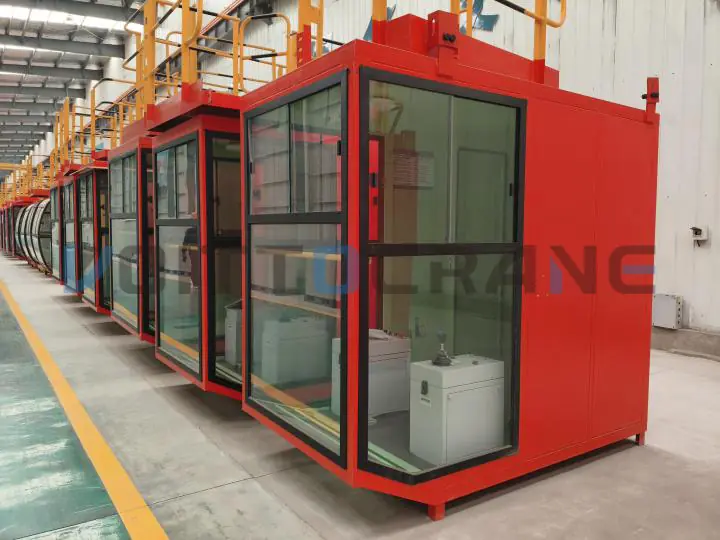
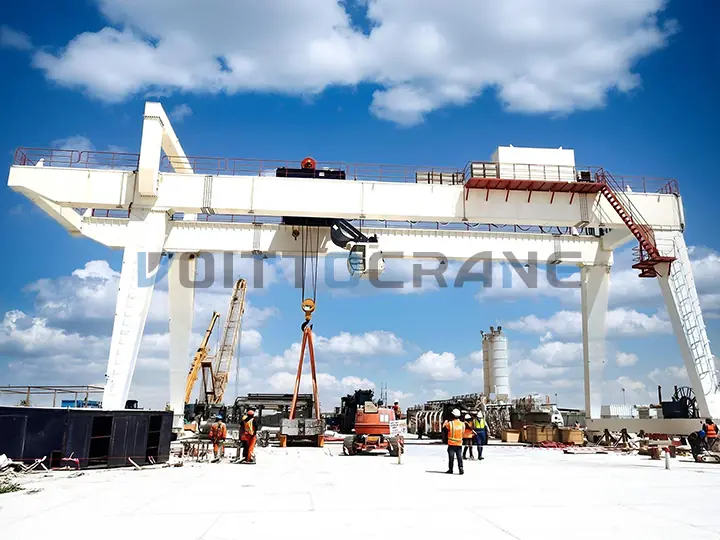
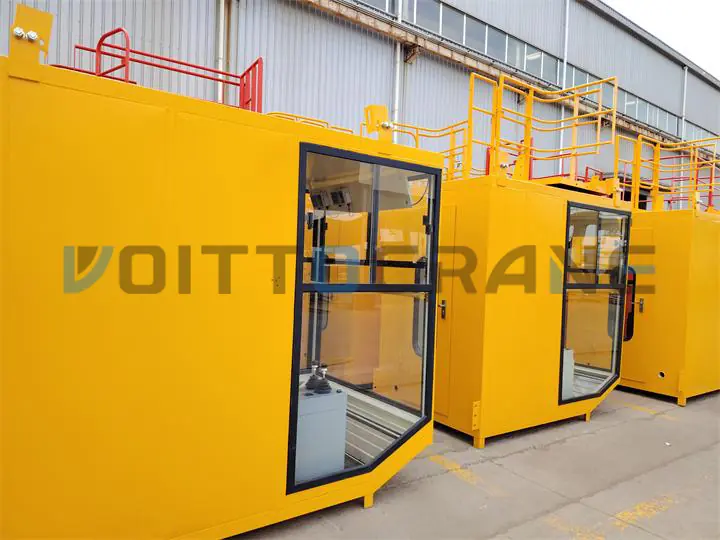
VOITTO crane cabins are supplied for the main girder, end carriage, gantry leg or hoist trolley of the host crane, with the mounting bracket drawn 1:1 to the crane structure. The cabin gives a horizontal viewing angle above 270° plus a bottom floor window, and its floor carries a 10–15 kV high-voltage insulated rubber mat.
A crane cabin (also known as an operator’s cab) is an enclosed control station from which the crane operator can control the hoisting mechanism, the trolley, and the travel of the bridge or gantry. This unit is typically installed on overhead cranes, gantry cranes, metallurgical cranes, or port cranes, and can be positioned on the main girder, end girder, gantry legs, or hoisting trolley. The VOITTO crane cab consists of a welded steel structure shell, safety glass with a bottom viewing window, a suspended seat with a joystick control console, an insulated electrical floor, and an air conditioning system equipped with auxiliary safety devices.
The crane cabin serves as the crane’s control center. From a position at approximately the same height as the load, the operator can control the crane’s operation from within the cab. This eliminates the blind spots that can occur when operating the crane from the ground using pendant controls or a remote control. The main components of the cab include: a welded steel shell and frame; safety glass windows with floor grating; a joystick control console and seat; an electrical cabinet with an insulated floor; as well as a heating, ventilation, and air conditioning (HVAC) system and various safety devices. Inside the sealed and insulated shell, the operator is protected from radiant heat, dust, corrosive fumes, and noise.
The structural shell is fabricated from 2.5 mm to 5.0 mm CNC-bent cold-rolled steel plate conforming to GB/T 700 (Q235B) or GB/T 1591 (Q355B), with a yield strength of 235–355 MPa. Cabins are designed for duty classes M5 to M8 (A5 to A8) and are the standard choice when the host crane exceeds 32 tons capacity or 25 m span, or works multiple shifts in severe-duty service.
Crane cabins are divided into different types based on environmental protection, host crane structure, and mounting mechanism. The four types below cover most overhead, gantry, metallurgical, and port crane installations.
Standard Closed Crane Cabin: The standard closed crane cabin is a fully enclosed welded steel structure with EPDM-sealed doors and windows, designed to keep rain, dust, and drafts out of the operator station. It is the base configuration for indoor EOT cranes and outdoor gantry cranes.
Insulated Metallurgical Crane Cabin: The insulated crane cabin is built for locations near radiant heat. It has a double-wall shell filled with 60–80 mm flame-retardant rock wool, double-glazed heat-reflective glass, a heat shield under the floor, and a high-temperature crane air conditioner that works up to +70°C ambient. A sealed shell reaching IP55/IP65 keeps metallurgical fumes and dust out of the cabin.
Port and Container Gantry Crane Cabin: The port crane cabin has a forward-inclined profile and an enlarged floor-to-ceiling bottom window, which gives the operator a vertical view down to the spreader and the container below. It is blasted to Sa2.5 and coated to ISO 12944 C5-M for salt-laden marine atmospheres, and carries a CMS/HMI touchscreen for crane monitoring.
Fixed Suspended vs. Trolley-Mounted Crane Cabin: A fixed suspended crane cabin is bolted to the end beam or gantry leg and stays at one position on the span. A trolley-mounted crane cabin is carried on the hoist trolley and moves in sync with it, so the operator stays directly above the hook. Cable supply to a moving cabin runs through a festoon or energy chain system. The trolley-mounted type is used for precision positioning on spans longer than 30 m.
A crane cabin consists of five subsystems, each with a defined structural or safety function.
Welded Steel Enclosure and Frame: Constructed from 2.5–5.0 mm Q235B/Q355B steel plates bent using computer numerical control (CNC) and welded to a tubular structural frame; the surface is sandblasted (to Sa2.5 standard) and coated with a zinc-rich epoxy primer and a polyurethane topcoat. This structure is designed to support operators, control consoles, air conditioning units, and other installed loads, transferring these loads to the crane’s main structure via brackets.
Panoramic Glass and Floor Grating: Equipped with 5–8 mm tempered safety glass or 8–12 mm laminated glass, providing a horizontal field of view exceeding 270°; an observation window is also provided at the bottom. The area above the observation window is covered with a removable, heavy-duty steel protective grating (with a load-bearing capacity exceeding 200 kg) to prevent personnel from accidentally stepping through.
Ergonomic Control Console: Equipped with a rotatable (90°–180°) shock-absorbing suspension seat and an integrated dual-axis master controller or cam controller. The console also includes safety foot/handle switches, an emergency stop button, and mounting brackets for a human-machine interface (HMI) or condition monitoring system (CMS) display.
Electrical Cabinet and Insulated Floor: The cab is equipped with an electrical cabinet and a central junction box, with wiring compliant with the IEC 60204-32 standard. The floor features non-slip checkered steel plates and is covered with high-voltage insulated rubber mats rated for 10 kV to 15 kV.
Industrial-Grade HVAC and Auxiliary Safety Equipment: The cab is equipped with a vibration-resistant air conditioning unit designed specifically for cranes, capable of operating normally at ambient temperatures ranging from -40°C to +70°C. Auxiliary equipment includes windshield wipers, sunshades, an intercom system, audible and visual alarms, fire extinguishers, and an emergency escape hammer.
Each VOITTO crane cabin incorporates engineering features that align with FEM 1.001, EN 13557, and OSHA crane operator station safety directives:
VOITTO Crane has designed and manufactured cranes and crane components since 2003 and supplies customers in more than 60 countries. Our crane cabins are CE, ISO, and FEM certified, and each order is approved against a 1:1 CAD drawing before production starts. If you need a crane cabin solution, please feel free to contact us.

Alan
Crane Solutions Specialist · Voitto Crane
Specialized in Overhead Crane, Gantry Crane, Jib Crane, Port Crane & EOT Crane export solutions. 10+ years helping global clients with pre-sales consultation, capacity selection and site-specific configurations.
Choose a crane cabin when the crane exceeds 32 tons capacity, 25 m span or 16 m lifting height, works at A6–A8 duty, or when the load path has blind spots or floor-level hazards such as molten metal, fumes, heat, and noise. In clear, single-shift bays under those limits, a wireless remote or pendant is normally enough. For mixed duty, VOITTO supplies the Cabin + Wireless Remote Dual-Control System: the operator controls the crane from the cabin during production and switches to the wireless remote for maintenance, set-up, and close-range hooking.
Yes. We build the replacement crane cabin to your existing bolt pattern, bracket geometry and electrical plugs. You send the old cabin’s drawings or measured photos, we issue a 1:1 CAD drawing for your approval, and production begins after approval. The new cabin bolts to the original mounting points and connects to the existing control cables.
The floor window uses 5–8 mm tempered safety glass or 8–12 mm laminated glass, which holds together on impact instead of falling out as fragments. A removable heavy-duty steel protective foot grate rated for more than 200 kg covers the glass, so the operator cannot step through the opening and the glass does not carry foot loads.
The cabin is pre-wired at the factory per IEC 60204-32: lighting, A/C, console, seat switches, alarms and intercom run to a central junction box on the cabin. On site, the electrician connects the junction box terminals to the crane control panel. For trolley-mounted cabins, the supply and control cables run through a festoon or energy-chain system that moves with the trolley.

Our pre-sale team provides consultations, tailoring solutions to your needs and environment.
Offer customization options for lifting capacity, span and lifting height etc. to meet specific needs.

Real-Time Progress Updates: Weekly reports and PM communication.
Pre-Delivery Testing: 100% load & safety checks, detailed reports.

3-5 years warranty and free replacement for non-manufacturing defects.
24/7 online support and on-site assistance for crane issues.
Yes, international shipping and export support are available for global customers.
Transit time varies depending on many factors, including the destination of the goods, distance, shipping method and shipping service provider, etc. Generally speaking, international shipping may take about a month.
We offer comprehensive after-sales service, including regular maintenance, rapid technical support, and spare parts supply. The standard warranty period is 1 year, with options for extension based on your needs.


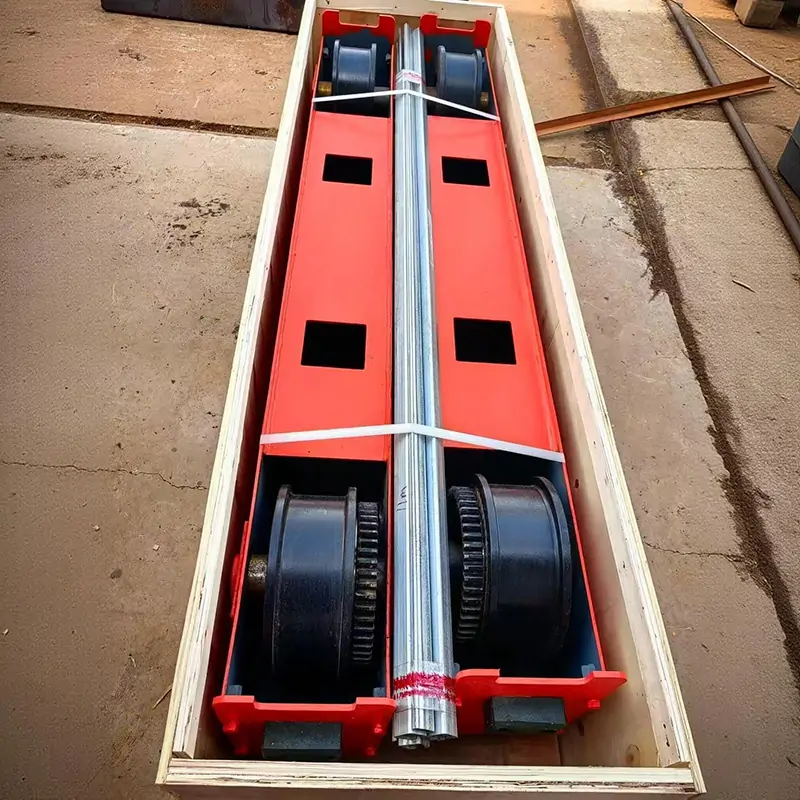
A gantry crane is a large-duty material lifting equipment. It is popularly used in construction sites, port terminals, factories, open-air storage yards, and shipyards. This industrial lifting equipment is assembled from a variety of key parts, which also facilitates its transportation from production to the use of the site and the later maintenance and repair. This article will help you understand the core gantry crane parts, analyze their structural characteristics and functional principles, to help you gain a more comprehensive understanding of this heavy-duty crane system and its components. What Are The Parts Of A Gantry Crane? A gantry crane comprises multiple key parts, including the main girder, support legs, tracks, travel mechanism, hoist mechanism, and electrical system. Other important components include the controller or operator’s cab, pulleys, brakes, and various safety devices. These components work together to move cargo from point A to point B. The following will introduce you to the functional description of the gantry crane parts. Gantry Crane Parts Diagram Components And Functions Of Different Types Gantry Cranes Portable Gantry Crane: Structural Description The portable gantry…
In modern industrial production and large-scale engineering construction, the overhead crane, the core equipment for material handling, with its high efficiency and stable performance, has become the preferred choice for workshops, warehouses, etc. As we all know, the overhead crane is assembled by various parts, which also facilitates its transportation from production to the use of the site and the later maintenance and repair. This article will help you understand the core Overhead Crane Parts, analyze their structural characteristics, functional principles, to help you gain a more comprehensive understanding of the overhead crane and its components. Overhead Crane Parts In modern industrial production and large-scale engineering construction, the overhead crane, the core equipment for material handling, with its high efficiency and stable performance, has become the preferred choice for workshops, warehouses, etc. As we all know, the overhead crane is assembled by various parts, which also facilitates its transportation from production to the use of the site and the later maintenance and repair. This article will help you understand the core Overhead Crane Parts, analyze their structural characteristics, functional principles, to help you…
An overhead crane is a type of material handling equipment widely used in workshops, warehouses, and factories, primarily responsible for lifting, horizontal transportation, loading, and unloading raw materials, finished products, and semi-finished products. Its efficient and safe operation is inseparable from the coordination and cooperation of various key overhead bridge crane components, each performing a specific function. Therefore, understanding the overhead bridge crane components not only helps in the correct use and maintenance of the equipment but also helps factories improve production efficiency and safety. Next, this article will introduce the overhead bridge crane components, as well as their definition and functions, to help you become familiar with and understand them. What are the Overhead bridge Crane Components? An overhead crane consists of the main girder, end beam, crane travel mechanism, trolley operating mechanism, lifting mechanism, electrical system, and safety devices. These overhead crane parts work together to move goods from point A to point B. The following will introduce you to the pictures of the various components of the bridge crane and its definition. Main Girder The main girder…
An overhead crane, often known as a bridge crane, is a key industrial lifting system for heavy-load handling in facilities like factories, ports, and warehouses. Available for single girder overhead crane (for lighter loads, 1-32 tons) or double girder overhead crane (for heavier tasks, 5-500 tons) or KBK Light flexible crane (for processing lines, less than 5 tons). It uses overhead structure to save space and avoid ground congestion. Next, this article will delve into the definition, image, application, structure and technical specifications of an overhead crane to help you have an overall understanding of it. What Is An Overhead Crane? An overhead crane is a heavy-duty lifting device installed above work areas (e.g., factories, warehouses) on fixed overhead rails. Unlike mobile cranes, it operates along a fixed path, saving ground space. Its basic components include main girders (the load-bearing structure), end trucks (for longitudinal movement), a hoist trolley (for lateral movement) and a hoisting mechanism (for vertical lifting) and a Control System (for easy and precise operation). An overhead crane’s core structure includes a bridge-frame main girder spanning the…
The Lifting Solution Built for Scale Some lifting jobs demand more than a fixed crane can offer. When loads are heavy, spans are wide, and the work happens outdoors or across large open areas, a gantry crane is often the only practical answer. From port container terminals to wind turbine assembly sites, gantry cranes handle material movement at a scale that few other systems can match. Stable structure, high load capacity, and wide operational range make them a core piece of equipment across heavy industry worldwide. This guide covers everything you need to understand about gantry cranes — what they are, how they work, which types exist, what they’re made of, and where each configuration performs best. What Is a Gantry Crane? A gantry crane is a large material handling system built around a portal frame structure. Two vertical support legs carry a horizontal main beam across the working area. This leg-and-beam combination forms a door frame — or gantry — which gives the equipment its name. The entire structure travels along ground-level tracks, with the trolley and hoist moving…

 English English
 Español
 Português
 العربية
 Français
 Русский