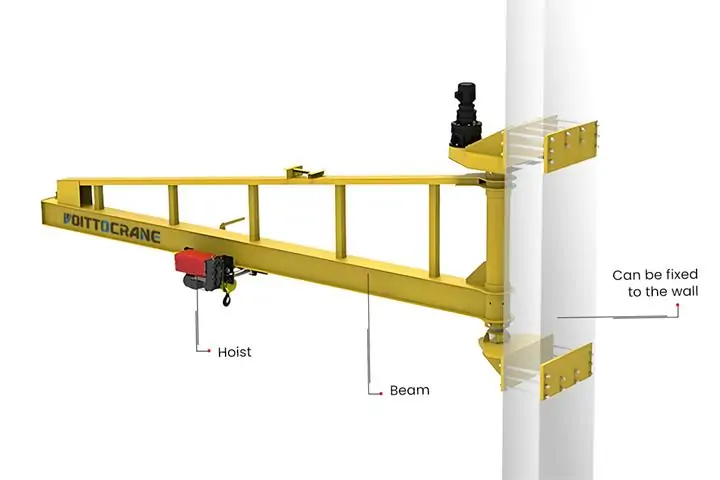
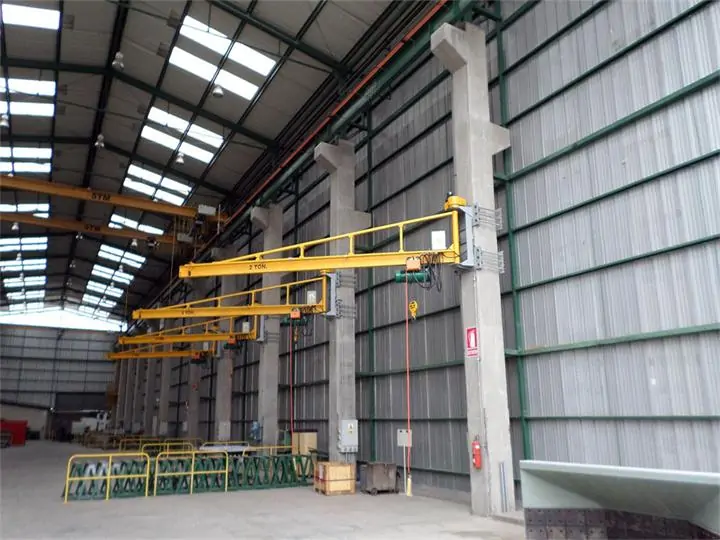
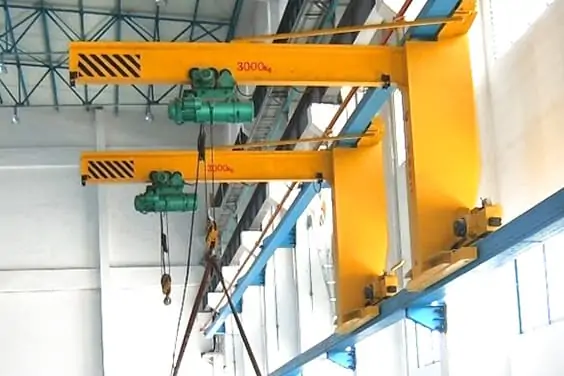
Wall mounted jib cranes are installed on factory columns or load-bearing walls. They operate by rotating the jib in conjunction with an electric hoist, enabling the lifting and handling of equipment components, tooling fixtures, and small-to-medium-sized materials. These cranes are used for localized material lifting and handling in workshops, assembly lines, warehouses, and similar settings. They feature a compact design that does not occupy floor space, making them ideal for production environments with limited space or where fixed-point operations are required. Vitto is a lifting equipment manufacturer that provides customized solutions based on requirements such as lifting capacity, jib length, and installation conditions.
Wall mounted jib cranes can be installed along walls to cover multiple workstations, thereby improving work efficiency. With minimal installation requirements and a short installation cycle, they are ideal for retrofitting existing facilities or upgrading production lines. Features such as variable frequency control can be configured as needed to ensure more stable and safe operation.
what are jib cranes used for
Types Of Wall Mounted Jib Crane
Depending on the structure of the facility and operational requirements, jib cranes can be classified into various types. Free standing and wall traveling jib cranes are two of the most commonly used types. Below is a brief introduction to these two types:
Free Standing Jib Crane
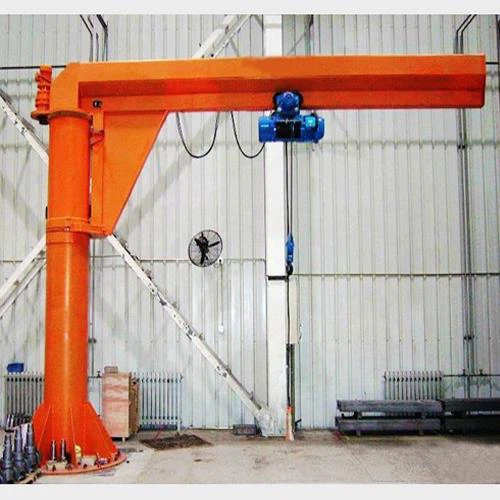
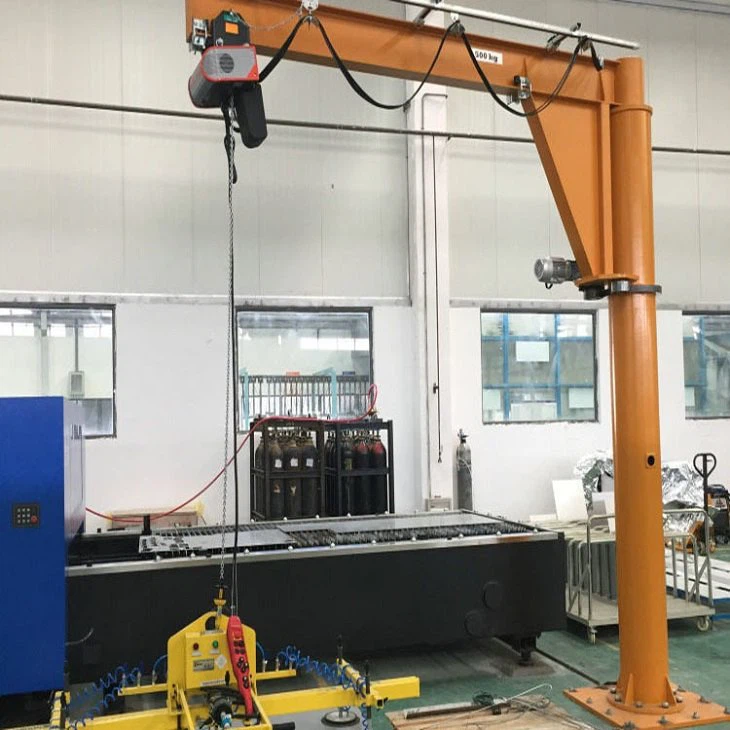
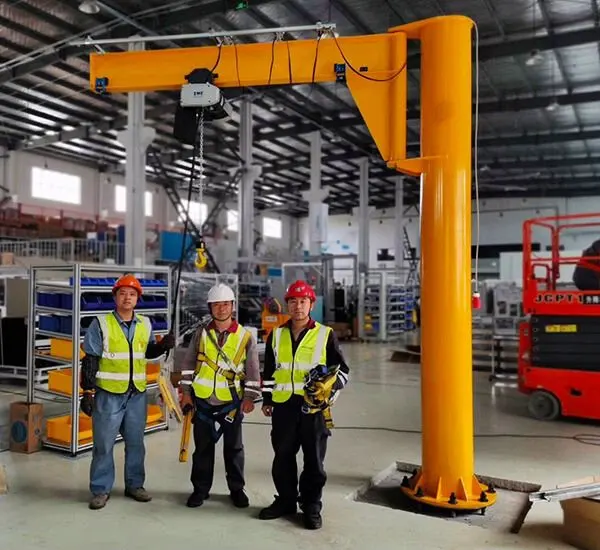
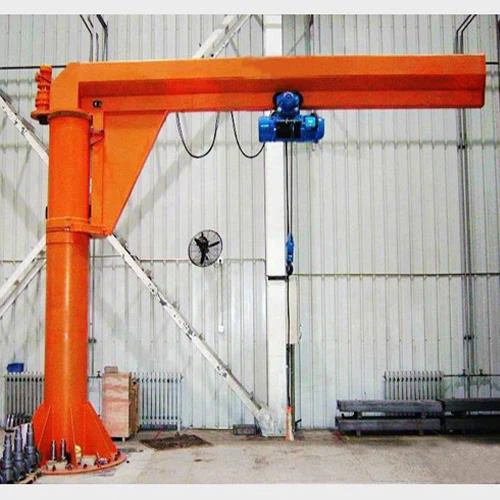
Free standing jib cranes feature a simple structure consisting of a column, a rotating boom, a drive mechanism, and an electric hoist. Installed independently on the ground without relying on the building structure, they offer a wide range of applications and are suitable for fixed or large-scale lifting operations in areas such as workshops and warehouses.
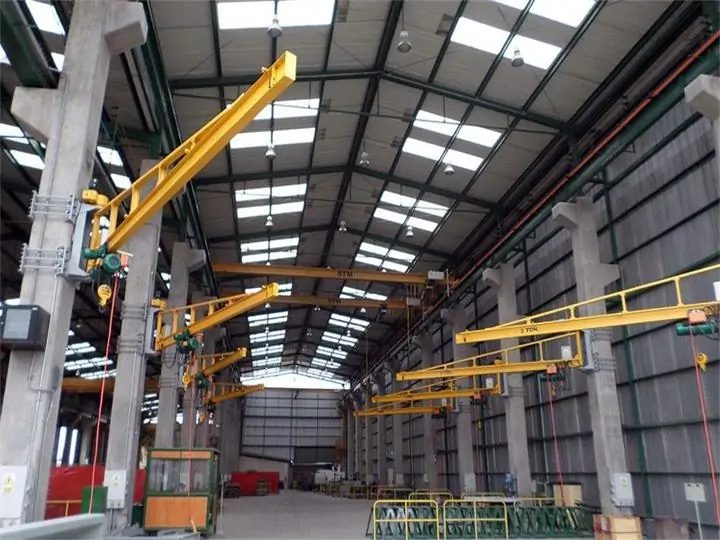
The Wall Traveling Jib Crane runs along a track mounted on the wall, providing a wider coverage area. It is ideal for multi-station operations or continuous production line work, thereby improving overall material handling efficiency.
Here is a clear comparison table of wall mounted jib cranes versus floor mounted jib cranes, focusing on key performance metrics and specifications:
Parameter
Wall Mounted Jib Crane
Free Standing Jib Crane
Installation
Mounted on wall or column
Fixed on floor with foundation
Floor Space
No floor space required
Occupies floor space
Foundation
Not required
Required (concrete base)
Lifting Capacity
0.25–5 ton
0.25–10 ton (or higher)
Jib Arm Length
2–7 m
2–10 m
Rotation Angle
180°–200°
180°–360°
Coverage Area
Limited (fixed position)
Wide (full circular coverage)
Mobility
Fixed location
Fixed, but larger working range
Installation Time
Short
Longer (foundation needed)
Cost
Lower
Higher
Application
Workstations, wallside tasks
Open areas, large coverage needs
Specifications
The specifications of wall-mounted jib cranes can be adjusted to suit specific operating conditions, and lifting capacity, boom length, and installation requirements may vary from project to project. The following are typical parameter ranges for reference when selecting a model:
Parameter
Specification
Lifting Capacity
0.25–5 ton
Jib Arm Length
2–7 m
Lifting Height
2–10 m
Rotation Angle
180°–200°
Hoist Type
Electric Chain Hoist / Wire Rope Hoist
Power Supply
220V / 380V / 415V / Customized
Control Method
Pendant Control / Remote Control
Installation Type
Wall Mounted / Column Mounted
Working Duty
A3–A5
Surface Treatment
Painting / Galvanizing
Key Features of Wall Mounted Jib Crane
Wall mounted jib cranes can meet the demands of a wide range of operating conditions. Their main features are as follows:
Space-Saving Design: Mounted on walls or columns, it occupies no floor space and is ideal for compact workshop layouts
Easy Installation: Requires no complex foundations, involves minimal modifications to the facility, features a short installation cycle, and enables faster commissioning
Flexible Rotation: The boom rotates flexibly to easily cover fixed workstations, enhancing operational efficiency
Stable and Smooth Operation: Compact structure, lightweight, and smooth operation reduce sway
High Positioning Accuracy: Precise control during lifting operations, suitable for precision work requirements
Low Maintenance: Simple structure, easy to maintain, and lower operating costs
Flexible Integration: Can be used in conjunction with overhead cranes or other equipment to enhance overall efficiency
Customizable Design: Can be customized based on lifting capacity, boom length, and on-site conditions to suit various operating environments
Installation & Operating Principle
The Wall Mounted Jib Crane is easy to install, requires minimal modifications to the factory building, and is suitable for rapid deployment. Its operating principle is simple, making it easy to operate and maintain.
Installation: The crane is secured to a load-bearing wall or column using a bracket, ensuring the installation structure has sufficient load-bearing capacity. The installation process primarily involves securing the bracket, connecting the jib, and installing the electric hoist, resulting in a relatively short overall installation cycle.
Working Principle: The electric hoist moves horizontally along the jib beam, enabling the lateral transport of materials; simultaneously, it works in conjunction with the hoisting mechanism to perform vertical lifting operations. The jib can rotate within a certain angle, thereby covering the designated work area and enabling efficient, targeted material handling.
Application
Wall mounted jib cranes are suitable for a wide range of industrial applications and can improve operational efficiency in environments requiring precise lifting or where space is limited.
Warehouse: Used for loading, unloading, and handling goods Workshop: Used for lifting equipment components and performing routine tasks Assembly Line: Used for transferring materials between workstations on the production line to improve operational continuity Maintenance Area: Used for lifting operations during equipment inspection and maintenance
Projects Show
Laser Cutting Workshop Plate Lifting & FeedingElectronics Assembly Workshop Station Material LiftingSteel Structure Workshop Component Lifting & TransferMachining Workshop Workpiece Loading & UnloadingWarehouse Production Line Long-distance Material ConveyingHeavy Equipment Workshop Component Lifting & Positioning
Customized Wall Mounted Jib Crane
Vitto cranes offer tailored designs to meet your specific operational needs. Since different applications have varying requirements for lifting equipment, our wall mounted jib cranes support a wide range of customization options
Capacity Customization: Lifting capacity can be adjusted to meet specific lifting requirements
Arm Length: The arm length is designed to accommodate the operational range, covering various workstations
Mounting Structure: Select the appropriate mounting method based on wall or column structures
Hoist Type: Choose between electric chain hoists or wire rope hoists to suit different application scenarios
Wall Mounted Jib Crane Manufacturer and Supplier
VOITTO has specialized in the manufacture of lifting equipment for over 20 years, boasting a well-established production system and consistent product quality. Our wall-mounted jib cranes have been exported to numerous countries and regions, where they are widely used in workshops, warehouses, and production line projects, delivering reliable performance.
We provide comprehensive engineering support, ranging from solution selection and structural design to installation guidance. For more product information or to request a quote, please feel free to contact us at any time.
Qualification and Honor
Engineered Strength, Global Crane Supplier
service
Exclusive and Considerable, Customer First.
01
Reliable and Customized Solutions
Our pre-sale team provides consultations, tailoring solutions to your needs and environment.
Offer customization options for lifting capacity, span and lifting height etc. to meet specific needs.
02
Updated Production Process
Real-Time Progress Updates: Weekly reports and PM communication.





 English
  Español
  Português
  العربية
  Français
  Русский