
- 1 Introduction
- 2 What Is a Portable Jib Crane?
- 3 Main Types of Portable Jib Cranes
- 4 Factors When Choosing a Portable Jib Crane
- 5 Industrial Applications
- 6 Video Show
- 7 Portable Jib Crane vs Fixed Jib Crane
- 8 Customization Options for Portable Jib Cranes
- 9 How to Choose a Reliable Portable Jib Crane Manufacturer?
-
10
FAQs
- 10.1 1. What is the typical capacity of a portable jib crane?
- 10.2 2. Can a portable jib crane be moved easily?
- 10.3 3. Does a portable jib crane require floor anchoring?
- 10.4 4. What type of hoist can be used with a portable jib crane?
- 10.5 5. How do I choose the right jib crane for my workshop?
- 10.6 6. Are portable jib cranes suitable for outdoor use?
Introduction
Portable jib cranes offer a practical and flexible solution, widely used in modern workshops, warehouses and construction sites. They are cost-effective and can be deployed quickly without the need for complex installation. However, with so many different designs available on the market, selecting the right model is no easy task.
Different types of portable jib cranes are designed to meet specific working conditions, load requirements and mobility needs. Choosing the wrong configuration can lead to inefficiency, safety hazards or unnecessary costs. For procurement managers and engineers, understanding these differences is crucial before making an investment.
In this guide, we will provide a detailed overview of the main types of portable jib cranes, their key features, and how to select the most suitable option for your application.
What Is a Portable Jib Crane?
A portable jib crane is a type of small crane consisting of a horizontal boom (jib arm) mounted on a movable or semi-fixed base, equipped with a hoist for lifting operations. It is specifically designed to provide localized lifting without the need for permanent structural support. Unlike permanently installed systems, this type of small crane can be relocated or repositioned as needed, making it ideal for workshops, warehouses, and temporary job sites where flexibility and efficiency are critical.
Main Types of Portable Jib Cranes
VOITTO Crane offers a full range of portable jib crane and flexible lifting solution options to suit different workspace layouts and handling needs. Whether you require a fixed small crane for repetitive lifting or a mobile unit for multi-station use, each type is designed to balance efficiency, space utilization, and cost.
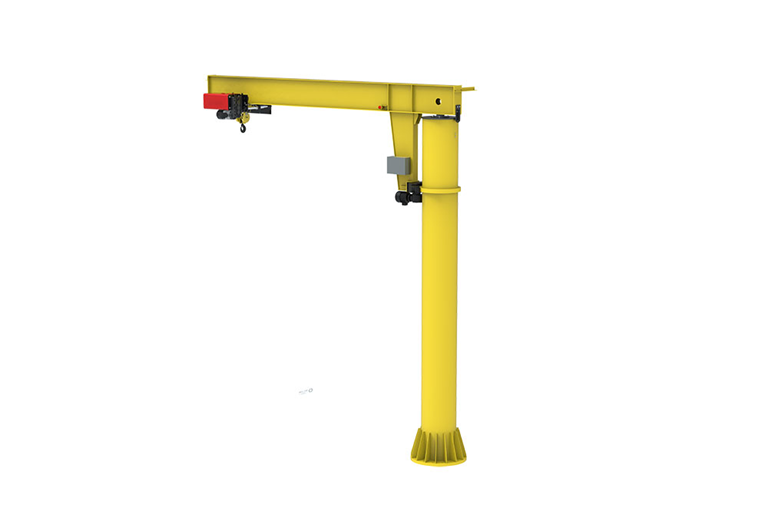
Floor Mounted Jib Crane
The floor mounted jib crane is a fixed solution installed on the ground, providing high stability and reliable lifting for continuous operations. It is widely used in workshops and production lines where tasks are repetitive and require consistent coverage within a defined radius.
- Capacity: 0.5 – 10 tons
- Arm Length: 2 – 8 m
- Lifting Height: 2 – 10 m
- Rotation: 180° / 360° (manual or electric)


Portable Jib Crane On Wheels
This type is a fully mobile portable jib crane equipped with wheels, allowing easy movement between different workstations. It is ideal for flexible operations where lifting tasks are not fixed in one location and no foundation installation is desired.
- Capacity: 0.25 – 2 tons
- Arm Length: 2 – 6 m
- Lifting Height: 2 – 5 m
- Mobility: Manual push with locking casters


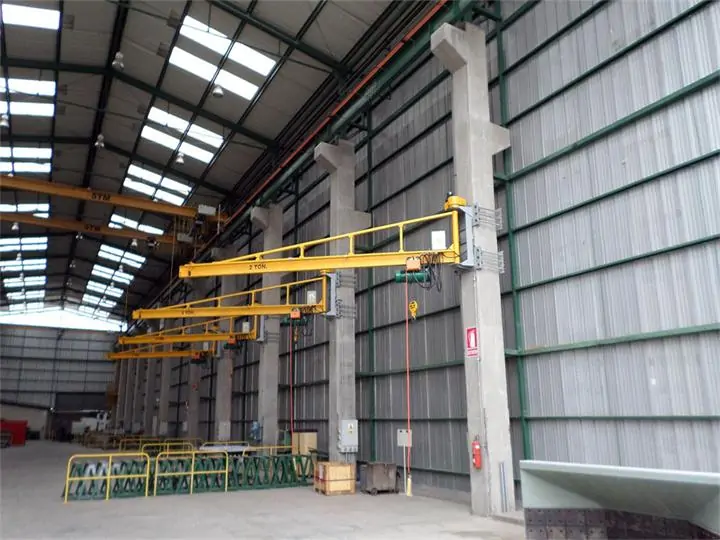
Wall Mounted Jib Crane
The wall mounted jib crane is attached directly to a wall or column, saving floor space while delivering efficient lifting performance. It is a cost-effective choice for facilities with limited ground space but stable structural support.
- Capacity: 0.25 – 5 tons
- Arm Length: 2 – 6 m
- Lifting Height: Customized by structure
- Rotation: Up to 180°
Wall Traveling Jib Crane
A wall traveling jib crane runs along a track mounted on the wall, enabling it to serve multiple workstations along a production line. This design significantly expands coverage and improves workflow efficiency.
- Capacity: 0.5 – 5 tons
- Arm Length: 3 – 7 m
- Travel Length: Customized
- Movement: Manual or motorized traveling


Articulating Jib Crane
The articulating jib crane features a dual-arm design that allows flexible movement around obstacles and precise positioning in confined spaces. It is especially suitable for complex environments where standard jib cranes cannot reach.
- Capacity: 0.25 – 2 tons
- Arm Length: 2 – 5 m (combined arms)
- Rotation: Up to 360°
- Control: Manual or electric


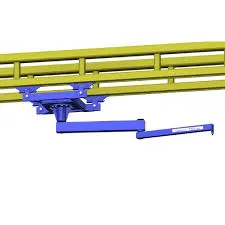
Ceiling Mounted Jib Crane
Installed on overhead structures, the ceiling mounted jib crane keeps the floor completely clear while providing efficient lifting from above. It is ideal for assembly lines and facilities requiring unobstructed ground space.
- Capacity: 0.25 – 3 tons
- Arm Length: 2 – 6 m
- Mounting Height: Based on ceiling structure
- Rotation: 180° – 360°

Factors When Choosing a Portable Jib Crane
Selecting a suitable portable jib crane involves more than comparing specifications—it requires aligning lifting demands with workspace conditions and long-term operational efficiency. In practice, most small crane solutions cover 0.25–2 tons for light-duty tasks, while industrial applications can extend to 3–5 tons or more, with boom lengths generally ranging from 2 to 8 meters. A properly matched configuration helps improve workflow efficiency while avoiding unnecessary investment or safety concerns.
Load Capacity and Reach
Lifting capacity should be defined first. In most workshop scenarios, loads fall between 100 kg and 3 tons, while heavier-duty operations may exceed 5 tons. It is recommended to select a crane with a 10–25% safety margin above the actual load to accommodate hoist weight and dynamic impact. Meanwhile, the jib arm length should match the working range, short spans (2–3 m) for compact stations and longer spans (5–8 m) for wider coverage areas.
Mobility Requirements
Mobility depends on how frequently lifting points change. For applications involving multiple work areas, a wheeled portable jib crane (commonly 0.25–2 tons) provides high flexibility and easy relocation. In contrast, fixed installations are better suited for repetitive tasks, offering improved structural stability and higher load capacity. The choice should balance operational flexibility with structural strength.
Installation and Setup
Site conditions play a key role in crane selection. Lightweight portable models typically require no special foundation and can operate on standard concrete floors, especially for loads below 500 kg. However, larger units in the 1–3 ton range or above may require reinforced flooring or structural support. Evaluating installation constraints in advance helps control project cost and ensures safe operation.
Working Environment (Indoor/Outdoor)
The operating environment determines material selection and protection level. Indoor applications prioritize compact design and efficiency, while outdoor use often requires anti-corrosion treatment, weather resistance, and temperature tolerance (typically -10°C to 60°C). Harsh conditions can directly impact equipment lifespan and lifting reliability.
Power Options (Manual vs Electric Hoist)
The choice of hoist affects both efficiency and cost. Manual hoists are suitable for light loads (100–500 kg) and occasional use, offering a simple and economical solution. For higher loads or frequent lifting—especially above 500 kg to 1 ton, electric hoists are recommended to increase productivity and reduce manual effort in continuous operations.
Industrial Applications
A portable jib crane is a compact and efficient small crane solution widely used for light to medium-duty lifting. It has flexibility and easy deployment make it ideal for improving handling efficiency and reducing manual labor across different work scenarios.
Manufacturing Workshops
Used for repetitive lifting such as part handling and assembly support. It improves positioning accuracy and reduces operator fatigue in production lines.
Warehouses and Logistics
Supports loading, unloading, and material transfer between stations. A cost-effective option where forklifts or large cranes are not suitable.
Construction Sites
Handles tools and building materials in temporary or changing locations. Its mobility allows quick repositioning as work progresses.
Maintenance and Repair Operations
Assists in lifting equipment parts during maintenance. Compact design enables safe operation in confined or hard-to-reach areas.
Video Show
Portable Jib Crane vs Fixed Jib Crane
When selecting a jib crane, buyers often compare portable jib crane and fixed types. Both serve as efficient small crane solutions, but they differ significantly in flexibility, installation requirements, cost, and application scenarios. In general, portable models focus on mobility and quick deployment, while fixed jib cranes emphasize stability and higher-duty operation. Understanding these differences helps users choose the most suitable flexible lifting solution for their workflow.

| Attribute | Portable Jib Crane | Fixed Jib Crane |
|---|---|---|
| Load Capacity | 0.25–2 tons (standard), up to ~3 tons in heavy-duty mobile models | 0.5–10+ tons depending on structure |
| Working Radius | Typically 2–6 m | Typically 2–8 m (customizable up to 10 m) |
| Mobility | High mobility with wheels or forklift base, can move between stations | Stationary, fixed installation |
| Installation | No foundation required; ready-to-use or light anchoring | Requires concrete foundation, wall or column mounting |
| Cost Structure | Lower installation cost, higher flexibility cost | Higher upfront installation, lower long-term unit cost |
| Duty Application | Light to medium-duty, multi-point lifting | Medium to heavy-duty, repetitive single-point lifting |
| Efficiency | Best for flexible workflows and changing layouts | Best for stable production lines and high-frequency lifting |
| Typical Use Cases | Maintenance, small workshops, temporary jobs | Manufacturing lines, machining centers, fixed stations |
Flexibility
Portable jib cranes offer high mobility and can be moved between workstations, making them ideal for multi-point lifting tasks. Most portable models support 0.25–2 ton loads, suitable for flexible workshop use. Fixed jib cranes, on the other hand, are stationary and designed for continuous operation in one location, providing more stable and precise lifting performance.
Cost
Portable jib cranes usually have a lower initial investment and no foundation cost, making them a cost-effective choice for light-duty applications. Fixed jib cranes may require floor reinforcement or structural installation, increasing upfront cost, but they deliver better long-term efficiency for high-frequency operations.
Installation
Portable models require minimal setup—often ready to use after assembly or basic anchoring. Fixed jib cranes need proper installation on concrete foundations, columns, or building structures, which may take longer but ensures higher load stability and safety, especially for capacities above 2–5 tons.
Application Scenarios
Portable jib cranes are commonly used in maintenance areas, small workshops, and flexible production lines where lifting points frequently change. Fixed jib cranes are more suitable for assembly lines, heavy manufacturing, and repetitive lifting stations, where consistent operation and higher load capacity are required.
Customization Options for Portable Jib Cranes
As a professional portable jib crane manufacturer and supplier, VOITTO Crane provides tailored solutions to match different working environments, load requirements, and operational preferences. Customization mainly focuses on improving lifting efficiency, space utilization, and safety performance. Depending on the application, options can be adjusted in terms of capacity, structure, rotation range, hoist type, and power configuration to ensure the crane fully fits the user’s workflow as a reliable flexible lifting solution.
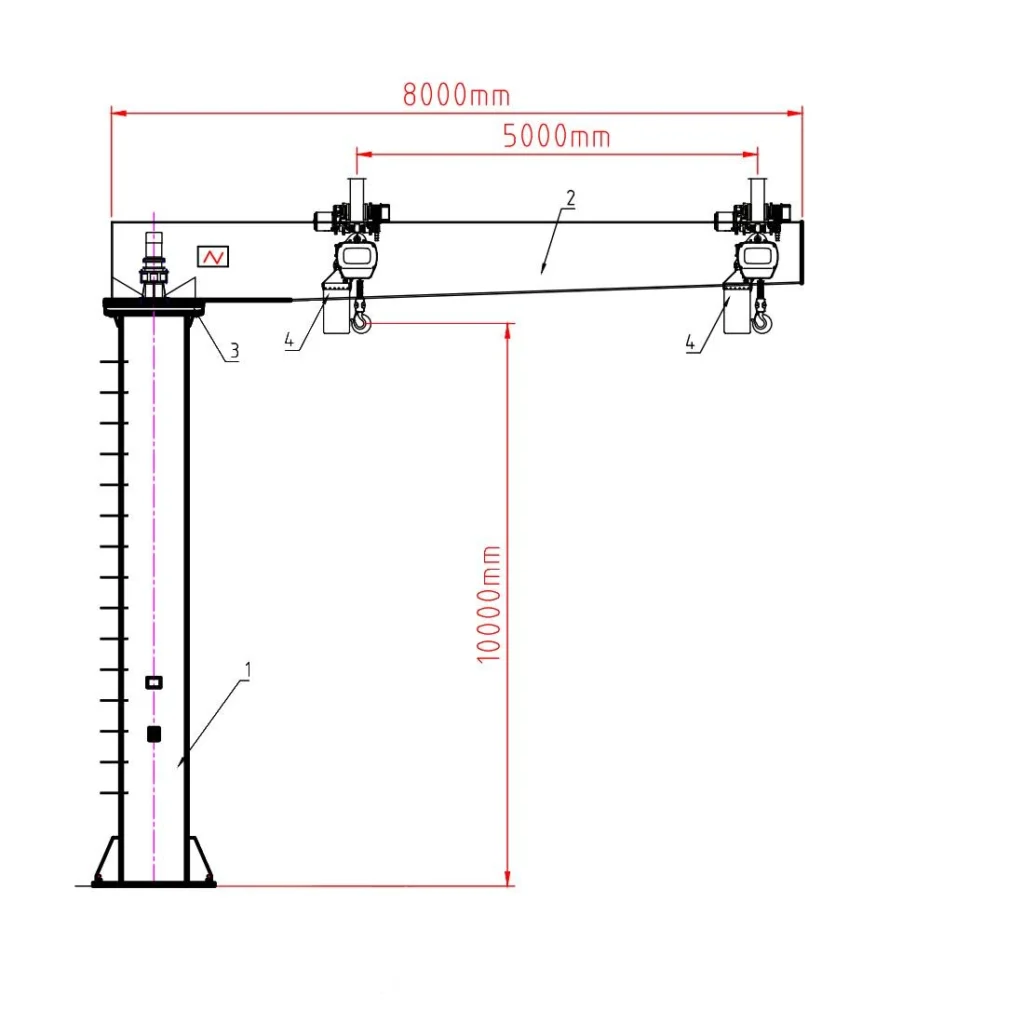
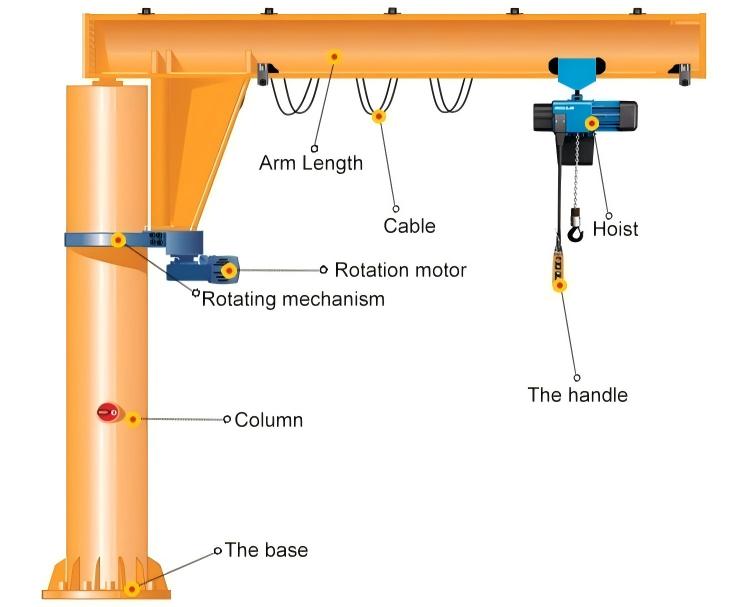
To design an accurate solution, please typically need to provide the following key information:
- Capacity range (required maximum and working load)
- Arm length (working radius or coverage area)
- Rotation angle (180°, 270°, or 360°)
- Hoist integration (manual chain hoist or electric hoist type)
- Power supply (voltage, phase, and site power conditions)
How to Choose a Reliable Portable Jib Crane Manufacturer?
Choosing a reliable portable jib crane manufacturer is critical for ensuring equipment safety, stable performance, and long-term operating efficiency. Beyond product specifications, buyers should evaluate a supplier’s engineering capability, customization flexibility, global delivery experience, and after-sales support. A qualified jib crane supplier should be able to provide not only standard models, but also tailored flexible lifting solutions based on real project conditions.
Key evaluation factors include proven project experience, strong customization capability, reliable production and delivery systems, and responsive technical service. Manufacturers with extensive export experience are usually more familiar with international standards, packaging requirements, and on-site installation support, which helps reduce project risk and downtime.
As an experienced portable jib crane manufacturer and supplier, VOITTO Crane has delivered lifting solutions to global industrial clients across manufacturing, logistics, and construction sectors. We focus on customized design, stable production capacity, and timely delivery to ensure each project runs smoothly from inquiry to installation. Our technical team also provides full-cycle support, including selection guidance, installation assistance, and after-sales service.
If you are looking for a reliable partner for your next project, contact VOITTO Crane to get a tailored solution and professional technical recommendation for your application.

Alan
Crane Solutions Specialist · Voitto Crane
Specialized in Overhead Crane, Gantry Crane, Jib Crane, Port Crane & EOT Crane export solutions. 10+ years helping global clients with pre-sales consultation, capacity selection and site-specific configurations.
FAQs
1. What is the typical capacity of a portable jib crane?
Most portable jib cranes offer capacities ranging from 250 kg to 2 tons. The exact capacity depends on the design, base stability, and boom length, making it essential to match the crane with your lifting requirements.
2. Can a portable jib crane be moved easily?
Yes, mobile jib cranes are equipped with wheels or casters, allowing easy relocation between workstations. However, movement is usually recommended without load to ensure safety and maintain structural stability.
3. Does a portable jib crane require floor anchoring?
Not always. Some models, such as counterweight jib cranes, do not require anchoring. Others may use bolt-down plates for added stability, depending on load capacity and operational safety requirements.
4. What type of hoist can be used with a portable jib crane?
Portable jib cranes can be equipped with manual chain hoists or electric hoists. Electric hoists improve efficiency and are preferred for frequent lifting tasks, while manual hoists are suitable for light-duty applications.
5. How do I choose the right jib crane for my workshop?
You should consider load capacity, lifting height, arm length, mobility needs, and workspace size. Evaluating these factors ensures the crane matches your operational workflow and improves overall efficiency.
6. Are portable jib cranes suitable for outdoor use?
Yes, but outdoor use requires weather-resistant materials and proper surface conditions. Wind load, uneven ground, and corrosion protection should be carefully evaluated before selecting a crane for outdoor applications.



 English
  Español
  Português
  العربية
  Français
  Русский