
An electric hoist works by using an electric motor and a transmission mechanism to move a wire rope or load chain, which raises or lowers the hook and the load attached to it. The motor produces rotation. A gearbox slows that rotation and increases its turning force. A rope drum or chain sprocket then converts it into straight-line movement of the rope or chain.
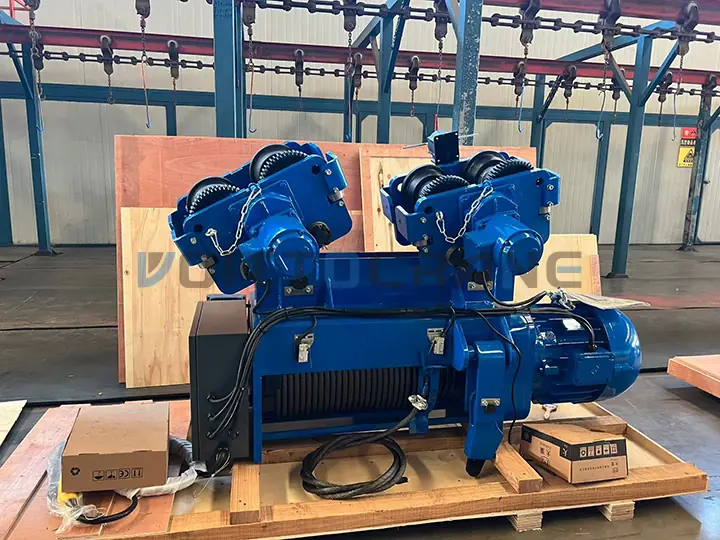
Talha de cabo de aço

Talha elétrica de corrente
Other parts keep that movement under control. A brake holds the load when the hoist stops, limit switches restrict hook travel, and many hoists add overload protection. This guide shows how an electric hoist works in the order it happens, from motor to hook. If you want a broader product overview first, read our overview of electric hoist types e uses.
- 1 Como funciona um guincho elétrico?
- 2 What Are the Main Components of an Electric Hoist?
- 3 How Does an Electric Hoist Lift a Load Step by Step?
- 4 How Does an Electric Hoist Lower a Load?
- 5 How Does an Electric Hoist Hold a Suspended Load?
- 6 How Do Electric Wire Rope Hoists and Electric Chain Hoists Work Differently?
- 7 How Does an Electric Hoist Work With an Overhead Crane?
- 8 What Safety Devices Help Control an Electric Hoist?
- 9 Conclusão
-
10
FAQ
- 10.1 How does an electric hoist generate lifting force?
- 10.2 How does an electric hoist stop a load from falling?
- 10.3 What is the difference between a wire rope hoist and a chain hoist?
- 10.4 Can electric hoists be installed on overhead cranes?
- 10.5 What factors should be considered when selecting an electric hoist?
Como funciona um guincho elétrico?
The easiest way to understand an electric hoist is to follow the path of power transmission from the power source to the load.
| Electrical Power → | Electric Motor → | Gearbox → | Rope Drum or Chain Sprocket → | Wire rope or Load Chain → | Hook and Load |
The above represents a simplified, general process. The specific designs of different types of electric hoists vary; for example, there are differences in the construction of the brake, the motor control method, and the arrangement of the drum or sprocket.
The core principle lies in the trade-off between speed and force. An electric motor rotates at high speed but has limited torque. The gearbox serves to reduce the rotational speed and amplify the torque. As a result, although the drum or sprocket rotates slowly, it generates sufficient force to pull the rope or chain, thereby overcoming the weight of the load. For this reason, the speed at which lifting equipment raises a load is much slower than the rotational speed of the motor itself.
What Are the Main Components of an Electric Hoist?
Designs differ between manufacturers and hoist types, so not every electric hoist has exactly the same parts. The components below appear in most electric wire rope and chain hoists.
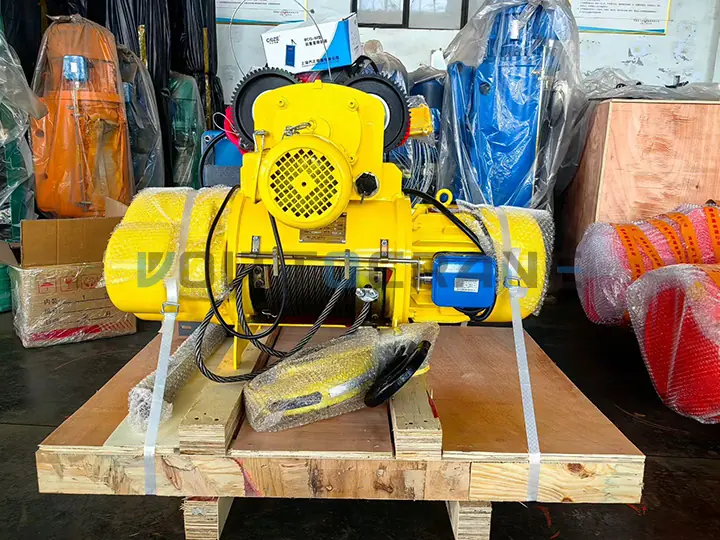
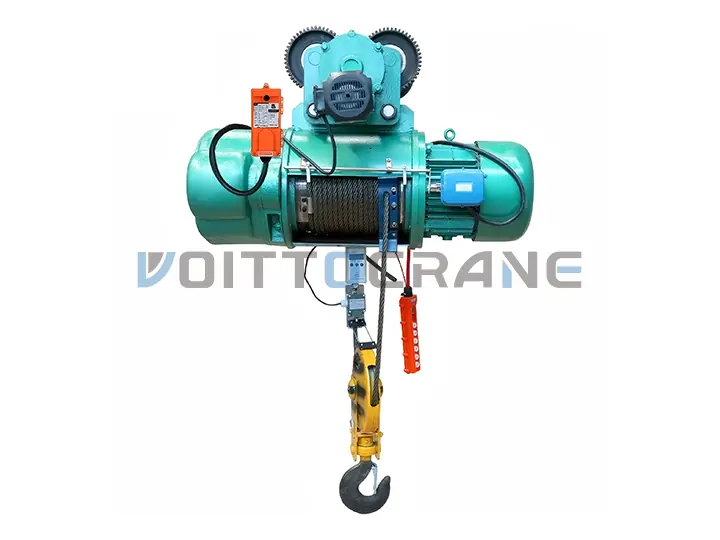
Motor and Gearbox: The motor converts electrical energy into rotational motion. Its output shaft is connected to the gearbox (also known as a reduction gearbox), which uses a set of gears to reduce the rotational speed and increase torque. Together, the motor and gearbox form the powertrain, upon which all other components depend.
Drum or Sprocket: In a wire rope hoist, the gearbox drives a grooved cylinder called a “drum.” One end of the wire rope is secured to the drum. As the drum rotates, the wire rope is wound onto or unwound from the drum. In a chain hoist, the gearbox drives a sprocket. The teeth on the sprocket mesh with the links of the chain, and as the sprocket rotates, it drives the chain forward.
Wire Ropes or Lifting Chains, and Hooks: Wire ropes or lifting chains bear the weight of the load and connect the drum or sprocket to the hook. The hook serves as the attachment point for slings or other lifting accessories. In a wire rope hoist, the wire rope passes through pulleys on the hook assembly, allowing the load to be distributed across multiple strands of wire rope. Hooks are typically equipped with a safety latch.
Brakes, Limit Switches, and Overload Protection: When the motor is not driving the mechanism, the brake is responsible for stopping the mechanism and holding the load in place. In some designs, the brake is integrated into the motor, while in others, it is installed elsewhere in the drive system. Limit switches are used to detect the upper and lower limits of the hook’s travel and cut off power to the motor in the corresponding direction when these positions are reached. Overload protection devices activate when the load exceeds a preset value. Depending on the type of hoisting equipment, these protection devices may be mechanical, electronic, or a combination of both.
How the Components Work Together: When the operator uses the remote control, the control system energizes the motor, and the brake is released. The rotational force from the motor is transmitted through the gearbox to the drum or sprocket, which in turn drives the wire rope or chain, ultimately causing the hook to move. During this process, limit switches and overload protection devices monitor and intervene in the operation.
How Does an Electric Hoist Lift a Load Step by Step?
The following procedure describes a typical lifting process. Nota: Specific details may vary depending on the design.
- The operator issues a lifting command. Pressing the “Up” button on the handheld controller or remote control sends a signal to the control system.
- The control system starts the motor. A contactor or drive unit connects the power supply to the motor. In common spring-braked designs, the brake releases as soon as the motor is energized.
- The motor drives the transmission mechanism. The motor drives the input end of the gearbox; through gear reduction, torque is increased, enabling the output shaft to pull the load.
- The drum winds the wire rope, or the sprocket drives the chain. In a wire rope hoist, the rotating drum winds the wire rope into its grooves. In a chain hoist, the sprocket engages with the chain links, driving the lifting chain through the hoist body.
- The wire rope or chain lifts the hook and the load. As the wire rope is wound or the chain is pulled, the length of the rope or chain on the load side shortens, causing the hook and load to rise.
- The hoisting command stops. When the operator releases the button, the control system cuts off power to the motor, and the brake engages immediately to secure the load in its current position. If the hook reaches the upper limit, a limit switch cuts off power to the upward direction.

How Does an Electric Hoist Lower a Load?
Lowering is a power-driven, controlled process; it is not simply allowing the load to fall freely.
When the operator presses the “Lower” button, the control system reverses the motor’s direction of rotation. The gearbox transmits this reverse rotation to the drum or sprocket, thereby releasing the wire rope or causing the chain to run in the opposite direction within the hoist, ultimately causing the hook to descend.
Although gravity pulls the load downward, the drive system strictly controls its descent speed. In a typical design, the brake is engaged only when the hoist is in drive mode and closes immediately once the operating command ends; therefore, the descent process never relies on the load’s free fall.
Control methods vary. Basic single-speed hoists can only descend at a fixed speed. Other designs offer dual-speed or variable-frequency control, which not only enables smoother starts and stops but also allows for more precise positioning as the load approaches its target location. Additionally, if equipped with a lower limit switch, the hoist will automatically stop at the end of the lowering stroke.
How Does an Electric Hoist Hold a Suspended Load?
When the hoisting command stops, the brake secures the load. In many lifting equipment designs, the brake applies braking force via a spring and relies on electricity to release it. Therefore, when the motor stops running or a power outage occurs, the brake automatically engages. However, specific configurations vary; some hoisting equipment types may use multiple brakes or include additional securing devices, so please consult the manufacturer’s technical documentation for the specific model.
There are three types of devices that are often confused, but their functions differ:
| Device | Primary role | What it does not do |
|---|---|---|
| Freio | Holds the load and stops movement when the motor is not driving it | It does not limit hook travel or detect overload |
| Limit switch | Cuts power at the upper or lower end of hook travel | It is not the device that holds the load |
| Overload protection | Responds to a load above its set limit, in the way the design specifies | It does not hold a suspended load |
How Do Electric Wire Rope Hoists and Electric Chain Hoists Work Differently?
Both types use the same basic power system, consisting of a motor, a gearbox, and a brake. The difference lies in the hoisting mechanism: wire rope hoists use wire rope as the lifting medium, while chain hoists typically use a sprocket that meshes with a lifting chain to drive the chain’s movement.
How an Electric Wire Rope Hoist Works
A motor and gearbox drive a grooved drum. One end of the wire rope is secured to the drum; as the drum rotates, the wire rope is wound onto it, thereby lifting the hook. When the drum rotates in the opposite direction, the wire rope is released, lowering the hook. The equipment is equipped with a rope guide to ensure that the wire rope is properly seated in the grooves.
Como funciona uma talha eléctrica de corrente
The motor and gearbox drive the sprocket, and the grooves on the sprocket mesh with the links of the chain. The chain wraps around the sprocket, and as it rotates, it moves the load-bearing side of the chain upward or causes it to drop back down. The unloaded end of the chain is typically collected inside the chain case.
| Recurso | Guincho elétrico de cabo de aço | Talha elétrica de corrente |
|---|---|---|
| Lifting medium | Cabo de aço | Load chain (steel link chain) |
| Main lifting mechanism | Grooved rope drum | Chain sprocket, also called a pocket wheel or load sheave |
| How the lifting medium moves | Winds onto and off the drum as it rotates | Engages the sprocket pockets and is pulled through the hoist |
| Unloaded length | Stored on the drum | Usually collected in a chain container |
| General design characteristics | Drum, rope guide and, in some designs, a hook block with a pulley | Sprocket, chain guide, chain container and hook |
| Application considerations | Confirm rope length, drum capacity, headroom, duty class, and environment with the manufacturer | Confirm chain length, container size, headroom, duty class, and environment with the manufacturer |
“Headroom Height” refers to the vertical space required beneath the support beam for the hoist body and hook assembly; “duty class” describes the hoist’s design working capacity. For more information on the components of chain hoists and the differences between manual and electric models, please refer to our Chain Hoist Guide. For detailed product information on talhas eléctricas de cabo de aço e talhas elétricas de corrente, please visit the respective product pages.
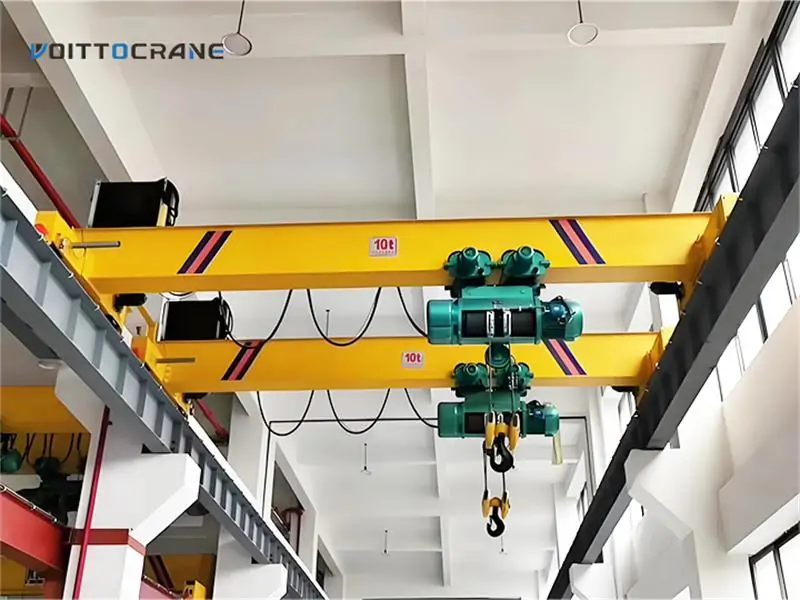
How Does an Electric Hoist Work With an Overhead Crane?
On an overhead crane, the hoist provides only one of three motions:
- Lifting: The hoisting mechanism raises and lowers the load.
- Lateral Travel: If equipped with a trolley, the trolley can move the hoisting mechanism horizontally along the crane’s main girder.
- Longitudinal Travel: The crane bridge travels along the rails, moving the load within the work area.
These three modes of movement work together to position the load at a specified location within the work area. The specific structural configuration depends on the crane’s design. In some designs, the hoisting mechanism is integrated with the trolley; in others, the hoisting mechanism is mounted on a separate trolley frame. Additionally, the hoisting mechanism can run on a monorail girder without requiring a bridge structure.
What Safety Devices Help Control an Electric Hoist?
The following accessories help control the operating mode of the electric hoist:
- Braking System: Holds the load in place and prevents it from moving when the motor is not driving the load.
- Upper and Lower Limit Switches: Stop the hook from moving when it reaches the end of its travel.
- Overload Protection: Triggers when the load exceeds the set limit.
- Emergency Stop and Control System: The emergency stop function cuts off power to the drive unit, thereby stopping the equipment. The control system manages normal start, stop, and direction commands.
These are equipment features and are not a substitute for safe operating procedures. For example, limit switches are safety devices and should not be used by operators as routine shutdown points. Safe lifting operations also depend on ensuring that the load remains within the rated capacity, that operations are performed by trained personnel, that regular inspections are conducted, and that the manufacturer’s operating manual and applicable local regulations are followed. This article outlines general principles only and is not a substitute for the aforementioned documents.
Conclusão
Through a series of coordinated operations, an electric hoist converts electrical energy into controlled lifting motions. The motor provides rotational power; the gearbox converts speed into torque; and the drum (or sprocket) drives the wire rope (or lifting chain), which in turn moves the hook and load up and down. When the equipment stops operating, the brake secures the load in place. In addition, limit switches and overload protection devices help control the operating stroke and load conditions. The main difference between wire rope hoists and chain hoists lies in their end drive mechanisms.
If you need assistance with selection, please provide information such as the rated load, lifting height, duty cycle, power supply requirements, and operating environment. The VOITTO technical team will evaluate your needs and recommend the most suitable configuration. Please feel free to contact us to discuss your lifting requirements.

Alan
Especialista em soluções para guindastes · Voitto Crane
Especializada em soluções de exportação de pontes rolantes, pórticos, gruas, pórticos portuários e pontes rolantes EOT. Mais de 10 anos a ajudar clientes globais com consultoria pré-venda, seleção de capacidade e configurações específicas do local.
FAQ
How does an electric hoist generate lifting force?
The motor generates rotational power, and the gearbox reduces the speed while increasing the torque. The drum or sprocket converts this torque into a pulling force applied to the wire rope or lifting chain, thereby supporting and lifting the load.
How does an electric hoist stop a load from falling?
When the motor is not driving the mechanical mechanism, the brake holds the load in place. The brake is tensioned by a spring and released by an electric signal. Therefore, as soon as movement stops, the brake engages.
What is the difference between a wire rope hoist and a chain hoist?
A wire rope hoist operates by winding a wire rope around a grooved drum, while a chain hoist uses a sprocket to engage with a lifting chain, thereby moving the load. Both are typically equipped with a motor, a gearbox, a brake, and a hook.
Can electric hoists be installed on overhead cranes?
Yes. Many electric hoists are specifically designed for overhead cranes and are typically mounted on a trolley that travels along the main girder. Specific compatibility depends on factors such as the trolley, girder, or track cross-section, rated load, and duty class; therefore, be sure to confirm these parameters with the supplier before placing an order.
What factors should be considered when selecting an electric hoist?
First, consider the rated load, lifting height, headroom, duty class, power supply conditions, and operating environment. VOITTO Crane electric hoist selection guide provides detailed explanations of each factor—including conditions such as dusty, humid environments and hazardous areas—and guides you on how to select the appropriate type of electric hoist based on these environmental requirements.



 English
 Español
 Português
 العربية
 Français
 Русский