

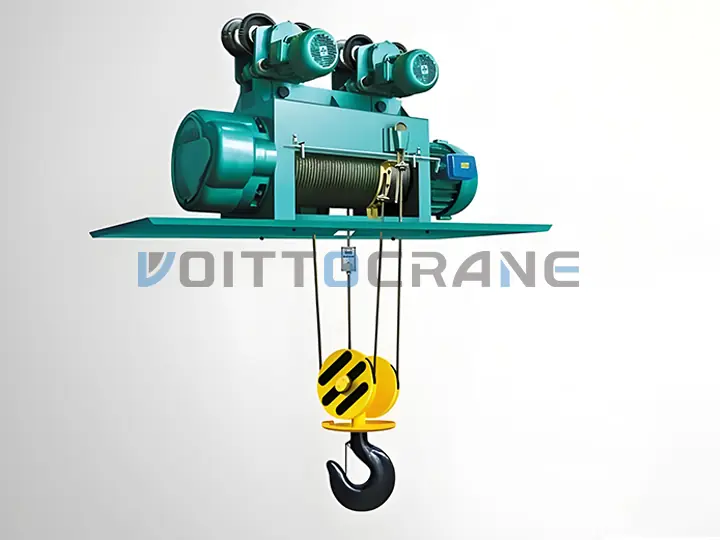
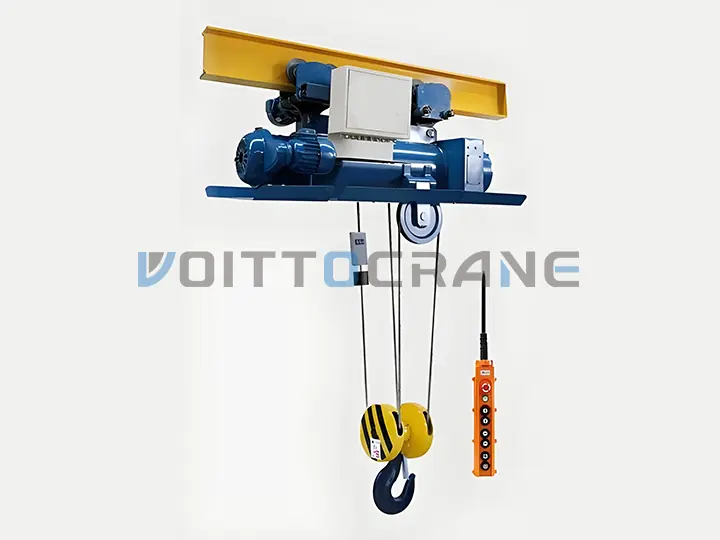
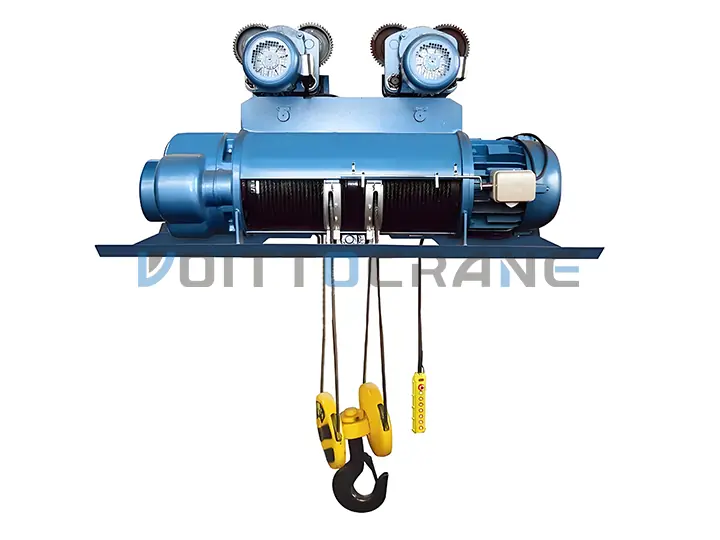
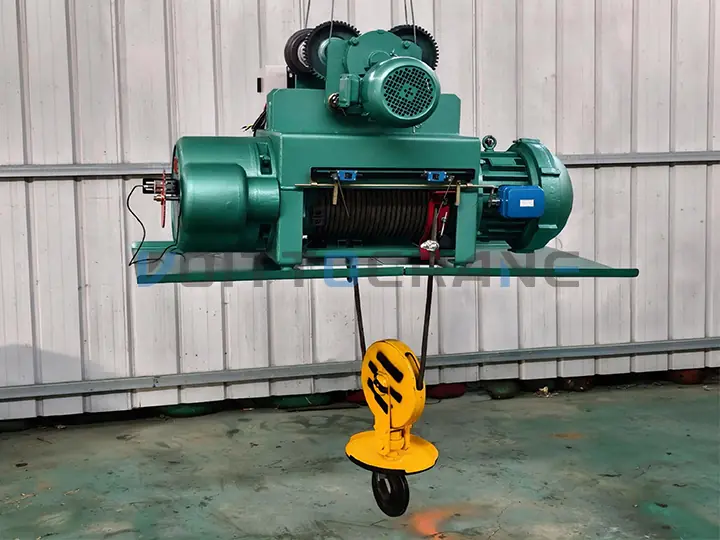
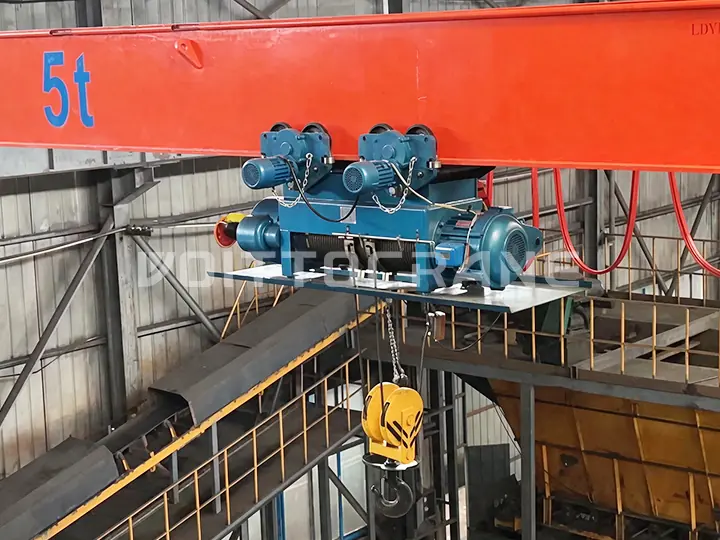
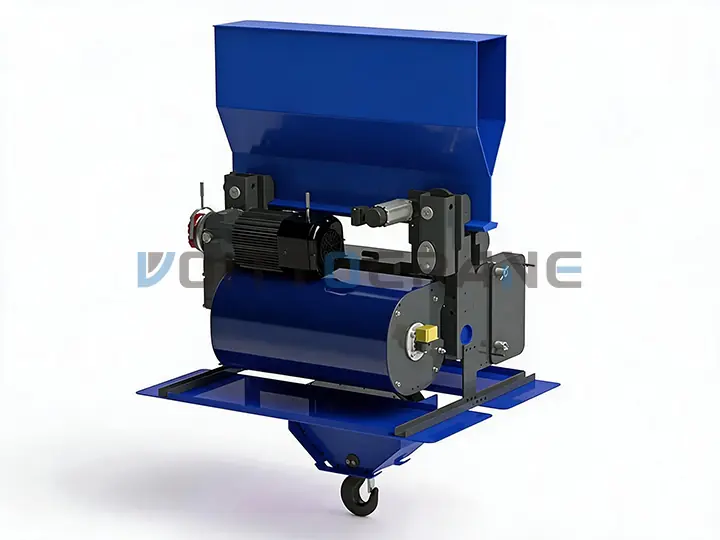
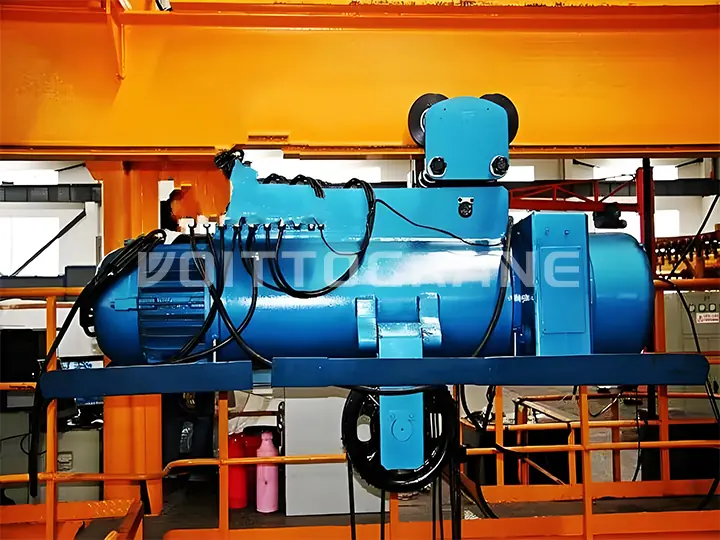
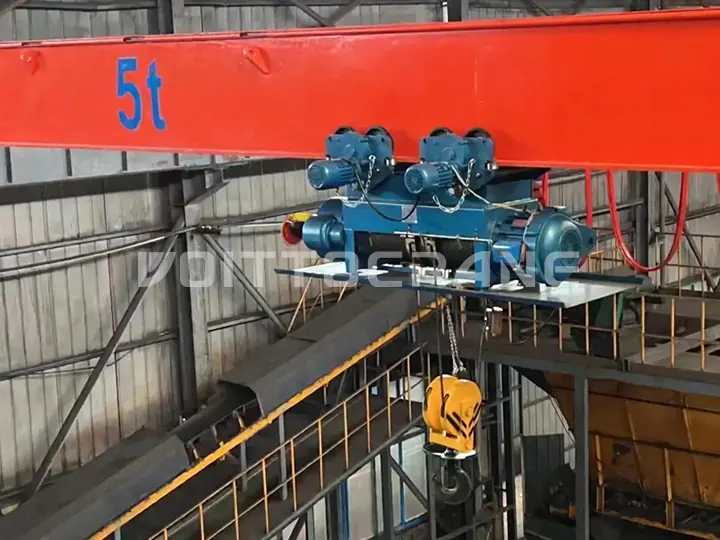
A metallurgical wire rope hoist is equipped with redundant brakes and limit switches and features a high-temperature-resistant motor and wire rope. By supporting remote operation, this equipment ensures that the entire lifting process remains under control at all times while allowing operators to stay away from high-temperature hazardous areas. The product offers a variety of control options, including single-speed, dual-speed, or variable frequency drive (VFD) configurations. The standard load range is 1 to 10 tons, and custom designs are available upon request.
VOITTO metallurgical wire rope hoist is engineered for molten metal handling in foundries and steel mills, with a 1–10 ton standard capacity, 9–20m lifting height, and an ambient range of -20°C to +60°C. This metallurgy electric hoist comes in single-speed YH, dual-speed YHM, and VFD/low-headroom versions. Below, you will find model specifications, the five core safety systems, price factors, and customization options.
The VOITTO metallurgical wire rope hoist is a purpose-built lifting unit for molten metal handling in foundries and steel mills. This equipment can operate on I-beam monorail tracks or LDY-type metallurgical single-girder cranes and lifts ladles containing molten steel and slag, as well as red-hot workpieces. Typically, metallurgical electric hoists operate in environments characterized by radiant heat, flying debris, and dust. The metallurgical wire rope hoist uses a dual braking system, a double upper-limit switch, H-class insulation, and a thermal radiation baffle, so every protective function has a second path if one device fails.
VOITTO offers three configurations of metallurgy wire rope hoists. The procurement team can select the appropriate model based on the operational requirements of their workshop.
The YH type is a single-speed metallurgy electric hoist for steady, repeatable lifts where fine positioning is not the priority. One hoisting speed of 8 m/min keeps the control circuit simple and maintenance straightforward.
Applications:
| Capacity (t) | Lifting Height (m) | Hoisting Speed (m/min) | Hoisting Motor (kW) | Trolley Speed (m/min) | Wire Rope Dia. (mm) |
|---|---|---|---|---|---|
| 1 | 9-20 | 8 | 1.5 | 20 | 8 |
| 2 | 9-20 | 8 | 3.0 | 20 | 11 |
| 3 | 9-20 | 8 | 4.5 | 20 | 13 |
| 5 | 9-20 | 8 | 7.5 | 20 | 15 |
| 10 | 9-20 | 8 | 15 | 20 | 20 |
The YHM model is a two-speed metallurgical electric hoist. VOITTO Crane Manufacturer has added a 0.8-meter-per-minute low-speed setting to the standard 8-meter-per-minute main speed, enabling operators to ensure smooth, sway-free, and shock-free operation when starting, stopping, or positioning steel buckets or high-temperature castings.
Applications:
| Capacity (t) | Lifting Height (m) | Hoisting Speed Main/Micro (m/min) | Hoisting Motor Main/Micro (kW) | Trolley Speed (m/min) | Wire Rope Dia. (mm) |
|---|---|---|---|---|---|
| 1 | 9-20 | 8 / 0.8 | 1.5 / 0.2 | 20 | 8 |
| 2 | 9-20 | 8 / 0.8 | 3.0 / 0.4 | 20 | 11 |
| 3 | 9-20 | 8 / 0.8 | 4.5 / 0.6 | 20 | 13 |
| 5 | 9-20 | 8 / 0.8 | 7.5 / 1.0 | 20 | 15 |
| 10 | 9-20 | 8 / 0.8 | 15 / 2.0 | 20 | 20 |
This metallurgical wire rope hoist configuration combines variable frequency drive (VFD) control with a compact trolley that shortens the headroom. Stepless speed removes the hard start-stop of pole-changing motors, and the low-headroom frame lets the hoist fit under low roof trusses or on LDY metallurgical single-girder cranes with limited hook height.
Applications:
| Capacity (t) | Lifting Height (m) | Hoisting Motor (kW) | Hoisting Motor (kW) | Min. Headroom (mm) | Wire Rope Dia. (mm) |
|---|---|---|---|---|---|
| 1 | 9-20 | 0.8–8 | 1.5 | 600 | 8 |
| 2 | 9-20 | 0.8–8 | 3.0 | 700 | 11 |
| 3 | 9-20 | 0.8–8 | 4.5 | 800 | 13 |
| 5 | 9-20 | 0.8–8 | 7.5 | 900 | 15 |
| 10 | 9-20 | 0.8–8 | 15 | 1100 | 20 |
Every VOITTO metallurgical wire rope hoist combines redundant safety protection, heat-rated components, and flexible control for molten metal duty in foundries and steel mills.
Designed specifically for molten metal operations: This equipment is designed for lifting molten steel ladles, slag ladles, and red-hot workpieces.
Dual Independent Braking System: The unit is equipped with two independent braking systems; even if one fails, the other ensures the load remains secure.
Dual Upper Limit Protection: The equipment combines a rotary limit switch with a counterweight-type limit switch. The second limit device serves as an independent backup safeguard.
Class H Insulation and Thermal Protection: The hoisting motor maintains stable operation even in high-temperature environments such as smelting furnaces or molten steel ladle workstations.
Heat-Resistant Steel Wire Rope and Thermal Shielding: The equipment uses steel-core wire ropes and is equipped with heat radiation shields.
Duty Class: Duty Class M6 is suitable for frequent, heavy-duty operations in foundries and steel mill production lines.
Flexible Speed Control: Offers single-speed (8 meters/minute), dual-speed (8/0.8 meters/minute), or variable-frequency drive (VFD) stepless speed control options.
Wide Range of Applications: This equipment is suitable for I-beam monorail tracks and LDY-type metallurgical single-girder cranes.
VOITTO is a metallurgical wire rope hoist manufacturer and supplier with more than 30 years of crane and hoist manufacturing experience. We design, build, and test each hoist in our own factory and ship to foundries and steel mills worldwide.
If you would like to learn more about the technical specifications of our metallurgical wire rope hoist or solutions tailored to specific industries, please feel free to contact us at any time.

Alan
Crane Solutions Specialist · Voitto Crane
Specialized in Overhead Crane, Gantry Crane, Jib Crane, Port Crane & EOT Crane export solutions. 10+ years helping global clients with pre-sales consultation, capacity selection and site-specific configurations.
No. A standard CD/MD hoist has one brake, general-purpose insulation, a single limit device, and no heat shielding, and it is rated for ambient temperatures up to about +40°C. A metallurgical wire rope hoist replaces each of these with a redundant or heat-rated part: dual independent brakes, double upper limit switches, H-class motor insulation, a thermal radiation baffle, and steel-core wire rope. Any lift over molten metal or liquid slag should use a purpose-built metallurgy electric hoist or a metallurgical crane.
The YH is a single-speed hoist at 8 m/min. The YHM metallurgy wire rope electric hoist adds a 0.8 m/min micro-speed for setting down ladles and hot castings accurately. The VFD / low-headroom metallurgical wire rope hoist gives stepless speed and a shorter headroom for low workshops.
Yes. The metallurgical steel-rope electric hoist can operate on I-beam monorails and can also be installed on LDY-type metallurgical single-girder cranes. VOITTO can also provide customized metallurgical electric hoist solutions based on your specific operating conditions, including non-standard models with lifting capacities exceeding 10 tons. Please provide the relevant data regarding your track and load, and our engineering team will confirm a specific design solution for you.
Every piece of equipment undergoes load testing before leaving the factory, including a static load test at 1.25 times the rated load and a dynamic load test at 1.1 times the rated load. In addition, the brakes, limit switches, overload limiters, and insulation performance are inspected.
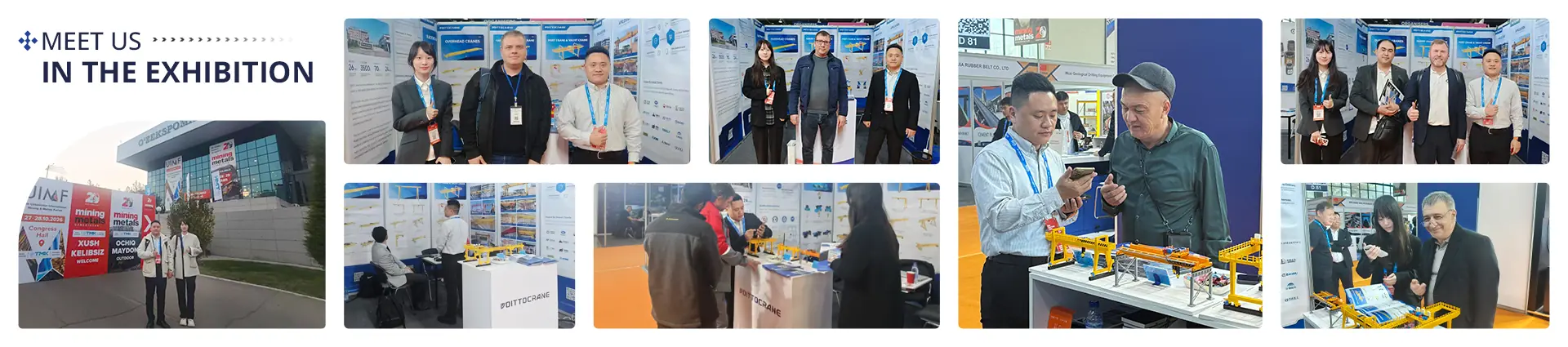

Our pre-sale team provides consultations, tailoring solutions to your needs and environment.
Offer customization options for lifting capacity, span and lifting height etc. to meet specific needs.

Real-Time Progress Updates: Weekly reports and PM communication.
Pre-Delivery Testing: 100% load & safety checks, detailed reports.

3-5 years warranty and free replacement for non-manufacturing defects.
24/7 online support and on-site assistance for crane issues.
Yes, international shipping and export support are available for global customers.
Transit time varies depending on many factors, including the destination of the goods, distance, shipping method and shipping service provider, etc. Generally speaking, international shipping may take about a month.
We offer comprehensive after-sales service, including regular maintenance, rapid technical support, and spare parts supply. The standard warranty period is 1 year, with options for extension based on your needs.

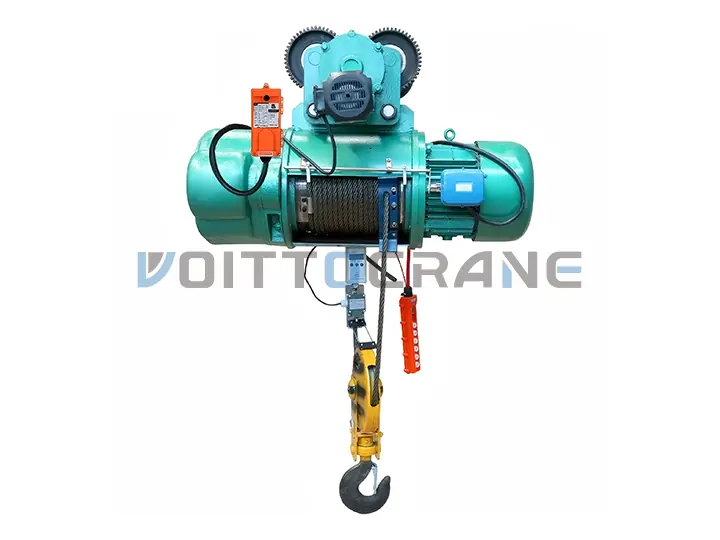

An electric hoist is a small lifting device that uses a reduction gear and a drum system to lift and horizontally move materials. Among them, there are many types of electric hoists, such as wire rope hoists, chain hoists, and European standard hoists, and electric hoist manufacturers can customize them according to different working environments. Next, we will introduce what is electric hoist, their applications, and prices to help you choose the right lifting solution. Usually, electric hoists as lifting mechanisms are equipped on overhead bridge cranes, gantry cranes, EOT cranes, jib cranes, KBK crane systems, and other equipment, and they work together to complete the lifting task. What is a Hoists? The electric hoist is primarily composed of a motor, reducer, drum, wire rope or chain, hook assembly, and electronic control system. The entire device features a compact structure, stable operation, and a strong load-bearing capacity, making it suitable for frequent lifting and large-tonnage material handling operations. Typically, electric hoists have a load capacity range of 1 to 32 tons. European electric hoists can reach 80 tons. What is…
A wire rope electric hoist is a light and small lifting equipment, usually equipped on overhead cranes, gantry cranes, jib cranes, and EOT cranes as a lifting mechanism to complete the lifting work. It uses a wire rope as the lifting medium, and a motor and reducer drive the drum to achieve vertical lifting of materials. Compared with the chain electric hoist, the wire rope electric hoist has the advantages of fast lifting speed, higher lifting height, economy, and practicality. This page provides a comprehensive overview of wire rope electric hoist types, prices, features, and the VOITTO export projects case. If you are considering upgrading your Lifting mechanism, it is crucial to understand its configuration and actual project costs. Explore our detailed insights to help guide your procurement decisions effectively. Different Types of Wire Rope Electric Hoist Wire rope electric hoists are divided into many types according to their structural form and use environment, as follows: CD/MD Type Wire Rope Electric Hoist CD/MD type wire rope electric hoists are available in single or double speed configurations. The CD model is…
Selecting an electric hoist for an overhead crane is fundamentally different from purchasing an electric hoist separately. The hoist must not only meet the lifting requirements for the rated load but also be compatible with the crane’s main girder structure, operate within the limited headroom, function on a trolley that matches the crane’s rails or flanges, have a duty class that corresponds to the crane’s actual operating conditions, and share a compatible electrical and control system with the crane’s other mechanisms. Before purchasing a hoist, users should first clarify the following key information: crane type (single-girder, double-girder, or underslung), rated and maximum lifting capacity, required lifting height and available headroom, trolley configuration, expected duty cycle, required lifting speed, and operating environment. Next, this article will explain in detail, step by step, how to select the right electric hoist for a bridge crane to ensure smooth operation under various working conditions, improve production efficiency, and reduce downtime. 1. Start With the Overhead Crane Configuration Before selecting a lifting mechanism, the procurement team should first determine the crane’s structural type, as this…
An electric hoist works by using an electric motor and a transmission mechanism to move a wire rope or load chain, which raises or lowers the hook and the load attached to it. The motor produces rotation. A gearbox slows that rotation and increases its turning force. A rope drum or chain sprocket then converts it into straight-line movement of the rope or chain. Other parts keep that movement under control. A brake holds the load when the hoist stops, limit switches restrict hook travel, and many hoists add overload protection. This guide shows how an electric hoist works in the order it happens, from motor to hook. If you want a broader product overview first, read our overview of electric hoist types and uses. How Does an Electric Hoist Work? The easiest way to understand an electric hoist is to follow the path of power transmission from the power source to the load. Electrical Power → Electric Motor → Gearbox → Rope Drum or Chain Sprocket → Wire rope or Load Chain → Hook and Load The above represents…
An electric hoist is only as safe as the person operating it. The equipment itself — motor, brake, wire rope or chain, and control system — is engineered to handle rated loads reliably, but most lifting incidents stem from skipped inspections, overloading, or abrupt operation rather than equipment failure. This guide walks through a complete lifting operation, from pre-use checks to shutdown, so operators can operate a hoist correctly and consistently, whether it’s mounted on a single-girder overhead crane, a jib crane, or a standalone beam. What Is an Electric Hoist? An electric hoist is a motor-driven lifting device that raises and lowers heavy loads using a wire rope or lifting chain wound around a drum or sprocket. It is typically mounted on an overhead crane, jib crane, gantry crane, or a fixed I-beam and is operated via a handheld control box or a wireless remote control. This guide focuses on how to properly operate an electric hoist, rather than its construction or selection. For detailed information on its components, please refer to the article “What Is Electric Hoist?” What…
Electric hoist troubleshooting is a crucial aspect of industrial lifting equipment maintenance manuals and safety management procedures. Electric hoists, as the most widely used light and small lifting equipment in factories, warehouses, and workshops, have their operational stability directly impacting production efficiency, equipment lifespan, and production safety. During use, users will inevitably encounter problems with equipment malfunctions. This is not due to design flaws on the part of the electric hoist manufacturer, but rather to factors such as electrical system abnormalities, wear and tear of mechanical components, brake system failure, or improper daily operation. By analyzing the malfunctions and applying the correct troubleshooting methods, users can promptly identify and resolve most problems they encounter. Next, this article will proceed from the user’s perspective, focusing on electric hoist troubleshooting strategies. We will categorize and analyze common malfunctions, providing troubleshooting directions and technical key points to help users quickly identify equipment failures, provide solutions, and prevent potential risks. 1. The electric hoist did not respond when the user pressed the button on the crane’s remote control. These problems typically occur during startup,…

 English English
 Español
 Português
 العربية
 Français
 Русский