
Electric hoist troubleshooting is a crucial aspect of industrial lifting equipment maintenance manuals and safety management procedures. Electric hoists, as the most widely used light and small lifting equipment in factories, warehouses, and workshops, have their operational stability directly impacting production efficiency, equipment lifespan, and production safety. During use, users will inevitably encounter problems with equipment malfunctions. This is not due to design flaws on the part of the electric hoist manufacturer, but rather to factors such as electrical system abnormalities, wear and tear of mechanical components, brake system failure, or improper daily operation. By analyzing the malfunctions and applying the correct troubleshooting methods, users can promptly identify and resolve most problems they encounter.

Wire Rope Electric Hoist
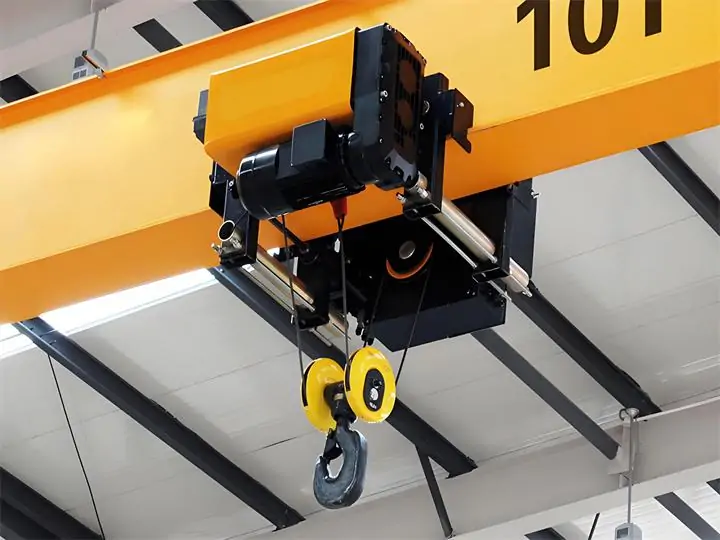
European FEM Standard Hoist

Electric Chain Hoist

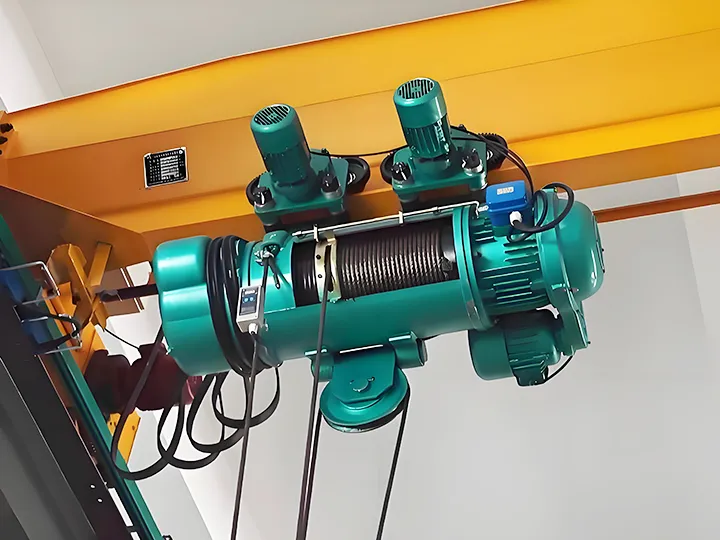
Wire Rope Electric Hoist
Next, this article will proceed from the user’s perspective, focusing on electric hoist troubleshooting strategies. We will categorize and analyze common malfunctions, providing troubleshooting directions and technical key points to help users quickly identify equipment failures, provide solutions, and prevent potential risks.
1. The electric hoist did not respond when the user pressed the button on the crane’s remote control.
These problems typically occur during startup, when moving workstations, or after prolonged periods of inactivity.
Fault Problem
- Power supply not connected, insufficient voltage, or phase loss.
- Emergency stop button not reset.
- Overload protection or thermal protection is activated.
- Control buttons or contactors are damaged.
Solutions
- Check if the main power supply, voltage, and phase sequence are normal.
- Ensure the emergency stop button is in the released state.
- Clear any overload condition and wait for the protection system to reset.
- Inspect the crane’s remote control buttons and control components, and replace any damaged parts.
2. The electric hoist can only move upwards or only move downwards.
When users operate the device, they may sometimes encounter situations where it can only move upwards but not downwards, or vice versa. This phenomenon can mislead users into thinking there is a motor malfunction, but it is actually related to the control or limit switch system.
Fault Problem
- Damaged or faulty button/switch.
- Accidental activation of the limit switch.
- Loose wiring connections.
- Contactor failure in one direction.
Solutions
- Inspect and replace damaged button contacts.
- Check if limit switches are being triggered incorrectly or are out of position.
- Tighten control circuit terminals.
- Test and replace faulty contactors.
3. The equipment’s lifting speed is slower than before.
Users notice a decrease in the lifting speed of the electric hoist, difficulty in lifting loads, and uneven operation under the rated load. This is usually a “load abnormality or wear warning signal” from the equipment.
Fault Problem
- Material weight exceeds the rated load.
- Motor or gearbox efficiency decreases.
- Wire ropes or chains are insufficiently lubricated or severely worn.
- Power supply voltage is low.
Solutions
- Immediately suspend use and verify the lifting weight.
- Operators should check the operating status of the gearbox and motor.
- Maintenance personnel should lubricate or replace the wire rope or chain.
- Users should measure and adjust the power supply voltage.
4. After the user stopped operating the device, the goods began to slide down.
When the operator released the button, they observed that the heavy object still slid a short distance, indicating that the braking system was no longer reliably holding the load. This phenomenon constitutes a high-risk failure, and users need to pay close attention to it.
Fault Problem
- Brake pads are severely worn.
- Brake springs are fatigued.
- The brake system is contaminated with oil.
- Brake coil voltage is insufficient.
Solutions
- The user should immediately stop using the device, inspect and replace the brake discs.
- Check if the brake springs are deformed or corroded.
- Clean the brake system of oil and adjust the clearance.
- Test the brake coil and power supply voltage.
5. The equipment produces increased noise or vibration and unusual sounds during operation.
During operation, the electric hoist exhibits abnormal noises, increased vibration, or metallic grinding sounds. This is a warning sign of potential problems with the internal mechanical components.
Fault Problem
- Bearing wear or damage.
- Abnormal gear meshing in the gearbox.
- Loose couplings or fasteners.
- Insufficient lubrication of mechanical components.
Solutions
- The user immediately shut down the machine and checked the condition of the bearings and gears.
- Maintenance personnel replenished or replaced the lubricating oil.
- The operator tightened any loose components.
- The condition of the gearbox was checked, and repairs or replacements were performed as needed.
6. Frequent activation of the limit switch.
Users frequently trigger the limit switches during device operation, causing the device to be unable to run continuously.
Fault Problem
- The limit switch is improperly installed.
- Contact points worn out or mechanically jammed.
- The lifting height setting is unreasonable.
Solutions
- The user readjusted the limit switch position.
- The aged or damaged limit switch components were replaced.
- The lifting and lowering limits were updated.
- Removing or bypassing safety devices is strictly prohibited.
7. The equipment has a short service life.
Under the same operating conditions, the service life of electric hoists can vary significantly among different users. This is largely related to daily usage patterns and maintenance frequency.
Common Causes
- Users frequently overload or subject the equipment to shock loads.
- Operators pull or drag heavy objects at an angle.
- Maintenance personnel lack regular inspection and maintenance.
Methods to Extend Equipment Lifespan
- Operators must use the equipment strictly in accordance with the rated parameters.
- Users must use the equipment correctly and avoid improper lifting methods.
- Users must establish a regular maintenance and inspection system.
- Maintenance personnel must replace wear parts promptly.
9. Gearbox Oil Leakage
Fault Problem
- Worn or damaged sealing rings between the housing and cover.
- Loose bolts on the gearbox
Solutions
- Replace the seal
- Stop using the equipment, and the user should tighten the bolts.
Conclusion
The above content describes electric hoist troubleshooting methods and corresponding solutions. From the user’s perspective, most electric hoist malfunctions exhibit clear “signals.” By correctly identifying these abnormal phenomena and taking appropriate troubleshooting and corrective measures, users can eliminate potential problems before they escalate, ensuring safe production operation, reducing equipment downtime, and extending the service life of the equipment. VOITTO Cranes is committed to providing you with valuable information and resources.
Electric Hoist Manufacturer and Supplier in China
VOITTO, a professional electric hoist manufacturer in China, offers various types of electric hoists, including wire rope electric hoists, chain hoists, FEM standard electric hoists, explosion-proof hoists, and low headroom hoists. We are committed to providing customers with solutions.
For detailed technical specifications or industry-specific solutions, please feel free to contact us.


 English
  Español
  Português
  العربية
  Français
  Русский