A chain hoist is a compact, lightweight lifting device with a rated load capacity ranging from 0.25 to 32 tons. Users employ it for handling and lifting goods and materials, which helps improve work efficiency and reduce labor costs.
This chain hoist uses a chain as the load-bearing component to lift, lower, and position heavy loads; it can be powered by a manual chain drive or an electric motor. This page covers the full range of Voitto chain hoists: manual chain hoists for applications requiring no power source, electric chain hoists for high-frequency production operations, low-headroom models for locations with limited headroom, and explosion-proof models (protection class ExdⅡBT4/ExdⅡCT4) for hazardous environments. The load capacity ranges from 0.25 to 32 tons.
Product Introduction
The hoisting mechanism inside this chain hoist includes a gear reduction system that drives the hoist sprocket, thereby pulling the chain up and down to lift, lower, or hold suspended loads in place. In manual models, the operator drives the gear set by pulling a hand chain; in electric models, the system is driven directly by a motor, enabling continuous operation without requiring physical effort from the operator.
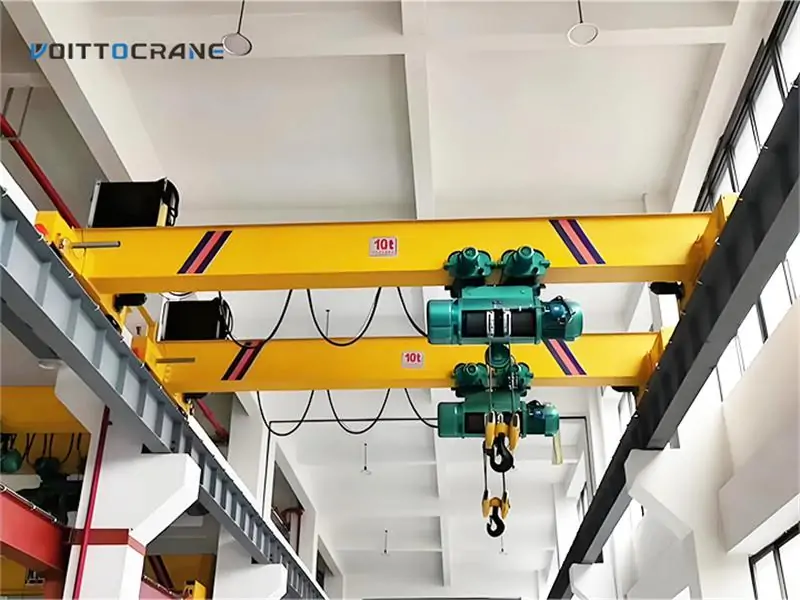
Because chain hoists are compact and self-contained, they can be mounted directly on the trolleys of single-girder overhead cranes, jib cranes, monorail systems, or portable gantry cranes. In this configuration, the hoist performs the lifting action, while the support structure moves along the beam. This combination is widely used in scenarios requiring the vertical and horizontal handling of heavy loads within a fixed work area, such as assembly lines, tool rooms, loading and unloading platforms, and maintenance workshops.
VOITTO Crane manufactures four types of chain hoists, which differ in power source, headroom, and environmental protection rating: manual, electric, low-headroom, and explosion-proof. The following sections will introduce each of these products and provide a comparative analysis to help users select the appropriate lifting equipment
Manual Chain Hoist
Manual chain hoists are operated by the user pulling a hand chain. Their structure includes a gear reduction mechanism, a lifting sprocket, a hand chain, and a hook, and they require no external power source. This equipment is quick to install and easy to operate, requiring no complex training, making it the preferred solution for small workshops, construction sites, warehouses, and other locations where power supply is limited or unavailable.
Common rated load capacities include 1/4 ton (500 pounds), 1/2 metric ton (1,000 pounds), 1 ton, 1.5 tons, 2 tons, and 3 metric tons. For applications within this load range that require frequent lifting operations, VOITTO Crane also offers heavy-duty versions.
Key Features:
Compact, lightweight design with no power dependency
Low purchase price and minimal maintenance cost
Simple operation suitable for any skill level
Ideal as an industrial lifting solution for moderate lifting cycles
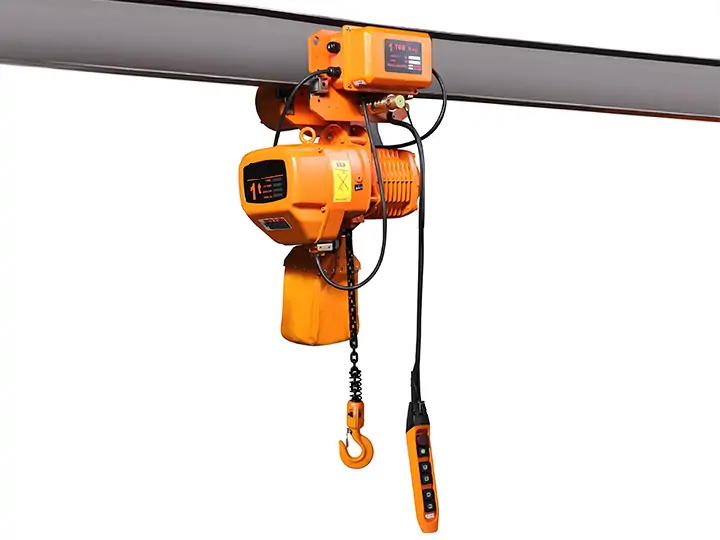
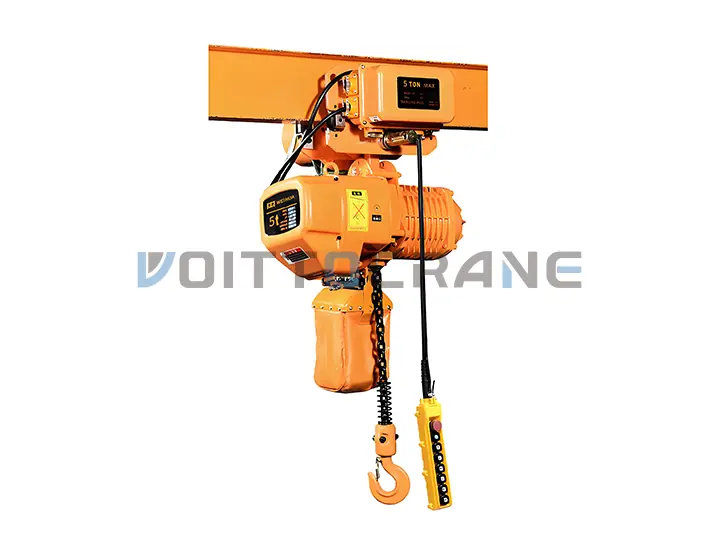
Electric chain hoists are driven by an electric motor and a precision gear reducer, providing stable, effortless lifting performance during repeated operating cycles. This equipment is the most common lifting device in lifting systems across the manufacturing, warehousing, and construction industries, as it eliminates the labor required for manual operation and the operational cycle limitations associated with such equipment.
The Voitto electric chain hoist series covers a load capacity range from 1/4 ton to 32tons, with the 1 t, 2-ton, 3t, 5 ton, and 10t models being the most commonly used. In addition to the standard three-phase power models available across the entire series, smaller models configured for 110V single-phase power are also available for facilities without three-phase power.
Key Features:
Compact and lightweight overall structure with high performance output
Smooth, controlled lifting ideal for frequent and precision operations
Wide range of capacities: 500 lb electric hoist to 32 ton
Wide range of applications: Suitable for diverse production environments and crane integrations
This low-headroom model is specifically engineered for facilities with restricted ceiling clearance. By minimizing the dead distance between the hook and the rail, it maximizes usable lift height — up to 30 meters — in spaces where standard hoists cannot operate effectively. This makes it well suited to mechanical manufacturing workshops, logistics warehouses, and compact production lines with restricted ceiling height.
Key Features:
Maximum space utilization in height-restricted environments
Compact structure and small footprint
Stable performance and straightforward installation
This explosion-proof model is purpose-built for flammable, explosive, and dust-prone environments. Its components are constructed to an explosion-proof standard, effectively preventing accidents caused by electric sparks, high temperatures, or static discharge. It operates stably in hazardous conditions where standard lifting equipment cannot be deployed.
Key Features:
Explosion-proof rated components: ExdⅡBT4 and ExdⅡCT4
Compact design with high safety and operational stability
Customizable for specific hazardous environment requirements
Capacity range: 1 to 20 ton
Applications: Petroleum refining, chemical processing, coal mining, grain handling, and any dust-prone or gas-present industrial facility.
Chain Hoist Capacity Guide: Which Tonnage Do You Need?
Choosing the correct load rating is the single most important decision when selecting a chain hoist. The table below matches the most common capacities to their real-world applications.
Capacity
Equivalent
Recommended Type
Typical Applications
1/4 ton
250 kg / 500 lb
Manual or Electric
Light assembly, small parts positioning, auto repair shops, thin-panel handling
Machine tool installation, die and fixture handling, heavy component assembly, automotive and aerospace facilities
4 – 5 ton
Up to 5,000 kg
Electric
Heavy fabrication, structural steel erection, shipbuilding auxiliary lifting, high-frequency production cycles
6 – 10 ton
Up to 10,000 kg
Electric
Large mold workshops, foundry ladle handling, heavy machinery installation, overhead crane systems
15 – 32 ton
Up to 20,000 kg
Electric / Custom
Port equipment maintenance, offshore platform servicing, large-scale structural assembly, heavy process industries
Note: For capacities of 2 ton and above, electric chain hoists are strongly recommended to maintain cycle efficiency and reduce operator fatigue. Custom configurations are available across all ratings.
Chain Hoist Type Guide: Quick Reference
Type
Power
Best For
Manual Hoist
Hand-operated
Low-frequency, no power available
Electric Hoist
Electric motor
High-frequency, precision lifting
Low-Headroom Hoist
Electric
Height-restricted facilities
Explosion-Proof Hoist
Electric
Hazardous/flammable environments
Chain Hoist Price
Chain hoist pricing depends on the specific configuration rather than a single list price. The main cost drivers are:
Lifting Capacity—Equipment with higher tonnage requires larger gear sets, chains, and structural components.
Lifting Height—Longer chains are required, and for electric equipment, greater lifting heights mean the motor must withstand a heavier workload.
Manual vs. Electric—Because electric equipment includes a motor, gearbox, and control system, it costs more than manual equipment with the same lifting capacity.
Lifting Speed—High-speed electric configurations typically cost more than standard-speed configurations.
Duty Cycle—Higher duty cycles for more frequent or continuous operation require heavy-duty components with higher rated performance.
Low-Headroom Configurations—Compact gear layouts designed to reduce the hook’s maximum reach.
Explosion-proof requirements—Components and enclosures compliant with ExdⅡBT4/ExdⅡCT4 ratings.
Power supply—Differences between single-phase and three-phase power supplies, as well as regional voltage and frequency standards, affect the cost of motors and control systems.
Customization and order quantity—Engineering modifications and total order volume both affect the price per unit.
Type
Capacity
Indicative Price (USD)
Manual chain hoist
0.5 – 3 ton
$150 – $800
Electric chain hoist
0.5 – 3 ton
$230 – $1000
Electric chain hoist
5 – 10 ton
$1200 – $2,550
Electric chain hoist
15-32 ton
$3500 – $15,550
Note: The prices listed are for reference only; actual prices vary by specifications and do not include shipping costs. Low-headroom, explosion-proof, and heavy-duty configurations require a separate quote—please provide your load capacity, lifting height, and operating environment details to receive an accurate quote.
The selection of a chain hoist depends primarily on the duty cycle, operating environment, and headroom, not just the rated load. The following application scenarios outline the types of hoists and their load ranges suitable for the manufacturing, warehousing, construction, petrochemical, and automotive industries.
Factory & Manufacturing — Manual and electric chain hoists are standard equipment on assembly lines, mold shops, and maintenance bays. A 1 ton or 2 ton electric chain hoist paired with a monorail system handles repetitive lifting efficiently.
Warehousing & Logistics — Low-headroom and electric chain hoists maximize vertical storage utilization. The electric chain hoist, rated from 500 lb to 5 ton, covers the majority of pallet and rack loading tasks.
Construction — Manual chain hoists provide flexible, portable lifting on construction sites. A heavy duty manual chain hoist in the 2–3 ton range handles structural elements and equipment without requiring a power connection.
Petroleum & Chemical — In flammable-gas or dust-prone areas, an explosion-proof chain hoist may be required depending on the hazardous-area classification and applicable regulations. Voitto’s ExdⅡBT4/ExdⅡCT4-rated units are built for these conditions.
Automotive — The 3 ton and 5 ton electric chain hoist are widely used for engine assembly, body panel transfer, and press maintenance in automotive manufacturing plants.
Custom Chain Hoist Solutions
Voitto’s engineering team configures chain hoists based on your specific working environment, load requirements, power source type, lifting height, duty cycle, and relevant regulatory requirements—rather than simply offering fixed catalog specifications. Common customization services include: adjustments to load capacity and lifting height beyond standard ranges; low-headroom or explosion-proof designs; non-standard voltage and phase configurations; and integration with existing cranes, monorail, or gantry systems.
All Voitto Crane products are manufactured in strict accordance with the aforementioned national technical standards and specifications. If you require a chain hoist lifting solution, please feel free to contact us.
Specialized in Overhead Crane, Gantry Crane, Jib Crane, Port Crane & EOT Crane export solutions. 10+ years helping global clients with pre-sales consultation, capacity selection and site-specific configurations.
A chain hoist is a compact lifting device that raises, lowers, and holds loads using a chain as the load-bearing element, driven by hand-chain pull or an electric motor. It’s typically mounted on a single-beam crane, jib crane, or monorail to add vertical lifting to a fixed work area.
What’s the difference between a manual and electric chain hoist?
A manual chain hoist is operated by hand-chain pulling and needs no power source, making it suited to occasional, low-frequency lifting. An electric chain hoist uses a motor and gearbox for continuous, fatigue-free operation, making it better suited to high-frequency production cycles.
What chain hoist capacity do I need?
When selecting a model, users should base their decision on the maximum load weight, which must include all lifting slings or attachments, not just the net weight of the item itself.
Can a chain hoist be used with an overhead crane?
Yes. A chain hoist mounts on the trolley of a single-beam overhead crane, jib crane, or monorail, with the hoist providing vertical lift and the crane structure providing horizontal travel. Beam size and headroom should be checked for compatibility.
What is a low-headroom chain hoist?
A low-headroom chain hoist uses a compact gear arrangement that reduces the distance between the hook and the supporting rail, maximizing usable lift height in facilities with restricted ceiling clearance.
Qualification and Honor
Engineered Strength, Global Crane Supplier
service
Exclusive and Considerable, Customer First.
01
Reliable and Customized Solutions
Our pre-sale team provides consultations, tailoring solutions to your needs and environment.
Offer customization options for lifting capacity, span and lifting height etc. to meet specific needs.
02
Updated Production Process
Real-Time Progress Updates: Weekly reports and PM communication.
3-5 years warranty and free replacement for non-manufacturing defects.
24/7 online support and on-site assistance for crane issues.
FAQ
Engineered Strength, Global Crane Supplier
What’s included in your after-sales service?
We offer comprehensive after-sales service, including regular maintenance, rapid technical support, and spare parts supply. The standard warranty period is 1 year, with options for extension based on your needs.
What’s the delivery time for an overseas order?
Transit time varies depending on many factors, including the destination of the goods, distance, shipping method and shipping service provider, etc. Generally speaking, international shipping may take about a month.
Do you ship internationally?
Yes, international shipping and export support are available for global customers.
Get In Touch
Please feel free to leave a message. We will reply in 24 hours.
Please specify your requirement by referring to the following aspects:
Which crane product do you need?
What is the maximum lifting capacity (in tons) required for your project?
Could you specify the lifting height (in meters) needed?
Can you provide details on the working environment, such as ground conditions, space limitations, and any obstacles?
What is the expected frequency of use and the duration of the project?







 English
  Español
  Português
  العربية
  Français
  Русский