Engineered to FEM standards, this European electric hoist is built for everyday lifting and a relatively long service life. Every unit comes with a one-year standard warranty, and our team keeps you updated on production progress and provides post-delivery support.
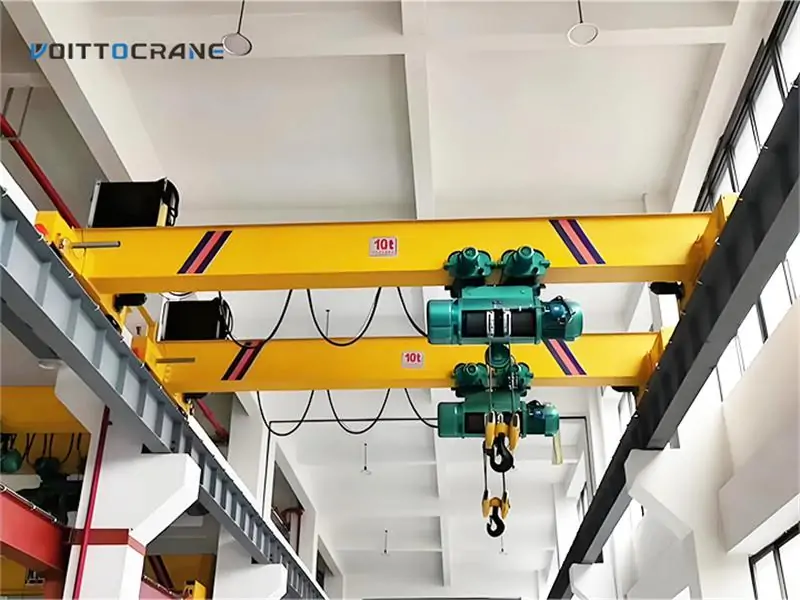
European electric hoist is a lifting unit built to the FEM standard design concept and used as the hoisting mechanism on overhead cranes and gantry cranes. The range covers standard hoists (1–20 ton), explosion-proof and low-headroom models, and double girder hoist trolleys (5–80 ton), and duty classes from M5 to M7. Typical users include automotive manufacturers, machining workshops, and warehouse logistics operations, while the explosion-proof model serves chemical, coal mine, and oil and gas sites. Custom designs are available. To select the right electric hoist, send your crane load, lifting height, voltage, and site conditions, and our engineers will confirm the configuration.
European FEM Standard Electric Hoist Description
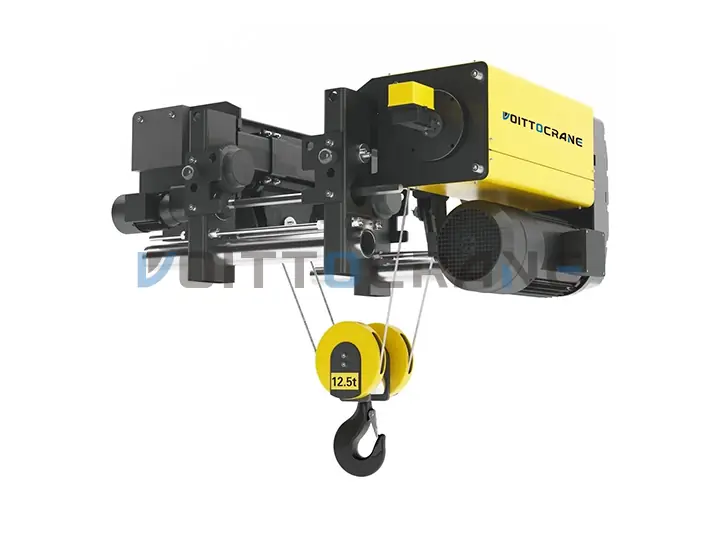
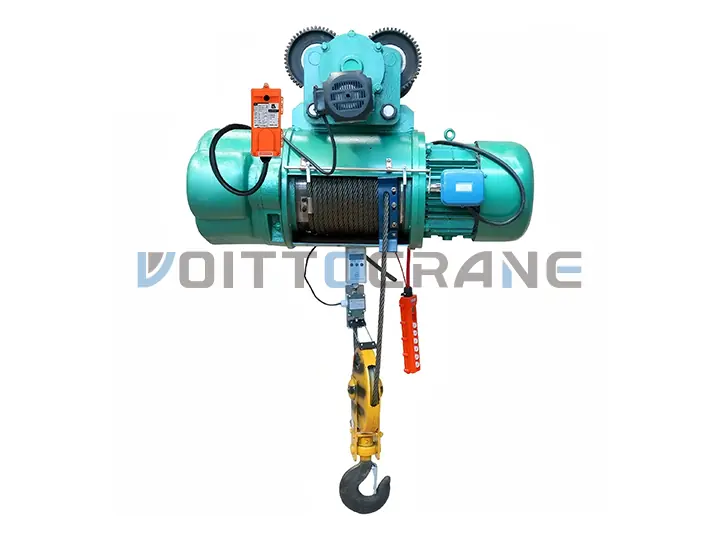
European electric hoist is lifting equipment designed with advanced European technology. It adopts a modular design, equipped with a brake motor and reducer, variable-frequency speed regulation, and a safety protection device. It is characterized by a compact structure, light weight, high lifting height, and stable operation. The lifting mechanism includes the motor, reducer, drum, wire rope, etc., which work together to complete the vertical lifting or lowering of goods.
Type Of European FEM Standard Electric Hoist
VOITTO Crane offers four configurations of European electric hoists to suit different operating conditions. These include the Standard Model (1–20 tons), the Explosion-Proof Model (3–50 tons) for flammable and explosive environments, the Low-Headroom Model (3–10 tons) for facilities with limited headroom, and the Double-Girder Hoist Trolley (5–80 tons) for heavy-duty operations on double-girder bridge cranes. Customized solutions are available for all models upon request.
European Electric Hoist
Unlike traditional electric hoists, this type of European electric hoist features several design optimizations that not only improve operational efficiency but also enhance safety. Typically, European-style electric hoists have a lifting capacity ranging from 1 to 20 tons.
Application: The European electric hoist is suitable for the automobile manufacturing industry, workshop machining, warehouse logistics, and other industries, mainly used for material or cargo handling, assembly, lifting, and other work.
Features: The European electric hoist design structure is more compact, uses advanced European technology, is lighter weight, more stable, and relatively longer service life.
The explosion-proof European FEM Standard electric hoist is lifting equipment that combines explosion-proof technology. This product is specially designed for use in flammable and explosive environments and complies with ATEX, IECEx, and other international explosion-proof standards. Typically, the load capacity of explosion-proof European electric hoists ranges from 3 to 50 tons.
Application: The Explosion-proof European electric hoists are mainly used in flammable and explosive environments such as the chemical industry, coal mines, dusty environments, and oil and natural gas.
Features: The European electric hoist design structure is more compact, uses advanced European technology, is lighter, more stable, and has a longer service life.
This type is specifically designed for low-headroom work environments to maximize the use of vertical space when lifting heavy loads. This low-headroom electric hoist, which complies with European FEM standards, provides the maximum lifting height within a limited height range. Its rated load typically ranges from 3 tons to 20 tons.
Application: Users install this equipment in facilities such as factories and warehouses where headroom is limited, enabling efficient material handling within confined spaces.
Features: This low-headroom European electric hoist features a compact structural design that complies with European international standards, allowing it to operate normally in tight spaces while maintaining a robust load-bearing capacity.
The double girder European hoist trolley is designed to run on double girder overhead cranes and is used for heavy cargo handling. Its compact, lightweight structure suits space-constrained plants and assembly lines, where a heavy load must be lifted and moved without adding bulk to the crane. It is the highest-capacity option in the range.
Application: Widely used for heavy cargo handling in workshops, warehouses, logistics, and other scenarios, especially suitable for space-constrained plants or assembly lines.
Features: The European FEM standard hoist trolley is designed according to European international standards, with a compact and lightweight structure, stable operation, and high load-bearing capacity.
VOITTO is a leading enterprise specializing in the customized design and manufacturing of European FEM standard electric hoists. It can be designed according to your specific needs. Please provide us with the following information:
Load Capacity: Required lifting weight (e.g., 1T, 5T, 10T, 20T, 30T, 80T) and whether shock loads apply. Lifting Height & Speed: Maximum lifting distance (meters) and preferred lifting/lowering speed. Power & Control: Voltage/frequency (e.g., 380V/50Hz) and control method (pendant/remote/automated). FEM Class: Usage intensity (e.g., 1Am-4m) and lifts per hour. Environment & Safety: Indoor/outdoor use, temperature, corrosion, explosion-proof needs (ATEX/IECEx).
European Electric Hoist Manufacturers
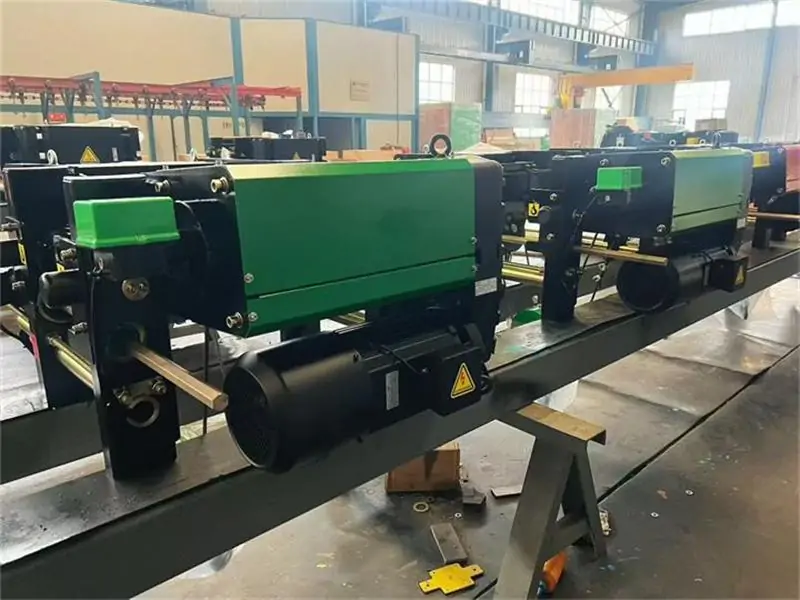
VOITTO is a professional manufacturer of European electric hoists based in China. We remain committed to engineering safety and technological innovation and are dedicated to providing our customers with efficient solutions. From custom design to manufacturing, and from quality inspection to after-sales service, VOITTO adheres to strict production standards to ensure that every piece of equipment complies with international safety standards.
If you would like to learn more about the technical specifications of our European Electric Hoists or solutions tailored to specific industries, please feel free to contact us at any time. VOITTO Crane has an experienced and professional sales team dedicated to providing you with detailed product information to help you make an informed decision.
Specialized in Overhead Crane, Gantry Crane, Jib Crane, Port Crane & EOT Crane export solutions. 10+ years helping global clients with pre-sales consultation, capacity selection and site-specific configurations.
A European electric hoist is a compact, lightweight electric hoist built to the FEM standard design concept. It combines a modular structure, brake motor, reducer, drum, and wire rope with variable-frequency speed regulation and a safety protection device.
What capacity can a European electric hoist handle?
The standard European electric hoist covers 1–20 tons. The explosion-proof types cover 3- 50 tons, and low-headroom types cover 3–10 tons, and the European hoist trolley covers 5–80 tons. Lifting height is 5–30 m, and custom designs are available.
Can FEM Standard wire rope hoist be used with overhead cranes?
Yes. A European electric hoist serves as the lifting mechanism on overhead cranes, and the European hoist trolley is built for double-girder overhead cranes. Send your crane span, rail, and load details, and we will confirm the match.
What working class is suitable for a European electric wire rope hoist?
VOITTO European electric hoists are available in working classes M5-M7. The right class depends on lifts per hour and load spectrum. Share your daily duty cycle, and our engineers will recommend a suitable class.
Can the electric wire rope hoist be customized?
Yes. We customize each electric hoist by load capacity, lifting height and speed, voltage, control method, working class and site environment, including explosion-proof needs. Send these details and our team will propose a suitable configuration.
Qualification and Honor
Engineered Strength, Global Crane Supplier
service
Exclusive and Considerable, Customer First.
01
Reliable and Customized Solutions
Our pre-sale team provides consultations, tailoring solutions to your needs and environment.
Offer customization options for lifting capacity, span and lifting height etc. to meet specific needs.
02
Updated Production Process
Real-Time Progress Updates: Weekly reports and PM communication.
3-5 years warranty and free replacement for non-manufacturing defects.
24/7 online support and on-site assistance for crane issues.
FAQ
Engineered Strength, Global Crane Supplier
What’s included in your after-sales service?
We offer comprehensive after-sales service, including regular maintenance, rapid technical support, and spare parts supply. The standard warranty period is 1 year, with options for extension based on your needs.
What’s the delivery time for an overseas order?
Transit time varies depending on many factors, including the destination of the goods, distance, shipping method and shipping service provider, etc. Generally speaking, international shipping may take about a month.
Get In Touch
Please feel free to leave a message. We will reply in 24 hours.
Please specify your requirement by referring to the following aspects:
Which crane product do you need?
What is the maximum lifting capacity (in tons) required for your project?
Could you specify the lifting height (in meters) needed?
Can you provide details on the working environment, such as ground conditions, space limitations, and any obstacles?
What is the expected frequency of use and the duration of the project?








 English
  Español
  Português
  العربية
  Français
  Русский