
Project Overview
A mid-sized industrial components manufacturer in Johor, Malaysia needed to replace an aging fleet of manual chain hoists that could no longer support its expanding production schedule. With two active production lines moving steel sub-assemblies weighing between 360 kg and 1,800 kg at a rate of more than 80 lifts per day, the facility required a reliable, compliant, and immediately scalable electric hoist chain solution.
After a full workstation load assessment, the client placed an order for 6 units of heavy duty electric chain hoist equipment across four capacity classes — deployed simultaneously across primary production lines, sub-assembly stations, and a quality control inspection bay. All units were configured as part of an electric chain hoist crane system integrated with existing runway beams and motorized trolleys on-site.
Project Challenges
Varying Load Profiles Across Workstations: The two primary production lines required heavy duty chain hoist units rated up to 1,500 kg, while sub-assembly and QC stations demanded lighter, more precise lifts in the 250–500 kg range. A single-capacity industrial chain hoist specification would either underserve the primary lines or oversize the secondary stations — introducing unnecessary cost and slower control response where precision matters most.
Single-Phase Power Constraints at Secondary Stations: Secondary workstations operated on 240V single-phase electrical drops. Any overhead chain hoist deployed at those positions had to be fully compatible with the existing supply without requiring new panels, conduit runs, or transformer upgrades. Misspecification at this stage is one of the most common — and costly — errors when sourcing chain hoist for sale from overseas suppliers.
Compliance and Certification Requirements: The facility required every electric hoist chain unit to arrive with a factory load-test certificate at 125% rated capacity, rated-capacity tagging, and internationally recognized certification documentation. The previous supplier had not delivered adequate paperwork, which was the direct cause of two open inspection findings at the time of inquiry.
Safety and Throughput Under Pressure: With three near-miss incidents recorded in a single quarter and manual lift cycles averaging over four minutes per operation, the facility faced simultaneous pressure on safety performance and production output. Transitioning from manual chain hoist crane operation to motorized electric hoist chain systems was operationally urgent.
On-Time Delivery Requirement: The facility had a fixed production ramp-up schedule. All 6 units of the industrial chain hoist order needed to arrive, clear customs, and be ready for installation within a defined window to avoid disruption to ongoing production commitments.
Solution Provided
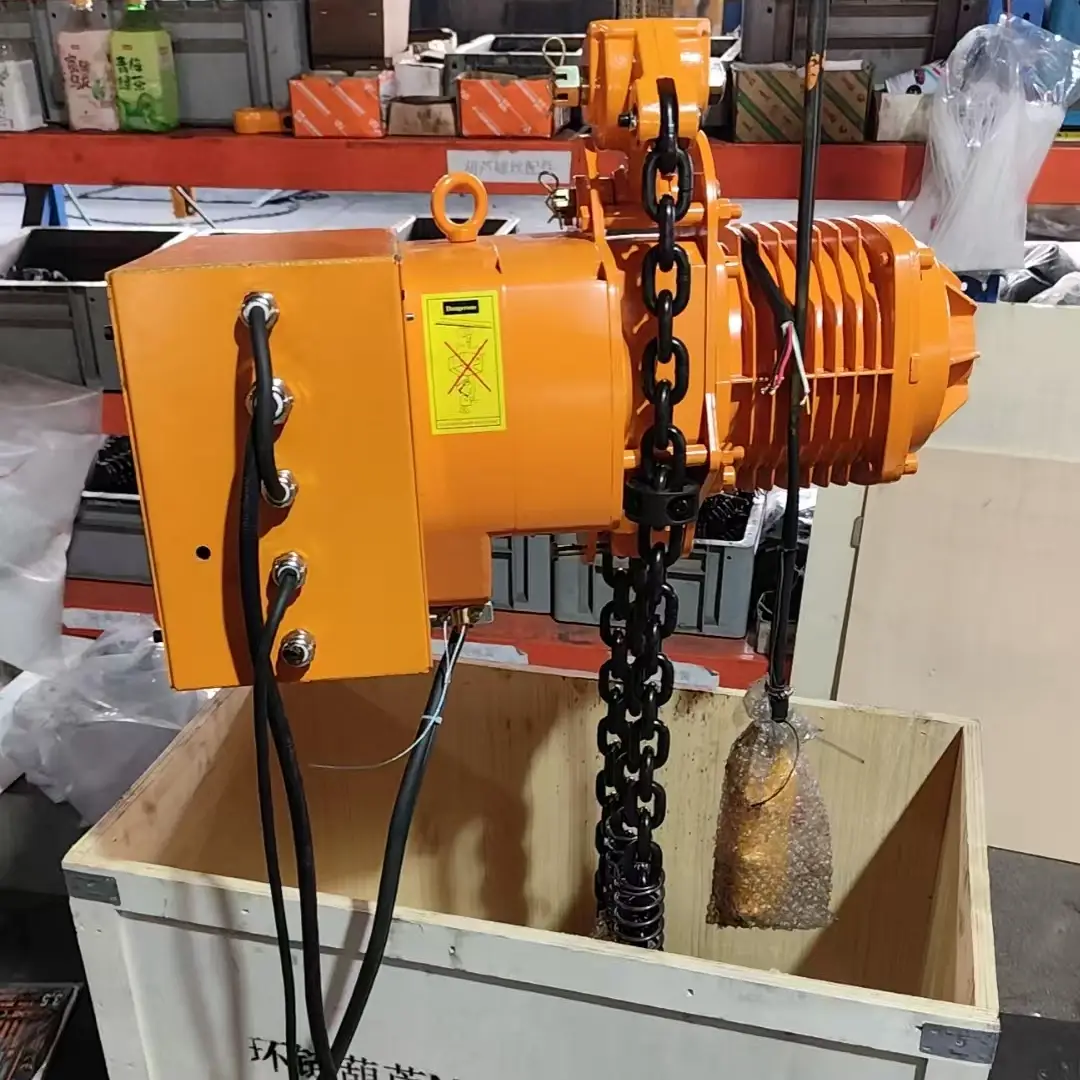
Mixed-Capacity Electric Hoist Chain Configuration: After reviewing the load profile at each workstation, we recommended a tailored 6-unit deployment across four capacity classes. This gave every station a correctly rated electric chain hoist without oversizing — balancing performance, compliance overhead, and procurement cost across the full installation. The configuration covered primary-line heavy duty chain hoist requirements as well as lighter overhead chain hoist duties at sub-assembly and inspection stations.
Single-Phase Compatible Units for Secondary Stations: Three of the six electric hoist chain units were configured for 240V single-phase input, fully compatible with the facility’s existing secondary-station electrical drops. No rewiring, no new panels, and no additional electrical contractor engagement was required. Primary-line units were specified for 415V three-phase connection using step-down transformers already present on-site — an efficient reuse of existing infrastructure.
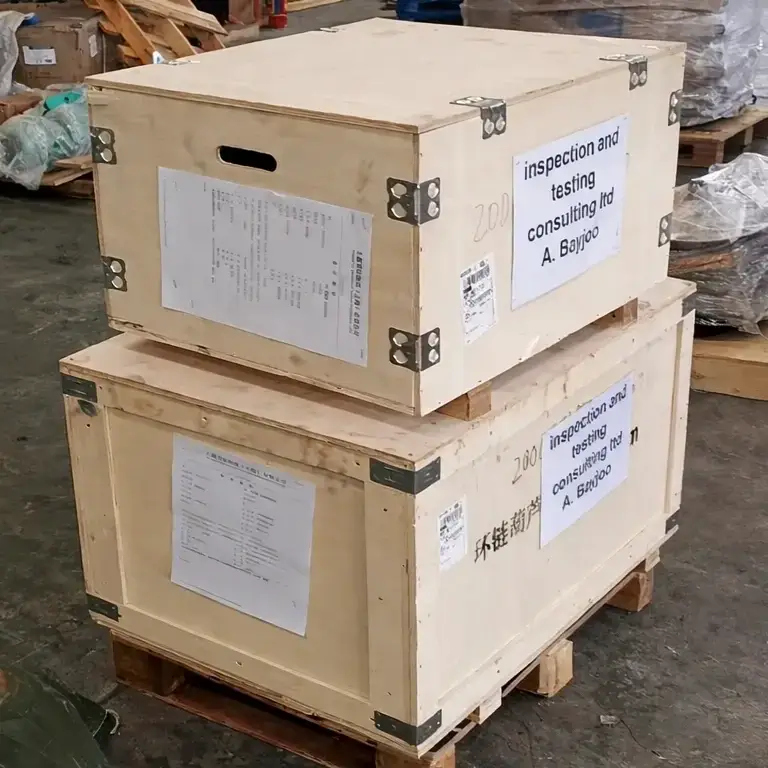
Full Certification and Compliance Documentation in Every Crate: Each electric hoist chain unit shipped with a factory load-test certificate at 125% rated capacity, a wiring diagram, an installation manual, a spare limit switch set, and a full compliance data sheet. All units are manufactured under an ISO 9001:2015 certified quality management system, independently verified by SGS. Every unit carries both CE and EAC certification, covering European and Eurasian market compliance requirements. Units were factory-tagged with rated capacity, serial number, and recommended inspection interval prior to shipment — enabling the customer to close both open inspection findings on the day of installation.
Grade 80 Hoist Chains on All Units: Every unit in this electric chain hoist crane deployment was fitted with Grade 80 hoisting chain compliant with EN 818-7. Grade 80 hoist chains deliver the combination of tensile strength, fatigue resistance, and wear life required for high-frequency industrial lifting — a non-negotiable specification for continuous-duty heavy duty chain hoist applications.
On-Schedule Export Delivery: All 6 units were pre-shipment inspected, packed in export-grade plywood crating with moisture-barrier wrap, and consolidated into a single container.
Equipment Specification
| Station | Capacity | Qty | Lift Height | Control | Power Supply |
|---|---|---|---|---|---|
| Primary Line A | 1,000 kg (1 ton) | 2 | 6 m | Pendant + wireless remote | 415V 3-phase |
| Primary Line B | 1,500 kg (1.5 ton) | 1 | 6 m | Pendant | 415V 3-phase |
| Sub-assembly | 500 kg (0.5 ton) | 2 | 4.5 m | Pendant | 240V single-phase |
| QC Inspection | 250 kg (0.25 ton) | 1 | 3 m | Pendant | 240V single-phase |
- Electric hoist chain type: Grade 80, EN 818-7 compliant
- Lifting speed: 2.5–5 m/min (variable by capacity)
- Trolley type: Motorized on primary lines; push-type on secondary stations
- Overload protection: Built-in mechanical overload clutch, all units
- Load test: Factory-certified at 125% rated capacity
- Certifications: CE / ISO 9001:2015 / SGS / EAC
- Packaging: Export-grade plywood crating, moisture-barrier wrap
Outcome
By deploying 6 units of correctly specified electric hoist chain equipment across its Johor production facility, the manufacturer achieved a 57% reduction in average lift cycle time — from 4.2 minutes down to 1.8 minutes per operation. Daily completed lifts on the primary line increased from 48 to 91. Unplanned maintenance events dropped from 6 per quarter to 1. Near-miss incidents fell to zero, and both open inspection findings were formally closed on installation day.
This project demonstrates what becomes possible when electric chain hoist crane selection is treated as an engineering and compliance decision rather than a simple procurement transaction. Matching industrial chain hoist capacity to individual workstation load profiles, resolving power supply compatibility before equipment is ordered, and delivering a complete certification package — including CE, ISO 9001:2015, SGS, and EAC documentation — are the foundations of a chain hoist for sale specification that performs from day one.
The global hoist chains market continues to see increasing demand from Southeast Asian manufacturing facilities making the transition from manual to motorized lifting. For facilities sourcing electric hoist chain equipment — whether a single overhead chain hoist or a full multi-station deployment — certification quality and compliance documentation are what determine whether an installation succeeds or creates ongoing regulatory and operational liability.
If you have similar requirements — whether a single chain hoist for sale inquiry or a large-batch heavy duty chain hoist order — contact our team. We will provide a tailored electric hoist chain solution matched to your load profile, power supply, and certification requirements.

Alan
Crane Solutions Specialist · Voitto Crane
Specialized in Overhead Crane, Gantry Crane, Jib Crane, Port Crane & EOT Crane export solutions. 10+ years helping global clients with pre-sales consultation, capacity selection and site-specific configurations.


 English
  Español
  Português
  العربية
  Français
  Русский