blog

Lever Chain Hoist
07 April 2026

Lever Chain Hoist vs Hand Chain Hoist: Key Differences & When to Use Each

Choosing the wrong hoist for a job can slow down your operation, create safety risks, and waste budget. If you’ve been comparing a lever chain hoist and a hand chain hoist, you’re already asking the right question — because these two tools look similar but serve very different purposes. This article gives you a clear breakdown: what each hoist does best, where they fall short, and how to match the right tool to your specific application. What Is a Lever Chain Hoist? A lever chain hoist (also called a lever block chain hoist or hoist lever chain) uses a short operating lever to apply mechanical force through a ratchet mechanism. The operator pumps the lever back and forth to lift, lower, or pull a load. How It Works The lever feeds into a gear system that multiplies the input force. This allows the user to move heavy loads with relatively little physical effort. Most models also allow load positioning in any direction — not just straight up — which makes them highly versatile on job sites. Key Technical Characteristics Ideal…

READ MORE
electric chain hoist
03 April 2026

Electric Chain Hoist Buying Guide: Types, Capacity & What to Look For

Not all electric chain hoists are built for the same job. Picking the wrong one doesn’t just slow down operations — it creates real safety risks and drives up maintenance costs over time. Whether you’re outfitting a new facility or replacing aging equipment, the decision deserves more than a quick price comparison. This guide gives procurement teams a clear, practical framework. We’ll cover the main hoist types, how to match capacity to your actual workload, power supply considerations, control options, and the features that separate reliable long-term equipment from costly short-term fixes. By the end, you’ll know exactly what to ask suppliers — and what to watch out for. Why Electric Chain Hoists Dominate Industrial Lifting Electric chain hoists have largely replaced manual chain blocks and lever hoists in most industrial settings. The shift isn’t just about convenience. It’s about consistency, safety, and throughput. The Core Advantages Over Manual and Wire Rope Alternatives Manual hoists require significant operator effort, limit lift speed, and aren’t practical for repeated cycles throughout a shift. Electric chain hoists eliminate that fatigue factor entirely. They…

READ MORE
Electric Chain Hoist – Key Components Overview
31 March 2026

What Is a Chain Hoist? How It Works, Types & Key Components Explained

If your team regularly lifts heavy loads — on a factory floor, at a construction site, or inside a maintenance facility — a chain hoist is likely one of the most important tools in your operation. Yet many procurement managers struggle to choose the right type, understand how it functions, or explain what separates a reliable unit from a problematic one. This article cuts through the confusion. You’ll learn exactly what a chain hoist is, how it works step by step, what its core components do, and which type fits which application. By the end, you’ll have the practical knowledge to make a smarter buying decision — or to ask the right questions when evaluating suppliers. What Is a Chain Hoist? A chain hoist is a mechanical device used to lift, lower, and position heavy loads using a chain as the primary load-bearing element. It converts input force — whether manual or electric — into lifting power through a system of gears, hooks, and chain links. Chain hoists are used across industries including manufacturing, warehousing, construction, shipbuilding, and automotive assembly.…

READ MORE
Hand Chain Hoist
01 April 2026

Manual Chain Hoist Guide: How to Use, Advantages & Best Scenarios

A manual chain hoist is one of the most practical lifting tools available. It requires no electricity, minimal maintenance, and can be set up almost anywhere in minutes. Yet many buyers overlook it — either because they assume electric is always better, or because they’re unsure how to use one correctly. This guide covers everything you need to know. You’ll learn how a hand chain hoist works, how to operate it safely step by step, where it outperforms electric alternatives, and how to pick the right capacity for your job. Whether you’re lifting a car engine in a home garage or positioning steel on a job site, the right manual hoist can make the work safer and more efficient. What Is a Manual Chain Hoist? A manual chain hoist — also called a hand chain hoist — is a mechanical lifting device that uses human pulling force to raise, lower, and hold heavy loads. The operator pulls a hand chain, which drives an internal gear system, which in turn moves the load chain to lift the load. Unlike electric hoists,…

READ MORE
Overhead Crane vs Hoist
27 March 2026

Overhead Crane vs Hoist: What’s the Difference?

If you are shopping for lifting equipment, you have likely come across both overhead cranes and hoists. Many buyers treat them as the same thing. They are not. Choosing the wrong one leads to wasted budget, poor efficiency, or worse — a safety risk on the floor. This article breaks down exactly what separates an overhead crane from a hoist, how they work together, and which one your facility actually needs. What Is an Overhead Crane? An overhead crane is a complete material handling system. It is installed above your workspace on fixed rails and moves loads in three directions: left and right along the runway, forward and back along the bridge, and up and down via the hoist. The system consists of several major components working together. Main Components of an Overhead Crane The key point: the overhead crane is the full system. The hoist is just one part of it. Types of Overhead Cranes Overhead cranes come in two main structural types. Single girder overhead crane — one main beam, suitable for loads up to 32 tons in…

READ MORE
Small Overhead Crane
27 March 2026

What is a Small Overhead Crane and Where is it Used?

Introduction A small overhead crane is a compact lifting system designed to handle light to medium loads within limited workspace environments such as workshops, warehouses, and small manufacturing plants. Installed on ceiling-mounted or freestanding runway beams, it enables efficient material handling, improves workflow, and reduces manual labor. Compared with larger industrial cranes, small overhead cranes are more cost-effective, easier to install, and highly adaptable to various operational needs. In this guide, we’ll explore what defines a small overhead crane, its key components, common types, and how to choose the right solution for your facility, helping you maximize efficiency while keeping investment under control. Main Components The structure of a small overhead crane is similar to that of a standard overhead bridge crane, but it is more lightweight and modular. Its main components include: Main Types of Small Overhead Crane With the diversification of application demands, different industries have higher requirements for the structure, capacity, and installation methods of small overhead bridge cranes, resulting in various types to suit different working conditions. Taking the Chinese crane manufacturer VOITTO as an example,…

READ MORE
Light Duty Overhead Crane
27 March 2026

How to Choose a Light Duty Overhead Crane?

Introduction In workshops, warehouses, and small manufacturing facilities, selecting the right light-duty overhead crane is essential for ensuring safe, efficient, and cost-effective material handling. With a wide range of options available, including lifting capacity, span, mounting methods, and control systems, choosing the most suitable crane requires a thorough understanding of your specific operational needs and work environment. In this guide, we will walk you through the key factors to consider when selecting a light-duty overhead crane, including load requirements, workspace constraints, customization options, and safety features, to help you make an informed decision that maximizes productivity while minimizing long-term costs. What Is a Light Duty Overhead Crane? A light duty overhead crane, also called a small overhead crane, which is a compact bridge crane system designed for lifting and moving relatively light loads, typically within a range of 0.5 to 10 tons—in confined or low-intensity working environments. It runs on overhead beams or tracks and is usually equipped with an electric hoist for smooth, controlled operation. Known for its simple structure, flexibility, and cost efficiency, this type of crane is…

READ MORE
Gantry Crane for Warehouse
26 March 2026

Gantry Crane for Warehouse: Efficient Lifting Solutions for Modern Material Handling

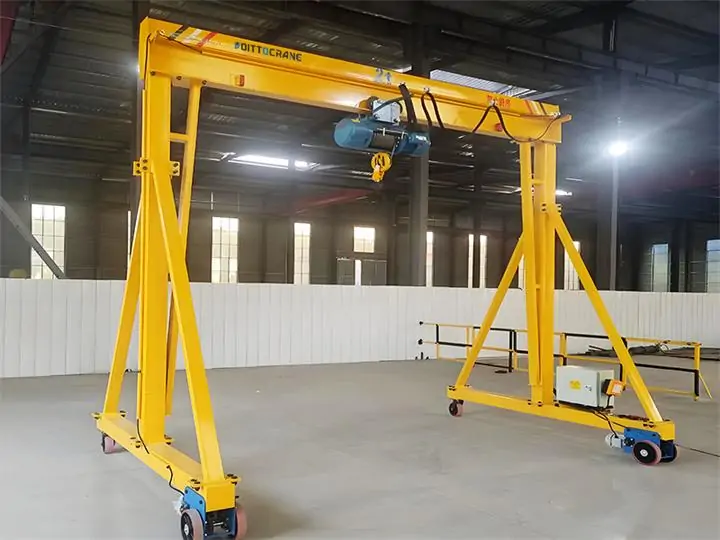
In modern warehouses, efficient material handling is essential to maintaining productivity and reducing operational costs. A gantry crane for warehouse applications offers a flexible, cost-effective solution for lifting and transporting heavy loads without the need for permanent structural modifications. This article will guide you through the different types of warehouse gantry cranes, their key features, benefits, and common applications. You’ll also learn how to choose the right gantry crane based on your specific working conditions, helping you optimize efficiency and safety in your warehouse operations. What is Gantry Crane for Warehouse? Warehouse gantry cranes feature high space utilization, large working range, wide adaptability, and strong versatility. They are mainly used in outdoor yards, material stockyards, and warehouses for heavy-duty operations such as loading, unloading, handling, and stacking. As a typical Gantry Crane for Warehouse, its structure resembles a door frame, with two legs installed under the main beam, traveling along ground-mounted rails. Therefore, it is also known as a gantry crane or portal crane. Why Choose a Gantry Crane for Warehouse Use? Gantry cranes have a flexible structure and wide…

READ MORE
Pillar Jib Crane
26 March 2026

Pillar Jib Crane vs. Wall Mounted Jib Crane: How to Choose the Right One

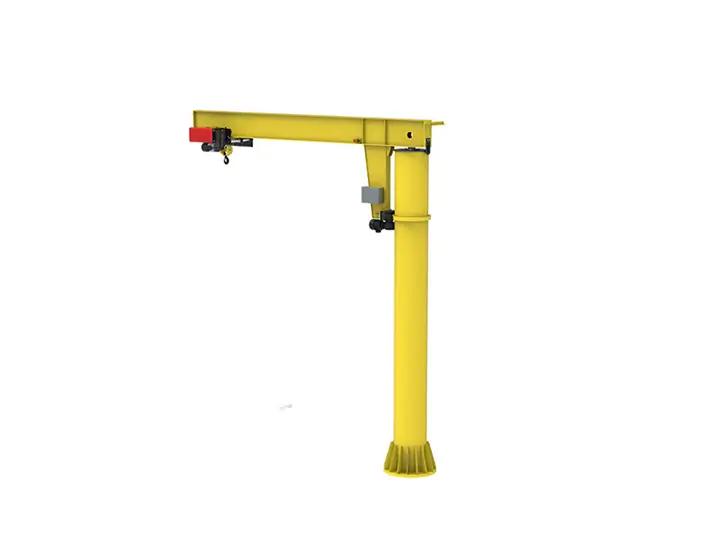
Choosing between a pillar jib crane and a wall mounted jib crane is one of the most common decisions buyers face. Both are practical, cost-effective lifting solutions — but they suit very different workspaces and workflows. The short answer: if you need full 360° coverage and freedom to position the jib crane anywhere in your facility, a pillar jib crane is the better fit. If floor space is tight and your work happens near a wall or column, a wall mounted jib crane is the smarter choice. This guide walks you through the key differences — structure, rotation range, load capacity, installation requirements, and cost — so you can make a confident decision without second-guessing. What Each Jib Crane Actually Is Before diving into comparisons, it helps to understand what sets these two types apart at a structural level. Pillar Jib Crane A pillar jib crane is a free-standing unit anchored directly to the floor via a reinforced concrete foundation. The jib arm rotates around a central steel column. This design provides a slew range of up to 360°, with…

READ MORE
wire rope inspection
24 March 2026

Wire Rope Inspection Guide: Professional Checklist and Safety Procedures

In industrial production, serious accidents caused by wire rope failures occur every year. However, such accidents can be effectively prevented if operators can promptly identify signs of wire rope deterioration, take proactive measures, and conduct regular inspections. Whether you manage cranes, elevators, or rigging equipment, understanding effective inspection methods protects personnel and maintains operational continuity. In the following sections, this guide will provide a detailed overview of wire rope inspection techniques, recognized standards, and practical implementation strategies. You will learn how to conduct thorough and meticulous inspections, accurately interpret inspection results, and make informed decisions regarding replacement. Please continue reading. Why are Wire Ropes Inspected? Wire rope inspections are essential to the safe operation of equipment. Regular inspections can identify wear, corrosion, and damage, all of which gradually reduce the wire rope’s strength and safety margin. In addition to meeting regulatory requirements, inspection programs serve several critical purposes. They enable the early detection of potential issues, making corrective actions less costly than replacements. Documented inspection results serve as evidence of due diligence during safety audits and accident investigations. Most importantly,…

READ MORE
Overhead Crane Motor: Structural Schematic Diagram
23 March 2026

How Does an Overhead Crane Motor Work?

If you’ve watched an overhead crane lift a multi-tonne load across a factory bay, the motor driving that movement is doing far more than simply spinning a shaft. It’s managing torque, controlling speed, holding loads safely, and withstanding hundreds of start-stop cycles every day. Understanding how that works — at a practical level — is what separates a smart procurement decision from an expensive one. The core answer is this: an overhead crane motor converts electrical energy into mechanical motion through electromagnetic induction. That motion drives three distinct crane functions — lifting, lowering, and horizontal travel. But the motor type, duty rating, braking system, and control method determine whether your crane runs reliably for 20 years or causes recurring problems from year two onward. This guide walks you through the working principle, key motor types, critical specifications, and what to look for when evaluating products for your facility. The Working Principle: How the Motor Drives Movement Every electric motor for overhead crane use follows the same fundamental principle. When alternating current flows through the stator windings, it generates a rotating…

READ MORE
Top