blog

Example of the wheelbase for a bridge crane with a four-wheel configuration on one side
23 October 2026

Crane Span,Gauge & Base Distance: Meaning and Differences

Crane span, gauge and base distance are three different horizontal dimensions. Span is the distance between runway rail centerlines, gauge is the rail-to-rail distance of a travelling mechanism, and base distance is the spacing between support centerlines along the direction of travel. The three terms are easily confused. Some suppliers use “gauge” and “wheelbase” interchangeably, and some treat span and trolley gauge as the same thing. In reality each one measures a different direction on a different part of the crane. This guide defines each term, compares them side by side, shows how base distance is read on layouts from two to twelve wheels, and explains the reference plane all of them are measured from. After reading, you should be able to check a crane drawing and say which dimension is which. Base distance (symbol b or B) is the horizontal distance between a crane’s support centerlines, measured parallel to its direction of travel, as defined in crane terminology standards such as GB/T 6974.1. What Do Span, Gauge and Base Distance Mean? Span (S): The Distance Between Rail Centerlines Span…

LIRE LA SUITE
Crane Main Beam Deflection
20 October 2026

Crane Main Beam Deflection: Causes, Effects and How to Fix It

Crane main beam deflection is the permanent downward sag of a main beam below its original upward camber. Once the main beam drops below the horizontal line at mid-span under rated load, it generally needs straightening or retirement. For buyers and maintenance leads, the problem is rarely visible at first. The trolley still runs and the hoist still lifts, yet the main beam has quietly lost its built-in arch. By the time the trolley starts to struggle uphill toward mid-span or wear grooves appear on the rail, the damage is already well advanced. This guide explains what crane main beam deflection is, the six causes behind it, what it does to the trolley, rails and webs, and how flame straightening corrects it. It also covers the repair mistakes that make the main beam worse. What Crane Main Beam Deflection Really Means Camber vs. deflection: the definition Crane main beam deflection is the permanent downward set of a main beam that has lost its designed upward camber and may bow below the horizontal, as treated in crane design codes such as…

LIRE LA SUITE
Crane Model Codes Explained_ QD, MG, LD, LX & More
14 October 2026

Crane Model Codes Explained: QD, MG, LD, LX & More (Complete Chart)

If you have ever received a crane quotation with codes like QD, MG or LX, you may have wondered what the letters mean. Chinese crane manufacturers use short letter codes to describe the crane type, structure and hoisting attachment. Once you know the logic, a model name tells you the basics at a glance. This guide explains how crane model codes work, gives a full reference chart for the most common types, and shows how to use the codes when comparing suppliers. Are Crane Model Codes a Mandatory Standard? No. Older Chinese standards, such as GB/T 14405-93 for overhead cranes and GB/T 14406-93 for gantry cranes, did define code tables. Those standards have been withdrawn. Newer versions, including GB/T 14405-2011 and GB/T 14406-2011, no longer include a model-code system. Today, under China’s TSG 51-2023 safety technical code for lifting equipment, a crane “model” simply identifies cranes of the same type that may differ in main parameters. The code is made up of letters describing the product type, main structure and mechanism layout, and each manufacturer defines its own model code.…

LIRE LA SUITE
Crochet
13 October 2026

Hook Drift in Cranes: Causes, Limits, and How to Fix It

Hook drift is the uncontrolled downward slide of a crane hook or load after the controller has been returned to zero, beyond the permitted braking distance. It is also called load drift, and it means the hoist brake is no longer holding the way it was designed to. Any drift beyond the limit should be treated as a safety fault, not a nuisance. The difficulty is that a small slip is easy to ignore. The hook settles a few centimeters, the operator corrects it, and the shift carries on. But hook drift rarely stays small. A contaminated brake surface, a worn lining or a mis-set spring gets worse with every lift, and the same defect that lets a load sink 20 cm today can let it fall tomorrow. This guide gives you the allowable drift limits for overhead cranes, gantry cranes and electric hoists, with a worked calculation. It then covers the six most common causes, a symptom-to-cause diagnostic table, practical fixes, and the design choices that prevent hook drift in high-duty work. Hook drift is the non-commanded downward movement…

LIRE LA SUITE
Diagram showing the hook over-hoisting limit
10 October 2026

Crane Over-Hoisting: Causes, How to Fix It and Prevention

Crane over-hoisting — sometimes called an over-winding or over-travel accident — occurs when a hook block rises past its designed upper limit and collides violently with the hoist drum, trolley frame, or crane structure. The impact can snap the wire rope instantly, dropping the load and the hook without warning. Understanding why it happens, and what stops it from happening, is one of the most practical things a crane manager or maintenance engineer can know. This guide covers the root causes (equipment and human), how to restore safe operation after an event, and the layered prevention system that keeps it from recurring — from limit switch selection through operator discipline. What Crane Over-Hoisting Actually Means Over-hoisting is the loss of control over vertical hook travel at the upper extreme of the hoist’s range, as defined under hoist safety standards including ASME B30.16 and OSHA 1910.179. In normal operation, the upper limit switch cuts power to the hoist motor before the hook block can reach the drum. Over-hoisting happens when that cut-off fails — for any reason — and the hook…

LIRE LA SUITE
how long does an overhead crane last by working class A1–A7
10 October 2026

How Long Does an Overhead Crane Last? Design Life vs. Real Service Life

A well-maintained overhead crane typically lasts 20 to 30 years, depending on its duty class. That number is a design convention, not a warranty: what really ends a crane’s life is fatigue in its load-bearing steel structure, not the age on the calendar. Buyers see “30-year design life” in tender documents, and owners of older equipment are asked whether to repair, refurbish or replace. Neither figure says how much life is actually left. This guide explains where the 20-, 25- and 30-year figures come from, how design life is calculated, what shortens it, and how to estimate remaining cycles with our free Crane Lifespan Calculator. Crane design service life is the total number of working cycles a crane is calculated to perform under stated loading conditions, as classified under ISO 4301-1. How Long Does an Overhead Crane Last by Duty Class? Reference design lives run from about 20 to 30 years by working class Lighter duty classes carry longer reference lives: roughly 30 years for A1–A2, 25 years for A3–A5 and 20 years for A6–A7. The reason is the cycle…

LIRE LA SUITE
Fracture of the high-speed gear shaft in the hoisting reduction gear
29 September 2026

Overhead Crane Gearbox, Drum & Sheave Faults: Causes, Symptoms & Repair Guide

The gearbox, drum, and sheave form the mechanical core of any overhead crane hoist mechanism — and when any one of them fails, the entire lift stops. These three components are also where most unplanned maintenance calls originate, because their failure symptoms overlap and early warning signs are easy to misread. A grinding noise, for instance, could point to a gearbox with insufficient backlash, a drum with a worn groove, or a seized sheave starved of lubrication — three very different corrective actions. This guide helps maintenance engineers and plant managers do two things quickly: identify which component is failing based on what they are seeing or hearing, and know the exact wear threshold at which replacement is no longer optional. For teams evaluating suppliers or spare-part sourcing, the compliance section at the end covers the certification documents worth requesting before a part ships. Diagnose the Fault First: Symptom Quick-Reference Before pulling tools, match the symptom to the component. The table below maps observable signs to the most likely source and the urgency level. What you are seeing or hearing…

LIRE LA SUITE
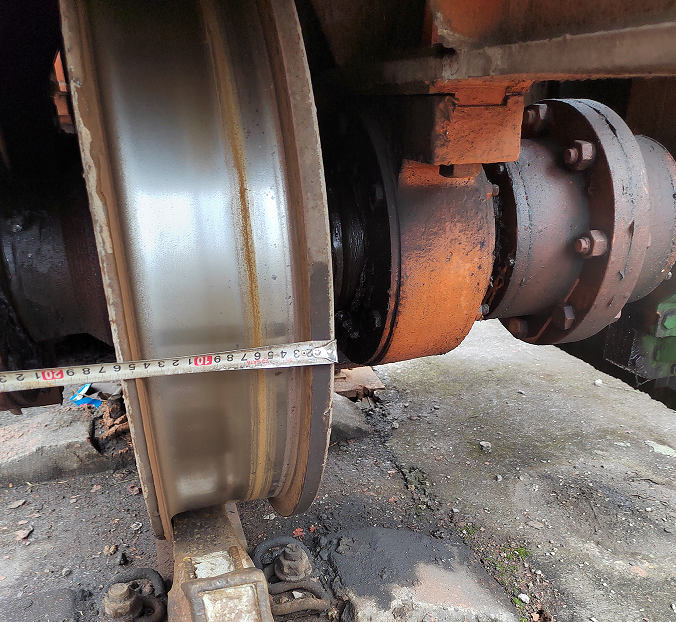
inspection de mesure de l'usure des brides de roues de grue
10 septembre 2026

Comment remédier à l'usure des brides de roues de grue : 5 solutions et 5 améliorations techniques

Crane wheel flange wear — the progressive damage caused by sustained contact between the wheel flange and the side of the running rail — does not resolve itself and cannot be managed by lubrication alone. Once the underlying cause is identified, corrective work must be sequenced correctly: applying adjustments in the wrong order wastes time, produces misleading results, and in some cases redistributes the contact force without eliminating it. The problem is known by several names depending on where you operate. North American engineers typically call it rail biting or crane skewing. European maintenance teams use flange rubbing. In Chinese and much of Asian crane industry practice, the direct term rail gnawing (啃轨) is common. UK and Indian engineers working with European-origin cranes often refer to the trolley mechanism as the crab and describe the same phenomenon as crab flange wear. Whatever the terminology, the corrective approach is the same. This article covers five field-correctable solutions — with step-level procedures where the work involves physical adjustment — and five engineering improvements for cases where standard corrections are insufficient or where…

LIRE LA SUITE
dommages importants à l'usure des brides des roues de grue
10 septembre 2026

Usure des brides de roues de grues : 5 signes avant-coureurs et 6 causes profondes dans les ponts roulants et les portiques

Wheel flange wear — the sustained, forceful contact between a crane wheel flange and the side of the rail — is one of the most damaging and persistent faults in overhead and gantry crane operation. Left unaddressed, it accelerates wear on both wheels and rails, increases running resistance, distorts the crane’s metal structure, and in severe cases leads to derailment and serious injury. The problem goes by several names depending on where you are. Wheel flange wear is the most widely recognized term internationally and appears in most maintenance standards and inspection checklists. Engineers and maintenance teams also encounter it as flange rubbing in European technical documentation, rail biting in North American maintenance manuals, and rail gnawing (啃轨) in Chinese technical literature — a direct translation that has become widely understood across the global crane industry. Whatever the terminology, the underlying mechanics and the diagnostic approach are the same. This article covers what wheel flange wear looks like in the field, how to identify it early, and — critically — how to distinguish between the six categories of root cause…

LIRE LA SUITE
Haut de page