


If your factory handles light to medium lifting tasks (typically up to 1 ton to 32 tons), our C hooks for crane offer a cost-effective, simple, and reliable solution. They are ideal for lifting steel coils, aluminum coils, steel pipes, and paper rolls. Easy to operate and well-matched with most single-girder or double-girder overhead cranes, they help reduce handling time, protect material surfaces, and improve workshop efficiency at a reasonable cost.
C hooks for crane are simple lifting mechanisms shaped like the letter “C”. They connect to your overhead crane or lifting beam and cradle the load from below.
Unlike ordinary hooks that need slings, C hooks provide stable support for round or flat items. Most are made from high-strength alloy steel for daily heavy use. This design lets operators load and unload materials faster while keeping loads balanced and safe.
C hooks for crane come in several practical types to match different coil sizes, weights, workshop space, and daily lifting tasks. Choosing the right type helps improve efficiency, protect materials, and keep operations safe. Below is a clear, expanded overview based on common industrial designs.
This is the basic and most widely used model. It consists of a lifting body and a counterweight iron. The lifting body is made from steel plates and steel pipes welded into a box-type cross-section structure. This gives excellent resistance to bending and torsion while keeping the hook lightweight and strong.
It works very well for standard steel coil handling, warehouse stacking, storage, and quick loading/unloading tasks in steel plants. Many procurement teams like it because it is simple, durable, and has a long service life. Custom designs are available to fit your exact operations.
Designed for handling horizontal steel coils of varying widths. It includes a lifting body (same box-type structure from steel plates and pipes) plus connecting rigging with adjustable double hooks mounted on a grooved steel beam.
The adjustable feature lets you easily change the distance between hooks to suit different coil widths. This makes it flexible for varied production lines and helps reduce setup time. The hook remains lightweight yet sturdy, offering good durability for repeated use.
This type adds convenience with an electric drive system for safe rotation. The C hooks can turn the load at any angle during lifting, which makes loading, unloading, and repositioning steel coils much easier and faster.
It is especially useful in workshops where coils need frequent turning or precise placement, such as during tempering, stacking, or transport. The rotation feature improves safety and reduces manual effort while keeping the strong box-type structure and counterweight for balance.
Specially built for small-tonnage and short-size coils, typically in the 1-3 ton range (customizable). The main body uses the same steel plate and pipe box-type structure for good strength and anti-bending performance.
It is very light, flexible, and easy to install or remove. Some versions include a guide handle on the rear side to help control direction during movement. This type is ideal for lighter or narrower coils in smaller operations or tight spaces where a full-size hook would be too heavy or bulky.
Also called double coil or fork-style C hooks. It handles two steel coils or wire rods side by side in one lift. The design keeps the standard lifting body with box-type structure and counterweight iron to maintain excellent balance.
This version is widely used in hot rolling and cold rolling workshops, as well as material yards and docks. It increases productivity when moving multiple items and keeps the hook lightweight and long-lasting.
Get QuoteOptimized for wire coils and steel coils. It follows the same reliable structure: lifting body in box-type section plus counterweight iron for perfect vertical balance.
The design ensures the center of gravity of the hook and load stays aligned, reducing swing. Custom options allow it to fit specific coil dimensions and lifting requirements. It is a practical choice for horizontal lifting of wire coils in various industrial settings.
These types cover most common needs in steel mills, warehouses, and processing plants. When selecting, consider your coil width, tonnage, how often you need to rotate loads, and available workshop space. This helps avoid mismatch and keeps your crane operations smooth and cost-effective.
C hooks for crane are used in many different factory environments for coil and material lifting.
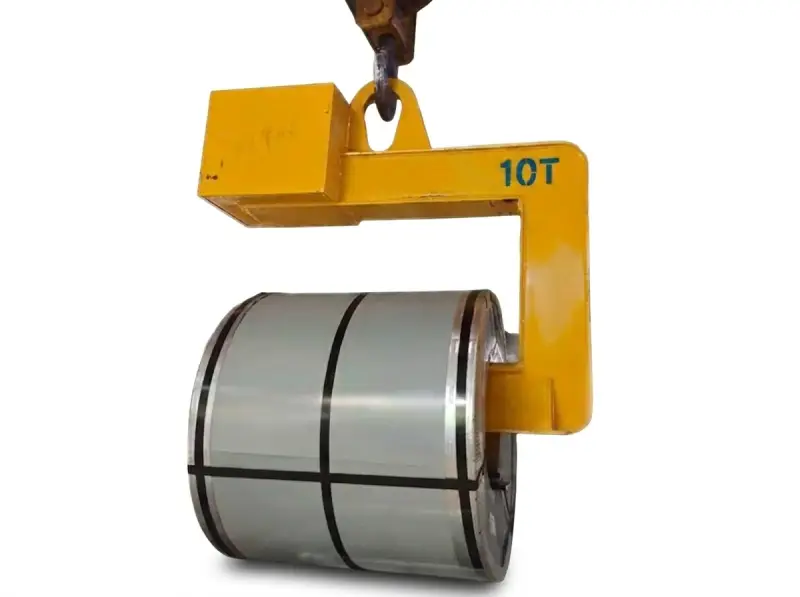
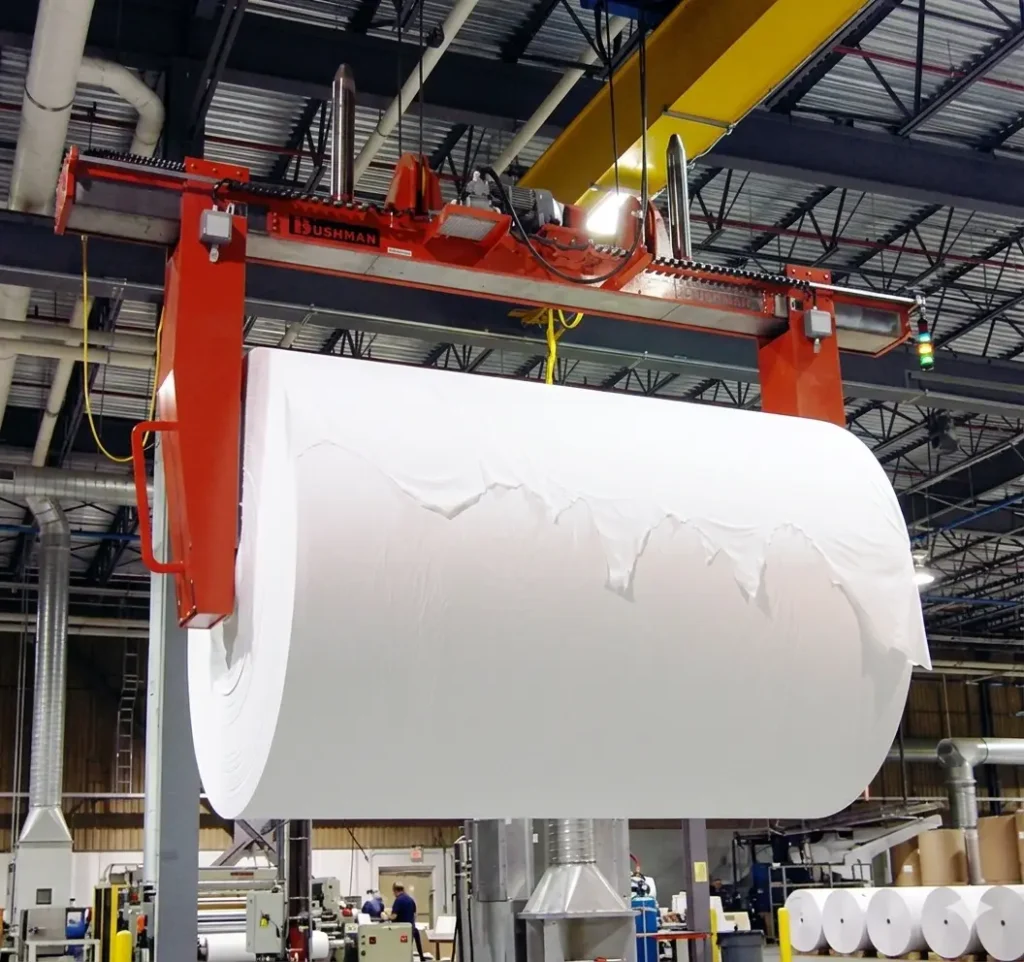
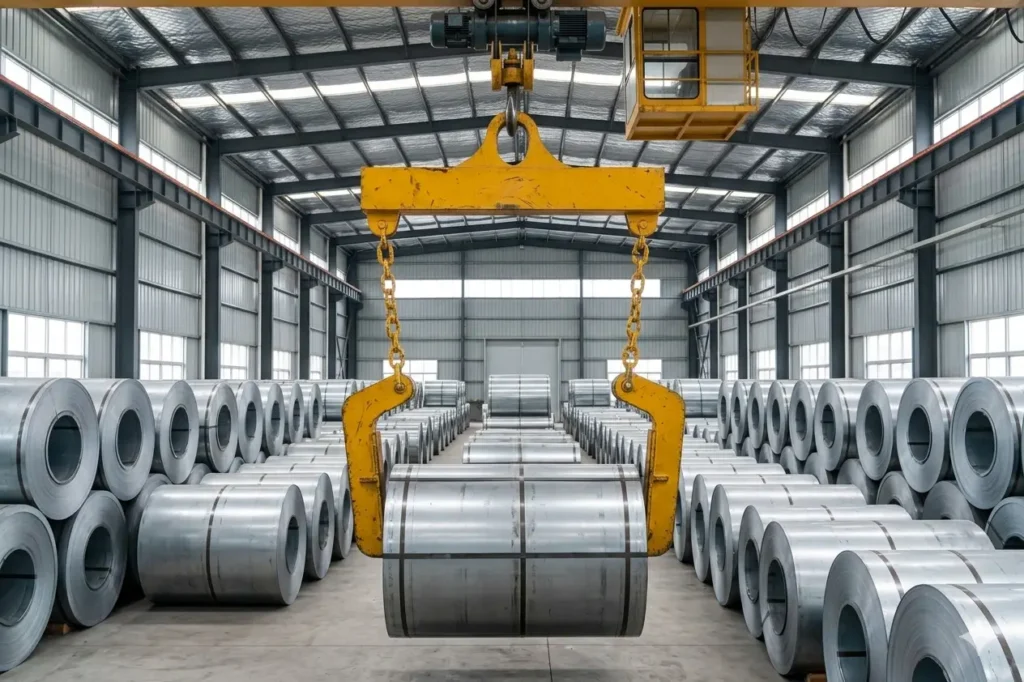
C hooks are commonly chosen for moving hot-rolled coils and cold-rolled coils in steel mills and coil processing centers. They allow quick transfer between production lines, storage areas, and transport vehicles. The C shape supports the coil from inside the eye to prevent slipping.
In aluminum and copper plants, C hooks lift aluminum coil and copper coil. The smooth contact surface helps protect soft materials from scratches or dents during handling.
C hooks simplify loading long steel pipes and flat steel slabs into containers or onto trucks. They are often used at warehouses and logistics yards for safe container loading and unloading.
C hooks work well in the packaging industry. Fork-style and narrow coil versions are popular for handling multiple paper rolls or wire reels side by side, even in limited space.
C hooks support transport, stacking, storage, and loading/unloading operations with overhead cranes and gantry systems across metallurgical plants.
| Type | Best For | Main Structure | Typical Advantage |
|---|---|---|---|
| Small | Standard steel coils | Box-type + counterweight | Lightweight and versatile |
| Double | Different coil widths | Adjustable rigging | Flexible for varying sizes |
| Rotary | Coils needing turning | Electric rotation | Easy repositioning |
| Narrow Coil | Small tonnage 1-3 tons | Lightweight box-type | Quick install for light coils |
| Fork | Two coils or wire rods | Box-type + counterweight | Efficient double handling |
Quality C hooks for crane share several useful features that matter for daily production.
These features make C hooks reliable for long-term use in busy workshops. They combine strength, balance, and ease of operation to help your team work more efficiently.

Our pre-sale team provides consultations, tailoring solutions to your needs and environment.
Offer customization options for lifting capacity, span and lifting height etc. to meet specific needs.

Real-Time Progress Updates: Weekly reports and PM communication.
Pre-Delivery Testing: 100% load & safety checks, detailed reports.

3-5 years warranty and free replacement for non-manufacturing defects.
24/7 online support and on-site assistance for crane issues.
A: There are several types jib crane, pillar mounted, wall mounted, wall travelling, portable type and articulating type. Your may tell us your working condition, lifting material, arm length and lifting height. We could offer you a satisfying solution to meet your needs.
A: The cantilever length needs to be determined based on the layout of work space and lifting range (e.g. a long and narrow workshop may require a 10-meter cantilever jib crane).
Insufficient rotation radius may lead to limited operation, and needs to be selected in combination with on-site measurement data.
Our gantry cranes support global voltage standards to ensure seamless operation worldwide. Solve any concerns you have about voltage.
Large gantry cranes are typically shipped overseas through modular disassembly, where the crane is broken down into major components (beams, legs, hoists) for containerized transport. For mega-cranes, we use specialized heavy-lift vessels equipped with reinforced decks, and critical parts are protected with anti-corrosion coatings during transit.
Yes, our gantry cranes have participated in large-scale bridge construction projects and railroad construction in Brazil, Pakistan, Indonesia, Malaysia, Egypt, and other countries, in which we have played a particularly key role and contributed to these construction projects!


Gantry cranes are important lifting equipment in modern industry and logistics. They are widely used in ports, railways, construction sites, and other places because of their stable structure, wide operating range, and strong carrying capacity. Different types of gantry cranes have their own characteristics in design and application, which can meet diverse lifting needs. If you don’t know which gantry crane is suitable for your use scenario, this article will systematically introduce different types of gantry cranes and their characteristics to help you understand the selection and application scenarios of this key equipment. What Is A Gantry Crane? A Gantry crane gantry frame structure consists of a main beam across the horizontal direction, vertically supported legs on both sides, and other structures such as the lifting system and cab. Its legs and main beam form a solid portal frame structure, so it is called a gantry bridge crane. What Is A Gantry Crane Used For? Gantry cranes are mainly used in harbor container handling, large-scale material handling, hydropower engineering, railroad manufacturing, and other projects, with a variety of functions, which can effectively complete…
In the world of material handling and heavy lifting, gantry cranes and bridge cranes are two of the most widely used and popular types of lifting machines. Although both excel in accurately moving large loads, their unique shapes and applications are somewhat different. This article takes a deep dive into the differences between the two types of cranes to help you determine and familiarize yourself with which type is best for your industrial needs. Structural Differences between Bridge Crane and Gantry Crane. When choosing a crane, it’s crucial to understand the structural differences between bridge cranes and gantry cranes. Although both types of cranes handle or move heavy loads, their structures and support mechanisms are very different. The structural differences between bridge cranes and gantry cranes will be explained in detail next: Bridge Crane: Bridge cranes are mainly composed of main beams, end beams, lifting trolleys or electric hoists, hoisting mechanisms, and other structures. Because its two ends are located in the concrete column or metal support, the shape is like a bridge, so it is called an overhead Travelling crane.…
In modern industrial production and large-scale engineering construction, the overhead crane, the core equipment for material handling, with its high efficiency and stable performance, has become the preferred choice for workshops, warehouses, etc. As we all know, the overhead crane is assembled by various parts, which also facilitates its transportation from production to the use of the site and the later maintenance and repair. This article will help you understand the core Overhead Crane Parts, analyze their structural characteristics, functional principles, to help you gain a more comprehensive understanding of the overhead crane and its components. Overhead Crane Parts In modern industrial production and large-scale engineering construction, the overhead crane, the core equipment for material handling, with its high efficiency and stable performance, has become the preferred choice for workshops, warehouses, etc. As we all know, the overhead crane is assembled by various parts, which also facilitates its transportation from production to the use of the site and the later maintenance and repair. This article will help you understand the core Overhead Crane Parts, analyze their structural characteristics, functional principles, to help you…
A gantry crane is a large lifting equipment. It uses mechanical and electrical coordination to move goods from point A to point B. With high load capacity and space adaptability, it has become the first choice for many outdoor handling and lifting work. This article will systematically explain to you how does a gantry crane work and their application scenarios, helping you to become familiar with this large lifting equipment so that you can make a choice. What Is A Gantry Crane? Gantry cranes are composed of two vertical columns and a horizontal main beam connected at the top, forming a movable gantry frame. Its distinctive feature is that it has a structural frame similar to the “gate” shape. Therefore, it is called a gantry crane. How Does A Gantry Crane Work The main structure of a gantry crane consists of a top main beam across the working area and two outriggers, which are movable or fixed along the ground track. When working, the motor drives the lifting mechanism to vertically lift the hook or grabber to lift the goods. The trolley…
What You Need to Know Before You Choose Choosing the wrong overhead crane creates problems that show up long after installation — in downtime, maintenance costs, and operational limitations. Overhead cranes are among the most widely used lifting systems in industrial facilities worldwide. They mount horizontally above the working area and move heavy loads accurately from point A to point B across the full floor coverage of a bay. But the different types of overhead cranes serve genuinely different purposes. A unit designed for a light-duty repair workshop is not the same machine as one built for a steel mill running three shifts. This guide covers what each type is, where it works best, what it’s made of, and what it typically costs — based entirely on the actual product range available from Voitto Crane. What Is an Overhead Crane? An overhead crane is a lifting system mounted horizontally above a workshop, production line, or warehouse. It moves heavy objects stably and precisely across the full working area below. The structure consists of one or two main girders, two end…
When to do overhead crane maintenance? This is a particularly important topic. Among them, the stable operation of the bridge crane is certainly important, but more important is the daily overhead crane maintenance and inspection work to ensure the safety of the operators and people around the equipment. Next, this article will help you understand what the daily overhead crane maintenance and inspection involve. If you don’t know how to maintain an overhead crane, then this article will be your ideal guide. What Is An Overhead Crane? The overhead crane is mainly composed of the main beam, end beam, lifting trolley or electric hoist, electrical system and other main structures. Because its two ends are located in the concrete column or metal support, the shape is like a bridge, so it is called an overhead Travelling crane. Mainly used in production workshops, factories, construction sites, petrochemicals, warehousing and logistics, etc. When To Do Overhead Crane Maintenance? While maintaining efficient operation, overhead cranes must also ensure the safety of operators and people around the equipment. Therefore, daily inspections and regular maintenance…

 English English
  Español
 Português
 العربية
 Français
 Русский