
Missing a single inspection step on an RTG crane can turn a minor issue into a full equipment shutdown. For terminal maintenance teams managing high-cycle operations, a reliable RTG crane inspection checklist is not a formality — it is a frontline tool for protecting equipment, people, and productivity.
This guide breaks down exactly what needs to be inspected, at what frequency, and what warning signs to watch for. Whether you are standardizing your existing process or building one from scratch, this checklist framework gives you a clear, practical starting point.
- 1 Why a Structured Inspection Checklist Makes a Difference
- 2 RTG Crane Inspection Checklist – Daily Pre-Shift
- 3 Weekly Inspection Checklist
- 4 Monthly Inspection Checklist
- 5 Quarterly and Annual Inspection Checklist
- 6 How to Implement This Checklist in Your Terminal
- 7 Summary
- 8 FAQ
- 9 RTG Crane Inspection Checklist PDF Download
Why a Structured Inspection Checklist Makes a Difference
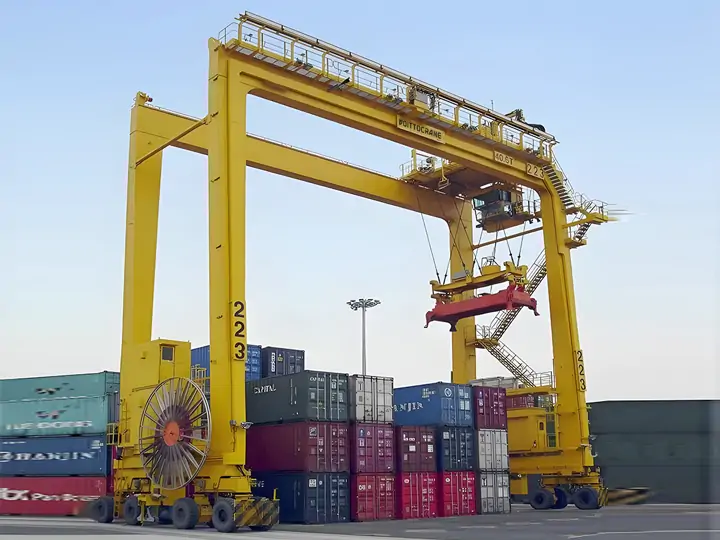

From Guesswork to Consistency
Without a written checklist, inspection quality depends entirely on individual memory and experience. One operator may check tyre pressure and skip the cable reel. Another may focus on the spreader and overlook brake condition. The result is uneven coverage and missed faults.
A structured checklist removes that variability. Every operator, every shift, covers the same ground in the same order. Issues get caught earlier. Repair costs stay lower. Downtime becomes more predictable and less frequent.
Compliance and Liability Protection
Inspection records are not just useful internally — they are often required. Port authorities, insurance providers, and certification bodies may request documented evidence of routine inspections. Standards such as EN 13001 and ISO 9001 expect traceable maintenance and inspection records as part of a quality management system.
A signed, dated checklist for each inspection creates that paper trail. It demonstrates due diligence and protects the terminal in the event of an incident or audit.
RTG Crane Inspection Checklist – Daily Pre-Shift
Operator Walkround (Before Every Shift)
The daily pre-shift check is performed by RTG crane operator before operation begins. It should take no more than 15–20 minutes and focuses on visible, functional, and safety-critical items.
Tyre and Travel System
| Item | Check |
|---|---|
| Tyre pressure (all wheels) | Within OEM-specified range |
| Tyre surface condition | No cuts, bulges, or abnormal wear |
| Drive wheel visual | No visible damage or debris lodged |
| Travel rail surface | Clear of obstacles and debris |
Spreader and Hoist
| Item | Check |
|---|---|
| Twist lock function | All four engage and disengage correctly |
| Flipper operation | Opens and closes fully |
| Telescoping function | Extends and retracts smoothly |
| Hoist wire rope | No visible broken wires or kinking |
| Hook and headblock | No deformation, pins secured |
Electrical and Controls
| Item | Check |
|---|---|
| Trailing cable / cable reel | No visible abrasion, connector intact |
| Operator cabin controls | All levers and buttons respond correctly |
| Warning lights and alarms | Function on startup self-test |
| Emergency stop buttons | Test at least one per shift |
Brakes and Safety Devices
| Item | Check |
|---|---|
| Travel brake | Holds position when applied |
| Hoist brake | Load does not drift on hold |
| Anti-collision system | Active and displaying correctly |
| Anemometer (wind sensor) | Reading present and plausible |
If any item fails or shows an abnormal condition, the operator must report it immediately and not operate RTG crane until the issue is assessed by a maintenance technician.
Weekly Inspection Checklist
Maintenance Team Checks
Weekly inspections go deeper than the operator walkround. A maintenance technician performs these checks with RTG crane stationary and, where required, de-energized following lockout/tagout (LOTO) procedures.
Mechanical Components
- Wire rope: measure diameter at multiple points, check for broken wires per lay length per ISO 4309
- Sheaves and drums: inspect for groove wear, flange condition, and rope seating
- Gearbox: check for oil leaks around seals and breather vents
- Slewing ring (if applicable): check for play, lubricate per schedule
- Structural bolts and fasteners: torque check on high-load connection points
Hydraulic System
- Fluid level in hydraulic tank
- Visual inspection of all hoses for cracking, chafing, or wet spots
- Cylinder rod condition: check for scoring or seal leaks
- Filter condition indicator: replace if at limit
Electrical System
- Control panel enclosures: check seals and gaskets for moisture ingress
- Terminal block connections: tighten any loose terminals
- VFD cooling fans: confirm operation and clear any filter blockage
- Limit switches: test travel and hoist limits for correct function
Tyre and Undercarriage
- Tread depth measurement on all tyres
- Check tyre sidewalls for cracking or bulging
- Wheel bearing condition: listen for abnormal noise during slow travel test
- Tyre pressure log: compare against previous week’s readings
Monthly Inspection Checklist
In-Depth System Review
Monthly inspections expand on weekly checks and include items that do not need attention every week but require regular oversight to avoid degradation.
Structural Assessment
- Gantry leg lower sections: inspect welds for cracks or corrosion, especially at ground level
- Trolley rail joints: check alignment and wear, measure rail head width at key points
- End buffers and travel stops: confirm secure attachment and cushion condition
- Rope anchor points: inspect for deformation or fatigue cracking
Lubrication Audit
All lubrication points should be checked monthly against RTG crane’s lubrication schedule. Key areas include:
| Component | Lubricant Type | Frequency |
|---|---|---|
| Wire rope | Rope dressing / penetrating oil | Weekly–Monthly (per OEM) |
| Sheave pins and bushings | Grease (per OEM spec) | Monthly |
| Slewing ring gear | Open gear grease | Monthly |
| Travel wheel bearings | Grease (sealed or open) | Monthly |
| Gearbox (all drives) | Gear oil — check level | Monthly |
Using incorrect lubricant grades is a common maintenance error. Always follow the OEM lubrication chart, which specifies grade, quantity, and application method for each point.
Safety System Verification
- Load cell calibration check: verify displayed load matches test weight
- Anti-sway system function test
- Camera systems and operator displays: confirm image clarity
- Fire extinguisher condition and expiry date in operator cabin
- Safety signage: legible and correctly positioned
Quarterly and Annual Inspection Checklist
Planned Overhaul Scope
Quarterly and annual inspections are typically carried out by a combination of in-house engineers and OEM-certified specialists. These checks assess components that cannot be evaluated during routine inspections without disassembly or specialist instruments.
Quarterly
- Full wire rope replacement assessment against ISO 4309 discard criteria
- Hydraulic oil sampling and laboratory analysis
- Structural inspection by qualified engineer: all welds, high-stress zones
- Electrical insulation resistance test on main motors
- Brake pad thickness measurement on all travel and hoist brakes
Annual
- Gearbox oil drain and refill (all drives)
- Full brake system overhaul assessment
- Load test to rated capacity per applicable standard (EN 13001 / local authority requirement)
- Complete electrical audit: panel condition, cable condition, earthing system
- OEM software and firmware update check for PLC and drive systems
- Full inspection report signed by competent person, filed for compliance records

Alan
Crane Solutions Specialist · Voitto Crane
Specialized in Overhead Crane, Gantry Crane, Jib Crane, Port Crane & EOT Crane export solutions. 10+ years helping global clients with pre-sales consultation, capacity selection and site-specific configurations.
How to Implement This Checklist in Your Terminal
Choose the Right Format
Paper checklists are simple and work well for smaller fleets. Digital checklists — via tablet or mobile app — allow real-time data capture, automatic timestamping, and instant escalation of flagged items. For terminals with 10 or more RTG units, a digital system significantly reduces administrative burden and improves traceability.
Whichever format you use, each completed checklist should capture: crane ID, date and shift, inspector name, findings for each item, and sign-off signature.
Train Operators and Technicians Together
A checklist is only as good as the people using it. Operators need to understand what they are looking for, not just tick boxes. A short, practical training session — covering what each item looks like when it passes and what a failure looks like — improves checklist quality significantly.
Pair new operators with experienced colleagues for the first two weeks of checklist use. This builds confidence and ensures the standard is applied consistently across shifts.
Review and Update Regularly
Equipment condition changes over time. A checklist written at RTG crane commissioning may not capture issues that emerge after five years of operation. Review your checklist at least once per year, incorporating lessons from any fault history, near-misses, or OEM service bulletins.
Summary
A well-designed RTG crane inspection checklist covers four levels: daily operator checks, weekly maintenance team inspections, monthly in-depth reviews, and annual overhaul assessments. Each level builds on the last. Together, they create a complete picture of RTG rubber tyred gantry crane health and give your team the information needed to act before failures occur.
Start with the daily checklist, get operators using it consistently, then layer in the weekly and monthly structures. Document everything. Review annually. This approach will reduce unplanned downtime, extend RTG crane service life, and keep your terminal compliant with international safety standards.
FAQ
Q1: What is the most important item on a daily RTG crane inspection checklist?
Emergency stop function and brake condition are the two most safety-critical items. If an e-stop fails or a hoist brake does not hold under load, the risk to personnel and cargo is immediate. These must be tested at the start of every shift without exception. Tyre pressure and spreader function follow closely — both affect operational safety directly and are quick to check.
Q2: How long should a daily pre-shift RTG crane inspection take?
A thorough daily pre-shift inspection should take between 15 and 20 minutes. If it is taking less than 10 minutes, the checklist is likely not being followed completely. Rushing pre-shift checks is one of the most common reasons minor faults are missed until they develop into breakdowns. Build adequate time into shift handover schedules so operators are not pressured to skip steps.
Q3: Who is responsible for RTG crane inspections — the operator or the maintenance team?
Both. Operators are responsible for daily pre-shift checks and for reporting any abnormal observations during operation. Maintenance technicians are responsible for weekly, monthly, and periodic deeper inspections. Clear role definition prevents the assumption that “someone else will check it.” Document who is responsible for each checklist level and ensure both teams are trained accordingly.
Q4: Should RTG crane inspection checklist be digital or paper-based?
Both can work effectively. Paper is simple and requires no technology investment. Digital checklists offer advantages for larger fleets: automatic timestamps, photo capture of defects, instant escalation alerts, and searchable records for audits. If your terminal manages more than five to ten RTG units, a digital inspection system is worth evaluating. The priority is consistent use of whichever format you choose.
Q5: How do inspection records support compliance with RTG crane safety standards?
Standards such as EN 13001 and ISO 9001 require documented evidence that equipment is maintained and inspected to a defined schedule. Inspection records demonstrate that your terminal is meeting this obligation. In the event of an incident, complete records show that due diligence was exercised. For terminals seeking or renewing port operator certification, inspection documentation is typically a mandatory submission item.
RTG Crane Inspection Checklist PDF Download
To make your inspection process easier, we’ve put together a ready-to-use RTG Crane Inspection Checklist PDF — covering daily, weekly, monthly, and quarterly checks in one clean, printable format. Each item includes clear acceptance criteria so your team knows exactly what to look for. Download it, print it, and keep it on RTG crane. No setup required.
Loading Viewer...


 English
  Español
  Português
  العربية
  Français
  Русский