blog

Grue RTG contre porte-conteneurs cavalier
15 juillet 2026

Grue RTG vs porte-conteneurs cavalier : un guide comparatif complet

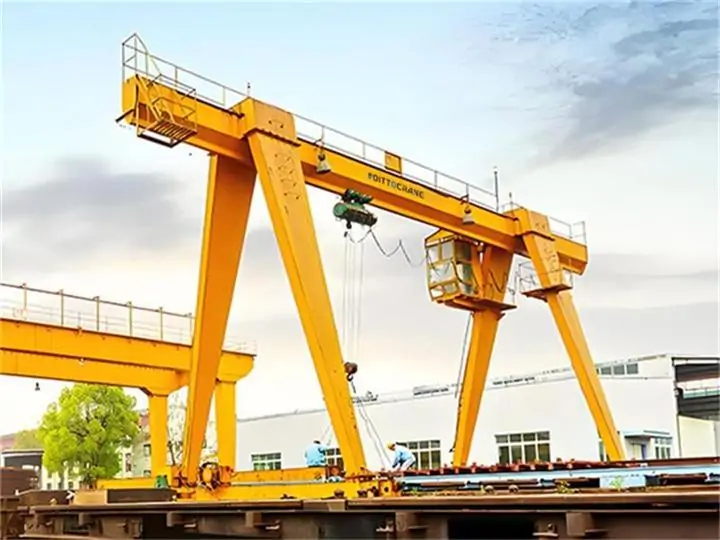
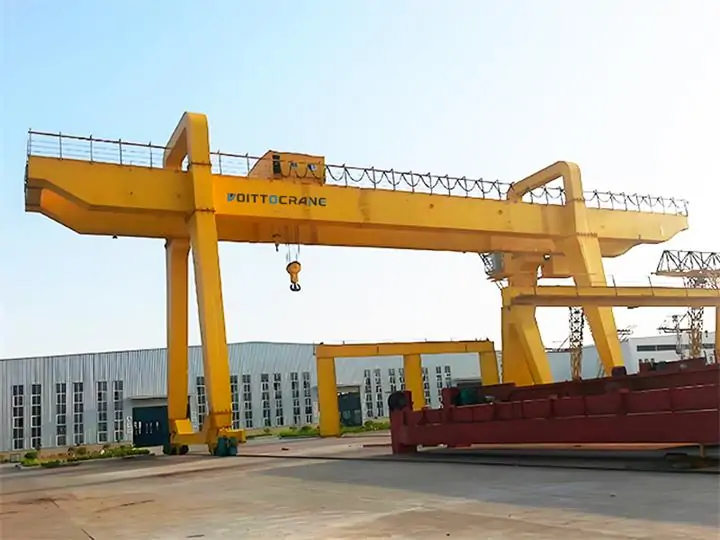
Lors du choix entre un portique RTG et un cavalier porte-conteneurs, les acheteurs doivent se concentrer sur les différences de caractéristiques fonctionnelles de ces deux types d'équipements plutôt que sur le débit. Les portiques sur pneus RTG sont adaptés aux terminaux à conteneurs à forte densité d'empilage, tandis que les cavaliers porte-conteneurs conviennent aux terminaux nécessitant un accès permanent à n'importe quel conteneur. Ce guide vise à aider les décideurs à déterminer le système de levage permettant de minimiser le nombre total de mouvements de conteneurs par heure, compte tenu du taux d'empilage réel du terminal et des flux d'arrivée des camions. L'objectif est d'aider les exploitants de terminaux à sélectionner l'équipement de manutention de conteneurs le plus adapté. VOITTO Crane s'engage à fournir aux utilisateurs des conseils précieux. Qu'est-ce qu'un portique RTG ? Un RTG (portique sur pneus) est un équipement de levage spécialisé, conçu spécifiquement pour les opérations d'empilage de conteneurs dans les parcs à conteneurs. Avec une capacité de levage allant jusqu'à 70 tonnes et une portée de 23,47 à 26 mètres, il peut empiler les conteneurs sur six niveaux, voire plus. Il utilise des pneus comme moyen de déplacement, ce qui élimine…
LIRE LA SUITE
grue à portique à vendre
10 juillet 2026

Grues pour l'industrie du béton préfabriqué : sélection, spécifications et installation

Pour les usines de préfabrication en béton, trois critères essentiels doivent être pris en compte par la plupart des fournisseurs : la classe de service, la configuration à deux zones et la compatibilité avec les crochets de levage. Un pont roulant bipoutre couvrant une zone de coulée coûte généralement entre $28 000 et $95 000, tandis qu’un portique bipoutre extérieur pour les opérations de chargement et de manutention se situe généralement entre $18 000 et $120 000. Le prix final dépend bien plus de la portée, de la classe de service et des spécifications de commande que du tonnage brut. Les usines de préfabrication sont soumises à des contraintes particulièrement importantes : des charges lourdes (poutres et longerons pesant couramment entre 20 et 60 tonnes), des formes complexes (longues, asymétriques, avec des dispositifs de levage spécifiques à des points fixes) et des manutentions répétées à haute fréquence tout au long d’un poste de travail. Une grue dimensionnée uniquement en fonction de sa capacité nominale, mais spécifiée dans une classe de service inadaptée, atteindra son seuil de maintenance en un temps record. Dans le secteur du préfabrication, les arrêts imprévus de grue entraînent directement des retards de démoulage et des non-respects des délais de livraison. Ce guide accompagne les responsables des achats et les ingénieurs d'équipement dans le choix du type de grue en fonction de la zone de production, en présentant les principaux paramètres qui influencent le coût et la fiabilité, les exigences de certification pour le dédouanement à l'importation, et bien plus encore…

LIRE LA SUITE
Poste de travail rigide autoportant Pont roulant bipoutre
14 juillet 2026

Système de pont roulant léger pour postes de travail : Guide du pont roulant autoportant

Un système de pont roulant léger est une solution de levage modulaire conçue pour la manutention de matériaux au niveau des postes de travail. D'une capacité typique de 0,25 à 2 tonnes et d'une portée maximale de 12,5 mètres, il est conçu pour dégager l'espace au sol et déplacer les charges en douceur, sans les contraintes structurelles d'un pont roulant classique. La solution la plus pratique pour les installations qui ne peuvent ou ne souhaitent pas modifier leur plafond est le pont roulant autoportant : un système autoportant sur rails en aluminium, boulonné au sol et ne nécessitant aucun support de la structure du bâtiment. Le prix direct usine d'un système complet de pont roulant autoportant se situe généralement entre $4 000 et plus de $20 000, selon la portée, la capacité et la configuration du palan. Si votre installation présente des plafonds fragiles, des espaces loués ou une configuration sujette à des modifications, il s'agit presque certainement de la solution à privilégier en premier lieu. Ce guide explique le fonctionnement des ponts roulants autoportants, leurs avantages par rapport aux solutions suspendues au plafond, leurs caractéristiques techniques et les documents de certification à demander avant de passer une commande à l'importation. Guide de référence rapide : Spécifications des ponts roulants autoportants Paramètre Spécification Capacité de levage : 0,25 – 2 tonnes Portée : 1 – 12,5 m Hauteur de levage : 3,7 – 13,5 m Rail…

LIRE LA SUITE
Grue portique monopoutre
02 July 2026

Grues pour l'industrie manufacturière : Choisir la grue adaptée à sa ligne de production

For most manufacturing plants, the fastest way to narrow down crane options is to work backward from what’s happening on the line — not from a catalog of crane types. A single-girder overhead crane rated for 5–10 tons typically runs $8,000–$25,000, while a double-girder crane in the 20–50 ton range moves into $30,000–$120,000+ depending on span and duty class. The harder problem isn’t the price — it’s that most buying guides list crane types and specs without connecting them to what’s actually happening at each stage of a production line, leaving procurement teams to guess whether a jib crane or an overhead system fits their assembly bay. This guide flips that order. It matches cranes for manufacturing industry buyers to production line stages — raw material intake, assembly, machining, and packaging — then covers the parameters and certifications that actually affect your purchase decision. Quick Reference: Cranes for Manufacturing Industry The table below compares the crane types most commonly used across manufacturing production lines, before we get into which one fits which stage of your process. Crane Type Typical Capacity…

LIRE LA SUITE
grue suspendue antidéflagrante lb
4 juillet 2026

Pont roulant antidéflagrant : spécifications, certification ATEX et guide de sélection (2026)

Explosion-proof overhead cranes from Voitto start at $4,000 for a 1-ton LB single-girder unit and scale to $533,250 for a 320-ton QB double-girder configuration — a range wide enough that choosing the wrong series on the first RFQ is both common and expensive. If your facility processes petroleum, pharmaceutical solvents, coal dust, or paint-line vapors, a standard EOT crane is a compliance failure waiting to happen. This guide uses Voitto’s actual product data to show you exactly which series fits your hazard zone, how to read an Ex-grade nameplate, what documents to demand before signing a PO, and where the hidden cost traps sit. The single most frequent procurement mistake in Ex crane buying is treating explosion protection as a component-level upgrade — fitting an Ex-rated hoist onto a standard crane frame and assuming zone compliance. In a Zone 1 environment, that assumption fails because ignition risk lives in the whole electrical system: a non-Ex limit switch tripping under load, a standard pendant arcing on contact, or an unsealed cable entry. This article addresses that gap directly. By the end,…

LIRE LA SUITE
Diagramme de la hauteur de levage et de la portée du pont roulant
10 juillet 2026

Portée et hauteur de levage des ponts roulants : Guide des paramètres de conception d’agencement d’usine

Overhead crane span and lifting height are the two layout parameters that determine everything else in your factory crane design. Span is the horizontal distance between the centerlines of the runway rails; lifting height (also called hook travel) is the vertical distance the hook can rise from its lowest to its highest position. Get either wrong at the design stage and you will either waste structural budget on over-specified steel or — more expensively — discover on installation day that your loads cannot clear the machinery below the hook. Factory planners and equipment managers face the same two concrete questions: What span do I specify, given my building column spacing? And what lifting height do I need, given my building’s usable headroom? Both calculations look simple on the surface, but each hides a stack of deductions — end-beam protrusions, hoist body height, hook deadweight travel distance, top safety clearance — that add up to 700–1,000 mm or more of “lost” headroom that generic articles rarely quantify. This guide works through both calculations step by step, with real numbers, then shows…

LIRE LA SUITE
Application du pont roulant à double poutre QD (1)
02 July 2026

Double Girder Overhead Crane Buyer’s Guide: Specs, Pricing & Selection (2026)

A double girder overhead crane typically costs between $7,900 and $1,772,500, depending on capacity, span, configuration, and duty class. Light-duty units — a 5-ton or 10-ton standard double girder — start at $7,900 and $8,500 respectively. Mid-range QD hook configurations covering 5–50 tons run $23,000–$149,000. Heavy-duty units above 100 tons start at $200,000, with the largest 320–800-ton configurations reaching $1,772,500 (all figures are ex-works market reference prices from Voitto Crane, excluding shipping and installation). If your operation regularly lifts loads above 20 tons, requires spans beyond 25 meters, or needs the hook to reach within 300–600 mm of the building end wall, a double girder crane is almost certainly the right direction. Below that threshold, a single girder crane may serve you more economically. This guide walks you through the complete decision process: what separates a double girder design from the alternatives, how specs translate into real prices, what certifications your import order must carry, and the five variables you need to confirm before sending a single RFQ. Quick Reference: Double Girder vs. Single Girder Overhead Crane Parameter Double Girder…

LIRE LA SUITE
Grue suspendue européenne HD-avancée.
26 June 2026

Pont roulant à faible hauteur sous plafond : solutions de conception pour espaces restreints

If your facility has a ceiling height under 6 meters — or existing pipework, ductwork, and structural ties that eat into the space between the roof beam and the floor — a standard overhead crane will likely leave you with insufficient hook travel to do useful work. A low headroom crane solves this by using a European-style hoist that sits beside or within the bridge beam rather than hanging below it, typically recovering 400–700 mm of vertical space compared to a conventional design. For most tight-space applications, a European-style single girder crane covers 1–12.5 tons, while European double girder configurations extend that range significantly — with market reference prices from $15,000 to $180,000+ depending on capacity, span, and configuration. The decision most buyers get wrong isn’t choosing between low headroom and standard — it’s assuming that the “minimum headroom” figure in a supplier’s datasheet represents their actual usable hook height. It doesn’t. This guide explains the engineering difference between European-style and conventional cranes, gives you a calculation framework to determine real hook height in your building, and walks through the…

LIRE LA SUITE
Grue portique bipoutre
24 juin 2026

Pont roulant pour l'industrie minière : Guide complet de sélection pour environnements difficiles

Choosing the wrong overhead crane for a mining facility doesn’t just slow production — it creates safety failures that shut operations down entirely. A mining industry overhead crane must do something most industrial cranes don’t: sustain rated performance in environments where abrasive dust, corrosive moisture, explosive gases, and continuous heavy cycles attack every component simultaneously. For most mineral processing, smelting, and ore-handling applications, a double girder overhead crane in duty class M5–M7 is the starting point, not the ceiling — and prices for mine-grade units typically range from $25,000 to $350,000+ depending on capacity, span, and environmental protection level. This guide is written for procurement managers and plant engineers evaluating overhead crane options for mining facilities. You’ll find a side-by-side comparison of crane configurations, a structured selection framework for harsh conditions, the certifications suppliers must prove before shipment, and the procurement mistakes that most buyers only learn after the first breakdown. By the end, you’ll be able to write a technically grounded specification, ask the right questions in supplier negotiations, and avoid the hidden cost traps that turn a competitive…

LIRE LA SUITE
élévateur de yacht
24 juin 2026

Ascenseur pour yachts : définition, prix et guide d’achat

A yacht travel lift is a mobile gantry crane system. This equipment is specifically designed to lift boats, yachts, and vessels out of the water for maintenance, repair, or storage. Yacht handling equipment combines flexibility with precise load control capabilities, enabling it to operate in confined and narrow spaces, as well as within shipyards and yacht marinas. In the following sections, this article will provide a detailed explanation of the definition and operating principles of mobile yacht cranes, analyze the factors that influence pricing, and list the key considerations you should keep in mind before making a purchase. What is a Yacht Travel Lift? A boat travel lift is a specialized vessel handling device. This machinery is capable of lifting a vessel vertically out of the water and transporting the yacht horizontally to any location. The system consists of four main components: a vertical lifting column, a horizontal beam connecting the column, flexible nylon or rubber slings used to support the hull, and an electric trolley responsible for moving the vessel horizontally. VOITTO Crane, the manufacturer, provides customized solutions based…

LIRE LA SUITE
pont roulant de 3 tonnes
22 June 2026

Ponts roulants en Arabie saoudite : marché et fournisseurs

Sourcing an overhead crane in Saudi Arabia today means buying into a market worth roughly $54–67 million and projected to reach about $111 million by 2030 — and one that still runs largely on imports, with China supplying more than half of the Kingdom’s bridge- and gantry-crane purchases. For most workshop and light-industrial duty, a factory-direct overhead crane lands in a market reference range of $5,000–$150,000, with heavy process cranes climbing past $300,000. Those headline numbers are easy to find; what they don’t tell you is which supplier route, specification, and compliance path actually fit a Saudi site. If you’re a procurement manager or plant engineer specifying a crane for a facility in Riyadh, Jeddah, Dammam, or Jubail, the real friction isn’t price — it’s matching the machine to 50°C summers, coastal corrosion, the right duty class, and CE/FEM/ISO compliance. Get any of those wrong and a cheap crane becomes an expensive one stuck at customs or failing early on your project. This guide covers what’s driving demand, how the main crane types and price bands compare, the four supplier…

LIRE LA SUITE
grue antidéflagrante à faible hauteur sous plafond
18 juin 2026

Norme OSHA 1910.179 Pont roulant : Ce que tout propriétaire doit savoir

If you operate an overhead crane in a U.S. general industry facility, 29 CFR 1910.179 is not one standard among many — it is your primary federal compliance obligation. It covers overhead cranes, gantry cranes, semi-gantry cranes, cantilever gantry cranes, and storage bridge cranes. Miss the requirements and you face citations ranging from $16,131 per serious violation to $161,323 per willful violation (2024 OSHA penalty schedule, adjusted annually). Most facilities that receive crane citations are not running visibly unsafe equipment. They are facilities where someone assumed that one annual inspection was enough, where the maintenance team didn’t know the OEM manual carries the force of OSHA law, or where an electrician updated wiring without checking Subpart S conductor color codes. This article works through each of those gaps — what the standard actually requires, why violations cluster where they do, and what a defensible compliance program looks like in practice. One note on scope before going further: 1910.179 covers top-running overhead and gantry cranes. It does not cover underhung bridge cranes, monorail systems, construction cranes (those fall under 29 CFR…

LIRE LA SUITE
Haut de page