Types de plateformes élévatrices d'entrepôt
Les exigences en matière de hauteur de travail, de dimensions de plateforme, de capacité de charge et de maniabilité des plateformes élévatrices varient selon l'environnement d'entrepôt. Pour des applications telles que la maintenance des rayonnages grande hauteur, les interventions dans des allées étroites, l'entretien des équipements et la maintenance des entrepôts de grande envergure, VIOTTO propose une gamme de solutions de plateformes élévatrices, incluant des nacelles ciseaux, des nacelles à mât et des plateformes élévatrices automotrices. Nous proposons également des conceptions sur mesure, adaptées à vos conditions d'exploitation spécifiques, pour des travaux en hauteur plus sûrs, plus efficaces et plus stables dans divers environnements d'entreposage et de maintenance industrielle.
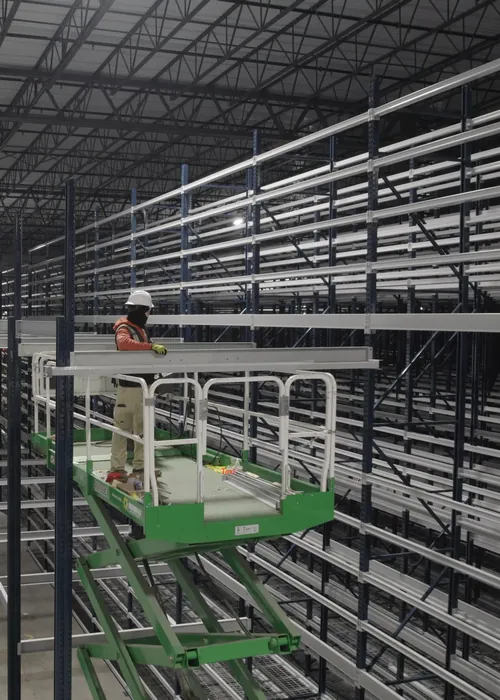
Plateforme élévatrice à ciseaux pour entrepôt
Conçue avec une large plateforme de travail et une capacité de charge élevée, elle convient aux opérations de levage stables et aux opérations de maintenance impliquant plusieurs personnes.
- Hauteur de travail : 6 à 18 m
- Capacité de charge : 300–1000 kg
- Dimensions de la plateforme : 1,8 × 0,9 m à 3,0 × 1,5 m
- Alimentation : Batterie / Secteur / Hydraulique
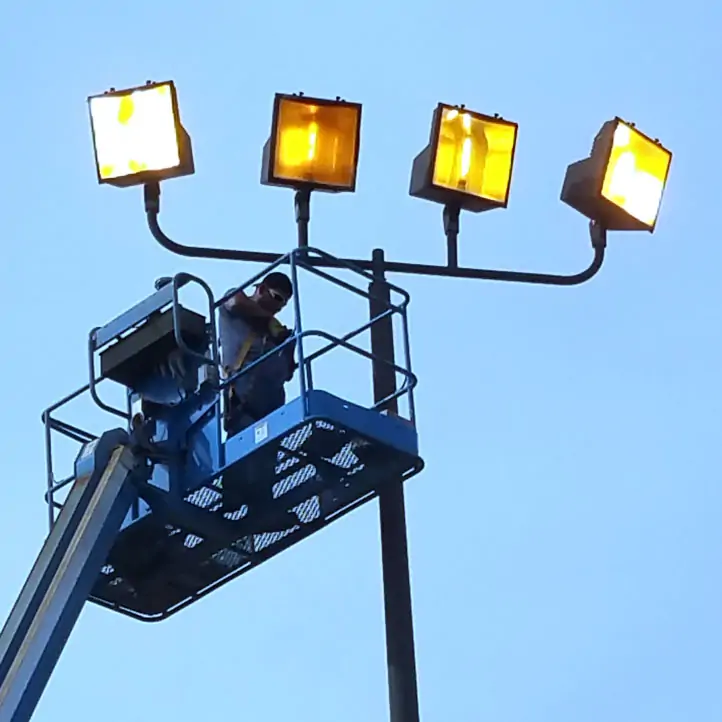
Applications : Convient pour la maintenance de l'éclairage des entrepôts, l'entretien des équipements, la réparation des plafonds et la maintenance des installations de grande surface.
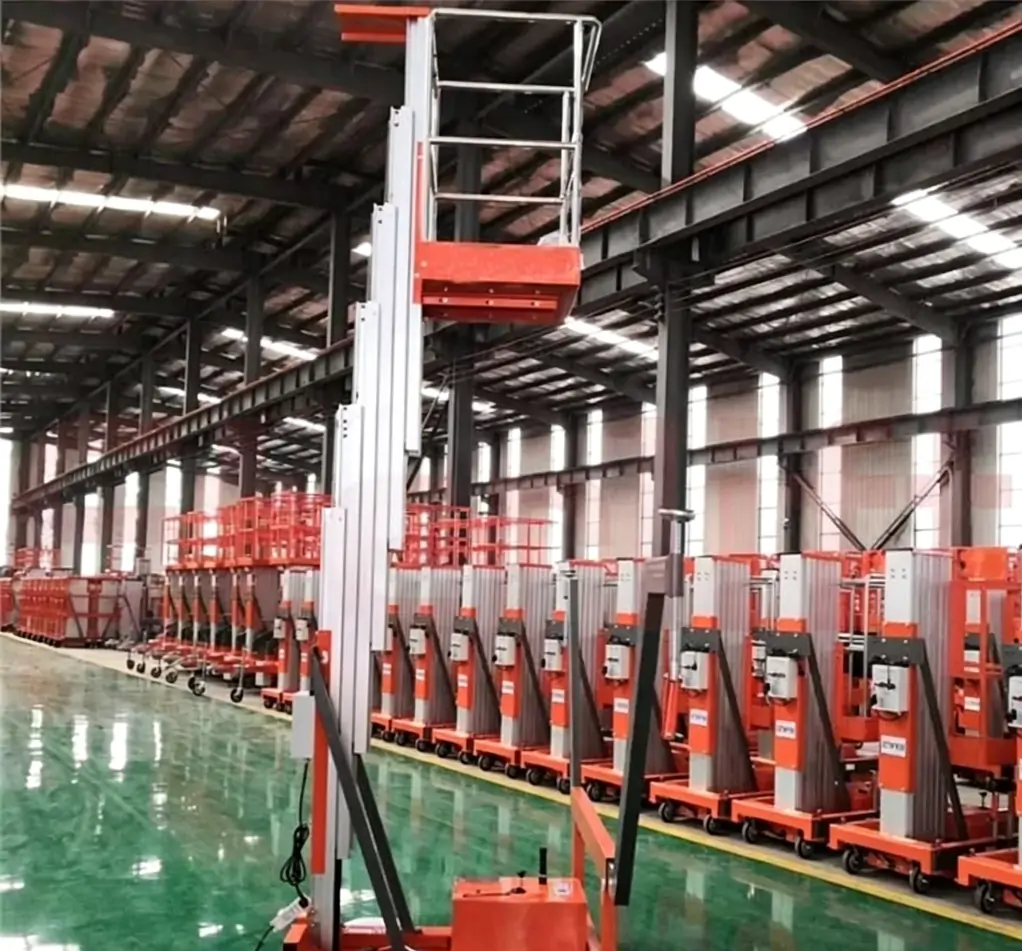
Ascenseur de maintenance d'entrepôt à mât unique
Doté d'une structure compacte et d'une conception légère, il est idéal pour les allées étroites et les travaux de maintenance intérieure effectués par un seul opérateur.
- Hauteur de travail : 6-12 m
- Capacité de charge : 100–150 kg
- Dimensions de la plateforme : 0,65 × 0,60 m
- Alimentation : secteur / batterie
Applications : Utilisé pour l'inspection des rayonnages, le remplacement de l'éclairage, le contrôle des stocks et la maintenance dans les espaces d'entrepôt restreints.
Plateforme élévatrice à double mât pour entrepôt
Offre une stabilité de levage accrue et une hauteur de travail plus importante tout en conservant un encombrement réduit.
- Hauteur de travail : 8-16 m
- Capacité de charge : 150–250 kg
- Dimensions de la plateforme : 1,2 × 0,6 m
- Alimentation : secteur / batterie
Applications : Convient aux travaux de plafonds d'entrepôt, à l'entretien des systèmes de chauffage, ventilation et climatisation, à l'installation d'équipements de sécurité et aux travaux de réparation en hauteur.
Plateforme élévatrice hydraulique automotrice pour entrepôt
Doté d'une capacité de conduite autonome pour un déplacement efficace et un fonctionnement continu dans de vastes zones d'entrepôt.
- Hauteur de travail : 8-14 m
- Capacité de charge : 230-450 kg
- Vitesse de déplacement : 3 à 5 km/h
- Type d'entraînement : Alimenté par batterie
Applications : Largement utilisé dans les centres logistiques, les entrepôts de distribution et les projets de maintenance nécessitant des déplacements fréquents.
Plateforme élévatrice électrique industrielle pour entrepôt
Sa conception alimentée par batterie offre un fonctionnement silencieux et des performances propres pour les environnements industriels intérieurs.
- Hauteur de travail : 6 à 16 m
- Capacité de charge : 200–500 kg
- Type d'alimentation : Batterie électrique
- Extension de plateforme : optionnelle
Applications : Idéal pour les usines, les entrepôts, les installations de stockage de détail et les opérations de maintenance industrielle en intérieur.
Avantages
Une plateforme élévatrice pour entrepôt offre une solution pratique et efficace pour les opérations de maintenance et d'exploitation en hauteur. Comparée aux échelles et échafaudages traditionnels, elle améliore la sécurité au travail, réduit les temps d'entretien et offre une plus grande flexibilité dans les entrepôts.
- Plateforme de travail sûre et stable : équipée de garde-corps, de systèmes de sécurité et de structures de levage stables pour des opérations en hauteur plus sûres.
- Opérations de maintenance efficaces : Permet un accès plus rapide aux zones de travail et améliore la productivité lors des tâches de maintenance.
- Flexibilité des mouvements et du fonctionnement : Plusieurs modèles sont disponibles pour les allées étroites, les grands espaces et différentes configurations d’entrepôt.
- Performances de levage hydrauliques fluides : Le système de levage hydraulique de la plateforme élévatrice d'entrepôt assure un levage stable et un fonctionnement fiable.
- Adapté à différentes hauteurs de travail : Disponible en différentes hauteurs de levage et capacités de charge pour répondre à divers besoins de maintenance.
- Réduction des coûts de main-d'œuvre et de maintenance : Diminue les efforts manuels et contribue à améliorer l'efficacité opérationnelle globale.
Applications courantes de maintenance d'entrepôt
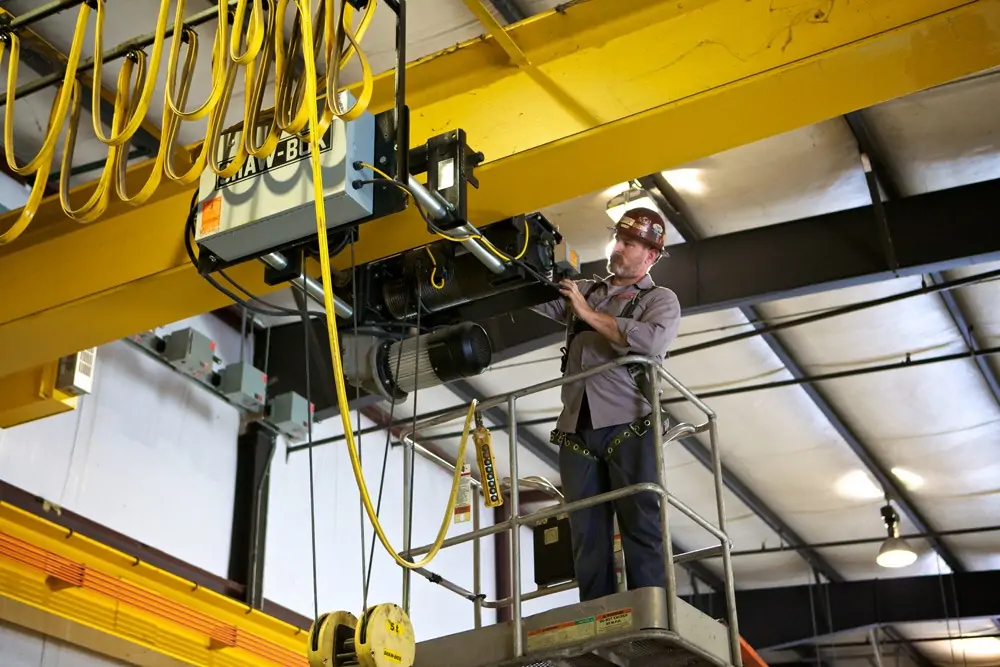
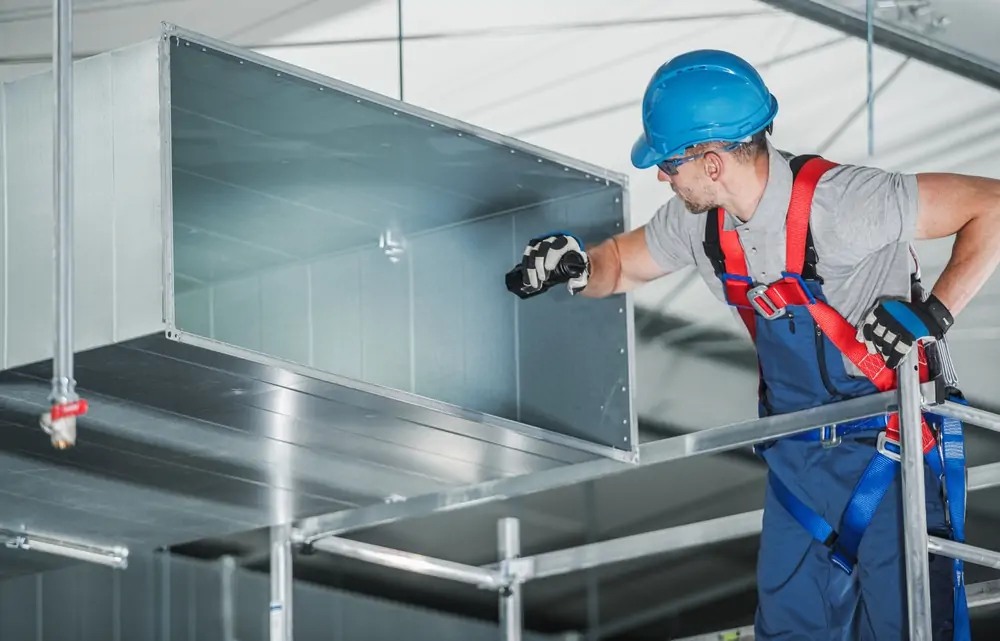
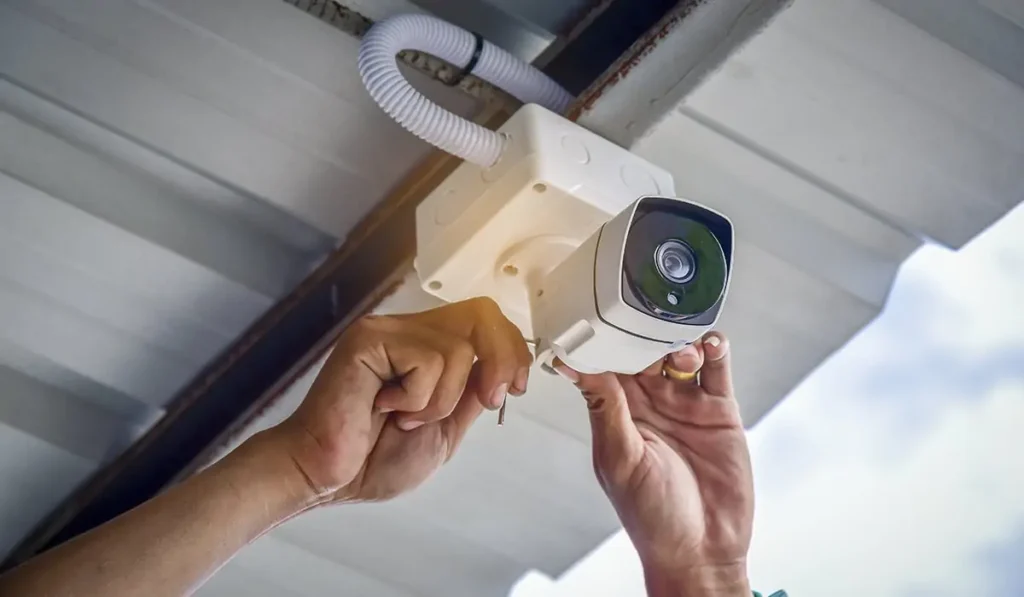
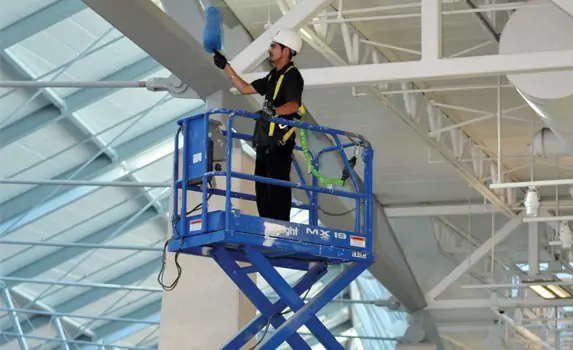
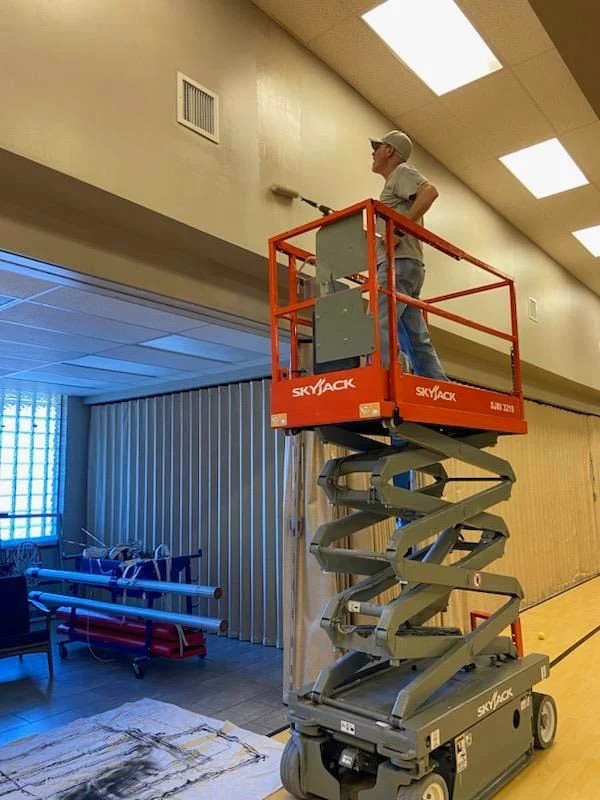
La plateforme élévatrice d'entrepôt est largement utilisée pour l'accès en hauteur, la maintenance, l'inspection et les travaux d'installation dans les entrepôts et les environnements industriels.
Comment choisir une plateforme élévatrice pour entrepôt
Le choix de la plateforme élévatrice adaptée à votre entrepôt dépend de votre environnement de travail, de vos besoins spécifiques et des exigences de sécurité. Une configuration appropriée garantit un fonctionnement plus sûr, une efficacité accrue et une durée de vie prolongée de l'équipement.
- Exigences relatives à la hauteur de travail : Déterminer la hauteur maximale nécessaire pour les tâches de maintenance telles que l’éclairage, les rayonnages ou les travaux au plafond.
- Capacité de charge : Choisissez-la en fonction du nombre d'opérateurs et d'outils nécessaires pendant l'opération.
- Utilisation intérieure ou extérieure : Choisissez un modèle électrique ou hydraulique selon que la plateforme est utilisée en intérieur ou dans des environnements mixtes.
- Dimensions de la plateforme : Assurez-vous que la plateforme offre suffisamment d'espace pour les opérateurs et les outils de maintenance.
- Type de mobilité : Choisissez entre un modèle stationnaire, à pousser ou autopropulsé en fonction de vos besoins en matière d'efficacité de travail.
- Système d'alimentation : Des systèmes de pont élévateur d'entrepôt alimentés par batterie, par courant alternatif ou hydrauliques peuvent être sélectionnés en fonction des conditions du site.
- Accessibilité des allées étroites : Pour les espaces d’entrepôt restreints, les modèles d’ascenseurs de maintenance compacts sont plus adaptés.
Choisir le bon élévateur de plateforme industriel pour entrepôt garantit un fonctionnement plus sûr, une productivité accrue et de meilleures performances à long terme pour les applications de maintenance d'entrepôt.
Dispositifs de sécurité pour les travaux d'entretien d'entrepôt
La sécurité est un critère primordial lors du choix d'une plateforme élévatrice pour les opérations de maintenance en entrepôt. Dans les entrepôts et les installations industrielles, les opérateurs travaillent fréquemment en hauteur, à proximité de rayonnages, de convoyeurs, de systèmes d'éclairage, d'équipements de climatisation et dans des allées étroites. Un système de levage stable, associé à des dispositifs de sécurité fiables, permet de réduire considérablement les risques opérationnels, les dommages matériels et les arrêts de production imprévus.
L'expérience pratique en matière de maintenance d'entrepôts montre que de nombreux accidents ne sont pas dus à une défaillance du système de levage lui-même, mais à une mauvaise utilisation, une surcharge de la plateforme, des surfaces glissantes, des sols irréguliers ou des situations d'urgence sans système de sécurité de secours. C'est pourquoi les plateformes élévatrices modernes utilisées pour la maintenance d'entrepôts doivent être équipées de multiples systèmes de protection actifs et passifs afin de garantir un fonctionnement stable et sûr dans différents environnements de travail.
Les plateformes élévatrices d'entrepôt VIOTTO sont conçues conformément aux normes de sécurité internationales telles que les exigences OSHA, la certification CE et les normes ANSI. Chaque plateforme est équipée de multiples dispositifs de sécurité permettant aux opérateurs d'effectuer les travaux de maintenance de manière plus sûre et plus efficace.
Pour plus de détails, veuillez consulter cet article : Comment utiliser en toute sécurité un pont élévateur à ciseaux avec plate-forme extensible ?
Pourquoi nous choisir ?
Nous proposons des solutions fiables de plateformes élévatrices pour entrepôts, conçues pour des opérations de maintenance sûres et efficaces. Axés sur la qualité, la personnalisation et la durabilité, nos équipements sont largement utilisés dans les centres logistiques, les entrepôts et les sites industriels.
- Solutions personnalisées : Nous proposons des configurations sur mesure pour différentes hauteurs de travail, capacités de charge et environnements opérationnels.
- Fabrication de haute qualité : Tous les produits de levage pour la maintenance d'entrepôt sont fabriqués avec un contrôle de qualité rigoureux et des matériaux industriels durables.
- Technologie hydraulique stable : Les systèmes de levage hydrauliques avancés des plateformes élévatrices d'entrepôt garantissent un levage fluide et une fiabilité opérationnelle optimale.
- Large gamme de produits : Plusieurs modèles disponibles, notamment des nacelles élévatrices à ciseaux, des nacelles à mât et des plateformes automotrices pour diverses applications.
- Normes de sécurité strictes : Équipé de systèmes de protection de sécurité pour garantir un fonctionnement en hauteur stable et sécurisé.
- Assistance technique professionnelle : Une équipe d'ingénieurs expérimentés vous accompagne de la sélection du produit au service après-vente.
- Capacité d'approvisionnement mondiale : Nos solutions de plateformes élévatrices pour entrepôts industriels sont exportées dans le monde entier et bénéficient d'une expérience éprouvée dans le secteur.
Nous choisir, c'est opter pour une solution plus sûre, plus efficace et plus fiable pour vos travaux d'entretien d'entrepôt.
Fabricant et fournisseur de plateformes élévatrices pour entrepôts
VIOTTO Nous sommes un fabricant professionnel de solutions de plateformes élévatrices pour entrepôts, fournissant des équipements sûrs et fiables pour la maintenance des entrepôts et des sites industriels. Nos produits comprennent des tables élévatrices à ciseaux, des nacelles élévatrices et des plateformes hydrauliques conçues pour un travail en hauteur efficace dans divers environnements. Grâce à un contrôle qualité rigoureux et à des performances stables, nos plateformes élévatrices pour la maintenance des entrepôts et nos plateformes élévatrices industrielles sont largement utilisées sur les marchés internationaux.
VIOTTO propose des solutions de plateformes élévatrices hydrauliques sur mesure pour entrepôts, adaptées à votre hauteur de travail et à vos besoins d'application. Contactez nous Pour obtenir une assistance technique, des informations sur les prix et des recommandations personnalisées pour votre projet.






 English
  Español
  Português
  العربية
  Français
  Русский