Hydraulic Scissor Lift Table for Material Handling
This heavy-duty stationary lift is a precision-engineered solution for vertical material transfer. Designed for seamless integration into production lines, loading bays, and warehouses, it eliminates manual lifting strain and optimizes workflow efficiency in demanding industrial and manufacturing environments.
Rated Load Capacity: 500 – 10,000 kg
Platform Size (L×W): 1300 × 800 mm – 3000 × 2000 mm (Customizable)
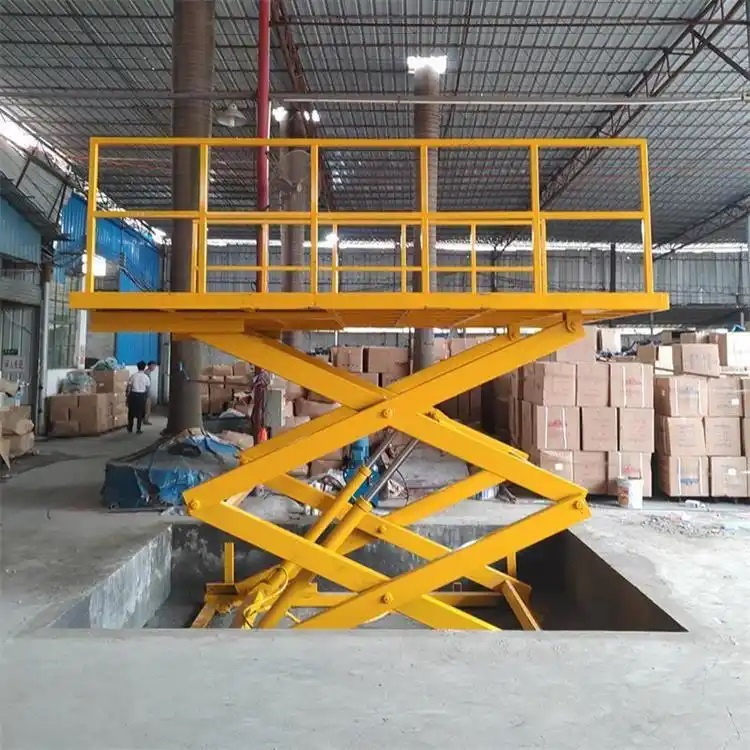
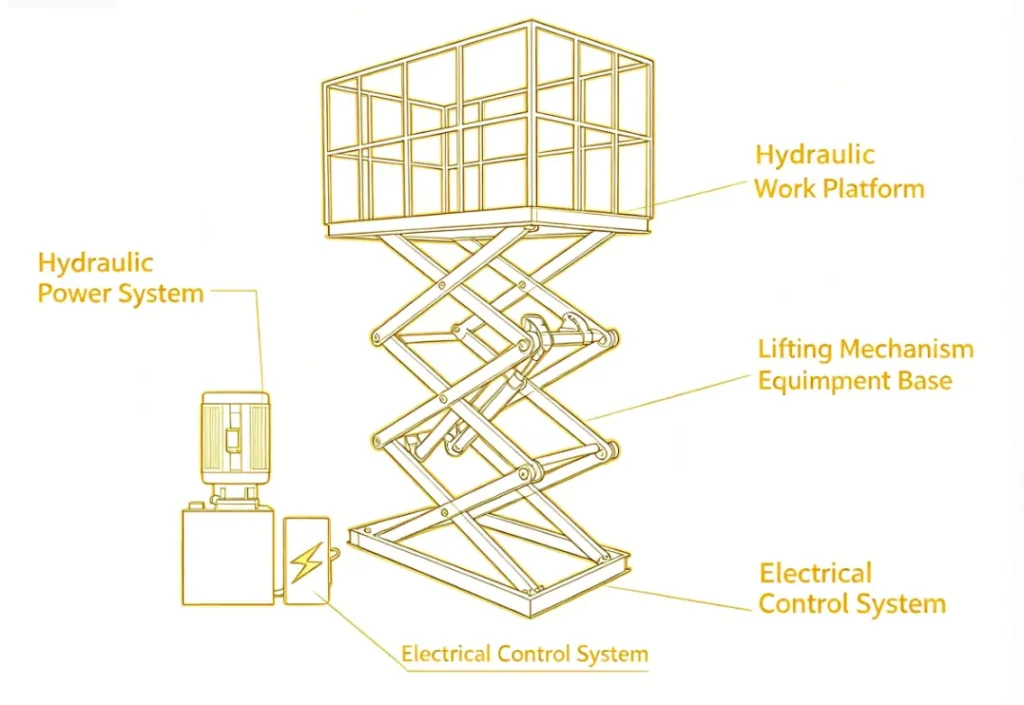
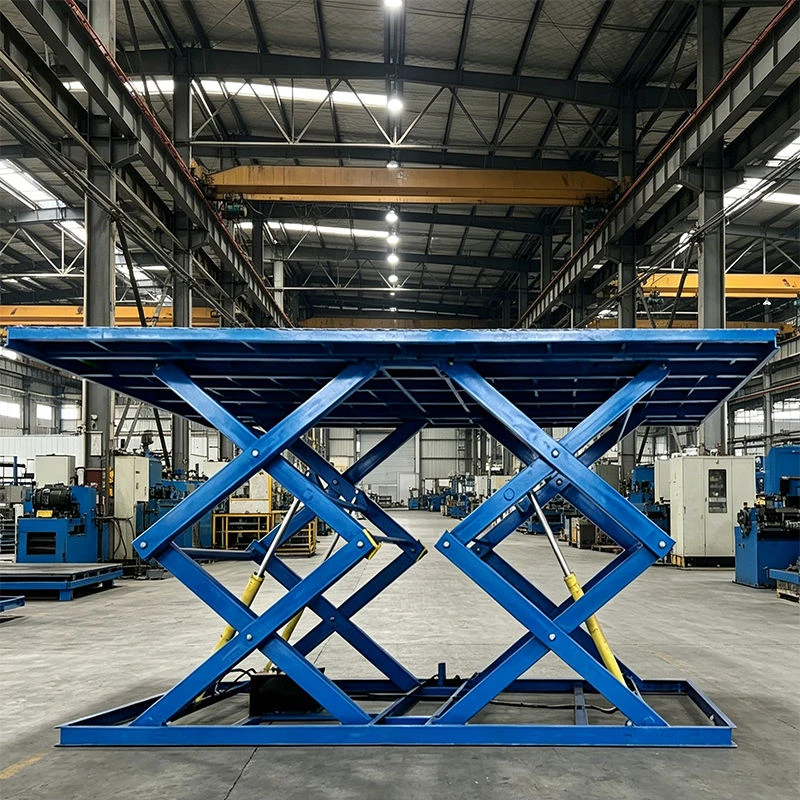
Hydraulic Scissor Lift Table for Material Handling is an industrial equipment that utilizes hydraulic power to drive a scissor mechanism. Through the extension and contraction of hydraulic cylinders, it drives cross-shaped metal supports (scissors) to unfold or fold, causing the top loading platform to rise or fall, completing the vertical lifting of goods. Including stationary or mobile lifting devices, it is an efficient equipment for transportation in modern factories, warehouses, and logistics centers.
Working Principle
The working principle of the Hydraulic Scissor Lift Table for Material Handling is a combination of efficiency and power. It converts hydraulic pressure into mechanical lifting power, providing stable vertical transport support for various operating environments.
Power Activation: After starting the control system, the motor of the Electric Hydraulic Lift Table drives a high-pressure pump to pump hydraulic oil from the tank into the pressure circuit, providing kinetic energy for the entire lifting cycle.
Energy Conversion: Pressure oil enters the high-strength hydraulic cylinders, pushing the piston rods to extend. The thrust of the cylinder is precisely transmitted to the intersection points of the cross supports, converting liquid pressure into powerful mechanical thrust.
Scissor Linkage: As the cylinder advances, the scissor supports of the Industrial Scissor Lift Platform begin to link through central axis pins, unfolding vertically like scissors. This structure ensures lateral stability of the platform during the lifting process.
Vertical Displacement: The expansion of the supports drives the top table to rise steadily. The Stationary Hydraulic Lift Table can precisely dock with production lines or truck chassis of different heights, meeting various complex handling needs.
Pressure Control: After reaching the predetermined height, a one-way locking valve maintains the circuit pressure, keeping the platform load stationary. During descent, the electromagnetic valve releases pressure rhythmically, allowing the Warehouse Material Handling Equipment to descend at a uniform and safe speed under the action of gravity.
The Hydraulic Scissor Lift Table for Material Handling features a compact structure, strong load capacity, and smooth operation, making it an important solution in the modern industrial and logistics fields.
Specifications
VIOTTO is a professional manufacturer of Hydraulic Scissor Lift Table for Material Handling. Since standard specifications cannot cover all industrial applications, we can provide customized solutions for actual operating environments.
Parameters (Item)
Specifications
Rated Load Capacity
500 / 1,000 / 2,000 / 5,000 / 10,000 kg
Max. Lifting Height
1,000 mm – 6,000 mm
Lowered Height
200 mm – 650 mm (Depends on capacity)
Platform Size (L×W)
1300×800 / 1700×1000 / 2500×1500 mm
Lifting Speed
15 – 40 mm/s (Customizable for efficiency)
Power Supply
AC 220V / 380V / 415V, 50/60Hz, 3-Phase
Motor Power
0.75 kW – 7.5 kW
Control Method
Pendent Control / Foot Switch / Remote Control
Safety Features
Safety Trip Bar, Burst Valve, Emergency Stop
Surface Treatment
Powder Coating / Galvanized / Stainless Steel
Advantages
The hydraulic scissor lift platform is an efficient solution for modern material handling systems. It features powerful hydraulic drives and a solid mechanical structure, improving vertical transportation efficiency, ensuring industrial operation safety, and providing ergonomic support.
Load Stability and Durability: Adopting a Heavy Duty Scissor Lift Mechanism design, the structure is robust and capable of maintaining extremely high lateral stability under high-frequency operations, easily carrying heavy materials from 500kg to over 10 tons.
Ergonomic Efficiency: Warehouse Material Handling Equipment can precisely adjust the working height, reducing labor strain caused by repeated bending or heavy lifting for workers, lowering the risk of industrial injuries and improving overall production efficiency.
Flexibility and Customization: Both Stationary Hydraulic Lift Table and mobile models can have their table size, lifting height, and special functions (such as roller tops or explosion-proof configurations) customized according to working conditions, allowing the equipment to dock seamlessly with existing production lines.
Safety Compliance and Easy Operation: The Electric Hydraulic Lift Table is equipped with comprehensive protection measures such as safety trip bars, burst valves, and emergency stops. The operation logic is simple and intuitive, reducing personnel training costs.
The strong bearing capacity, high safety factor, and flexible adaptation of the Hydraulic Scissor Lift Table for Material Handling make the hydraulic scissor lift platform an ideal choice for various industries to optimize logistics processes, reduce labor intensity, and ensure operation safety.
Application
The Hydraulic Scissor Lift Table for Material Handling has powerful load capacity and vertical lifting stability, widely used in various industrial and commercial environments.
Production Line Integration: Connects automated and manual workstations, precisely adjusts material height, and eliminates handling bottlenecks.
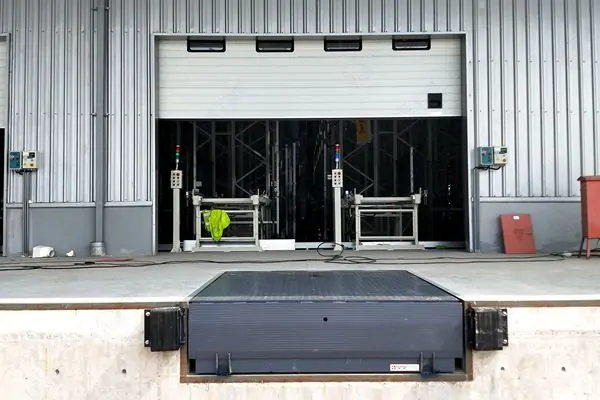
Loading Docks: Compensates for height differences between trucks and loading docks, ensuring safe and rapid loading and unloading by forklifts.
Die & Mold Handling: Assists in the smooth lifting and precise positioning of heavy dies and molds, reducing the physical strain and time required for mold changes.
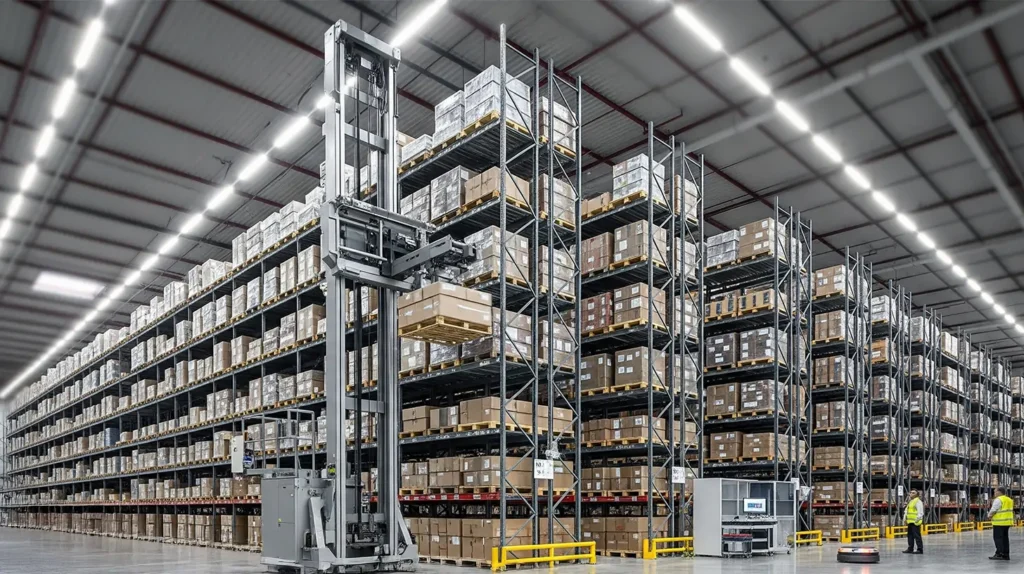
Warehouse Stacking: Vertically lifts goods to upper shelves within limited space, maximizing space utilization.
Ergonomic Workstations: Dynamically adjusts height based on the operator’s stature to prevent occupational injuries and maintain a healthy working posture.
Inter-floor Freight Transfer: Functions as a simple freight elevator, enabling cost-effective vertical transport of palletized goods between floors.
Whether as a “lubricant” in the production link or a “booster” in the logistics link, this equipment can improve the precision and efficiency of vertical heavy object movement while ensuring safety.
How to Choose?
When selecting a hydraulic scissor lift table for material handling, you should consider the following factors comprehensively
Capacity: The maximum rated load capacity, with a safety margin built in to accommodate impact loads.
Lift Height: Specifies the maximum lifting height and the lowest height of the unit itself to ensure precise alignment with the workstation.
Platform Size: Determined based on the cargo’s dimensions; for irregularly shaped items, consider adding rotation or tilting functions.
Power: Compatible with on-site voltage (220V/380V); DC power is available for outdoor operations.
Safety: Standard features include anti-pinch aluminum strips, safety relief valves, and emergency stop switches; must comply with CE/ISO safety standards.
Duty Cycle: Reinforced scissor mechanisms are required for high-frequency continuous operation; stainless steel or explosion-proof configurations are recommended for harsh environments.
Installation: Depending on forklift access requirements, choose between floor-mounted or pit-mounted (flush with the floor) installation.
Hydraulic Scissor Lift Table for Material Handling Manufacturer and Supplier/VIOTTO
As a professional manufacturer deeply rooted in the field of industrial lifting and elevation equipment, We have profound industry experience, providing global customers with one-stop customized solutions from design to after-sales. Here are our core strengths and customization advantages:
10 Years of Industry Experience: Over a decade of focus on the R&D of lifting equipment, possessing deep technical accumulation and mature industry solutions.
Serving 117 Countries Worldwide: Products are exported globally, fully complying with industrial standards, voltage requirements, and safety guidelines of various countries.
Deep Customization Capability: Supports comprehensive customization of load capacity (up to 20 tons), table size, and lifting height to meet special working conditions.
Authoritative Quality Certification: The entire product line has passed CE, ISO, and SGS certifications, using high-strength steel to ensure safety under heavy loads.
Special Environment Adaptation: Can provide stainless steel materials for the food and pharmaceutical industries, and explosion-proof system customization for the chemical industry.
Comprehensive After-sales Support: Provides remote installation guidance, original spare parts supply, and rapid technical response to ensure long-term stable operation of the equipment.
VIOTTO combines a global perspective, strict quality control, and flexible customization, making it your trustworthy efficient material handling partner. Contact us to create your exclusive solution.
Qualification and Honor
Engineered Strength, Global Crane Supplier
service
Exclusive and Considerable, Customer First.
01
Reliable and Customized Solutions
Our pre-sale team provides consultations, tailoring solutions to your needs and environment.
Offer customization options for lifting capacity, span and lifting height etc. to meet specific needs.
02
Updated Production Process
Real-Time Progress Updates: Weekly reports and PM communication.
3-5 years warranty and free replacement for non-manufacturing defects.
24/7 online support and on-site assistance for crane issues.
FAQ
Engineered Strength, Global Crane Supplier
What are the main benefits of using a stationary hydraulic lift table?
A stationary hydraulic lift table enhances workplace ergonomics by bringing materials to a comfortable working height, reducing manual labor injuries, and significantly speeding up loading and assembly processes in industrial settings.
Can I install the hydraulic scissor lift table in a pit?
Yes. Pit installation allows the platform to be flush with the floor when fully lowered, enabling pallet jacks and carts to roll directly onto the Industrial Scissor Lift Platform without the need for a ramp.
What safety features are included in your lift tables?
Our tables feature a safety trip bar (to stop descent upon contact with obstructions), burst valves to prevent sudden drops in case of hose failure, and emergency stop buttons, ensuring full compliance with international safety standards.
How do I choose the right load capacity for my lift table?
Always select a capacity that exceeds your maximum anticipated load. For Heavy Duty Scissor Lift Mechanism longevity, we recommend a safety margin; for example, if your load is 800kg, a 1,000kg rated table is ideal to ensure stability and reduce wear.
Is it possible to customize the platform for a specific production line?
Absolutely. As a leading manufacturer, we provide OEM/ODM services to customize platform dimensions, add roller tops, turntables, or integrate the Electric Hydraulic Lift Table with your existing automated control systems.
Get In Touch
Please feel free to leave a message. We will reply in 24 hours.
Please specify your requirement by referring to the following aspects:
Which crane product do you need?
What is the maximum lifting capacity (in tons) required for your project?
Could you specify the lifting height (in meters) needed?
Can you provide details on the working environment, such as ground conditions, space limitations, and any obstacles?
What is the expected frequency of use and the duration of the project?





 English
  Español
  Português
  العربية
  Français
  Русский