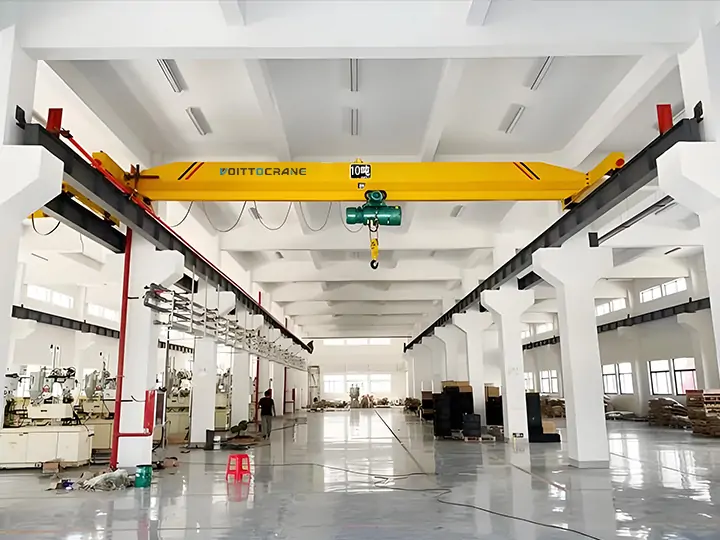
Selecting the right 20 ton overhead crane can transform your material handling efficiency or become a costly mistake. Many industrial facilities rush into purchasing decisions based solely on lifting capacity, only to discover later that span limitations, duty cycle mismatches, or inadequate power systems create operational bottlenecks. The reality is that a 20 ton overhead bridge crane represents a significant capital investment that will serve your facility for 20-30 years.
This guide cuts through the confusion. You’ll learn the seven critical factors that separate successful 20 ton overhead crane installations from problematic ones. Whether you’re evaluating options from established manufacturers like Voitto Crane or comparing specifications from different suppliers, these criteria provide a decision-making framework grounded in real-world industrial experience. With over two decades serving industries from steel mills to automotive plants, proven selection methodologies ensure your investment delivers measurable productivity gains.
Understanding Your Operational Requirements
Actual Load Characteristics
The “20 ton” rating represents maximum capacity, but your actual needs tell a different story. Most facilities rarely lift loads exceeding 70-80% of rated capacity during normal operations. Document your typical load weights, dimensions, and lifting frequency over a representative period. Loads with irregular shapes or off-center gravity points require additional capacity margin.
Consider load distribution patterns throughout your workspace. Concentrated loads in specific areas might benefit from a double girder design, while evenly distributed lighter loads could work efficiently with single girder configurations. This assessment directly impacts structural requirements and long-term operational costs.
Duty Cycle Classification
Duty cycle determines how hard your medium-sized bridge crane works over time. FEM classification ranges from 1m (occasional light use) to 5m (continuous heavy-duty operation). A 20 ton overhead crane serving intermittent maintenance needs differs fundamentally from one supporting continuous production cycles. Mismatched duty ratings lead to premature component failure or unnecessary over-specification.
Calculate your actual operational hours per day, average lifts per hour, and percentage of time operating at various load levels. Steel mills and foundries typically require M5-M6 duty cycles, while general manufacturing might operate effectively at M3-M4. This classification affects motor sizing, brake systems, structural design, and maintenance intervals.
Lifting Speed Requirements
Productivity demands often focus on horizontal travel speeds while overlooking vertical lifting rates. Standard hoisting speeds for 20 ton overhead crane range from 3-8 meters per minute for main hooks. Applications requiring precise positioning might need dual-speed or variable frequency drive (VFD) controls.
Fast-paced production environments benefit from higher speeds, but this increases structural stress and requires more robust braking systems. Evaluate your process flow carefully. Faster isn’t always better if operators spend more time on precise positioning. VFD technology offers infinitely variable speeds, improving both productivity and safety while reducing mechanical wear on hoisting components.
Structural Configuration Choices
Single Girder vs Double Girder Design

single girder overhead crane

Double Girder Overhead Travelling Crane
This fundamental decision shapes cost, performance, and facility requirements. Single girder cranes mount the hoist trolley on the bottom flange of one main beam, creating a compact profile ideal for facilities with limited headroom. They suit operations where maximum hook height isn’t critical and offer simpler maintenance access.
Double girder configurations position the trolley on top of two parallel beams, maximizing lifting height and providing superior rigidity. This design handles sustained heavy-duty cycles more effectively and accommodates additional features like walkways, operator cabs, or auxiliary hoists. For 20 ton overhead crane applications in steel processing or heavy manufacturing, double girder construction often proves more economical over the equipment’s lifecycle.
Top Running vs Under Running Systems

Under Running Systems overhead crane

Top Running Systems Overhead Crane
Top running cranes travel on rails mounted atop runway beams, utilizing full building width and requiring robust building structures to support runway loads. This configuration suits facilities designed specifically for overhead crane operations and provides maximum coverage area with better load distribution.
Under running systems suspend from the bottom flange of runway beams, allowing installation in existing facilities without major structural modifications. They’re ideal for retrofit applications or buildings with lower load-bearing capacity. However, they reduce effective hook coverage by approximately one trolley width on each side.
Span and Runway Length Considerations
Span measurement—the distance between runway rails—directly impacts overhead bridge crane rigidity and cost. Standard 20 ton overhead crane specifications accommodate spans from 10-35 meters, though custom designs extend further. Wider spans require heavier structural components and more powerful drive systems to maintain deflection limits.
Don’t automatically match your building width. Reducing span by repositioning columns or work areas can significantly decrease structural costs and improve performance. Runway length determines travel distance and affects power delivery systems. Longer runways may require conductor bar systems rather than festoon cables for reliable power transmission.
Power and Control Systems
Electrical Infrastructure Requirements
A 20 ton overhead crane demands substantial electrical capacity. Three-phase power ranging from 380V to 480V is standard, with total connected load typically between 30-50 kW depending on configuration and duty cycle. Your facility’s existing electrical infrastructure may need upgrades to handle starting currents and sustained operational loads.
Verify transformer capacity, circuit breaker ratings, and voltage stability under load. Starting currents for standard motors can reach 6-8 times running current, creating voltage dips that affect other equipment. Soft starters or VFD systems reduce this impact while improving motor longevity and providing better operational control.
Control System Technology
Modern control options range from pendant push-button stations to wireless radio controls and cab-mounted interfaces. Radio controls improve operator visibility and positioning flexibility, particularly valuable in complex production environments. Cab controls suit applications where operators dedicate full time to 20 ton overhead crane operation and need comprehensive visibility.
Advanced control systems integrate variable frequency drives for all motions, enabling smooth acceleration, precise positioning, and energy efficiency. Anti-sway technology reduces load swing during transport, improving safety and productivity. When evaluating 20 ton overhead crane for sale options, consider how control sophistication affects operator training requirements and long-term productivity.
Safety and Monitoring Features
Essential safety systems include overload protection, emergency stop circuits, limit switches for travel and lifting heights, and audible warnings. More advanced installations incorporate load moment indicators, real-time monitoring systems, and diagnostic capabilities that predict maintenance needs before failures occur.
Collision avoidance systems prevent multiple overhead bridge cranes on shared runways from impacting each other. Data logging capabilities track operational patterns, supporting maintenance planning and process optimization. These features add value through reduced downtime and extended component life rather than just meeting minimum safety standards.
Building and Foundation Requirements
Structural Load Analysis
Your building must support both static crane weight and dynamic operational loads. A typical 20 ton overhead crane with double girder construction weighs 15-25 tons, creating substantial vertical loads on runway support columns. Add the lifted load, trolley, and dynamic factors from acceleration and braking, and total loads can reach 2-3 times the nominal crane weight.
Existing buildings may require structural reinforcement. Column spacing affects runway beam sizing and support requirements. Building age and construction method influence load-bearing capacity. Professional structural analysis is essential before installation, particularly in facilities not originally designed for overhead crane operations.
Runway Beam Specifications
Runway beams transfer all overhead bridge cranes loads to building columns. They must resist vertical loads, lateral forces from acceleration and braking, and longitudinal loads from thermal expansion. Standard configurations use heavy-duty I-beams or box girders, with sizes determined by span between supports and expected loads.
Runway alignment tolerances are critical. Maximum allowable deviations typically range from 5-10mm vertically and 3-5mm laterally per 10 meters of runway length. Excessive misalignment causes wheel wear, increases rolling resistance, and creates potentially dangerous operating conditions. Quality installation requires precision surveying and adjustment capabilities.
Foundation Considerations
Column foundations must distribute concentrated loads into soil or existing floor structures. New installations often require dedicated footings extending below frost lines with adequate bearing capacity. Existing facilities may need foundation strengthening through underpinning, additional footings, or grade beam systems.
Floor loading becomes critical when 20 ton overhead crane handles loads near ground level. Dropped loads or accidental impacts can damage standard industrial floors. Reinforced concrete floors with adequate thickness and proper reinforcement prevent costly damage and operational disruptions.
Supplier and Manufacturing Quality
Factory Certification and Standards
When evaluating a 20 ton overhead crane factory, verify compliance with relevant international standards. Leading manufacturers like Voitto Crane maintain ISO 9001 certification and hold CE, GOST, and SGS approvals, demonstrating commitment to quality across global markets. These certifications indicate established quality management systems that govern every production phase.
Manufacturing capabilities directly affect quality and delivery times. Factories with in-house fabrication, machining, and assembly facilities maintain better quality control than those relying on extensive subcontracting. Advanced facilities utilize automated welding, precision machining centers, and comprehensive testing equipment to ensure consistent product quality.
Component Quality and Sourcing
Premium manufacturers specify branded components from established suppliers. Electric motors from Siemens, ABB, or SEW provide reliability and worldwide service support. Reducers from European manufacturers offer superior efficiency and longevity compared to generic alternatives. Wire ropes meeting ISO or ASTM standards ensure predictable performance and safety.
Reputable manufacturers prioritize component quality over cost reduction. Voitto Crane, for example, partners with globally recognized suppliers—Siemens and ABB for electrical systems, SEW and Nord for drive components—ensuring every critical element meets stringent performance standards. This approach to component selection reflects a manufacturer’s commitment to long-term customer value rather than short-term competitive positioning.
Component sourcing affects both initial reliability and long-term maintenance costs. Standardized components simplify spare parts procurement and reduce downtime. Proprietary systems may offer performance advantages but can create supply chain dependencies and higher replacement costs.
Warranty and After-Sales Support
Comprehensive warranties typically cover 12-24 months for mechanical and structural components, with extended coverage for electrical systems. Evaluate warranty terms carefully. Does coverage include on-site service or require return shipping? Are consumable components like brake pads and wire ropes included?
After-sales support determines long-term satisfaction. Leading manufacturers provide comprehensive global service networks with responsive technical support and readily available spare parts. Voitto Crane’s service model includes remote diagnostics, preventive maintenance programs, and qualified technicians who understand both the equipment and your industry’s operational demands. This level of support maximizes uptime and extends equipment life well beyond warranty periods.
Compliance and Safety Standards
Regional Regulatory Requirements
Different markets impose specific requirements on 20 ton overhead crane design and operation. OSHA regulations govern installations in the United States, requiring specific safety features, testing protocols, and operational procedures. European installations must meet Machinery Directive requirements and obtain CE certification.
Understanding applicable regulations before finalizing 20 ton overhead crane specifications prevents costly modifications later. Some regions require third-party inspection and certification before commissioning. Operating permits may mandate periodic inspections and operator certification programs.
Load Testing and Certification
New overhead bridge cranes installations require load testing to verify capacity and safety system functionality. Standard practice involves testing at 125% of rated capacity with gradual loading and comprehensive inspection of all components under load. Testing validates structural integrity, verifies brake holding capacity, and confirms limit switch operation.
Documentation from load testing becomes part of the crane’s permanent record. Regular retesting may be required by regulations or insurance providers, typically after major repairs or modifications. Maintain complete testing records to demonstrate ongoing compliance and support liability protection.
Operator Training and Qualification
Competent overhead bridge crane operation requires formal training covering equipment capabilities, load handling procedures, safety protocols, and emergency responses. Many jurisdictions mandate certified operator training with periodic recertification. Training programs should address your specific 20 ton overhead crane configuration and operational environment.
Inadequate operator training leads to equipment damage, productivity losses, and safety incidents. Investment in comprehensive training programs pays dividends through reduced maintenance costs, improved productivity, and enhanced workplace safety. Consider training requirements when planning implementation timelines and budgets.
Total Cost of Ownership Analysis
Smart procurement extends beyond comparing initial quotations. Experienced manufacturers like Voitto Crane emphasize total cost of ownership (TCO) analysis, helping customers understand how design choices, component quality, and operational efficiency impact long-term profitability. This section breaks down the financial factors that separate value-driven investments from costly mistakes.
Initial Investment Components
Understanding what drives acquisition costs helps prioritize requirements and evaluate proposals effectively. Major cost factors include structural configuration, duty cycle rating, span and lifting height, control system sophistication, and special features. A basic single girder 20 ton overhead crane costs substantially less than a heavy-duty double girder system with advanced controls.
Installation expenses often surprise buyers. Site preparation, runway construction, electrical infrastructure upgrades, and commissioning can equal or exceed equipment costs. Obtain comprehensive quotations including all installation requirements to avoid budget overruns.
Operating and Maintenance Costs
Energy consumption varies significantly based on duty cycle and control systems. VFD-equipped cranes use 20-40% less energy than traditional systems by matching motor output to actual load requirements. Calculate annual energy costs based on your operational profile and local utility rates.
Planned maintenance includes lubrication, brake adjustments, wire rope replacement, and periodic inspections. Budget approximately 2-4% of equipment value annually for routine maintenance. Heavy-duty applications or demanding environments increase these costs. Component quality directly affects maintenance frequency and replacement part expenses.
Lifecycle Value Considerations
A well-specified 20 ton overhead bridge crane operates productively for 25-30 years with proper maintenance. Assess long-term value by projecting total ownership costs over expected service life. Lower initial costs may prove expensive if equipment requires frequent repairs, consumes excessive energy, or limits operational flexibility.
Residual value and adaptability matter for changing business needs. Quality equipment with standard components maintains value and can be relocated or reconfigured. Investing in slightly greater capacity or more versatile configurations provides operational flexibility as your business evolves.

Selection Challenges? Get Free Technical Support
Voitto Crane application engineers are ready to help you identify the optimal 20 ton overhead crane configuration for your specific requirements. Contact our technical team for customized solution recommendations, load analysis, and professional specification development at no obligation.
Get QuoteFrequently Asked Questions
How do I determine the right span for my facility?
Measure the distance between your building columns or proposed runway support points, then subtract clearance requirements on each side. Effective working span equals the distance between runway rails minus one trolley width. Your material handling needs determine optimal coverage. Consider future layout changes that might benefit from additional span. Wider spans cost more due to heavier structural requirements but provide greater operational flexibility. Balance coverage needs against structural costs and building capacity. Professional overhead bridge crane suppliers can help optimize span based on your specific facility layout and operational requirements.
Can I install a 20 ton overhead crane in an existing building?
Many existing facilities can accommodate overhead cranes with proper structural evaluation. Critical factors include column spacing, roof height, building age, and construction type. Steel-framed buildings typically adapt more easily than older masonry or wood structures. A structural engineer must assess load-bearing capacity of existing columns and roof structure. Reinforcement may be necessary for columns, foundations, or roof trusses. Under-running configurations often work better for retrofits since they require less structural modification. Budget for potential building improvements when planning overhead bridge cranes installation in existing facilities.
What maintenance does a 20 ton overhead crane require?
Daily inspections should check hooks, wire ropes, brakes, and limit switches before operation. Weekly maintenance includes lubricating travel wheels and trolley components. Monthly tasks involve inspecting electrical connections, checking brake wear, and testing safety devices. Annual comprehensive inspections require qualified technicians to examine structural components, measure wire rope condition, verify brake holding capacity, and test all safety systems. Heavy-duty operations demand more frequent maintenance intervals. Establishing a documented maintenance program prevents unexpected failures and extends equipment life. Many suppliers offer maintenance contracts that include routine servicing and emergency support.
How long does it take to install a 20 ton overhead crane?
Installation timeline depends on site preparation requirements and overhead crane system complexity. Simple installations in prepared facilities with existing runway structures may complete in 1-2 weeks. Complex projects requiring new runway construction, building modifications, or electrical infrastructure upgrades can extend to 2-3 months. Site preparation and runway installation typically consume the most time. The 20 ton overhead bridge crane itself usually installs in 3-5 days once runways are ready. Add time for electrical connections, load testing, and operator training. Weather conditions affect outdoor installation work. Work with suppliers to develop realistic timelines that account for all project phases and coordinate with your operational requirements.
What information do I need to provide when requesting a quote?
Suppliers need specific operational details to propose appropriate equipment. Provide maximum load weight, typical load characteristics, required lifting height from floor to hook, span between runway rails, and total runway length. Describe your duty cycle including daily operating hours, lifts per hour, and percentage of time at various loads. Specify available electrical power configuration and voltage. Include building information such as column spacing, available headroom, and any structural limitations. Mention special requirements like explosion-proof construction, outdoor installation, or extreme temperature environments. Clear documentation of these parameters ensures accurate proposals that meet your actual needs rather than generic solutions.
Selecting the right 20 ton overhead crane requires balancing technical specifications, operational requirements, and long-term value considerations. Partnering with experienced manufacturers who understand your industry’s unique challenges makes this complex decision more manageable. Voitto Crane has guided hundreds of facilities through this selection process across automotive, steel, machinery, and logistics sectors, combining engineering expertise with practical operational insights. The right 20 ton overhead crane doesn’t just meet your current needs—it adapts to your business growth and operational evolution over decades of service.
What makes Voitto Crane different from other 20 ton overhead crane manufacturers?
Voitto Crane distinguishes itself through comprehensive engineering support and proven industry expertise spanning over 20 years. Unlike suppliers offering standard catalog products, Voitto provides customized solutions based on deep understanding of industry-specific requirements—whether that’s explosion-proof configurations for chemical plants or high-temperature designs for steel mills. Their global certification portfolio (CE, ISO, GOST, SGS) enables compliant installations worldwide. The company’s service model emphasizes long-term partnerships rather than transactional relationships, offering lifecycle support from initial design consultation through decades of operational service. This approach has built lasting relationships with clients in over 30 countries across automotive, aerospace, machinery manufacturing, and heavy industry sectors.




 English
  Español
  Português
  العربية
  Français
  Русский