
Lightweight overhead crane and light duty overhead crane are widely used as indoor lifting equipment solutions in factories, workshops, warehouses, and logistics facilities. Users often mistake them for the same equipment. However, in reality, a lightweight overhead crane and a light-duty overhead crane are distinctly different in terms of structural design, appearance, working class, components, and application scenarios. There are significant differences between the two, which are often confused by users or operators. Next, I will introduce the differences between lightweight overhead cranes and light-duty bridge cranes. By clearly understanding the distinctions between these two types of cranes, users can enhance the accuracy of crane selection and choose the most suitable lifting solution tailored to their specific lifting needs.

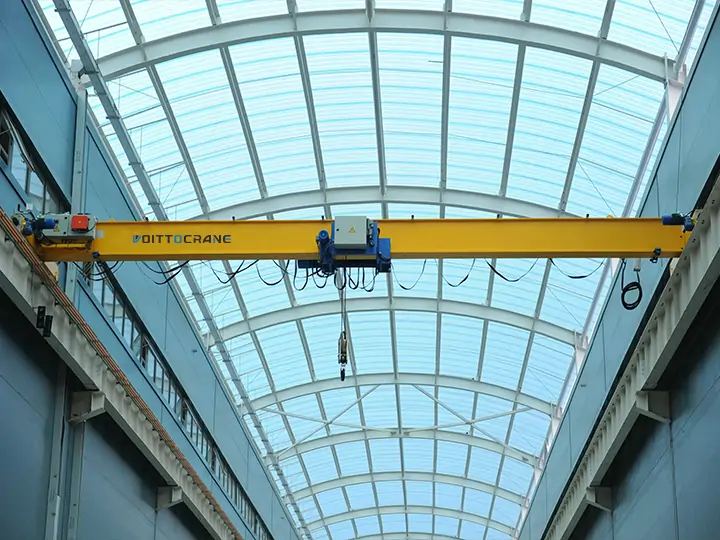
Lightweight Overhead Crane

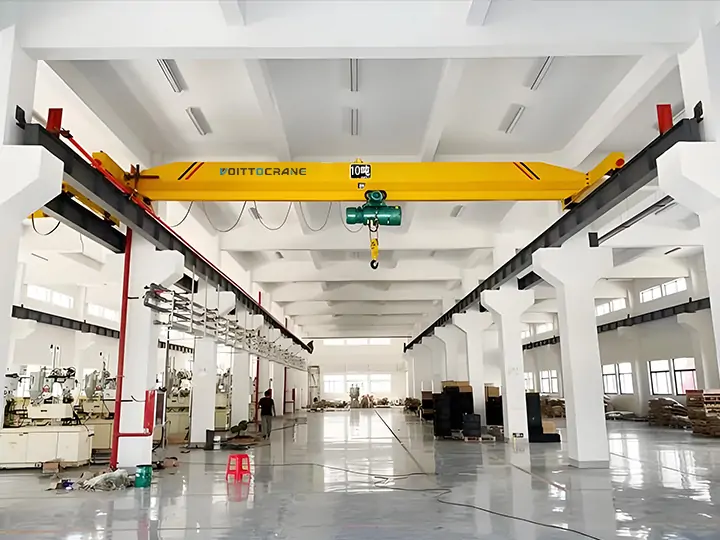
Light Duty Overhead Crane
What is a Lightweight Overhead Crane?
A lightweight crane utilizes lightweight structural design standards. Overhead crane manufacturers minimize the crane’s own weight while maintaining lifting performance. Lightweight cranes employ high-strength steel, compact components, and modular design, thereby reducing the demands on the application environment. Furthermore, lightweight cranes have short design cycles and a high degree of standardization, allowing for rapid deployment to suit different workstations and operational needs.
What is a Light Duty Overhead Crane?
A light-duty overhead crane is designed specifically for low-intensity lifting operations, characterized by a small lifting capacity, low lifting frequency, and short operating time. Users employ it in lower work classes, suitable for applications that do not require continuous operation.
Lightweight Overhead Crane and Light Duty Overhead Crane
VOITTO Cranes selected representative models of a lightweight overhead crane and light duty overhead crane for comparison. The comparison focuses on key technical parameters to help users understand the differences between them.
Lightweight Overhead Crane

Light Duty Overhead Crane
| Model | HD FEM Standard European Single Girder Overhead Crane (Lightweight Overhead Crane) | LD Type Single Girder Overhead Crane (Light Duty Overhead Crane) |
|---|---|---|
| Load Capacity | 10 ton | 10 ton |
| Work Class | A3 ~ A6 | A3 |
| Operating Frequency | 20 ~ 60 lifts per hour | ≤10 lifts per hour |
| Average daily working hours | 4 ~ 8 h | ≤2 h |
| All Weight | 6.5 ton | 8.5 ton |
| Travel Speed | 4 ~ 8 m/min(Variable frequency) | 3 ~ 5 m/min |
| Site Installation Requirements | Low | Must meet standard design specifications |
Weight
In terms of self-weight, a lightweight overhead crane utilizes a lightweight main beam design, high-strength materials, and a compact lifting mechanism. Compared to a light duty overhead crane, lightweight overhead cranes reduce their self-weight by approximately 20% to 30%, thereby lowering wheel loads and reducing the installation requirements on the building structure.
Costs of Use and Maintenance
A lightweight bridge crane, due to their lighter structural weight, can reduce energy consumption and minimize stress on the supporting structure. Simultaneously, lower structural stress and wheel loads reduce wear and tear on the tracks and components, resulting in an extended service life and reduced maintenance frequency. In contrast, while a light-duty bridge crane has lower initial purchase costs, their operational efficiency and long-term energy savings are limited, and the frequency of maintenance will increase if it is used beyond their intended low-load operating range.
Work Level
A light duty overhead crane is designed for low-intensity lifting operations, typically classified as A1 to A3. These cranes are suitable for lifting tasks with low frequency and short duration. In contrast, lightweight overhead cranes can have working classifications ranging from A3 to A6 or even higher. This means that lightweight overhead cranes can perform more frequent and demanding lifting tasks while still maintaining a relatively light structural weight.
Work Efficiency
A lightweight overhead crane equipped with variable frequency drive systems enables smooth acceleration and deceleration, precise speed control, and energy recovery. This makes lightweight EOT cranes faster and safer to operate, while reducing mechanical stress and lowering energy consumption. In contrast, lightweight overhead cranes using standard fixed-speed motors, while simpler to operate, offer less precise acceleration control, lower lifting efficiency, and higher energy consumption during frequent or prolonged operation.
Therefore, lightweight overhead cranes with VFD systems offer higher productivity and smoother performance, especially in production environments where speed, precision, and operating costs are critical.
Common Application Scenarios
Users typically use a lightweight overhead crane in environments requiring frequent lifting operations and high precision.
- Automotive Assembly Lines: Users frequently use it to lift engines, transmissions, and parts.
- Electronics and Precision Manufacturing Workshops: Operators control lightweight overhead cranes to handle control cabinets, molds, and precision parts.
- Pharmaceutical Production Facilities: These environments have high demands on the structural integrity and noise levels of lifting equipment.
- Food and Beverage Processing Plants: Users utilize it to lift packaging materials, containers, and processing equipment.
- Automated Warehouses and Intelligent Logistics Centers: Lightweight overhead cranes are integrated with automated systems, responsible for fast, repetitive material handling and high-cycle operations.
- Mechanical Manufacturing: Users employ it for rapid mold changes in CNC machining centers and injection molding workshops.


Typically, in situations where work efficiency is low and lifting requirements are minimal, users will choose to equip themselves with a light duty overhead crane.
- Small Machinery Repair Workshop: Assists maintenance personnel in lifting motors, pumps, and mechanical components.
- Industrial Plant Maintenance Workshop: Maintenance personnel perform intermittent lifting operations during equipment inspection and maintenance.
- General Processing Workshop: Users control it to lift light steel structures, frames, or processed parts.
- Storage Areas and Tool Rooms: Operators use it to load and unload materials or heavy tools.
- Educational and Training Institutions: Used for instructor demonstrations and operational practice.
- Auxiliary Lifting Operations: Used for basic lifting needs in non-production areas of the factory.
Conclusion
A lightweight overhead crane and light duty overhead crane are designed to meet users’ diverse lifting needs. The former focuses on reducing structural load, improving space utilization, and supporting high-frequency material handling, while the latter provides solutions for low-frequency lifting operations with a simpler and more economical configuration. When choosing an overhead crane, users need to consider factors such as factory building conditions, lifting cycle, working environment, and long-term operational expectations. This is crucial for selecting the appropriate lifting solution.
As a lightweight overhead crane and light duty overhead crane manufacturer and supplier, VOITTO is committed to providing customers with customized solutions, technical consulting, and application scenario suggestions. For detailed technical specifications or industry-specific solutions, please feel free to contact us.
Once you’ve confirmed that a light-duty crane matches your operating frequency and load profile, the next practical question is how to size it correctly for your workshop — span, headroom, duty class, and hoist type all feed into that decision. Choosing a light-duty overhead crane covers each of these factors with specific guidance and a real installation case study.




 English
  Español
  Português
  العربية
  Français
  Русский