
The 30 ton crane is a commonly used lifting equipment for medium and heavy-duty industrial applications, found in manufacturing workshops, steel plants, precast concrete plants, and shipyards.
Different industries and working conditions require different crane structures, lifting heights, spans, working classes, and operating requirements. A crane that performs well in an indoor workshop may not be suitable for outdoor or high-frequency operations.
This article will introduce the main types, typical specifications, and common applications of 30-ton cranes, as well as the key factors to consider when selecting one. This will help you find the right solution for your operational needs.
- 1 What Is a 30 Ton Crane Used For?
-
2
Main Types of 30 Ton Cranes
- 2.1 30 Ton Overhead Crane
- 2.2 Double Girder Overhead Crane
- 2.3 Steel Mill Crane
- 2.4 QD Double Girder Overhead Trolley Crane
- 2.5 QC Magnetic Overhead Crane
- 2.6 QZ Grab Overhead Crane
- 2.7 30 Ton Gantry Crane
- 2.8 Double Girder Gantry Crane
- 2.9 Hydraulic Gantry Lifting Systems
- 2.10 MG Heavy Duty Trolley Gantry Crane
- 3 30 Ton Overhead Crane vs 30 Ton Gantry Crane: Key Differences
- 4 How to Choose the Right 30 Ton Crane for Your Project
- 5 How Much Does a 30 Ton Crane Cost?
- 6 30 Ton Crane Duty Class and Working Frequency Explained
- 7 Why Choose a Professional 30 Ton Crane Manufacturer?
- 8 Safety Standards and Certifications for 30 Ton Cranes
- 9 30 Ton Crane Maintenance and Service Life
- 10 Conclusion
- 11 FAQS


What Is a 30 Ton Crane Used For?
The 30 ton crane is designed for handling medium-sized loads in standard workshop lifting applications. 30 ton cranes are used in various industries that require lifting, positioning, or assembling large components or bulk materials, including:
- Manufacturing plants and heavy workshops
- Steel mills and metal processing plants
- Precast concrete and building materials yards
- Shipyards and marine equipment repair workshops
- Mechanical assembly and equipment maintenance facilities
Common Load Weight Range
Although the rated lifting capacity is 30 tons, these cranes are generally used for regularly lifting loads in the range of 20 to 28 tons. This allows for safer operation, smoother handling, and extended service life. The full 30-ton capacity is typically only used for occasional heavy lifting or special tasks.
Continuous Operation vs. Intermittent Lifting
A 30 ton crane can be configured with different operating modes:
- Continuous or high-frequency operation: Suitable for production lines and steel processing plants, where cranes operate all day and require a higher duty cycle and more robust components.
- Intermittent or occasional lifting: Common in maintenance areas, equipment installation areas, or storage yards, where heavy lifting is less frequent, and standard configurations are sufficient.
Main Types of 30 Ton Cranes
When choosing a 30-ton crane, the two most common options are the 30-ton overhead crane and the 30-ton gantry crane, each suited to different working environments and lifting requirements.
30 Ton Overhead Crane
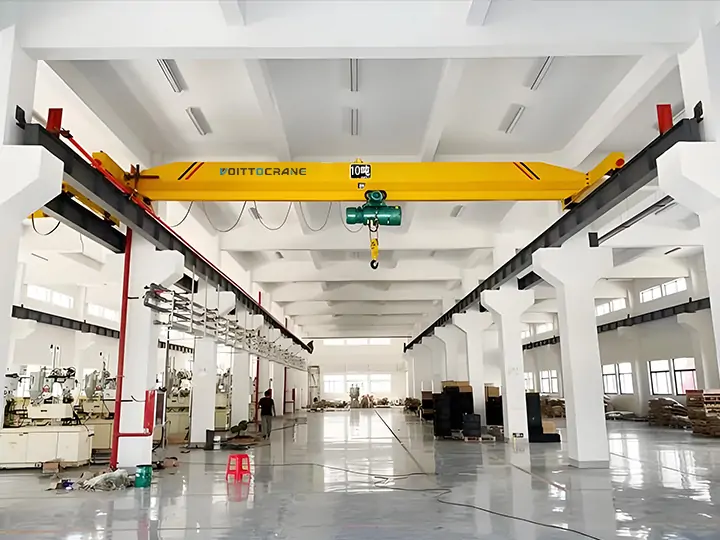
30 ton overhead cranes are primarily used in indoor workshops and factories, requiring a supporting rail structure. They are suitable for production facilities that require stable, precise, and frequent lifting operations.The main types are as follows:


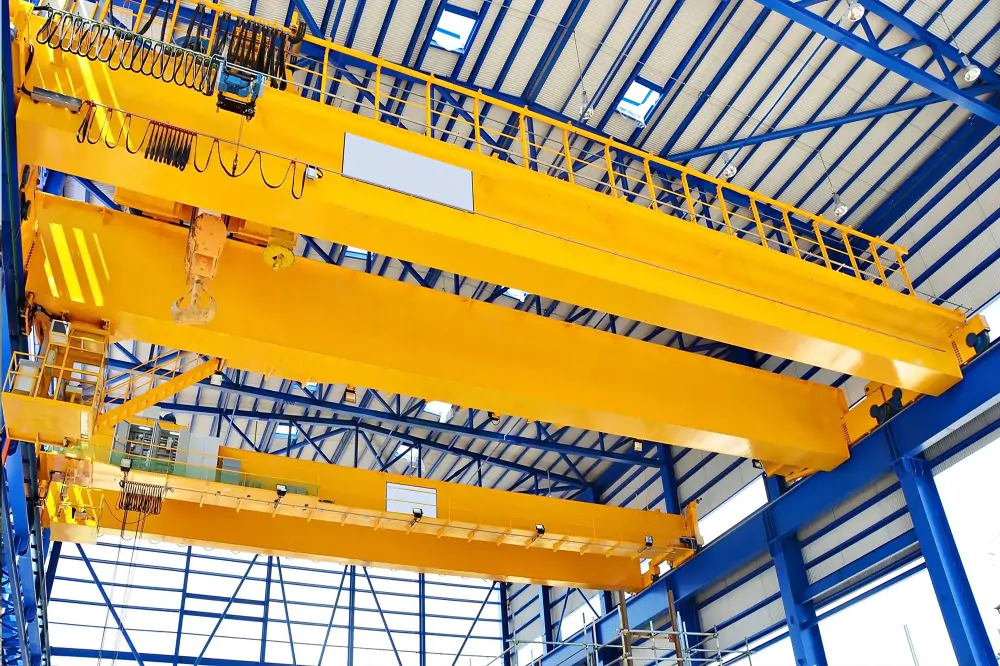
Double Girder Overhead Crane
Double Girder Overhead Cranes utilize a two-main-girder structure, resulting in high overall strength and greater stability under load, making them suitable for medium-to-high frequency, heavy-duty lifting operations. They are used in manufacturing workshops, steel structure processing, machinery assembly, mold hoisting, and other similar applications.
- Lifting Capacity: 5–500 tons
- Span Range: 10–40 m
- Lifting Height: 6–30 m
- Working Class: A5–A7
- Operation Method: Handlebar / Remote Control / Cab
- Power Supply: 380V / 50Hz (Customizable)
Steel Mill Crane
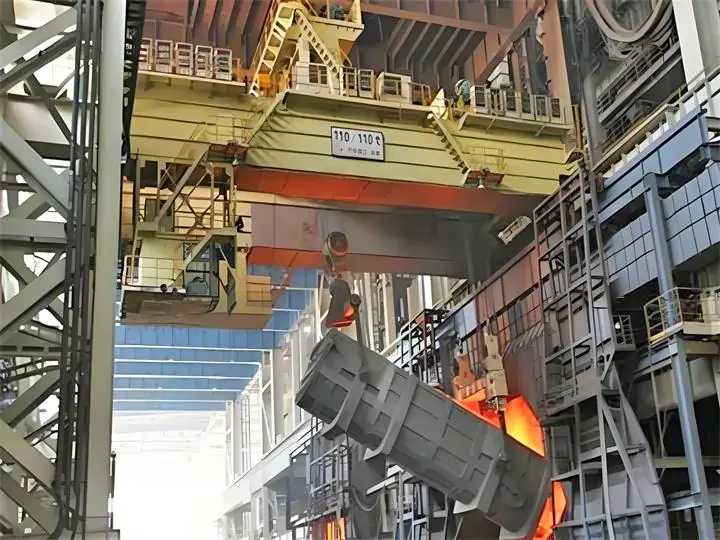
Steel plant cranes are heavy-duty lifting equipment used in steel production workshops. They are adapted to high-temperature, dusty, and high-load conditions, featuring high structural strength, stable operation, and suitability for continuous operation. They are used in steelmaking, continuous casting, rolling, and finished product warehouses for the lifting and transfer of heavy materials such as steel billets, coils, and ladles.
- Lifting Capacity: 10–500 tons
- Span: 10–40 m
- Lifting Height: 6–30 m
- Working Class: A6–A8
- Operation Method: Cab / Remote Control
- Power Supply: 380V / 50Hz (Customizable)
QD Double Girder Overhead Trolley Crane
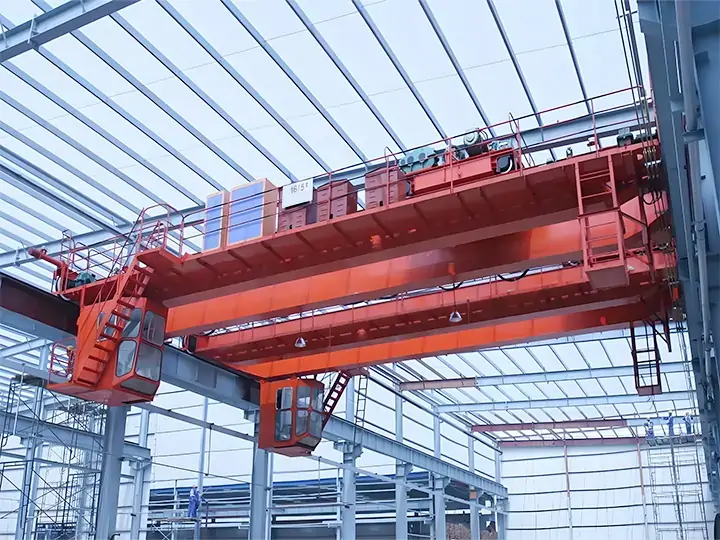
The QD type double-girder bridge crane adopts a double main girder structure and electric trolley travel, featuring strong load-bearing capacity, stable operation, and suitability for medium- and high-frequency lifting operations. This crane boasts a large lifting height and precise positioning, making it suitable for manufacturing workshops, steel structure processing, mechanical assembly, and heavy equipment lifting.
- Lifting Capacity: 5–500 tons
- Span: 10–40 m
- Lifting Height: 6–30 m
- Working Class: A5–A7
- Operation Method: Handlebar / Remote Control / Cab
- Power Supply: 380V / 50Hz (Customizable)
QC Magnetic Overhead Crane
The QC type electromagnetic bridge crane is a specialized lifting device equipped with electromagnetic chucks, primarily used for lifting steel plates, billets, pipes, and various magnetic metal materials. It adopts a double-girder bridge structure, offering strong load-bearing capacity and smooth operation, suitable for continuous or high-frequency material handling operations. Applications include steel mills, metal processing workshops, warehouse storage yards, and material sorting areas.
- Lifting Capacity: 5–50 tons
- Span: 10–35 m
- Lifting Height: 6–30 m
- Working Class: A5–A7
- Lifting Device: Electromagnetic Chuck
- Operation Method: Cab / Remote Control
- Power Supply: 380V / 50Hz (Customizable)

QZ Grab Overhead Crane
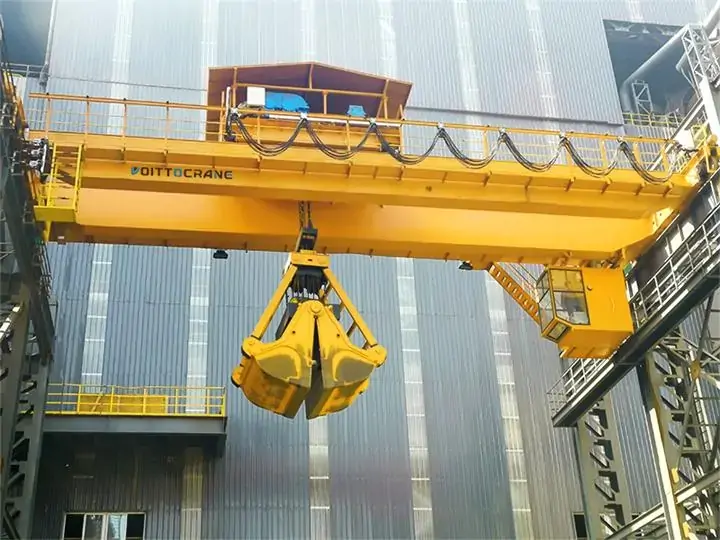
The QZ type grab bucket bridge crane is a specialized lifting equipment equipped with a grab bucket device, suitable for loading, unloading, and transferring bulk and lumpy materials. It adopts a double-beam structure, ensuring stable operation and suitability for continuous or high-frequency operations. It is used in power plants, ports, steel mills, and raw material warehouses for lifting and transporting bulk materials such as coal, ore, sand, gravel, and slag.
- Lifting Capacity: 5–50 tons
- Span: 10–35 m
- Lifting Height: 6–30 m
- Working Class: A5–A7
- Lifting Device: Grab Bucket
- Operation Method: Cab / Remote Control
- Power Supply: 380V / 50Hz (Customizable)
30 Ton Gantry Crane
30 ton gantry crane is suitable for outdoor operations or in locations where building overhead crane tracks is impractical or too costly. Unlike bridge cranes, gantry cranes are supported by ground rails or wheels and do not rely on existing building structures. They are used in ports, shipyards, and precast concrete plants to lift large components and move them within open areas.At 30 tons, the gantry configuration involves more decisions than most buyers expect — single vs. double girder, fixed rail vs. rubber-tyred travel, span and leg height relative to the working area, and duty class matched to actual cycle frequency. These factors interact in ways that directly affect structural cost and long-term reliability, and are covered in detail in this 30 ton gantry crane selection guide. Gantry cranes can span wide work areas and handle heavy loads with good stability, even in harsh environments.The following is an introduction to common types of 30-ton gantry cranes:


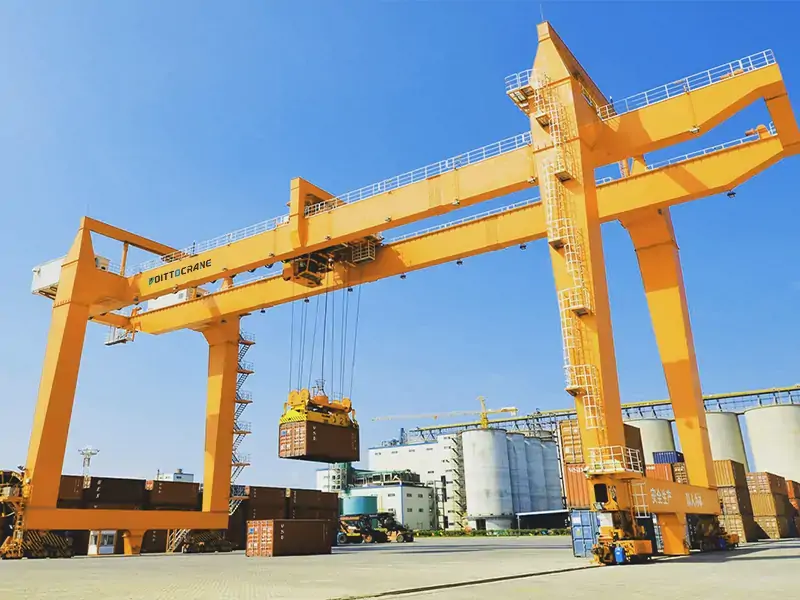
Double Girder Gantry Crane
Double-girder gantry cranes are heavy-duty lifting equipment used in outdoor or semi-outdoor locations. They feature a double-girder structure, high load-bearing capacity, stable operation, and are suitable for large-span and heavy-load lifting operations. They are independent of factory building structures, offer flexible installation, and are applicable to prefabrication yards, steel structure storage yards, port terminals, and large equipment assembly areas.
- Lifting Capacity: 10–500 tons
- Span: 12–40 m
- Lifting Height: 6–30 m
- Working Class: A5–A7
- Operating Mode: Rail-mounted / Wheel-mounted
- Operating Mode: Cab-operated / Remote Control
- Power Supply: 380V / 50Hz (Customizable)
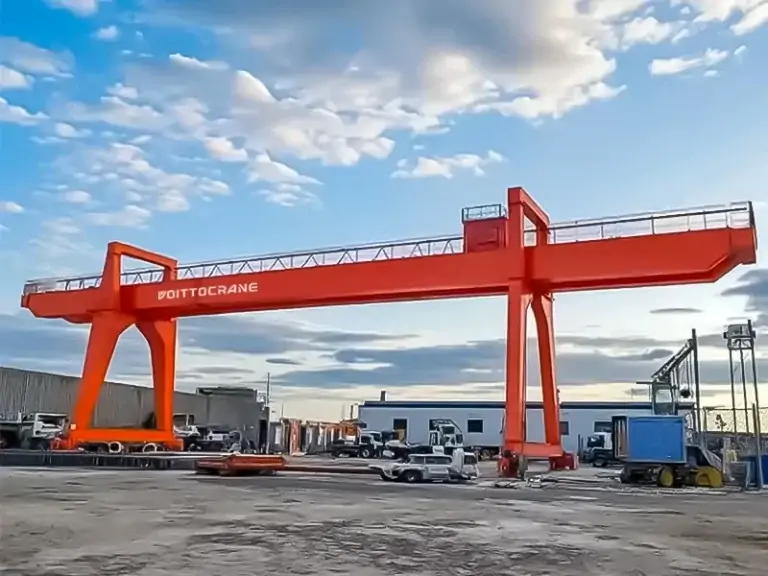
Hydraulic Gantry Lifting Systems
The hydraulic gantry lifting system is a heavy-duty lifting and jacking device driven by hydraulic pressure, primarily used for the overall lifting and precise positioning of large structural components and ultra-heavy equipment. The system boasts high load-bearing capacity and excellent operational synchronization. It is used in equipment installation, large module hoisting, bridge construction, and power, petrochemical, and other engineering projects.
- Single point load capacity: 50–1,000 tons
- Lifting stroke: 1–12 m
- Synchronization accuracy: ±2 mm
- Drive method: Hydraulic drive
- Control method: Centralized control / Synchronous control
- Power supply: 380V / 50Hz (customizable)
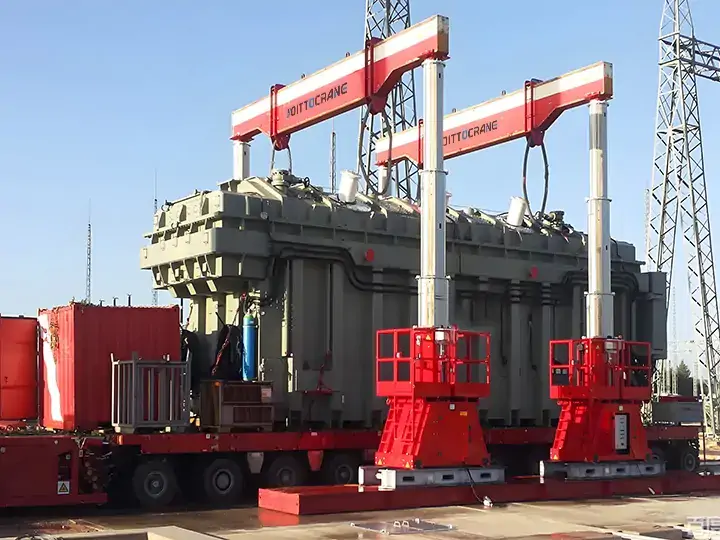
MG Heavy Duty Trolley Gantry Crane
The MG heavy-duty trolley-type gantry crane is a gantry crane used for heavy-duty outdoor lifting operations. It features a double-girder structure and electric trolley travel, offering high load-bearing capacity, stable operation, and suitability for large-span and high-frequency operations. Applications include steel structure yards, precast component yards, port terminals, and large equipment assembly areas.
- Lifting Capacity: 20–500 tons
- Span: 12–40 m
- Lifting Height: 6–30 m
- Working Class: A5–A7
- Operating Mode: Rail-mounted
- Operating Mode: Cab/Remote Control
- Power Supply: 380V/50Hz (Customizable)
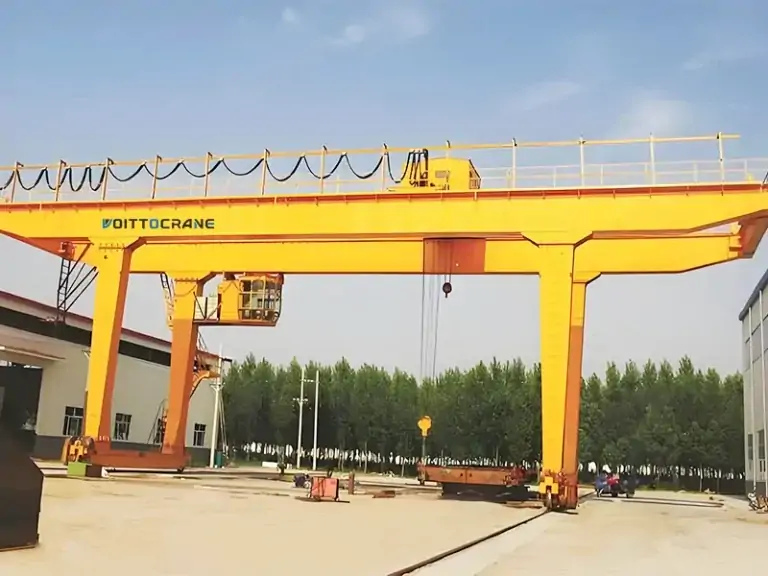
30 Ton Overhead Crane vs 30 Ton Gantry Crane: Key Differences
30 ton cranes are mainly divided into two categories: bridge cranes and gantry cranes. There are significant differences between the two in terms of structural form, installation requirements, usage scenarios, and overall cost. Below, we compare 30-ton bridge cranes and 30-ton gantry cranes from the perspective of key parameters and costs.
| Item | 30 Ton Overhead Crane | 30 Ton Gantry Crane |
|---|---|---|
| Typical Installation | Indoor workshops and factory buildings | Outdoor yards or open work areas |
| Supporting Structure | Uses building columns and runway beams | Self-supported on legs, rails, or wheels |
| Lifting Capacity | 30 tons (stable for frequent lifting) | 30 tons (suitable for heavy outdoor loads) |
| Span Range | Medium to large spans, limited by building | Wide spans, fewer structural restrictions |
| Lifting Height | Higher lifting height possible indoors | Moderate lifting height, flexible layout |
| Duty Class | Suitable for continuous or high-frequency operation | Often used for medium to heavy-duty cycles |
| Positioning Accuracy | High precision, ideal for assembly work | Good accuracy, more focused on transport |
| Typical Applications | Manufacturing, steel workshops, machinery assembly | Ports, shipyards, precast concrete yards |
| Installation Cost | Lower if building structure already exists | Higher due to steel structure and rails |
| Overall Cost Level | USD 25,000–50,000 | USD 35,000–70,000 |
How to Choose the Right 30 Ton Crane for Your Project
When choosing a 30 ton crane, the first step is to determine the operating environment: is it an indoor workshop or an outdoor work site? This will determine whether to choose a bridge crane or a gantry crane.
Secondly, the frequency of use needs to be considered. Continuous or high-frequency operations require a higher working class and more reliable configuration, while occasional lifting can use a more standard solution. Simultaneously, the span, lifting height, and layout conditions of the site should be confirmed in advance to avoid increased costs from later modifications.
How Much Does a 30 Ton Crane Cost?
The following is a reference parameter and price list for a 30 ton bridge crane:
| Product Type | Span (m) | Lifting Height (m) | Lifting Speed (m/min) | Duty Class | Price Range (USD) |
|---|---|---|---|---|---|
| Double Girder Overhead Crane | 10 – 31.5 | 9 – 24 | 5 – 12 | A5 / A6 | 18,000 – 35,000 |
| Steel Mill Crane | 10 – 28 | 12 – 30 | 4 – 8 | A6 / A7 | 35,000 – 70,000 |
| QD Double Girder Overhead Trolley Crane | 10 – 31.5 | 9 – 26 | 5 – 10 | A5 / A6 | 20,000 – 40,000 |
| QC Magnetic Overhead Crane | 10 – 28 | 10 – 25 | 5 – 10 | A6 | 28,000 – 55,000 |
| QZ Grab Overhead Crane | 10 – 31.5 | 10 – 24 | 4 – 8 | A6 | 30,000 – 60,000 |
The following is a reference parameter and price list for a 30 ton gantry crane.
| Product Type | Span (m) | Lifting Height (m) | Lifting Speed (m/min) | Duty Class | Price Range (USD) |
|---|---|---|---|---|---|
| Double Girder Gantry Crane | 12 – 35 | 9 – 24 | 5 – 10 | A5 / A6 | 22,000 – 45,000 |
| Hydraulic Gantry Lifting Systems | 4 – 20 (custom) | 6 – 18 | 0.5 – 3 | Intermittent / Heavy Load | 30,000 – 80,000 |
| MG Heavy Duty Trolley Gantry Crane | 18 – 40 | 12 – 30 | 4 – 8 | A6 / A7 | 38,000 – 75,000 |
30 Ton Crane Duty Class and Working Frequency Explained
Common working classes for 30-ton cranes include A5, A6, and A7, corresponding to medium, high, and heavy-duty continuous operation conditions, respectively.
If the crane is used on a production line or for frequent lifting operations, a higher working class should be selected to ensure operational stability and service life. If it is only used for maintenance or occasional lifting, the standard configuration is sufficient. Appropriately matching the working class helps reduce failure rates and long-term maintenance costs.
Why Choose a Professional 30 Ton Crane Manufacturer?
Choosing a professional 30 ton crane manufacturer allows for customized solutions tailored to industry needs, site layout, and operating frequency.
Reliable suppliers adhere to international standards such as ISO, FEM, and CE, guaranteeing product safety, quality, and stable performance.
Comprehensive after sales service, including technical guidance and spare parts support, helps minimize downtime and ensures the long-term value of the equipment.
Safety Standards and Certifications for 30 Ton Cranes
A 30 ton crane must comply with relevant safety standards and industry specifications. Common standards include Chinese GB, international ISO, and CE certification, which is commonly used in European and American markets.
During the selection and procurement process, key safety features such as structural strength, braking systems, electrical protection, and overload protection should be given priority. Cranes with proper certification are not only safer but also more likely to pass acceptance tests and meet export and project compliance requirements.
30 Ton Crane Maintenance and Service Life
The service life of a 30-ton crane is closely related to routine maintenance. Regular inspections of the steel structure, hoisting mechanism, electrical system, and safety devices help reduce malfunctions and maintain stable operation.
Under reasonable working conditions and standardized operation, a 30-ton crane can be used stably for a long period. Choosing a reliable manufacturer and an easy-to-maintain structural design not only reduces maintenance costs but also effectively extends the overall service life of the equipment.
Conclusion
A 30-ton crane is a practical solution for many medium and heavy-duty industrial applications. Factors such as the working environment, duty cycle, span, and lifting height all play a crucial role in the long-term efficiency and safety of the equipment.
For a closer look at overhead-specific configurations, pricing tables, and a real export case, see our 30 ton overhead bridge crane for sale guide.
If you are planning a 30-ton crane project or comparing overhead crane and gantry crane options, please contact us. We will provide you with a customized 30-ton crane solution and quotation.
FAQS
Can a 30 ton crane be customized?
Yes. A 30 ton crane is usually customized based on working conditions, layout, duty cycle, and environment
What is the difference between a 30 ton overhead crane and a gantry crane?
Overhead cranes are designed for indoor workshops with supporting structures, while gantry cranes are self-supported and commonly used outdoors or in open yards.
What industries commonly use 30 ton cranes?
30 ton cranes are widely used in manufacturing, steel plants, precast concrete yards, shipyards, and heavy equipment assembly facilities.
How much does a 30 ton crane typically cost?
Prices vary depending on crane type, span, lifting height, duty class, and customization. Overhead cranes are generally more cost-effective indoors, while gantry cranes require higher initial investment.
What information is needed to select the right 30 ton crane?
Key details include lifting capacity, span, lifting height, working environment, operating frequency, and site layout.




 English
  Español
  Português
  العربية
  Français
  Русский