
Port cranes are the backbone of global maritime trade, handling millions of containers and bulk cargo daily at ports worldwide. Whether you are upgrading existing port infrastructure, constructing new terminals, or evaluating different types of cranes used in ports, this article provides valuable reference information.

RTG Rubber Tyred Gantry Crane
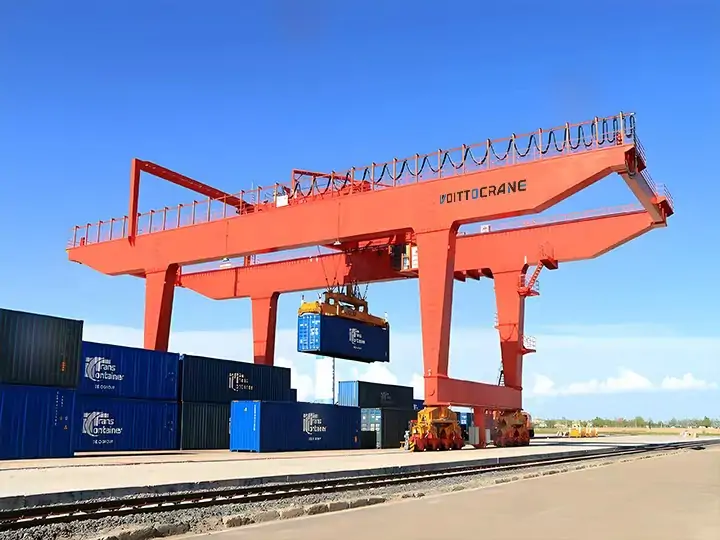
RMG Rail Mounted Gantry Crane

Container Straddle Carrier

Dock Portal Slewing Crane

STS Ship to Shore Crane
This comprehensive guide provides terminal operators, port authorities, and procurement professionals with detailed insights into cranes for ports. You’ll learn about different port crane types, operational capabilities, pricing considerations, and selection criteria that ensure your equipment investment delivers maximum throughput and ROI.
How Do Port Cranes Work?
The basic working principle of a port crane is to use an electric motor-driven wire rope to lift cargo. The trolley moves horizontally along the bridge or boom, positioning the cargo on the working span.
Modern port cranes are equipped with advanced control systems that enable precise load positioning, anti-sway technology, and automated container loading and unloading. Operators work in a well-ventilated, enclosed cab with excellent visibility. Sophisticated sensors monitor load weight, position, and structural stress to ensure safe operation.
Power systems typically utilize shore-based electrical supply, eliminating diesel emissions and reducing costs. Variable frequency drives provide smooth acceleration and deceleration.
Types of Port Cranes
A port operator’s understanding of port crane types will help match equipment performance with the specific requirements of the terminal. Below, I will introduce you to the different types of port cranes. Please continue reading.
Ship-to-Shore Container Cranes (STS Crane)
Ship-to-shore cranes are the absolute core of modern container terminals. These massive structures stand along the quay, spanning the ships to lift containers from the holds or deck stacks.
The STS crane has an operating radius of up to 70 meters, which is sufficient to meet the operational needs of ultra-large container ships with a capacity of over 24,000 TEUs. Its lifting height can reach over 50 meters, enabling it to handle containers stacked more than 10 layers high on the deck. Lifting capacity typically ranges from 30 to 75 tons, and a dual container grab configuration can handle multiple containers simultaneously.
Port crane manufacturer has designed and integrated automated systems that enable seamless docking of containers with terminal storage. The equipment can operate at a rate of over 40 times per hour.
Rubber Tyred Gantry Crane (RTG Crane)
The RTG crane is a specialized lifting device designed for container stacking operations in container yards. It boasts a lifting capacity of up to 70 tons. Equipped with rubber tires as its travel mechanism, this crane can move freely within the yard without requiring tracks to be laid on the ground.
Rail Mounted Gantry Crane (RMG Crane)
The RMG Crane is a container handling equipment that runs on ground rails. Users utilize it to perform container stacking tasks at port terminals, railway freight yards, and inland container yards. The RMG crane’s main beam gantry structure spans the entire container yard. Rail-mounted gantry cranes feature stable operation, precise positioning, and a high degree of automation.
Containder Straddle Carrier
A container straddle carrier is a type of mobile lifting equipment. Operators utilize it to handle, stack, and transport containers within terminals and container yards. The vehicle straddles the container from above, lifts it using a top-mounted spreader, and then moves rapidly within the yard to complete stacking or transfer operations.
Mobile Harbor Crane (MHC Crane)
Mobile harbor cranes provide flexible cargo handling solutions for multipurpose terminals. These wheel-mounted port gantry cranes travel along the quay on rails, positioning at optimal locations for vessel operations.
MHC Crane has a lifting capacity range of 40 to 125 tons. The boom can be adjusted between variable and fixed positions to accommodate different types of vessels. This equipment excels particularly at handling cargo, bulk materials, and containers in busy port terminals.
Dock Portal Slewing Crane and Floating Crane
Dock portal slewing cranes maintain a constant hook height during boom movement, making them ideal for handling bulk materials. Based on boom structure, dock portal slewing cranes are divided into single-boom and four-link types. Their 360° rotating platform and tilting jib system cover a wide working range. Floating cranes operate on barge platforms and are used for heavy lifting in port construction and salvage operations, with lifting capacities ranging from 50 tons to over 200 tons.
What Cranes Are Used For in Port Operations
Users operate cranes to perform a wide variety of material-handling tasks, precisely those tasks that define the efficiency of a modern port.
Container handling represents the primary function at dedicated terminals. Quay STS cranes transfer containers between vessels and terminal transport systems at rates exceeding 40 moves per hour. Bulk cargo operations utilize specialized cranes with grabs or magnets achieving 10,000+ tons daily throughput.
General cargo handling accommodates breakbulk, project cargo, and oversized equipment. Mobile harbor cranes provide flexibility for diverse cargo characteristics, from steel coils to wind turbine components. Furthermore, offshore replenishment operations also rely on cranes, which users utilize to load equipment onto replenishment vessels.


Port Crane Manufacturers: Leading Suppliers
The global port crane manufacturing sector concentrates among established companies with proven track records.
WEIHUA Crane dominates port container crane manufacturing with approximately 70% market share. The Chinese manufacturer delivers turnkey solutions including quay cranes, AGVs, and automation systems at competitive pricing.
Haitai Crane is based in Fengqiu Crane Industrial Park, Henan Province, China, specializing in deck equipment and port crane manufacturing. Product range covers pedestal cranes, rubber tyred gantry cranes, and mobile boat hoists, all certified by CCS, ABS, BV, and RINA. Integrated intelligent monitoring, anti-collision, and remote control technologies ensure safe and efficient port operations.
Liebherr Container Cranes produces premium ship-to-shore cranes and mobile harbor cranes known for advanced technology and energy efficiency. Strong presence in European and Americas markets.
Konecranes offers comprehensive port equipment including Gottwald mobile harbor cranes and automated stacking cranes. Product range emphasizes flexibility for diverse terminal types.
VOITTO Crane from the “Home of Cranes” in China—Changyuan City, Xinxiang, Henan Province. As a specialized manufacturer and supplier of custom services in the field of port cranes, VOITTO is dedicated to delivering efficient, safe, and reliable lifting solutions to our clients.
Port Crane Price: How Much Does a Port Crane Cost
The price of a port crane varies significantly depending on its type, lifting capacity, technical specifications, and degree of automation. Typically, in practical applications, the cost of a port crane ranges from hundreds of thousands to tens of millions of US dollars. Below, we have listed some sample prices for reference only — the final quotation will be tailored to your exact requirements.
Ship-to-Shore (STS) cranes are characterized by their massive structures and extensive reach, with costs typically ranging from $4 million to over $20 million. Rubber-tired gantry cranes (RTGs), commonly used for stacking operations in container yards, generally cost between $500,000 and $3 million. Rail-mounted gantry cranes (RMG), which operate on rail tracks, typically range from $1 million to $6 million; this cost can increase significantly if port operators require integration into automated terminal systems. General-purpose mobile harbor cranes designed for bulk and general cargo handling typically range from $600,000 to $3 million. Meanwhile, smaller harbor gantry cranes or dock portal slewing cranes for lighter-duty port operations cost approximately $120,000 to $800,000, depending on lifting capacity and specific configurations.
Port Cranes for Sale: Procurement Options
Port operators seeking to purchase port cranes should evaluate various procurement options to balance costs and operational requirements.
Brand-new equipment ensures state-of-the-art technology and comprehensive warranty coverage. The delivery lead time for quay cranes typically ranges from 18 to 36 months, while for mobile harbor cranes, it is 12 to 18 months.
Used and refurbished equipment offers cost savings of 40% to 60%. For cost-conscious operators or terminals with immediate operational needs, the secondary market presents an excellent opportunity. However, throughout this process, conducting thorough structural inspections and reviewing maintenance records is absolutely critical.
Selection Criteria: Choosing the Right Crane
Vessel traffic analysis determines required crane outreach and lift height. Terminals expecting post-Panamax vessels need cranes with 60+ meter outreach. Container throughput projections determine handling rates and crane quantity.
Terminal layout and infrastructure constrain selection. Quay structural capacity must support crane loads. Power supply must provide adequate electrical infrastructure—modern quay cranes consume 1-2 MW during operations.
The level of automation spans the entire spectrum from manual operation to fully automated systems. Furthermore, the integration requirements of the Terminal Operating System (TOS) will directly influence the specific technical specifications of the crane control system.

Alan
Crane Solutions Specialist · Voitto Crane
Specialized in Overhead Crane, Gantry Crane, Jib Crane, Port Crane & EOT Crane export solutions. 10+ years helping global clients with pre-sales consultation, capacity selection and site-specific configurations.
Frequently Asked Questions
What is the difference between quay cranes and dock cranes?
Quay cranes and dock cranes are often used interchangeably to describe ship-to-shore container cranes. “Quay crane” is the more technically precise term referring to cranes operating along the quay (waterfront). In contrast, “dock crane” is a general term that can encompass various crane types operating in port dock areas, including mobile harbor cranes and specialized bulk handlers.
What are the main types of cranes used in modern ports?
Modern ports primarily use ship-to-shore quay cranes for container handling, mobile harbor cranes (port gantry cranes) for multipurpose operations, rubber-tired gantry cranes and RMG cranes for yard container stacking, reach stackers for flexible container handling, and specialized bulk material handlers for coal, grain, and ore operations.
Which port crane manufacturers are most reliable?
Leading manufacturers include WEIHUA Crane, Konecranes, Kalmar, and VOITTO Crane.
What maintenance do port cranes require?
Port cranes require daily pre-operational inspections, monthly preventive maintenance, annual major inspections, and periodic non-destructive testing of structural components. Maintenance costs typically run 2-4% of the purchase price annually. Critical activities include wire rope inspection/replacement, brake testing, structural crack detection, electrical system testing, and lubrication of mechanical components.
How do port cranes impact terminal productivity?
STS cranes achieve 25-40+ container moves per hour, directly determining vessel turnaround time and terminal throughput capacity. Automation, anti-sway systems, and operator aids increase productivity 15-30% over conventional cranes. Crane reliability and maintenance quality significantly impact availability rates and overall terminal performance.
Conclusion
Selecting optimal cranes for ports represents a strategic investment, determining terminal competitiveness, operational efficiency, and long-term profitability. Whether you require STS cranes for quay operations, versatile RTG cranes for multipurpose terminals, or specialized equipment for bulk cargo handling, a thorough understanding of each equipment type’s performance parameters, cost structure, and manufacturers’ market positioning is essential for making informed decisions.
If you have any specific requirements or require further assistance, please feel free to contact us. VOITTO will provide you with customized solutions and professional support.


 English
  Español
  Português
  العربية
  Français
  Русский