
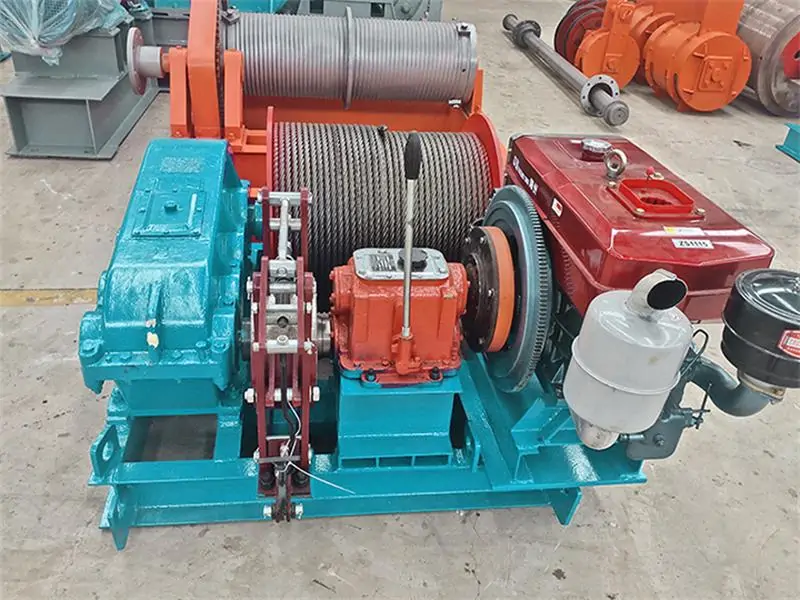
An electric winch is a motorized pulling device that winds a steel cable or synthetic rope around a drum to move or recover heavy loads. It runs on electricity—typically from a vehicle battery or a dedicated power source. The key difference from a hand winch or come-along is that an electric winch can pull continuously without operator fatigue, and it can handle significantly heavier loads.
- 1 What an Electric Winch Actually Does?
- 2 How to Operate an Electric Winch: Step-by-Step
- 3 Electric Winch vs. Similar Equipment: Key Distinctions
- 4 User Operation Precautions
- 5 Electric Winch Manufacturers
- 6 Summarize
-
7
FAQ
- 7.1 How does an electric winch know when to stop pulling?
- 7.2 What size electric winch do I need for vehicle recovery?
- 7.3 How often should I inspect and maintain an electric winch?
- 7.4 Can I use an electric winch continuously for long pulls?
- 7.5 Is synthetic rope better than steel cable for an electric winch?
What an Electric Winch Actually Does?
An electric winch converts electrical power into rotational force. The motor drives a gear train—a set of interlocking gears that multiply the torque, which turns the drum that winds in the rope or cable. A remote control or handlebar switch lets the operator pay out (unspool) or retrieve (wind in) the line without standing next to the winch.


A common misconception among first-time users is to view a winch’s rated load as a fixed limit. For example, a winch with a rated load of 9,000 pounds can only truly exert that pulling force when the cable is wound on the innermost layer (i.e., the first layer) of the drum. As the cable is wound in layers around the drum, its effective pulling force decreases. When the cable is wound to the outermost layer, the pulling force may drop by as much as 30% or more. Therefore, to fully utilize the winch’s maximum load capacity, it is essential to ensure that the number of cable layers wound on the drum is kept to a minimum during towing operations.
How to Operate an Electric Winch: Step-by-Step
Next, I will describe the operating steps for the electric winches, presented in a step-by-step manner. Please follow along as we continue.
Inspect the Equipment Before Every Use
Before operating an electric winch, users must inspect the wire rope or cable for any signs of kinking, fraying, or broken strands. Operators must verify that the safety latch on the hook is fully closed. Additionally, the winch’s mounting base should be inspected.
If the winch has not been used recently, it is recommended to manually pay out a few feet of cable first: simply disengage the clutch and pull the cable out by hand. This step serves to confirm that the cable is spooling correctly onto the drum and is not binding.
Set Up a Safe Anchor Point
An anchor point is whatever the winch cable attaches to—a tree, a fixed post, a recovery point on another vehicle, or a ground anchor. The anchor must be strong enough to withstand the full pull force of the winch without moving, bending, or breaking.
If you choose to use a tree as an anchor point, be sure to use a “tree sling” (a wide nylon webbing that won’t cut into the bark when wrapped around the trunk); never wrap the cable directly around the tree. When connecting, attach the winch hook to the carabiner (a D-shaped metal connector) on the tree sling, rather than directly to the loop on the sling itself. Note: Never use fence posts, spindly saplings, or trailer hitches as anchor points. These objects cannot withstand the lateral pulling force generated by an electric winch.
Connect and Tension the Line
Once the anchor point has been securely established, the operator should pay out a sufficient length of cable to reach the anchor point, while leaving a small amount of slack. Note: Never perform operations with the cable in a state of full tension. Attach the hook to the anchor point’s shackle, and drape a damping object—such as a thick cloth, a sandbag, or a specialized rubber weight—over the middle section of the cable. Should the cable snap, this damping object will absorb the released energy, thereby reducing the distance the broken cable is projected.
Before applying power, the user must ensure that all bystanders maintain a safe distance from the cable of at least 1.5 times the cable’s length.
Operate the Winch
Whenever conditions permit, users should utilize the remote control rather than the handlebar-mounted switch for operation. This allows you to position yourself to the side of the winch cable, thereby avoiding the hazardous zone associated with cable recoil. When applying power, use short, intermittent presses rather than continuously holding down the button. This method of operation provides the motor with a cooling interval between traction cycles while also facilitating precise control over the movement of the load.
If the motor housing feels hot to the touch or if the motor speed drops noticeably under load, immediately cease operations and allow the motor to cool down for at least 10 to 15 minutes before resuming use. Overheating is the most common cause of failure in electric winch motors—a malfunction that is entirely preventable.
Spool the Cable Correctly After Use
Operators retrieving the cable must maintain moderate tension; under no circumstances should it be allowed to accumulate loosely on the drum. If the cable is wound loosely, the outer layers may become embedded between the inner layers when subjected to load, thereby damaging the cable and reducing its traction capacity. Should the cable become tangled, fully unspool it and lay it flat on the ground; then, while maintaining steady tension, manually rewind it neatly.


Electric Winch vs. Similar Equipment: Key Distinctions
This table does not list specific rated loads, as these values may vary depending on the model and configuration.
When loads exceed the limits of manual handling and continuous or repetitive towing operations are required, an electric winch is the ideal choice. However, it is not suitable for applications that demand extremely high positioning accuracy—for vertical lifting, an electric hoist offers more precise “incremental” control.
| Equipment | Power Source | Typical Use | Key Limit |
|---|---|---|---|
| Electric winch | Battery or Power Supply System | Vehicle recovery, loading, and rigging | Motor heat, cable layers |
| Hand winch (come-along) | Manual ratchet | Light loads, occasional use | Operator fatigue, slow |
| Hydraulic winch | hydraulic system | Heavy industrial, continuous use | Requires a hydraulic circuit |
| Capstan winch | Engine PTO or electric | Forestry, marine | The rope must be managed manually |
User Operation Precautions
Before operating an electric winch, users must carefully consult the product manual to identify two key specifications. First, the actual pulling force on the first layer of wire rope, and second, the duty cycle—that is, the maximum duration for which the motor can run continuously before requiring a rest period. These two values will determine whether the winch is capable of meeting your specific operational requirements.
Attempting to tow with a fully loaded drum. Most users mistakenly assume that the winch’s rated pulling capacity remains constant regardless of how much wire rope is wound onto the drum. This is not the case, before commencing any heavy-duty towing operations, the operator must ensure that at least two-thirds of the wire rope has been spooled out.
Neglecting to use a damper. The risk of an accident involving wire rope failure is very real—particularly if there is latent, internal damage within the rope. In documented rescue incidents, the use of a damper has repeatedly proven effective in preventing serious personal injury.
Using the winch to hoist personnel or to lift heavy loads over people. Electric winches are designed specifically for horizontal or inclined pulling operations, not for vertical lifting. If lifting operations are required, specialized equipment—specifically rated and certified to meet the relevant safety standards—must be used.
Failing to rewind the wire rope under tension. Loose coiling of the wire rope on the drum is one of the primary causes of sudden rope failure during towing operations. This occurs because the upper layers of the rope exert compressive force, crushing and damaging the underlying layers.
Electric Winch Manufacturers
VOITTO Crane is dedicated to providing customized electric winches solutions. Please feel free to contact us at any time for technical specifications and project quotes.

Alan
Crane Solutions Specialist · Voitto Crane
Specialized in Overhead Crane, Gantry Crane, Jib Crane, Port Crane & EOT Crane export solutions. 10+ years helping global clients with pre-sales consultation, capacity selection and site-specific configurations.
Summarize
The key to ensuring the safe operation of electric winches lies in thorough pre-use inspections, high vigilance, and a deep respect for the equipment’s operational limits. Before using the equipment, users must conduct a comprehensive inspection, select secure and reliable anchor points, and operate the winch in a controlled and smooth manner—avoiding any hasty or reckless actions.
A deep understanding of key factors such as cable winding techniques, duty cycles, and rated load capacity not only helps maximize the equipment’s performance but also effectively prevents equipment damage and safety incidents. VOITTO Crane is committed to providing you with valuable professional guidance and resource support.
FAQ
How does an electric winch know when to stop pulling?
It does not stop automatically in most consumer and light-commercial models. The operator controls when power is applied and released. Some models include a load indicator light or audible alert, but these are warnings, not automatic cutoffs. You must monitor the load and motor temperature manually.
What size electric winch do I need for vehicle recovery?
A general starting point is 1.5 times the gross vehicle weight of the heaviest vehicle you expect to recover. Ask the supplier to confirm the first-layer rating specifically, as marketing specifications often state the maximum (outermost-layer) capacity.
How often should I inspect and maintain an electric winch?
Inspect the cable and hook before every use. Lubricate the cable with a wire rope lubricant every three to six months under regular use, or after any use in water or mud. Check all electrical connections annually for corrosion. If the winch has been submerged, strip and re-grease the drum and gear assembly before the next use.
Can I use an electric winch continuously for long pulls?
No. Most electric winches have a duty cycle of around 10–15 minutes of operation followed by a mandatory rest period of similar length. Running the motor beyond its duty cycle does not just reduce performance—it can permanently damage the motor windings. Check the manual for your specific model’s duty cycle rating.
Is synthetic rope better than steel cable for an electric winch?
Synthetic rope is lighter, does not store as much energy when it snaps (making a break less dangerous), and is safer to handle without gloves. Steel cable is more resistant to abrasion from rocks and sharp edges and costs less. Neither is universally superior—the choice depends on the working environment.




 English
  Español
  Português
  العربية
  Français
  Русский