For warehouse operators, choosing the right warehouse crane system is crucial, as it directly impacts operational efficiency, safety, and profitability. Furthermore, selecting the right crane equipment requires striking a balance between lifting capacity, building constraints, budget considerations, and long-term operating costs.

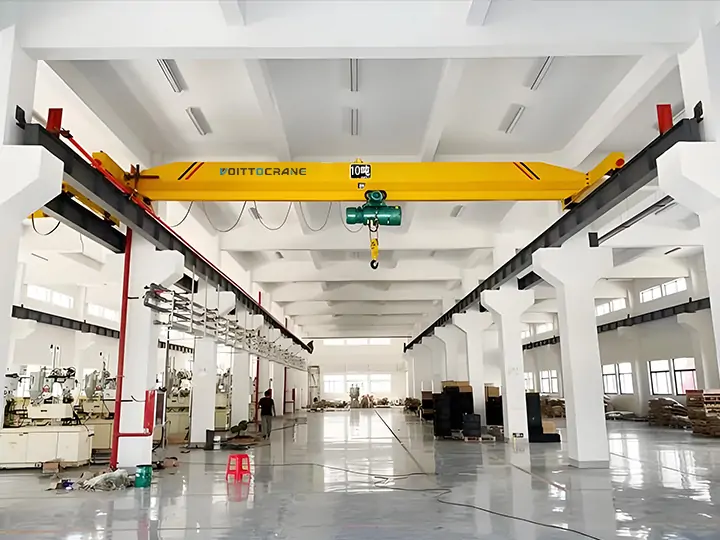
2 ton Overhead Crane

Double Girder Overhead Crane

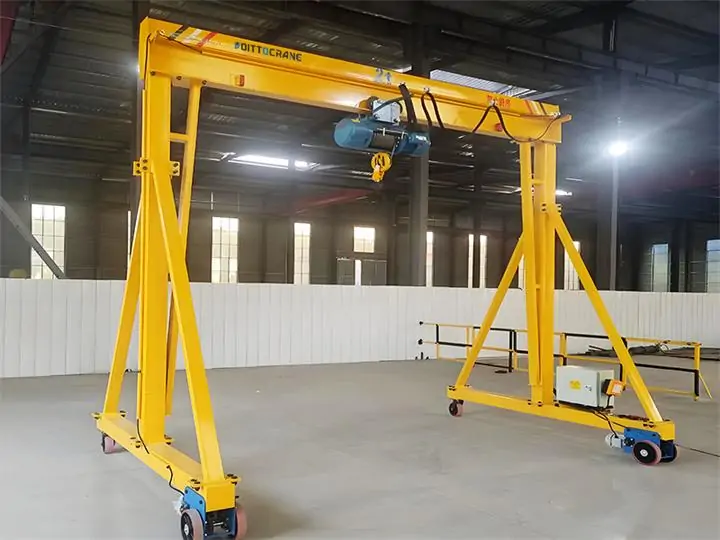
Gantry Crane

Workstation Crane
This buyer’s guide provides warehouse managers, facility engineers, and procurement professionals with the technical knowledge and decision-making framework needed to specify, evaluate, and purchase warehouse crane systems. You’ll understand different types of warehouse cranes, specifications, supplier evaluation criteria, and total cost of ownership calculations that ensure your investment delivers maximum value.
Understanding Warehouse Crane Applications and Advantages
Users utilize warehouse cranes to move products, raw materials, and finished goods within storage and distribution facilities. Warehouse cranes have become the preferred solution for material handling operations.


Key Applications and Advantages
Operators use overhead crane systems for receiving, high-bay storage and retrieval, loading and unloading, and cross-transfer operations. Overhead cranes can handle heavy or large materials that forklifts cannot operate, such as machinery equipment, steel coils, and modular pallets.
The operational advantages primarily include freeing up ground space, increasing warehouse space utilization, handling goods ranging from 1 ton to over 50 tons, reducing forklift operations to improve safety, and accelerating goods handling to increase efficiency. The elevated structure eliminates the need for aisles, enabling a denser storage layout and higher inventory capacity.
Warehouse Crane Types and Configurations
Understanding different crane configurations helps match equipment capabilities to your operational requirements and facility constraints.
Single Girder vs Double Girder Overhead Cranes
Single girder overhead crane designs offer cost-effective solutions for light to medium-duty operations. Capacity ranges from 1 to 32 tons with lower headroom requirements and reduced maintenance costs. These systems suit most warehouse applications with an economical initial investment.
Double girder bridge crane provides heavy-duty capability for demanding operations. Capacity ranges from 10 to 320+ tons with superior hook height utilization and longer span capabilities exceeding 100 feet. They cost 30-50% more but deliver superior performance for heavy loads and high-duty-cycle operations.
Gantry Crane and Workstation Cranes
Gantry cranes feature legs that support the structure, eliminating the need for building-mounted runways. They offer flexibility for mobile material handling, outdoor operations, and facilities lacking structural support. Portable gantry cranes move between work areas. It offers exceptional flexibility with easy operation, quick assembly, and disassembly.
The workstation system provides an ergonomic method for handling materials in assembly and packaging areas. Its load capacity ranges from 150 pounds to 2 tons, and users utilize it to handle parts and packages.
For a warehouse-specific breakdown of gantry crane types — single girder, double girder, portable, and semi-gantry — along with span, lifting height, and capacity selection criteria matched to common warehouse configurations, see our gantry crane for warehouse guide.
Warehouse Crane Specifications
Understanding the specifications can help you select the most suitable lifting equipment for your warehouse while saving on procurement costs.
Capacity and Duty Cycle
Rated load capacity must exceed the maximum anticipated load by 25% safety margin. Duty cycle classification matches crane design to operational intensity—Class C (moderate service) or Class D (heavy service) for most warehouses.
Span, Coverage, and Speed
The bridge span determines accessible width based on building column spacing. Runway length defines longitudinal coverage. Users should consider future expansion needs when determining the dimensions.
Control Systems
Remote control operation allows nearby operators to perform cost-effective work. Wireless remote control operation allows operators to operate from the optimal position. Cab-operated cranes are suitable for high-utilization operations with dedicated operators.
Supplier Evaluation Criteria
Suppliers influence equipment reliability, after-sales support, and long-term costs.
ISO 9001 certification and ASME B30 compliance ensure high-quality manufacturing and safety standards. A localized service network reduces maintenance and repair response times. Sufficient spare parts inventory minimizes downtime. Warranty terms reflect the manufacturer’s confidence—standard warranties are 12-18 months, while reputable suppliers offer even longer warranties.
Analysis of Initial Cost and Operating Cost
Warehouse crane of Initial purchase costs represent 20-30% of total lifecycle costs. Include equipment, travelling rail system, installation, and commissioning. Installation costs vary based on facility conditions—existing structures may require reinforcement.
Operating costs include energy consumption (VFD controls reduce usage 30-40%) and operator labor. Preventive maintenance costs 2-4% of the purchase price annually. Component replacement schedules affect long-term costs—wire rope, brakes, and wheels require periodic replacement based on usage intensity.
FAQS
What capacity warehouse crane do I need for my application?
You need to determine the maximum load capacity and add a 25% safety margin. Also consider the weight of the rigging, the mass of the lifting beam, and any potential future load increases. Most warehouse operations require a lifting capacity of 3-10 tons, while heavy manufacturing may require cranes with capacities exceeding 20 tons.
What’s the difference between Class B, C, and D duty cycle ratings?
Class B suits occasional use with light loads (2-5 lifts per hour). Class C handles moderate service with average loads (5-10 lifts per hour). Class D covers heavy service with near-maximum loads (10-20 lifts per hour). Match the duty class to your operational intensity.
Should I choose a single girder or double girder configuration?
Single girder suits capacities under 32 tons, spans under 65 feet, and lower budgets. Double girder handles heavier loads, longer spans, higher duty cycles, and provides better hook height. Double girder costs 30-50% more but delivers superior performance.
What’s the expected service life of a warehouse crane?
Quality warehouse cranes deliver 20-30 years of service with proper maintenance. Duty cycle intensity affects lifespan—light-use cranes last longer than heavy-service equipment. Modern control upgrades and component replacements can extend life beyond 30 years.
Conclusion
Warehouse operators need to carefully assess operational needs, facility limitations, and supplier capabilities when purchasing a warehouse crane system. The above information is intended to help you make informed purchasing decisions, thereby optimizing material handling efficiency while controlling costs. VOITTO crane is dedicated to providing you with valuable insights.
VOITTO Cranes is a professional warehouse crane manufacturer and supplier in China. We understand warehousing applications and can provide customized solutions to meet your specific needs. If you need warehouse crane lifting solutions, please contact us.




 English
  Español
  Português
  العربية
  Français
  Русский