
When sourcing a crane winch for sale, the first decision point is equipment classification. A crane winch is a mechanical transmission device installed on overhead cranes, gantry cranes, or port cranes. As part of the lifting system, this device raises and lowers heavy loads vertically by winding and unwinding steel wire ropes. This device functions as a lifting mechanism that raises and lowers heavy loads vertically by winding and unwinding steel cables. It is not a standalone ground winch. It is an integrated lifting component, designed and rated specifically for repeated lifting cycles within a defined load class.

Electric Winch

Hydraulic Crane Winch
When a crane winch for sale, most buyers make the same mistake: they confuse it with a general-purpose winch. These two types of equipment differ significantly in their engineering design standards and have different duty ratings, they are not interchangeable. In this guide, we will explain the definition of a crane winch, the differences between the main types, and the key questions you should ask before making a purchase.
- 1 Difference Between Crane and Winch
- 2 Main Types of Crane Winch for Sale
- 3 Key Parameters to Check Before Buying a Crane Winch
- 4 Common Mistakes When Searching for a Crane Winch for Sale
- 5 Crane Winch Supplier and Manufacturer
-
6
FAQ
- 6.1 What is a crane winch and how does it differ from a regular winch?
- 6.2 How do I choose between an electric and a hydraulic crane winch?
- 6.3 Does crane winch weight matter when replacing an existing unit?
- 6.4 How often does a crane winch need maintenance?
- 6.5 Can I buy a crane winch separately and fit it to my existing crane?
Difference Between Crane and Winch
A crane is the complete lifting machine — the structure, trolley, travel mechanism, and controls. A crane winch is the hoisting mechanism within that crane: the drum, motor, gearbox, and brake assembly that actually moves the load vertically.
What Does a Crane Winch Do?
The winch converts motor power into wire rope tension. It does not steer, travel, or position the crane laterally. On an overhead bridge crane, one or two winches are mounted on the crab (the moving trolley), and all vertical load movement is controlled entirely by the winch drum and brake system.

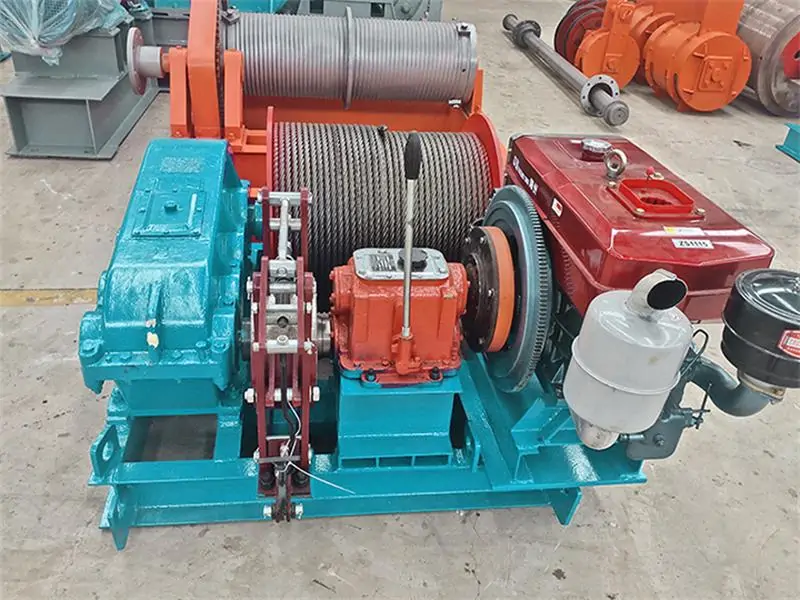
Crane Electric Winch Parts

Crane Hydraulic Winch Parts
Why a General Winch Cannot Replace a Crane Winch?
General-purpose winches—the type commonly used in vehicles or on construction sites—are designed for intermittent, low-frequency applications. In contrast, crane winches must operate under repeated lifting cycles (often up to hundreds of times per shift) and must maintain consistent braking force and load control throughout the entire operation. Substituting one for the other not only involves differences in technical specifications but also constitutes a serious mismatch in structural design and safety ratings.
Main Types of Crane Winch for Sale
Crane winches are divided primarily by drive type and installation format. The table below summarises the four configurations most commonly available:
| Type | Drive | Typical Capacity | Common Application |
|---|---|---|---|
| Electric crane winch | AC / DC motor | 0.5 t – 100 t+ | Overhead & gantry cranes |
| Hydraulic crane winch | Hydraulic motor | 5 t – 300 t+ | Port/harbor cranes, heavy lift |
Lifting Winch Electric — The Most Common Configuration
Electric Crane Winches: This equipment is equipped with an AC induction motor or a variable frequency drive (VFD) as its drive system. Typically, users install electric winches on overhead cranes, gantry cranes, and light-duty port equipment to perform material lifting tasks. They are suitable for most indoor and sheltered outdoor applications with a stable power supply. Variable frequency drive (VFD) control technology enables precise speed regulation during low-speed hoisting, making it particularly suitable for handling fragile items or loads that require precise positioning.


Hydraulic Crane Winch for Sale — Heavy and Marine Applications
Hydraulic Crane Winch: A hydraulic crane winch uses a hydraulic system to convert hydraulic energy into mechanical rotational power. This equipment has become the preferred solution for port cranes, floating cranes, and any lifting equipment installed on ships or mobile platforms. These winches are capable of handling extremely heavy loads. Typically, their load capacity reaches 100 tons or more, and they offer superior resistance to shock loads compared to electric drives, even in rough sea conditions. However, a drawback is that hydraulic systems require fluid management and filter maintenance, and they are not suitable for environments that are highly sensitive to fluid contamination.
Key Parameters to Check Before Buying a Crane Winch
One of the most common procurement mistakes is purchasing a crane winch without first confirming its compatibility with the crane. Four key parameters determine this decision:
Rated Lifting Capacity and Rope Pull
The rated lifting capacity refers to the maximum load that a winch is designed to lift under specific wire rope speeds and rope-over-drum ratios. With a single-turn rope configuration, the wire rope tension doubles relative to the load. With a four-turn rope configuration, the tension is reduced to one-fourth. Users must verify whether the stated rated lifting capacity refers to the load on the hook or the tension on the drum. If a pulley block is involved, these two values are not the same.
Crane Winch Weight and Structural Compatibility
The weight of a crane winch directly affects the load on the trolley frame and the deflection of the crane’s main girder. If the weight of the replacement winch increases—even if its rated lifting capacity remains unchanged—the load on the trolley may exceed its design limits, thereby reducing the crane’s actual net lifting capacity. Therefore, it is essential to obtain the weight data for the winch assembly and compare it with the original design specifications or the trolley’s rated dead weight.
Duty Class / Working Group
Crane winches are classified according to their “duty class.” This is a comprehensive metric that measures their operating frequency and the ratio of average load to maximum rated load. Even if the maximum rated load is the same, the specifications for winches used in light-duty workshop cranes differ significantly from those for heavy-duty steel mill cranes. Before purchasing, users must ask to confirm the specific duty class of the equipment.
Wire Rope Specification and Drum Capacity
The winch drum must be capable of accommodating the required wire rope diameter and length, and the number of wraps must not exceed three. For most crane-specific drums, exceeding this number of layers can lead to issues with the wrap angle and compression loads; therefore, three layers are generally considered the practical upper limit. Before determining the drum length, it is essential to verify the wire rope diameter, the rope lay (number of strands) in the rigging system, and the total lifting height.
Common Mistakes When Searching for a Crane Winch for Sale
When purchasing crane winch equipment, users often fall into the following pitfalls. Below, I will outline these common mistakes to help users select the most suitable hoisting mechanism.
- Purchasing personnel select equipment based solely on rated load capacity without specifying the duty class. For example, two winches with the same rated tonnage but different duty classes will have different motor specifications, brake parameters, and expected service lives.
- Users mistakenly believe that low-cost, general-purpose winches can be used as direct replacements. Such equipment fails to meet the safety requirements for cranes and will result in the invalidation of the entire machine’s certification.
- Users fail to verify interface mounting dimensions. The motor flange, gearbox output shaft, drum bearing center distance, and wire rope exit angle must match the existing hoist trolley frame.
- Purchasing personnel overlook the drum’s rope capacity. If the drum’s rated rope capacity is only 30 meters, it cannot be used on a crane with a lifting height of 40 meters without appropriate modifications.
- When purchasing replacement winches, users fail to request technical data sheets from the original equipment manufacturer (OEM). Without this data, matching the braking torque, motor power, and operating speed becomes a matter of guesswork.
Crane Winch Supplier and Manufacturer
When evaluating suppliers or manufacturers of crane winches, the key distinguishing factor is not the breadth of their product catalogs, but the depth of their technical documentation. A qualified supplier should be able to provide the following information for any product unit it sells, a technical specification sheet for the motor that includes the duty rating, the gearbox gear ratio, and the efficiency curve, the holding torque values for the brake, load test certificates, and the applicable standards under which the product has been certified.
VOITTO offers a crane winch for sale. We consistently adhere to the standards outlined above in serving every customer. We provide customized solutions tailored to our clients’ specific operating conditions and lifting requirements. If you need a project solution involving crane winches, please feel free to contact us at any time.

Alan
Crane Solutions Specialist · Voitto Crane
Specialized in Overhead Crane, Gantry Crane, Jib Crane, Port Crane & EOT Crane export solutions. 10+ years helping global clients with pre-sales consultation, capacity selection and site-specific configurations.
FAQ
What is a crane winch and how does it differ from a regular winch?
A crane winch is a rated lifting drive unit integrated into a crane structure — bridge crane, gantry crane, or port crane — to raise and lower loads vertically through a wire rope and drum system. A regular (general-purpose) winch is designed for low-frequency pulling tasks and is not classified for repetitive lifting cycles. The key difference is duty classification: crane winches are assigned a working group (light, medium, heavy, or very heavy duty) that determines brake specifications, motor sizing, and expected service life. A general winch carries none of these classifications and should not be used as a crane hoist.
How do I choose between an electric and a hydraulic crane winch?
Choose an electric crane winch when the host crane has a reliable power supply and precise speed control is needed — this covers the majority of overhead and gantry crane applications. Choose a hydraulic crane winch when the crane is mounted on a mobile platform, vessel, or machine that already has a hydraulic circuit, or when the required capacity exceeds what standard electric units offer (typically above 100 t in a single unit). Hydraulic units also handle shock loads better in marine environments.
Does crane winch weight matter when replacing an existing unit?
Yes — crane winch weight is a structural parameter, not just a handling concern. The trolley frame is designed with a specific self-weight budget. If a replacement winch is heavier than the original, the additional dead weight reduces the net payload the crane can lift at full rated capacity. In some cases, a heavier winch also changes the bridge girder loading and may require a structural re-evaluation. Always compare the replacement winch assembly weight against the original OEM specification before ordering.
How often does a crane winch need maintenance?
Maintenance intervals depend on duty class and manufacturer specifications. As a baseline, brake lining inspection typically occurs every 3 to 6 months under medium-duty use; gearbox oil should be checked at least annually and replaced per the manufacturer’s interval (commonly every 2,000 to 4,000 operating hours); wire rope should be inspected at every duty shift for visible damage and formally inspected quarterly. Higher-duty-class winches require shorter intervals. Always refer to the winch manufacturer’s maintenance manual — generic intervals are a starting point, not a substitute.
Can I buy a crane winch separately and fit it to my existing crane?
Yes, but compatibility must be verified across four dimensions: rated capacity and duty group match; physical interface (drum shaft, bearing centres, motor flange dimensions); control system compatibility (voltage, control signal type, brake circuit); and crane structural load budget. If all four align, a separately sourced winch can be fitted. If anyone does not align, modification costs can exceed the winch purchase price. Request the existing crane’s crab assembly drawing and winch datasheet before specifying a replacement.



 English
  Español
  Português
  العربية
  Français
  Русский